The future of engineering decision making: trends, tools, careers
Decision-making involves choosing among alternatives under uncertainty. This article is dedicated to both seasoned professionals and engineering students navigating an increasingly AI-driven decision-making landscape. We will discuss current tools and the future of engineering decision-making with Artificial Intelligence.
- In everyday language, decision-making belongs to leadership: the bold founder backing an instinct under pressure.
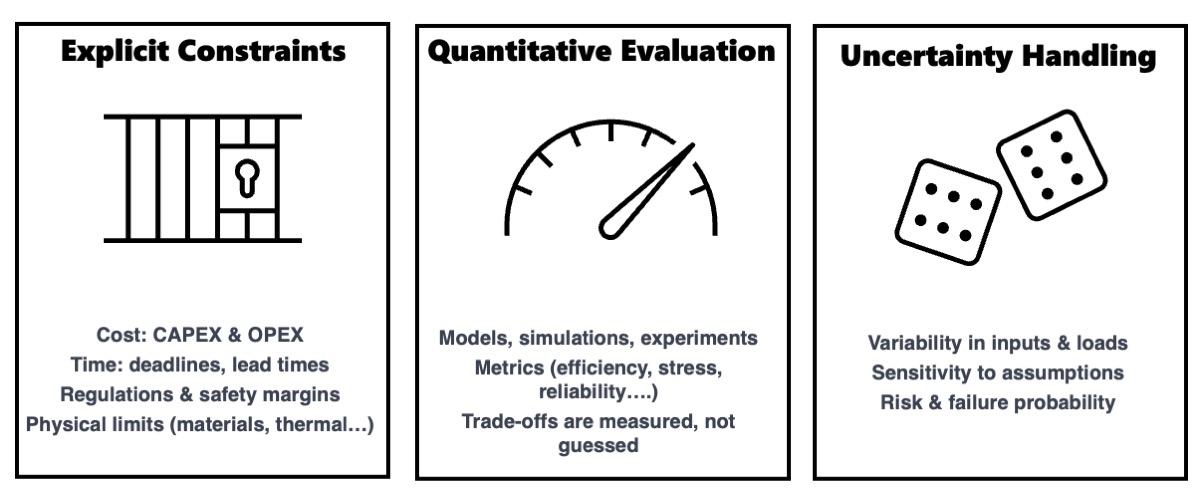
- Engineering decision-making is a more deliberate matter. Within product development, it is a technically structured process for selecting the best technical solution within cost, safety, and performance constraints.
We will show how innovations in Artificial Intelligence are enabling engineers to tackle ever more complex challenges.
Why is engineering decision making relevant?
Engineering decision-making matters because early choices influence prospective options and costs. Each decision limits subsequent possibilities. As a project advances, the solution space narrows.
Early decisions
Examples of questions to ask for initial decisions include:
- Which materials to specify?
- Which safety margins to apply?
- Which compromises between cost, performance, and longevity are acceptable?
A design decision limits what can happen later. It may affect construction possibilities, influencing how a structure handles stress, ages, and wears, and whether it might fail. AI-driven decisions help minimize material waste and carbon footprints during product design. Engineers should consider environmental impact assessment and sustainability in their decision-making.
Integrating AI into design for reliability shifts failure-mode decisions upstream, before physical prototypes are built.
Why are engineering decisions inherently difficult?
Decision-making in engineering is demanding because inputs are uncertain. Real-world conditions are never perfectly known, for example:
- Incomplete data
- Model approximations
- Uncertain future
Uncertainty quantification is critical when model predictions drive structural decisions.
Why is uncertainty quantification important for AI?
Integrating Uncertainty Quantification (UQ) into AI workflows solves the “black box” problem of machine learning.
- Risk Management ensures that structural decisions are based solely on model predictions when those predictions are statistically robust.
- Computational Efficiency: Using UQ to decide when a full simulation is needed helps teams avoid wasting expensive computational resources on designs that the AI can already predict with confidence.
- Safety-Critical Applications. In sectors such as aerospace and automotive (e.g., pedestrian crashworthiness), UQ provides the evidence-based trail required to meet regulatory standards.

Decisions in engineering projects: case histories
The following cases highlight the consequences of decisions involving the same company (Boeing):
- What were the dramatic results of a single poor design decision
- How adopting a new digital design approach (second case) was the right decision to make
Wrong decision: Boeing 737 MAX
A single design-phase decision to forgo an aerodynamic redesign to save costs led to hundreds of deaths and the grounding of the fleet. Here’s how:
- Boeing added software to fix pitch issues, relying on a single angle-of-attack sensor without redundancy, as it was deemed non-safety-critical.
- When that sensor malfunctioned, the software activated on false data and could not be overridden by crews. Two accidents with over 300 victims followed.
- The 737 MAX was grounded for 20 months, the longest in U.S. aviation history. (See Ref. ⁽¹⁾)

Right decision: Boeing 777
The Boeing 777 program is a landmark case of how structured digital tools act as a “System 2” check on engineering intuition. By committing to a 100% digital definition using CATIA (Dassault Systèmes), Boeing eliminated the need for full-scale physical mockups. This move reduced the uncertainty inherent in large-scale assembly. ⁽²⁾
Traditional aircraft development faced massive cost overruns during the “fit-up” phase, where parts manufactured by different teams failed to align. The 777 program bypassed these fit-up failures through several digital-first strategies:
- Automated Interference Checking: algorithms detected “clashes” (spatial overlaps) between structural components and subsystems before a single part was manufactured.
- Virtual Tolerance Analysis: 3D CAD enabled precise simulation of how production variances would stack up across the airframe. The simulation ensured that parts from suppliers would fit together with high fidelity and addressed the primary driver of late-stage engineering change costs.
- Structured (System 2) Reasoning: The digital environment forced teams to address geometric and manufacturability issues during the design phase, preventing “System 1” intuitive assumptions from leading to physical errors.
Because issues were resolved digitally, the Boeing 777 entered service on schedule on June 7, 1995. Boeing 777 became the first aircraft to receive ETOPS-180 certification upon entry, proving that digital verification can deliver the same reliability as years of physical prototyping.
The transition from physical to virtual environments laid the groundwork for today’s Engineering Intelligence and physics-aware AI models.

How engineers actually decide
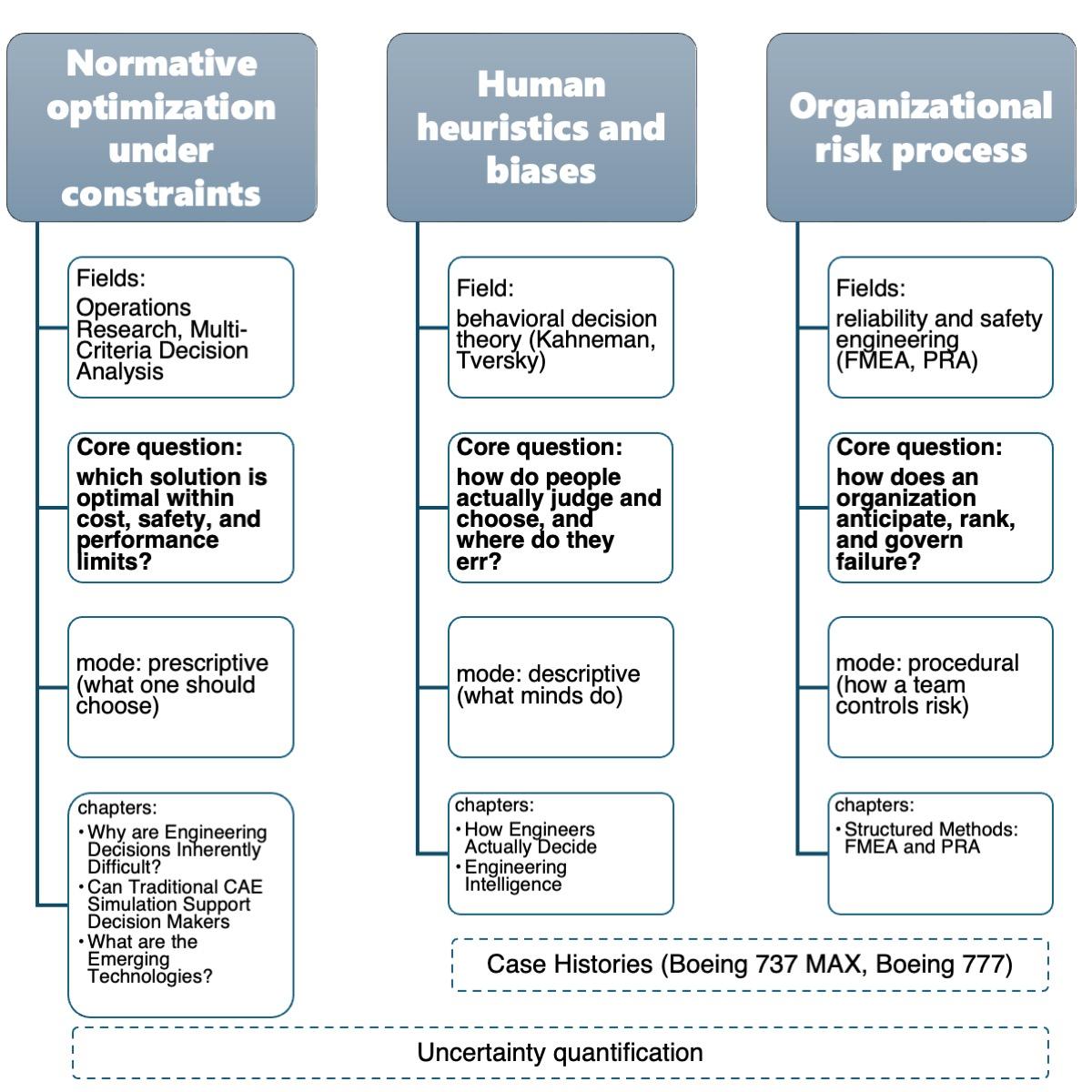
Engineers make informed decisions within "bounded rationality". Cognitive biases influence how we process information and make decisions. Decisions are not purely rational; quality depends on expertise, cognitive mode, and structured methods. Daniel Kahneman explains this in Thinking, Fast and Slow (2011). ⁽³⁾
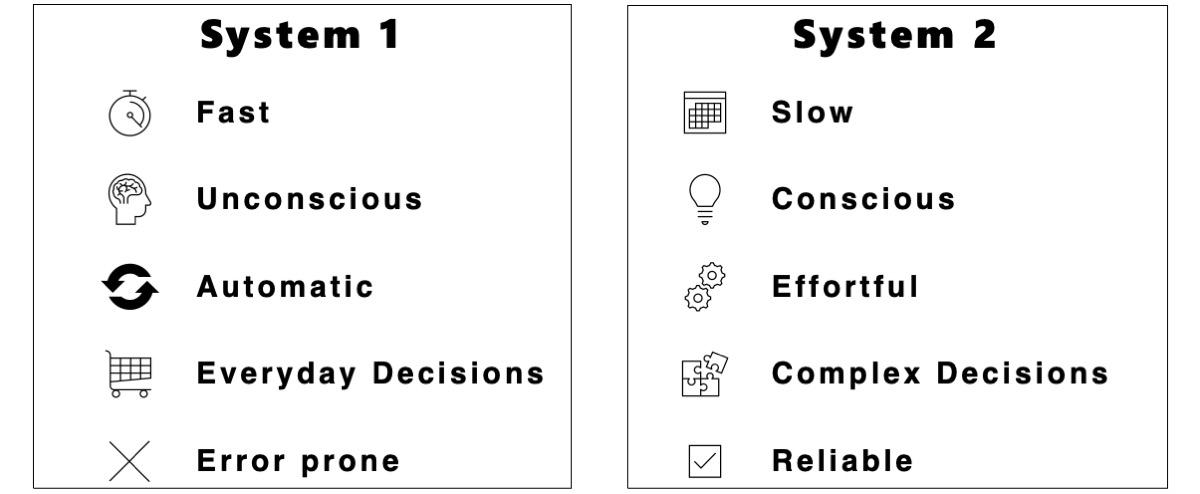
Fast, intuitive thinking
“System 1” operates automatically, using pattern recognition and experience to reach conclusions effortlessly. For example, an aerospace designer spots an anomaly on a stress plot. An engineer walking on a bridge senses structural soundness. A dyno test specialist hears a knock before instruments confirm it.
- The danger is that System 1 fails to recognize its limits and draws confident conclusions even when data are incomplete or the situation is new.
- Biases like “overconfidence” lead an aerospace team to underestimate a failure mode; “anchoring” biases an engineer’s load estimate to a prior project.
Slow, deliberate reasoning
“System 2” is effortful and analytical. It engages when a complex problem requires structured reasoning and explicit evaluation of alternatives.
Methods like FMEA and Probabilistic Risk Assessment force System 2 engagement when cognitive pressure or culture would leave System 1 unchallenged.
Engineering Intelligence
Engineering Intelligence is a “System 3” approach combining the speed of intuition with the rigor and data density of analytical reasoning.
Physics-aware AI modeling based on Deep learning makes that approach operational, bridging the System 1 and System 2 modes of thinking (see Table).
In decision-theoretic terms, such a model is a learned value function over the design space: it returns an estimate at the speed of intuition while staying anchored in analytical data.
Closing this gap between the digital and the intelligent is the core of Neural Concept’s founding vision:
"Today, all advanced manufacturing companies rely on what I call the digital layer. These include simulation and 3D CAD tools that virtualize product development. Engineers design products, run simulations, analyse results and decide what to do next, all inside this virtual environment. But even though everything is digital, it's still humans driving most of the actions and decisions. What we are building with Neural Concept is the intelligence layer on top of that digital layer." Pierre Baqué, CEO and co-founder of Neural Concept, interviewed by HTGF February 2026.
System 1System 2Engineering IntelligenceSpeedFast/InstantSlow/SequentialFast/Real-timeEffortLow effortHigh effortAutomated/Low manual effortBasisPattern recognitionStructured logicPhysics-aware AI modelsReliabilityProne to biasHighHigh (data-dense)ScopeBroadLimitedBroad
Structured methods: FMEA and PRA (probabilistic risk assessment)
Frameworks can help us to make risk explicit, traceable, and actionable. Two methods stand out: Failure Mode and Effects Analysis (FMEA) and Probabilistic Risk Assessment (PRA).
What is risk?
Risk combines the probability and magnitude of loss, replacing intuition with measurable calculations.
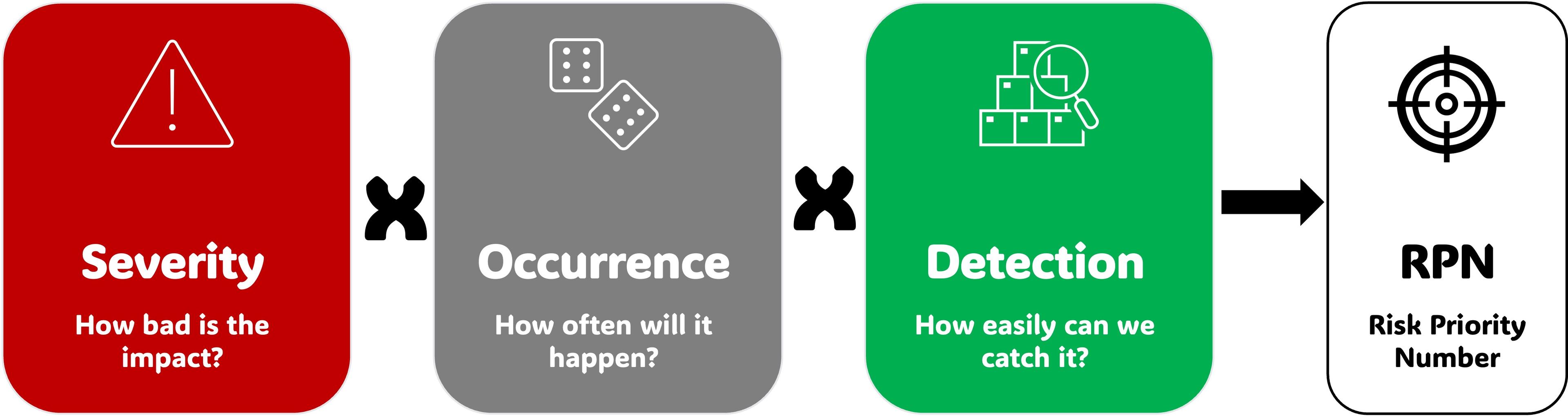
- Risk = Probability of Loss × Value of Loss. A high-probability, low-consequence event can be less risky than a rare, catastrophic one (see figure).
- Unquantified risk is not a managed risk. Decisions based solely on severity or likelihood misallocate resources and lead to suboptimal outcomes.

Failure mode and effects analysis (FMEA)
FMEA identifies how components or processes could fail, the consequences of each failure, and how to prioritize corrective actions.
According to the American Society for Quality, failures are ranked by three criteria: severity, likelihood of occurrence, and detectability. Those criteria are combined into a Risk Priority Number (RPN) to guide intervention ⁽⁴⁾ (see also figure).
FMEA was adopted by aerospace industries and NASA during the Apollo program in the 1960s, according to the American Society for Quality ⁽⁴⁾, and later by Ford Motor Co. in the 1980s.⁽⁴⁾
FMEA is now a core tool in the aerospace, civil, and automotive sectors. For instance:
- In aerospace, FMEA is applied to turbofan engine air to rank the criticality of component failures before they occur.
- In civil engineering, FMEA structures the assessment of failures in construction processes before they propagate into structural deficiencies.
- In the automotive industry, FMEA governs the validation of software and hardware in vehicle safety.
Probabilistic risk assessment (PRA)
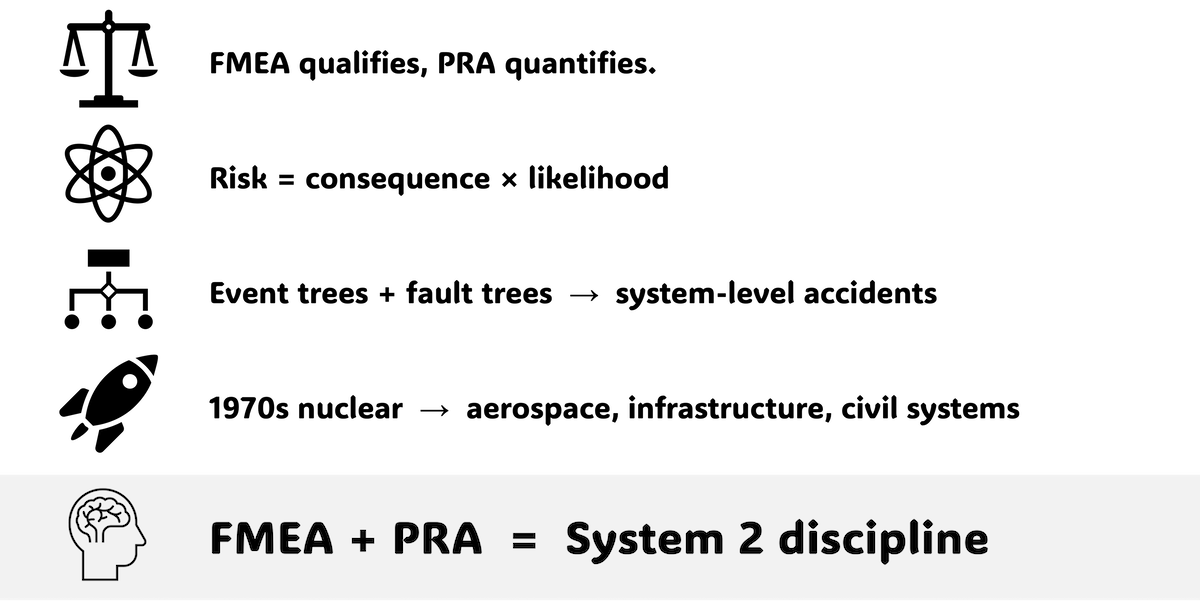
PRA ranks failure modes as a risk-estimation methodology by calculating potential adverse outcomes and their likelihoods, using event and fault trees to model how failures lead to accidents. ⁽⁶⁾
Together, FMEA and PRA help provide deliberate, structured reasoning that System 1, left unchecked, would bypass.
Can traditional CAE simulation support decision makers in industrial engineering?
Traditional simulation (CAE - Computer-Aided Engineering) supports decision-making by enabling the evaluation of design alternatives before physical realization. Upfront evaluation reduces uncertainty and reveals needed compromises earlier. This added value drove CAE adoption in the automotive industry and other sectors between the 90s and the early 2000s.
Instead of solving problems in one step, simulation tools approximate system behavior under different assumptions. They allow designers to compare options and identify failure modes before committing to a design.
How simulation supports decisions
Simulation tools act as decision amplifiers. Postprocessing tools in simulation make consequences clearly visible before they occur in reality.
For example:
- 3D CAD and simulation tools help evaluate geometry, stress, and manufacturability before physical prototypes
- Finite Element Analysis tools support decisions on structural integrity and material selection.
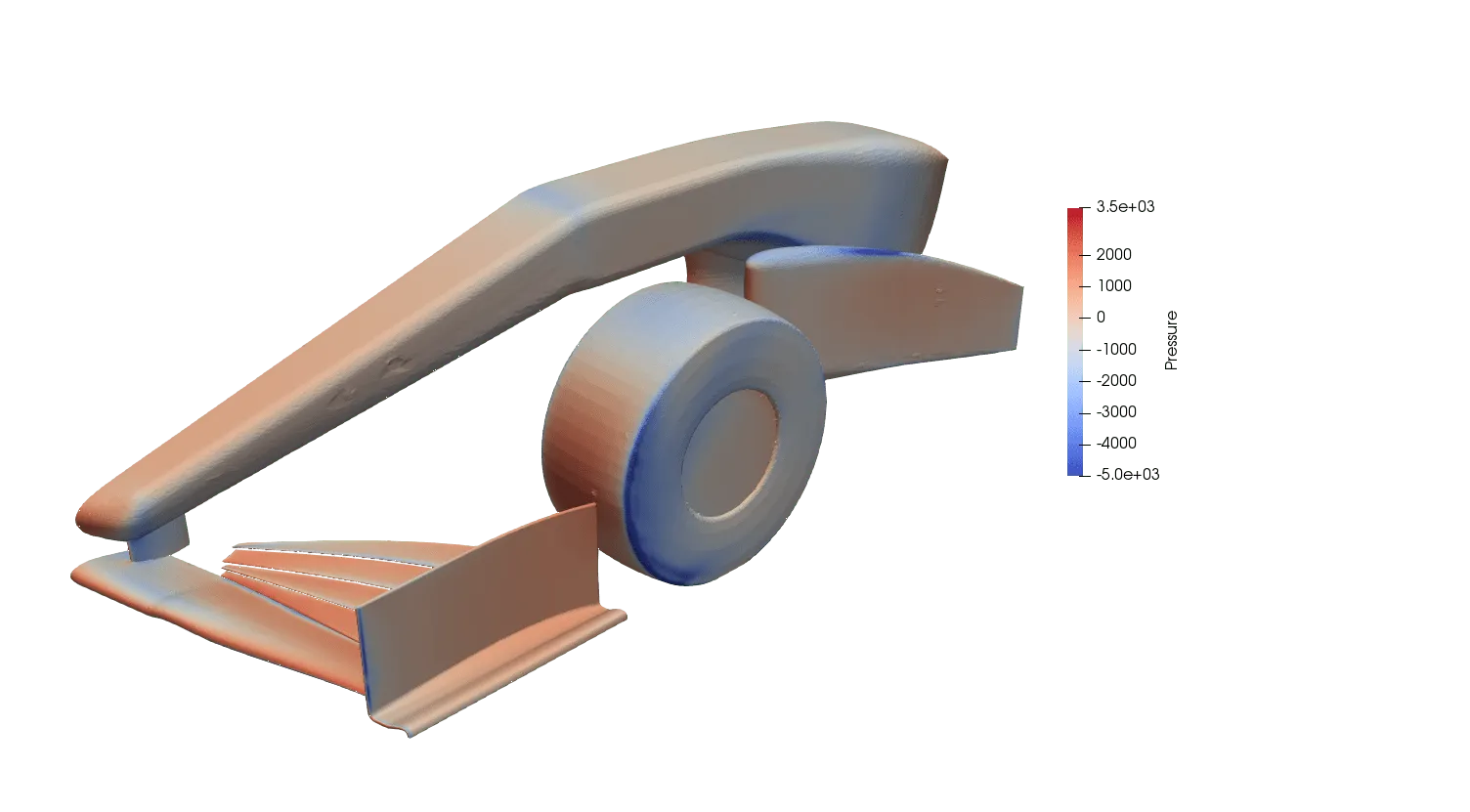
- Computational Fluid Dynamics tools inform trade-offs among flow behavior, heat transfer, and the efficient use of available space.
Tools like CAD and CAE structure the decision space by turning assumptions into measurable outcomes. Teams using simulation-driven design gain the data density needed to make confident decisions earlier and avoid costly late-stage failures compared to previous prototype-and-test cycles.
Limits and the need for new approaches
Modern engineering problems involve high-dimensional design spaces, tight time constraints, and complex system interactions.
In these contexts, traditional simulation becomes a bottleneck for engineering projects:
- Each evaluation can be computationally expensive.
- Exploring many alternatives requires time.
- Decision cycles remain sequential and slow.
Artificial Intelligence can assist by accelerating exploration, approximating simulations, and guiding searches through complex design spaces.
What are the emerging technologies to support engineering decision-making?
AI solutions shift judgments from intuition-based to data-driven, leveraging new technologies such as real-time simulation and predictive modeling.
Maintenance decisions benefit from AI-driven predictive maintenance across industrial assets.
Integrated decision tools
- Building Information Modeling (BIM) and Product Lifecycle Management (PLM) integrate data among stakeholders, breaking down silos to deliver the “digital dividend”: a single, coherent view of the project.
- Augmented Reality (AR) and Virtual Reality (VR) change how users visualize and interact with designs, adding a spatial dimension to decision-making.

- Smart manufacturing with AI brings a data-driven approach to the factory floor. AI enables predictive and prescriptive maintenance by detecting early signs of failure and recommending optimal interventions before breakdowns occur.
Nokia’s research reinforces the importance of integrated decision tools. Processes and machines are now so complex that the risks of live experimentation are too high. Companies are moving forward to proactive management powered by continuous streams of information, using digital environments to improve products and optimize designs before committing any changes to the physical world. ⁽⁷⁾
The transition from simulation to physical world implementation is essential for advancing projects and ensuring informed, strategic decision-making. For instance, deep learning is being applied to heat exchanger design optimization, giving designers faster feedback to support configuration decisions for a key component in most industrial applications.

AI-driven physics-aware modeling and AI Design Copilots
The persistent bottleneck in design is the capacity to evaluate solutions, rather than the supply of them. Products span multiple physics domains, and the design space grows faster than teams can assess through sequential CAD and simulation workflows.
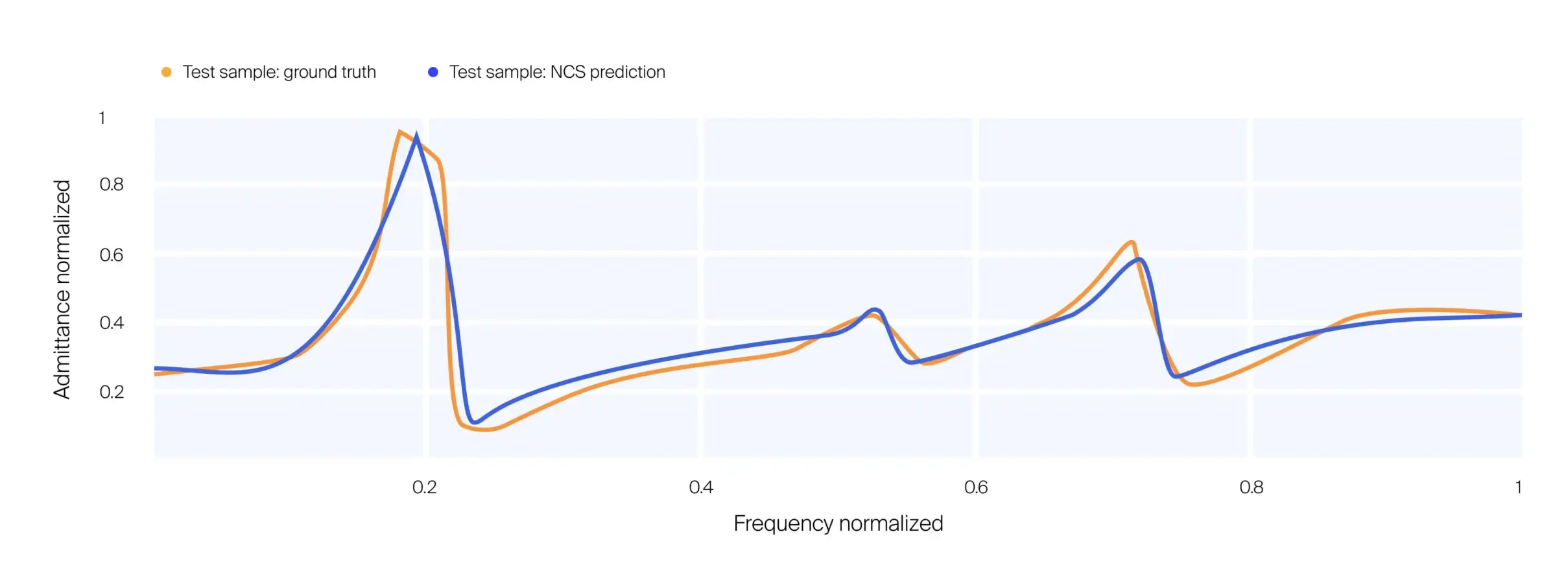
- Physics- and geometry-aware AI addresses the evaluation bottleneck. Deep Learning replaces expensive physics solvers with physics-aware AI prediction models. Those models are data-driven approximations trained on prior simulation runs; their advantage is that they can predict multiphysics performance at a fraction of the computational cost.
- Research published in the Journal of Engineering Design (2025) demonstrated the feasibility of this approach by combining deep reinforcement learning with multi-fidelity surrogate models to navigate design spaces that would be infeasible to explore exhaustively with conventional simulation. ⁽⁸⁾
- General Motors, working on pedestrian crashworthiness with the Neural Concept platform, fed the AI copilot crash-simulation data spanning 11 vehicle programs, regulatory standards, and more than 100 impact locations per vehicle. ⁽⁹⁾
- The objective was to verify that the model could assess key safety metrics for new vehicle designs and produce informed recommendations on design trade-offs.
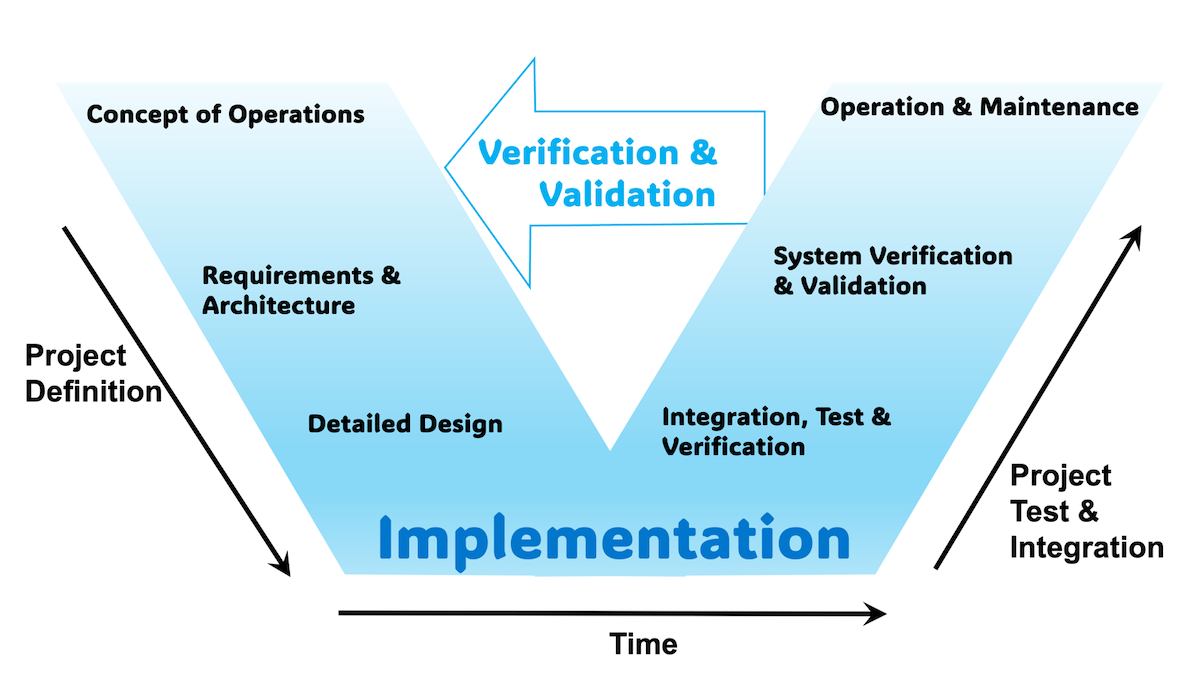
- GM’s engineers confirmed the model captured component interactions. Data-driven workflows and AI copilots restructure the V-cycle into a continuous, cross-functional evaluation loop.
A map of the major fields of AI and their applications helps engineering teams make informed decisions about where to prioritize adoption. Physics- and geometry-aware AI expands the number of alternatives that judgment can consider and grounds decisions in measured performance rather than intuition.
How much faster is physics-aware AI than traditional simulation?
Physics-aware AI compresses the evaluation loop by orders of magnitude. When the wind-engineering firm RWDI integrated a Neural Concept deep-learning model into its Orbital Stack tool, each design iteration fell from ten hours to two minutes, and the cost per iteration dropped tenfold.⁽¹⁰⁾ For a decision-maker, that speed changes the unit of analysis: a structural engineer can compare hundreds of massing and façade options within a single review cycle, so judgment is exercised over a far wider field of validated alternatives than a fixed schedule would otherwise permit.
The RWDI benchmark is, in decision-theoretic terms, a story about collapsing the cost of acquiring information, which raises the amount of evaluation it is rational to perform before committing. Lower the cost of a value estimate, and you change the optimal stopping point of the search, widen exploration of the design space, and shift where on the explore/exploit frontier a rational designer sits.
Careers in engineering decision making
Engineering decision-making is rarely a job title, yet it remains crucial for career growth. Organizations find it hard to hire but reward engineers with domain expertise who understand program decision processes, structure trade-offs, quantify risks, and communicate with leadership. These skills help engineers move from execution to influencing program direction.
Systems and reliability engineers highly value and are well compensated for this skill. A systems engineer manages trade-offs and arbitrates requirements that no AI model can do on its own. Reliability engineers using FMEA or PRA make failure effects clear beforehand, serving as a basis for judgment rather than calculation.
Early-career engineers now need higher judgment from day one as automation replaces traditional analytical learning. Early exposure to decision frameworks, FMEA, and risk analysis is crucial for those governing AI workflows.
Takeaways
- Engineering decision-making involves optimizing towards objectives under constraints and with imperfect information.
- Traditional methods support structured analysis, simulation-based evaluation, and parametric trade-off studies across the design lifecycle.
- Artificial Intelligence automates and alleviates the computational burden of traditional software, boosting engineers’ productivity, enabling them to evaluate more options, and improving decision quality.
Strategic roadmap
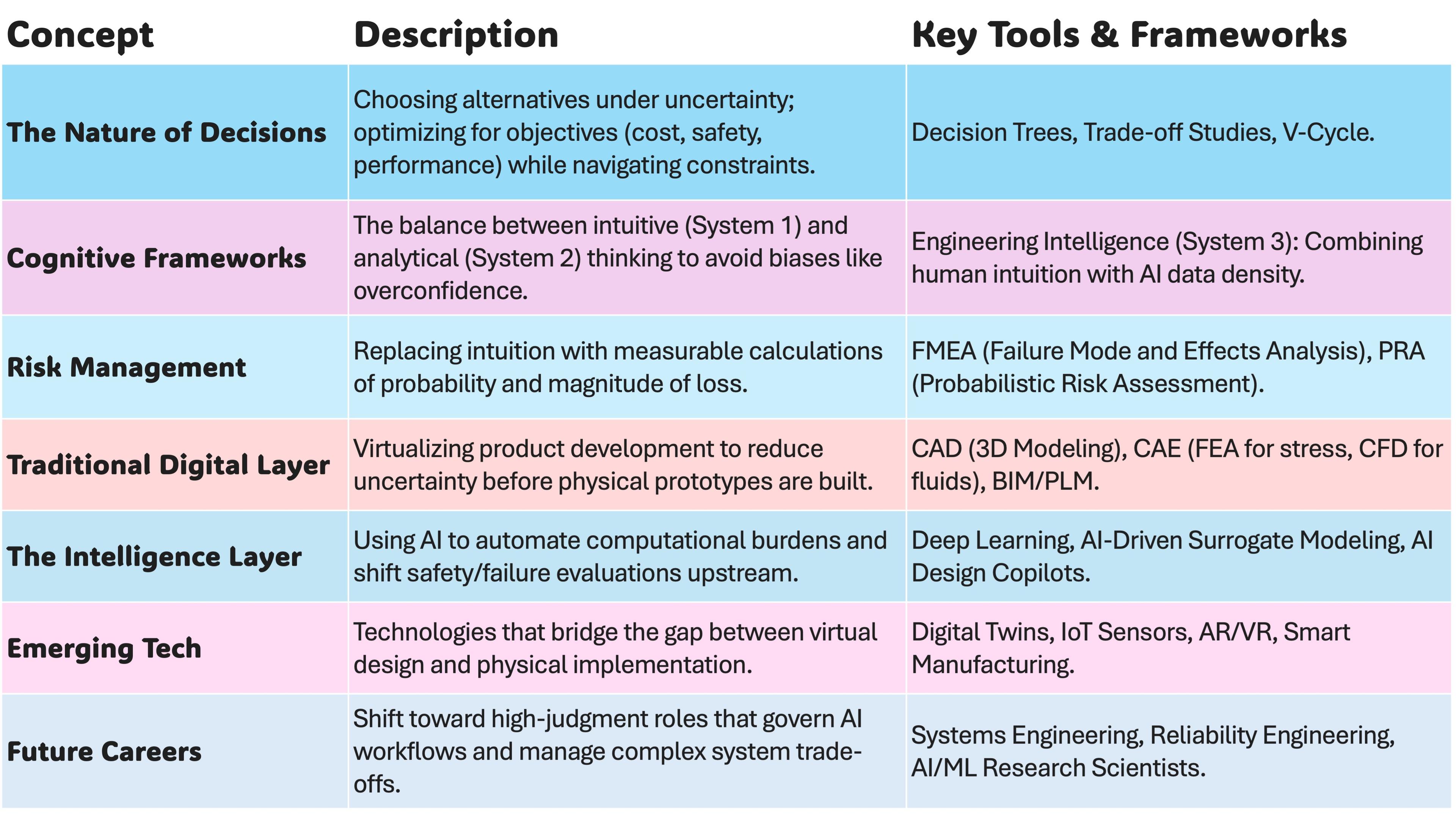
To wrap things up, the following table summarizes how the intersection of human intuition and artificial intelligence is reshaping the landscape of engineering judgment. It serves as a strategic roadmap for professionals navigating the shift from traditional analytical methods to a more integrated, data-driven “Engineering Intelligence”.
FAQ
What makes decision-making so difficult?
Decisions involve complex trade-offs, technological advancements, regulatory considerations, and numerous variables. The quality and availability of datasets can impact outcomes, and the increasing volume of data makes it difficult to extract meaningful insights without structured frameworks. Engineers must navigate competing objectives while managing uncertainty across interconnected systems.
How are AI and machine learning improving the decision-making process?
AI and machine learning can analyze vast datasets to identify patterns that traditional software might miss, leading to more accurate predictions. Engineers are moving toward proactive management powered by continuous data, with AI-enhanced workflows that still require human judgment for validation, ethics, and critical decisions. AI and machine learning are advancing processes in industrial, systems, mechanical, and aerospace engineering by optimizing workflows and enabling faster, more confident choices.
What do digital twins actually do for engineers?
Digital twins allow for the simulation and optimization of designs before implementation, reducing risks and uncertainties in industrial engineering. Connected through IoT sensors and driven by data science, twins enable engineering teams to continuously improve designs in a virtual environment and apply only validated changes to physical infrastructure. Technologies like BIM (Building Information Modeling) further enhance collaboration across complex engineering processes.
How is sustainability changing the engineering decision-making process?
Engineers are prioritizing sustainability in their decision-making processes to reduce environmental impact and leverage renewable sources. New tools enable accurate environmental impact assessments to align with decarbonization goals, and materials science is producing new materials that help teams make sustainable decisions without sacrificing performance. Sustainability is now a central driver of engineering decisions across various sectors. The shift towards renewable energy sources is a global priority for engineers: overall, teams are increasingly prioritizing sustainability in their decision-making processes to reduce environmental impact.
Which engineering careers are growing the fastest?
Younger engineers should consider that computer and information research scientists (the BLS category that covers AI and machine learning engineering roles) are projected to grow 20% from 2024 to 2034. Environmental engineering is projected to grow by 4%, and biomedical engineering by 5%, over the same period. Renewable energy engineering, robotics engineering, and industrial automation engineering are all in rising demand, driven primarily by emerging technologies and the ongoing transition to renewable energy sources. Sustainable engineering careers, such as environmental engineering, are showing growth and attracting top talent. ⁽¹¹⁾⁽¹²⁾
What skills do engineers need to lead in this environment?
Engineers must develop a broader skill set emphasizing systems thinking and the ability to navigate complex trade-offs. Proficiency in data science is becoming standard. Innovations in technology, materials, and processes are reshaping how engineers work, requiring them to continually adapt their skills and decision-making approaches. Engineers will need to integrate AI-enhanced workflows while maintaining human judgment in decision-making, and those who can communicate complex trade-offs clearly to non-engineering decision-makers, including federal government stakeholders and executive leadership, will lead. The future of engineering design will require engineers to work across multiple domains from the earliest stages of the design process.
Is teamwork important?
Collaboration among multidisciplinary teams is essential in addressing complex engineering challenges. Engineering projects often require input from multiple disciplines, including mechanical, electrical, civil, chemical, and more. The reason for a multidisciplinary approach is that engineering decisions are rarely straightforward, as they involve complex trade-offs, technological advancements, regulatory considerations, and numerous variables that complicate decision-making.
Appendix. Sources
(1) U.S. House Committee on Transportation and Infrastructure. Final Committee Report: The Design, Development and Certification of the Boeing 737 MAX. September 2020.
(2) Glende, W.L. (1997). “The Boeing 777: A Look Back.” AGARD-CP-602, NATO. Boeing press release, January 7, 2000 - NATO Publications
(3) Kahneman, D. (2011). Thinking, Fast and Slow. Farrar, Straus and Giroux.
(4) American Society for Quality. “Failure Mode and Effects Analysis (FMEA).” Available at: asq.org/quality-resources/fmea.
(5) University of Cambridge Engineering Design Center
(6) U.S. Nuclear Regulatory Commission (2020): Probabilistic Risk Assessment (PRA)
(7) Nokia (2024): “The ‘twin first’ revolution: Reimagining network operations with digital twins.”
(8) Li, H., Wang, R., Wang, Z., Li, G., Wang, G., & Yan, Y. (2025). Leveraging deep reinforcement learning for design space exploration with multi-fidelity surrogate model. Journal of Engineering Design, 36(5–6), 880–919. https://doi.org/10.1080/09544828.2024.2366686
(9) BusinessWire (March 18 2025). “Neural Concept Demonstrates Engineering AI Platform Integrated with NVIDIA Omniverse Blueprint at NVIDIA GTC, Accelerating Product Development”
(10) Neural Concept customer stories.
(11) U.S. Bureau of Labor Statistics. Occupational Outlook Handbook: Architecture and Engineering Occupations, 2024–34 projections.
(12) U.S. Bureau of Labor Statistics. Occupational Outlook Handbook: Computer and Information Research Scientists, 2024–34 projections.
Appendix. Glossary
- Augmented Reality (AR) / Virtual Reality (VR) overlays spatial data onto the physical environment or immerses users in a simulated environment. Used for visualization, inspection, and conflict detection.
- Building Information Modeling (BIM) creates a unified digital model that combines geometry, materials, scheduling, and stakeholder data, supporting decision-making during the project lifecycle.
- Computational Fluid Dynamics (CFD) solves fluid flow and heat transfer equations over a geometry. Used to assess aerodynamic performance and thermal behavior before physical testing.
- Computer-Aided Design (CAD) enables the creation and modification of 2D and 3D models and serves as the primary tool for documenting and communicating design decisions.
- Decision Trees map decision points, outcomes, and probabilities to evaluate choices under uncertainty and identify high-risk or high-value paths.
- Deep Learning, a form of machine learning, uses neural networks to detect patterns in large datasets and is applied to anomaly detection, structural health monitoring, and crash prediction.
- Digital Twin is a real-time virtual replica of a physical system, updated by sensors to simulate, test, and improve performance before making physical changes.
- Finite Element Analysis (FEA) divides a structure into small elements to approximate stress, strain, deformation, and thermal behavior under specific loads, guiding structural integrity and material choices.
- Generative Design uses AI to generate and evaluate multiple design options based on performance parameters and constraints.
- Internet of Things (IoT) connects sensors and devices to collect real-time operational data, powering digital twins, predictive maintenance, and smart manufacturing.
- Machine Learning enables machines to learn patterns from data, improving performance and supporting predictive analytics, anomaly detection, and risk assessment.
- Product Lifecycle Management (PLM) manages data, processes, and stakeholders from design to end-of-life, integrating engineering, procurement, and operations.
- Smart Manufacturing integrates AI, IoT, and data analytics to improve manufacturing processes and enable predictive maintenance.
- Physics-Aware AI Models approximate complex physics simulations, trained on prior outputs, to predict system performance, thereby enabling rapid, large-scale design exploration. (Referred to as surrogate models in academic literature.)
- V-Cycle structures development in phases from requirements to verification, with AI improving through continuous, iterative evaluation loops.