Changing or adjusting a design costs time and money, which is why building a minimum viable product with core functionality first reduces upfront cost and lets user feedback shape later features. What AI changes is speed: simulation-driven analysis moves teams from early idea to validated solution with fewer physical iterations.
Key takeaways
The MVP approach limits upfront cost and turns user feedback into the roadmap for added features.
AI does not change the economics of design change, it changes how fast a design reaches validation.
Reducing physical iterations is one place AI-driven simulation cuts development cost.
Cost estimation and production planning are covered alongside the development process itself.
Table of contents
Changing a design costs time and money. Adjusting an existing design also carries a cost, for example, when a product needs to be refined or customised. Focusing on developing a Minimum Viable Product (MVP) with core functionalities first reduces upfront costs and allows for user feedback to inform future feature additions.
What is changing with AI acceleration: None of this is surprising. What is changing is the unprecedented speed at which teams can move from an early idea to a validated solution. AI-driven simulations are shifting this balance by accelerating analysis and reducing the need for physical iterations.
Business perspective: Businesses invest significant resources in product development and must carefully track and account for these costs to support financial planning, profitability, and strategic decision-making. Tracking expenses against a detailed budget in real time and performing variance analysis helps identify and address inefficiencies promptly.
Here is how to reduce product development costs, with examples:
Faster Design Iterations. By running thousands of aerodynamic predictions in the time it takes a traditional CFD tool to complete a high-fidelity simulation, AI helps aerospace companies reduce development costs. For instance, in an aerospace use case, a speedup of ~10,000 times was achieved.
Early Problem Detection. Automotive companies have reported a significant reduction in development time (up to 30% shorter design cycles) and $20 million in savings on 100,000-unit vehicle programs – thanks to the application of an enterprise-ready AI platform.
Resource Efficiency. Using fewer physical prototypes and reducing trial-and-error shortens development timelines. This has always been a key advantage of numerical analysis in CAE. Now, it is even more pronounced with AI.
Improved Decision-Making. Real-time AI feedback on design alternatives leads to a more effective allocation of engineering effort.
Design-to-Cost (DTC). Integrating cost considerations into the design phase enables greater savings and ensures that financial constraints are addressed early in the process.
The following table provides a sense of the scale of development costs across various industries:
Most programs still lose 30-50% of their engineering budgets to changes after the design freeze is implemented. An AI tool can replace multi-day CFD and FEA runs with predictions in the millisecond range, potentially moving development costs from reactive to predictive. In practice, catching design flaws during early stages is far less expensive than fixing them after production has begun.
To know more, explore the full guide:
What is Product Development?
Conceptual Models in Product Development
The Booz, Allen & Hamilton Model
Automotive Product Development
What Is Market Research?
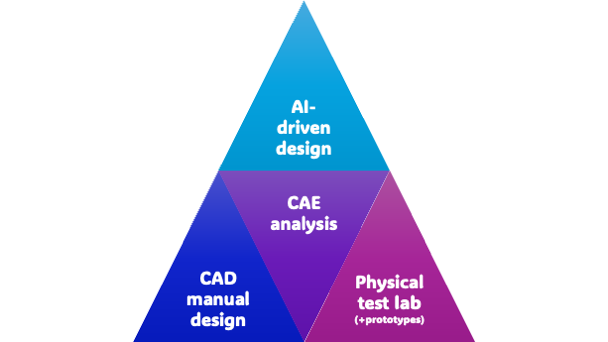
Design Method: Traditional CAD Workflow and AI Optimisation
Automotive Product Development and the V-Model
Automotive Product Development Costs
Understanding Development Costs
Product Development Costs in the Income Statement
Key Cost Drivers in Product Development
Examples of Development Costs
How Does Research and Development Affect Costs?
Key Concerns in Managing R&D Costs
Cost Estimation
AI Cost Estimation Tools
What Are the Key Components of the Development Process?
Mechanical Engineering
Product Design
Impact of AI-Based Design Tools
AI-Based Design Success Story
Optimizing Production Planning and Costs
How Does AI-Driven Production Planning Work?
What are Scenario Analysis and Risk Management?
Quick Takeaway – Where Does AI Deliver the Strongest Returns?
What is Product Development?
Product development (PD) encompasses the entire journey from initial idea to production.
The process integrates design, engineering, and validation within technical objectives and financial constraints, with the ultimate goal of generating revenue for the company while meeting user needs.
Researching customer needs is a foundational step in product development. It informs design and engineering decisions to ensure the final product aligns with user expectations.
A central aspect in creating a new product or upgrading an existing one is product design (PD). Learn more about the key stages of PD and product designers’ careers.
In PD, AI can help accelerate design iterations and uncover cost drivers earlier, thereby enabling teams to improve efficiency. Learn more about redefining the engineering experience.
Conceptual Models in Product Development
Conceptual models help teams understand the nature of the innovation they aim to deliver. Models clarify where investments should concentrate to avoid unnecessary costs in the later stages of the process.
The Booz, Allen & Hamilton Model
The Booz Allen & Hamilton model (see “New Products Management for the 1980s,” Indiana University, 1982) provides one of the earliest structured methods for developing new products. It introduces categories of innovation and supports modern AI-driven optimisation, especially in the early phase, when AI determines many of the costs incurred later.
Direct link between resources and future economic benefit: The framework clarifies the relationship between financial resources and the economic benefits expected from each innovation category. It helps teams understand the project’s scope and ambition.
A new drug initiative highlights the value of the Booz, Allen & Hamilton model: Teams face uncertainty about how many units the market will adopt, which creates pressure on cost control.Clinical trials represent a major portion of development costs in pharmaceutical projects and may be capitalized if they demonstrate probable future economic benefits. AI tools such as simulation, predictive modeling, and automated search help reduce that uncertainty and validate early design choices before significant investment begins
A focus on the progression toward the final product: The model maps the journey from concept to final product, revealing where inefficiencies typically occur. Other third parties often introduce delays or fragmentation. AI identifies these issues early and improves coordination.
Continuous mechanism for cost reduction: AI-supported quality control stabilises performance and lowers cumulative expenses by detecting errors earlier in the cycle. Manual checks become less frequent, reducing waste and improving overall efficiency.
A strategic reference for aligning AI with business goals: The framework provides a clear anchor for determining whether the team aims for breakthrough innovation or a cost-reduced version of an existing product. It clarifies the type of value pursued and shows where AI delivers the strongest economic leverage relative to the costs incurred.
Automotive Product Development
Automotive product development sits at the centre of modern industrial engineering because it concentrates some of the most demanding technical, regulatory, and economic challenges of any sector.
This complexity makes the industry a benchmark for structured development models, rigorous quality processes, and advanced design methods.
AI tools are thus utilized in product development to maximize the efficiency of engineering workflows, centralize the design process, predict potential budget issues early, and deliver dramatic cost savings, especially in complex, simulation-driven industries.
What Is Market Research?
In the automotive sector, market research involves gathering and analyzing information about customer needs, preferences, and trends to inform product development decisions. It helps companies understand the market, anticipate demand, and prioritise features that deliver the most value.
Idea: Identify what customers want and where unmet needs exist. Generate data-driven hypotheses about feature combinations, pricing, and adoption patterns.
Idea > Create: Develop survey instruments, focus groups, and prototype concepts to explore these needs. Build models and simulations to explore different product configurations and market responses.
Create > Test: Collect feedback on concepts, evaluate interest, and refine insights before full-scale development. Validate assumptions against historical data, pilot launches, or small-scale trials to ensure accuracy and reliability.
In parallel with these activities, effective marketing strategies are essential for promoting and adopting new automotive products, as they play a crucial role in shaping the diffusion and acceptance of innovations in the market.
For instance, a study used AI to predict how “appealing” a new car design will be to consumers based on images, thereby implementing AI in product aesthetic design.
Design Method: Traditional CAD Workflow and AI Optimisation
Traditional CAD workflows in the automotive industry involved sequential steps:
(1) design
(2) simulate later, and
(3) discover cost issues – last.
In contrast to the sequential step, AI can analyze project data and simulate design alternatives throughout development, often instantly, collapsing the timeline so phases (1)–(3) coincide.
For instance, iìnstead of waiting days for CFD or crash simulation results, engineering teams can evaluate hundreds of design variants per day.
Automotive Product Development and the V-Model
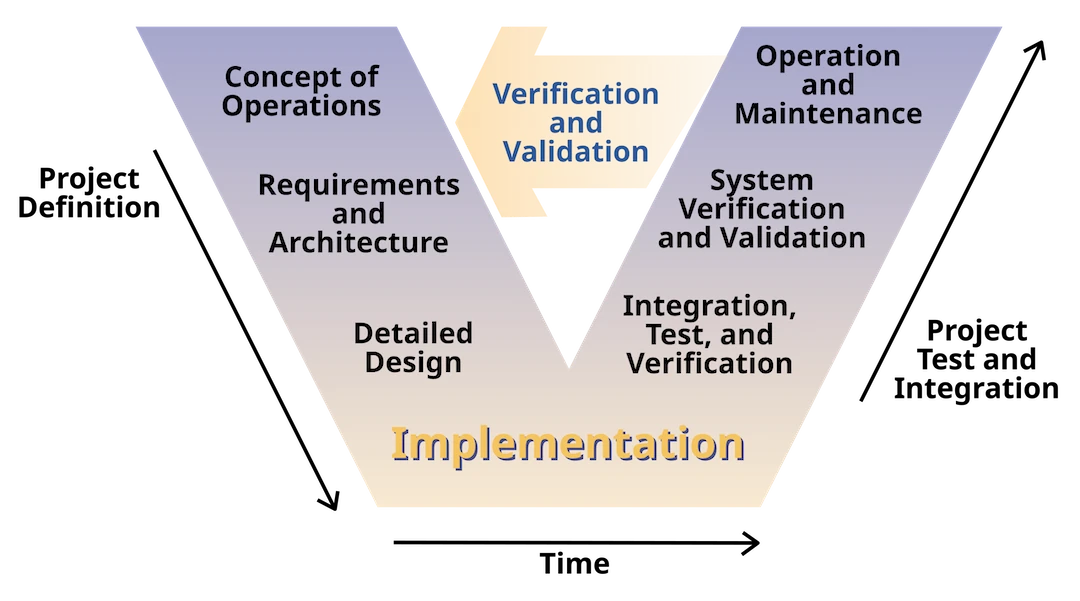
Major automotive OEMs commonly use the V-Model systems-engineering framework to map and align their standard product lifecycle with established engineering processes.
The V-Model impacts R&D costs by facilitating early requirements definition, structuring design and verification activities, and reducing late-stage rework, resulting in more predictable, cost-efficient product development.
Automotive Product Development Costs
Here are some reliable data points specific to the automotive industry:
According to a Bain & Company report, traditional OEMs often take 48–54 months to develop a new model, and some new-entrant OEMs spend as little as ~27% of what the large German OEMs do.
According to Strategy&, the “concept to series‐development” phases account for ~77 % of the cost for the 20 largest OEMs worldwide. See the report on digital automotive R&D.
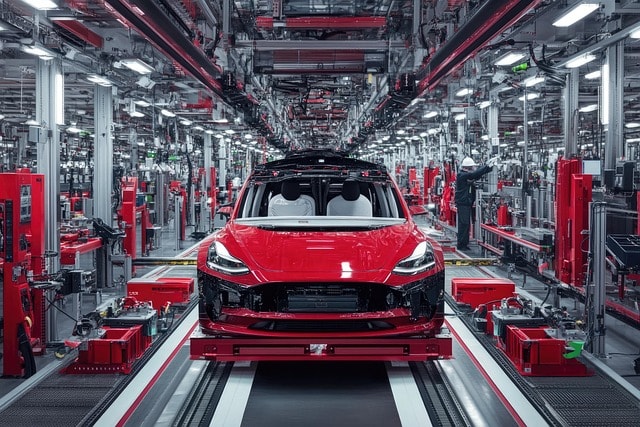
Developing a new car model (end-to-end) costs between US$500 million and over US$1 billion.
Recent (2025) data from the Chinese automarket report that in Q1/2025, BYD’s research and development expenditure for the quarter was US$2 billion, exceeding its net profit.
Given the sector’s scale, here is an illustration adapted for automotive product development stages with cost ranges:
Stage
Cost Range (USD)
Key Considerations
1. Concept Development & Research
$50 M – $200 M
Market research, styling, early feasibility, new platform studies
2. Design & Engineering
$100 M – $400 M
CAD modelling, system integration (powertrain, electronics), and validating suppliers
3. Prototyping
$20 M – $100 M
Building functional prototypes, hardware validation, and multiple iterations
4. Testing & Refinement
$30 M – $150 M
Crash, durability, emissions, certification
5. Manufacturing Setup
$200 M – $600 M+
New assembly line, stamping tools, dies, robots, supply chain ramp-up
6. Initial Production Run
Varies widely
Launch volumes, marketing support, warranty contingencies, and global roll-out
Understanding Development Costs
Development costs encompass all expenses necessary to bring a product from idea to commercial production. The total cost varies depending on the project.
Product Development Costs in the Income Statement
Accurately estimating costs during the product development process is crucial, as it presents challenges that can significantly impact budgeting and decision-making.
Product development costs refer to the resources allocated for designing, engineering, and preparing a product for market.
AI tools can assist finance teams in tracking and categorizing development expenses, identifying cost drivers, and improving forecast accuracy.
For example, machine learning models can analyze thousands of past projects to predict which categories are likely to exceed budget.
How costs are recorded affects financial reporting and decision-making:
Operating expenses (OPEX): Most development costs are reported as OPEX when they do not meet capitalization requirements. Examples include labor or prototyping. These costs reduce current-period profits and appear on the income statement immediately.
Capitalized costs (CAPEX): Costs, such as software development for internal use or prototypes that demonstrate technical feasibility and commercial viability, may be capitalized as assets. Capitalized development costs are recorded as assets on the balance sheet and can affect the company’s overall financial position. Capitalized items are amortized by spreading the expense over a series of periods.
Impact on budgets: Proper classification of development costs helps managers track spending, control budgets, and assess project profitability. For instance, capitalizing development costs can improve short-term profitability metrics, but requires justification under accounting standards.
Industry variations: High-tech, pharmaceutical, and aerospace companies often shoulder more development costs due to their long product lifecycles and stringent regulations. In contrast, consumer products typically incur upfront costs due to shorter lifecycles and higher uncertainty.
Key Cost Drivers in Product Development
Understanding what drives development costs allows companies to make strategic trade-offs early in the process.
Key cost drivers include:
Intangible assets, including patents and licensing fees, should be included in the total development cost. For example, licensing a patented manufacturing process might cost $100,000 upfront but save $500,000 in R&D by avoiding redundant research.
Product costs due to labor are influenced by geography and the level of specialization. Hiring experienced mechanical engineers in Silicon Valley may cost $200+ per hour (sources: CSG Engineering Division – San Francisco / Bay Area; PCBAPros), while equivalent expertise in Eastern Europe may cost $50-60 (sources: Evozon; Zupyak).
Utilization of off-the-shelf parts: Leveraging existing designs can reduce costs and shorten the development cycle. A consumer electronics company might save by adapting an existing circuit board design rather than creating one from scratch, a common strategy in electronics product development to reduce costs and accelerate hardware integration.
Mechanical Engineering and Design Complexity: More intricate designs or high-precision requirements increase both labor and prototyping effort.
Regulatory Approvals: Certifications and compliance verification add effort. For example, CE marking for many consumer products might require an investment of $20,000 and a few months.
Examples of Development Costs
Development costs accumulate across multiple stages.
These examples illustrate how costs at each stage accumulate:
Ideation and design: The initial idea for the new product typically involves software licenses (e.g., SolidWorks, AutoCAD), which usually cost $10,000-$ 50,000 for simple new products.
Mechanical Engineering involves detailed design, structural analysis, tolerance studies, and design-for-production reviews. Costs range from $50,000 for simple components and assemblies (such as small mechanisms, brackets, and fixtures) to over $5 million for complex systems, including automotive powertrains.
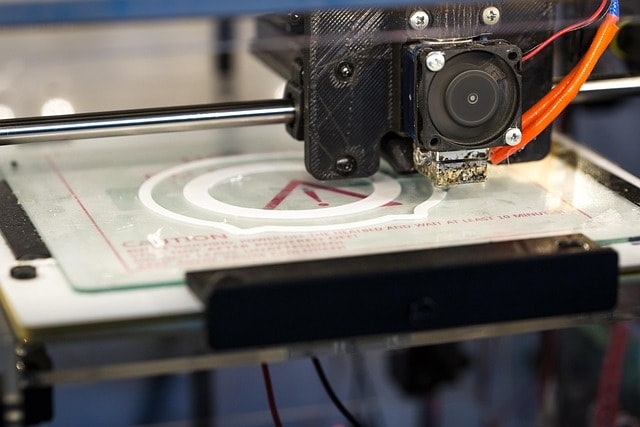
Prototyping: Building functional samples for performance and fit evaluation. Early-stage versions often rely on 3D printing, while later iterations may require CNC machining or injection molding. The cost depends on the geometry, materials, tolerances, and required fidelity. Prototyping costs can vary significantly, typically starting at $5,000 per iteration and reaching $250,000 or more for complex prototypes.
Validation and Certification: Before entering the market, new products undergo verification to ensure safety, electromagnetic compatibility, environmental compliance, and adherence to other relevant standards.
Production Setup: This includes tooling, molds, test benches, and assembly line preparation. High-volume output demands substantial initial investment, which is later distributed across all produced units.
Distribution and Shipping: Covers transportation, warehousing, packaging design, and fulfillment logistics.
Given this accumulation, an accurate estimation is crucial for maintaining budget control throughout the development process.
How Does Research and Development Affect Costs?
R&D is crucial to development. It fosters innovation, but it also consumes resources ranging from software and hardware to prototypes and energy to power tests.
R&D includes feasibility studies, concept evaluation, and prototyping.
The key is striking a balance between thorough research and budget constraints:
Overinvestment delays market entry
Underinvestment risks costly failures
Utilizing existing knowledge and off-the-shelf components reduces R&D costs by leveraging proven designs and established supply chains, thereby enhancing efficiency and minimizing costs. Thus, risk is minimized.
For example, in an optics project, one team used off-the-shelf lenses instead of custom optics, reducing costs by approximately 60%, cutting the design time from 18 to 8 months, and accelerating iterations with customer feedback. The trade-off was a slightly lower optical performance for a significantly lower cost and a faster time-to-market.
AI tools analyze datasets to identify patterns and predict outcomes, including the number of units that can be effectively produced. An “AI-first” approach reduces time and costs by minimizing trial-and-error and accelerating product development or optimization.
Key Concerns in Managing R&D Costs
Key concerns in managing R&D costs include optimizing the allocation of financial resources.
Intangible Assets: Intellectual property, patents, and licensing fees should be incorporated into the R&D budget from the start. Choosing between licensing existing technology and developing proprietary solutions calls for a detailed financial and strategic assessment.
Utilization of Existing Components: Reapplying validated subassemblies, standard parts, or legacy designs can reduce development expenditures and shorten project timelines while maintaining quality standards.
Engineering and Design Complexity: Highly detailed geometries or tight tolerances raise labor hours, prototyping requirements, and tooling investment.
Regulatory Approvals: Certifications and compliance impose financial and time demands, particularly in regulated industries.
Planning and tracking across these areas help companies make informed decisions about where to invest R&D effort to achieve the highest return.
Cost Estimation
Companies should consider making informed decisions about :
Components: Prices vary by order quantity and applicable discounts.
Labor: Depends on skill level, location, and hours required for design, prototyping, and validation.
Existing Components: Reuse validated parts or prior designs to reduce effort and resources.
Engineering: The Complexity of assemblies, tolerances, and verification requirements affects tooling, simulation, and validation activities.
Production Volume: Determine the number of units that can be produced; low-volume production results in higher per-unit resource requirements due to limited economies of scale
Capitalized development costs are typically amortized over their useful life, which represents the expected period of future economic benefits derived from the product.
AI Cost Estimation Tools
AI-powered cost estimation tools can leverage historical data, supplier databases, and predictive models to enhance accuracy and precision.
For instance, Carrier implemented a cost-modeling software tool that uses historical data to estimate manufacturing costs. The system analyzes CAD models, compares them to similar past projects, and simulates various manufacturing processes to determine the most cost-effective approach.
What Are the Key Components of the Development Process?
These groups typically work sequentially, discovering conflicts only after significant time and money have been invested:
Mechanical engineers optimize for strength.
Manufacturing engineering optimizes for producibility.
Procurement optimizes for cost.
AI-powered workflows break silos by simultaneously simulating mechanical performance, manufacturing constraints, and cost implications.
Generative design and AI-assisted CAD tools propose thousands of configurations balancing cost, weight, and strength.
When integrated with simulations, AI can flag over-engineered areas, suggest lighter designs, and predict manufacturability risks early in the process.
Traditional Vs. AI Approaches
The traditional approach for a new product is often sequential: iterate > negotiate > compromise,
The AI approach involves finding a Pareto frontier, where all constraints are optimized simultaneously.
Key considerations include:
Materials, labor, and software: Estimate expenses for prototypes, design software licenses, and engineering hours. A typical design phase might involve thousands of engineering hours, software licenses, and prototype materials.
Accounting treatment for design engineering: Determine which expenditures can be capitalized and which must be expensed to ensure accurate budget management.
Cost-effective solutions: Select design techniques that minimize material use, streamline assembly, or reduce prototype cycles while maintaining product functionality and performance. For example, creating snap-fit assemblies rather than screwed joints can eliminate fasteners, cut assembly time by 30-50%, and reduce manufacturing costs.
Impact of AI-Based Design Tools
AI design tools evaluate options, reducing the need for prototypes and waste while effectively managing costs. They highlight low-cost alternatives upfront, avoiding costly revisions.
For example, Neural Concept’s AI CAD reduces design iteration from hours to minutes by leveraging deep-learning emulators of CFD and FEA that train neural networks on thousands of simulations to predict the impact of design changes on performance metrics.
AI-Based Design Success Story
One case involved a company and a major aerospace OEM utilizing the platform for real-time external aerodynamics simulation, delivering results in 30 milliseconds, compared to the hours typically required by traditional CFD.
Having a 10,000x faster process enabled the team to explore hundreds of design options in a single day, leading to early fuel savings before costly tooling was required. Testing more variations early prevented redesigns at the end, resulting in a 15% reduction in development costs and improved product performance.
Beyond the design phase, companies should focus on managing costs in production planning and related services to control expenses and maximize returns on their development investment. AI analytics can guide companies in making better production decisions while optimizing financial resources by modeling cost implications and determining optimal manufacturing quantities.
How Does AI-Driven Production Planning Work?
AI forecasts demand by SKU using historical data and generates production plans that help companies make informed decisions about production and inventory. For instance, at Svanehøj (Denmark), machine‑learning forecasting software outperformed traditional methods in inventory planning (Ref. Appl. Sci. 2023, 13(15), 8581), reducing excess stock and associated costs while improving schedule reliability.
By dynamically balancing supply and priorities, it lowers inventory-related costs and enhances delivery performance.
What are Scenario Analysis and Risk Management?
Scenario analysis is the process of evaluating how different hypothetical situations impact production plans and overall operations. Risk management is the systematic identification, assessment, and mitigation of potential issues that could disrupt production, increase costs, or reduce service levels.
Scenario analysis helps identify vulnerabilities and test the robustness of schedules under varying conditions. Risk management encompasses strategies designed to reduce the likelihood or severity of adverse events.
The contribution of AI to scenario analysis and risk management is manifold:
Simulation of multiple scenarios: AI can model thousands of “what-if” situations to evaluate impacts on production, inventory, and delivery.
Predictive risk detection: Machine learning identifies patterns that signal potential delays, quality issues, or supply bottlenecks before they occur.
Dynamic response planning: AI recommends adjustments in resource allocation or inventory levels to minimise the effect of disruptions.
Continuous improvement: AI systems learn from past events to refine future risk forecasts and scenario evaluations.
Quick Takeaway – Where Does AI Deliver the Strongest Returns?
The competitive landscape has already shifted. Early adopters in aerospace and automotive have moved beyond asking whether to integrate AI into their development workflows. They are now focused on scaling these capabilities across all programs. For engineering-led organizations facing tighter margins and shorter market windows, the question is increasingly about timing and implementation strategy rather than whether to adopt at all.
In summary:
The integration of AI-driven simulation and optimization tools has moved from experimental to essential in high-stakes development activities.
By compressing design iteration cycles, corporations in the automotive, aerospace, and other sectors consistently achieve reductions of 10-30% in development costs and time.
These savings amount to tens of millions of $/€ in expenses for typical programs.
For engineering-led organizations facing tighter margins and shorter market windows, adopting these capabilities is becoming more than a competitive advantage: it is a vital requirement for financial viability.
The strongest AI returns are in projects that involve:
High simulation intensity: Multiple CFD, FEA, or crash analysis cycles
Long development timelines: 12+ month programs with compounding costs
Tight performance margins: small improvements justify development investment
Physical prototype constraints: Limited budget or time for real-world testing
Source: Author
FAQ
Are product development costs capitalized?
Development costs may be capitalized when they are expected to generate future economic benefits; otherwise, they are expensed.
How can companies reduce product development costs?
Utilizing off-the-shelf components, selecting cost-effective materials, conducting early-stage testing, and accounting for regional cost differentials all help control expenses.
What are the main components of product development costs?
Key components include R&D, engineering design, prototyping, regulatory approval, manufacturing setup, distribution, and related services.
Which software tools help estimate expenses?
Estimation platforms, project management tools, CAD systems, AI-driven analytics, and third-party collaboration environments improve visibility and control.
Can a prototyping strategy affect overall resources?
Yes. Early rapid prototyping of a new product reduces design errors and expensive rework later, leveraging the expertise of experienced teams and offering greater value than late-stage or full-scale prototypes.
How do material choices impact project execution?
Using rare or specialized materials increases effort and may require unique manufacturing, while standardized or locally available materials simplify processes and reduce complexity.