Breaking Down Silos in Engineering Design Teams with AI
Engineering organizations are becoming more complex, not less. Yet most companies still operate with siloed teams. The term “silo” originally refers to a tall structure on a farm used to store grain securely, keeping it separated from the outside environment, much like how information is kept within departments in organizations. These are isolated toolchains and a legacy organizational structure. Silos slow decisions, inflate development costs, and dilute accountability without a unified vision.
Research from Gartner⁽¹⁾ indicates that insufficient data, a direct result of silos, costs organizations an average of $12.9 million annually.
PwC⁽²⁾ estimates that team members lose 350 hours per year to silo-driven inefficiencies.
AI is changing the equation by learning directly from historical engineering data.
With a shared layer of accessible intelligence, AI systems create common, actionable knowledge at all levels of design, simulation, and manufacturing.
The benefits of AI consist of:
- unifying information flows
- accelerating early trade studies
- reducing reduplication and related effort
- Providing individual departments with a common technical baseline rather than going their own way with parallel interpretations of the same product.
The organizations that win in the next decade will be those that treat engineering data as an integrated asset to work collaboratively. Winning organizations will use AI to reveal where expertise resides and which interdependencies truly shape performance.
A success story shows that Woodward⁽³⁾ faced this challenge when data silos made their testing processes error-prone and threatened operational stability in the aerospace industry. After implementing an AI platform to centralize test data, Woodward achieved a 30% reduction in manual testing effort and gained the ability to intervene early and identify failures before production.
Read on for more details:
- From the Industrial Revolution to Complex Engineering Programs
- Why do Engineering Organizations Naturally Fragment?
- Pre AI Software Tools: CAD, CAE, PLM, SLM
- How Does AI Work?
- What AI Adds to Engineering Design Teams
- Breaking Down Organizational Silos with AI-Enabled Engineering Workflows
- Effective Communication Strategies
- Engineering Simulation for All
- What is the Best Way to Sustain an Integrated Organizational Structure?
- Measuring Whether Organizational Silos Are Actually Reduced
From the Industrial Revolution to Complex Engineering Programs
This article explains how engineering silos formed, how pre-AI tools shaped current workflows, how AI works with geometric and physics-based data, and how companies can deploy AI-enabled collaboration to improve performance across the entire product lifecycle.
Engineering design moved from craft-level work to large coordinated systems during the 20th century. Several programs shaped how different teams collaborate today. We will provide examples of how engineering teams evolved into large, specialized structures to understand how departmental silos form.

Ford and Assembly Line Engineering
Ford’s early mass production required coordinated work between tooling specialists, product designers, manufacturing engineers, and quality teams. Parts lists, process sheets, and early configuration practices created the first structured handoffs between departments.
Learn more about the modern application of AI to automotive development with the Subaru experience.
The Manhattan Project
The Manhattan Project involved thousands of engineers and scientists across physics, chemistry, metallurgy, ordnance, and systems integration. Institutional factors included formal memos, controlled documents, structured reviews, and central information management. These practices intensified the departmental silos of specialist groups and created controlled integration points.

Boeing and the Aerospace Expansion
Programs such as the B-52, 707, and 747 involved thousands of engineers across aerodynamics, stress analysis, materials, systems engineering, propulsion, and manufacturing. Different departments at Boeing coordinated design reviews, standardized platforms, and shared documentation. These practices spread across the entire company and became the template for modern aerospace engineering organizational structures.
Modern aircraft generate up to 1 TB of data per day. Still, when this information remains trapped in separate departments, optimization opportunities are lost.
NASA Apollo
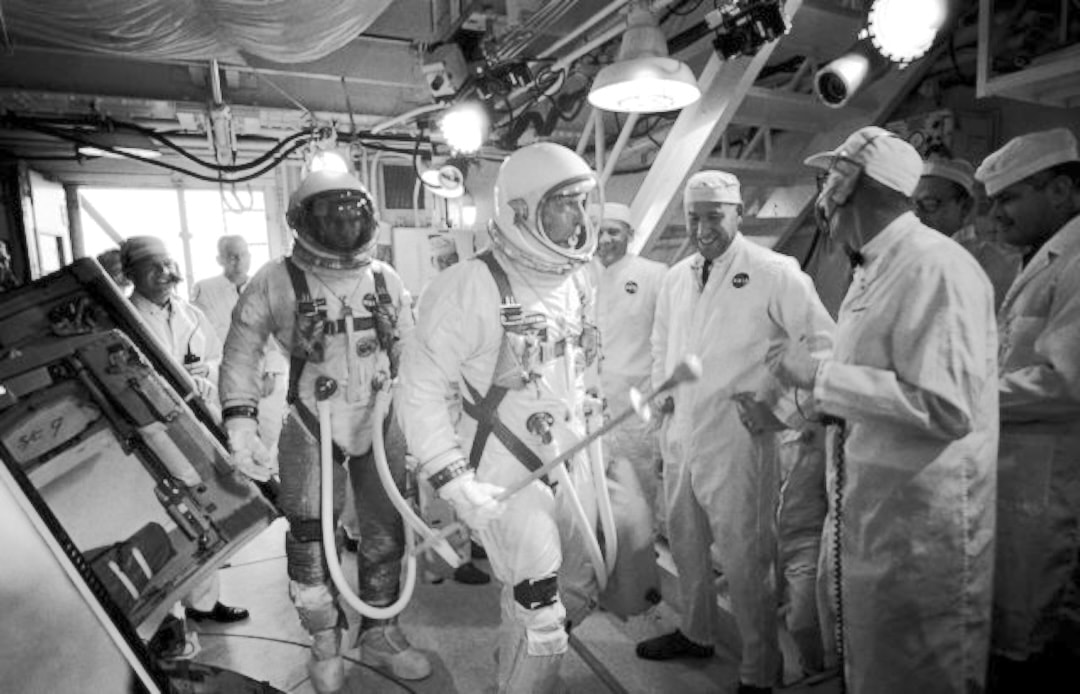
Apollo introduced systems engineering as a formal discipline. It relied on PDR and CDR reviews, structured verification flows, and a leadership guiding hundreds of interconnected engineering disciplines with a unified vision. Modern PLM and SLM approaches (see later in the article) draw heavily from this period.
These historic programs show the origins of formal departmental silos, silo mentality, and departmental goals. They also show why engineering teams still rely on specialist roles, controlled interfaces, and handoffs.
Why do Engineering Organizations Naturally Fragment?
Ron Ashkenas, author of multiple Harvard Business Review articles on breaking down silos⁽⁴⁾, has noted that “working in silos represents a natural human tendency toward tribal organization”.
Anthropologist and financial journalist Gillian Tett explains in her book The Silo Effect⁽⁵⁾: “The paradox of the modern age, I realised, is that we live in a world that is closely integrated in some ways, but fragmented in others.”
So even with teamwork incentives, there is a natural tendency to build up silos.
Employees naturally group with colleagues who share similar skills and tasks. This leads to silo formation. An organizational culture can either reinforce silo mentalities by encouraging departmental isolation or mitigate them. The most effective way to mitigate silo mentality is to promote shared goals and open communication across teams.
How Do Silos Arise in Engineering?
Engineering silos typically form when departments optimize their own goals rather than the organization’s overall goals. Organizational silos are self-contained teams or departments that operate independently, with their own objectives and communication channels. For instance, members of the mechanical, electrical, and software teams often operate independently, using their own tools and processes. This reinforces a silo mentality.
Why do silos form? Technical complexity encourages specialization, and institutional factors reinforce separation.
Standard “silo drivers” are therefore:
- Distinct CAD or CAE workflows
- Separate documentation and collaboration tools
- Different communication platforms across other departments
- Lack of cross-functional cooperation incentives
- Team members focus on their own objectives rather than the bigger picture
A siloed organization reduces organizational performance, leading to missed opportunities, because:
- duplications grow
- competence gaps emerge
- cross-team collaboration slows down.
Pre AI Software Tools: CAD, CAE, PLM, SLM
Before AI, what programs did engineering teams use, and were these programs helping teams to avoid isolation?
Engineering teams relied on powerful software before AI. Today, tools like CAD, CFD, and FEA remain essential for designing, simulating, and controlling complex products. They digitalized manual work, reduced errors, but never removed organizational boundaries. Each tool addressed a part of the workflow and was mapped directly to a department, leading teams to rely on their own tools.
To prevent silo effects, it is important that communication protocols include all departments, ensuring all teams are coordinated within a unified framework. Mechanical design, simulation, manufacturing, testing, and quality all use separate systems, reducing silos but creating a structure where each team focuses on its own environment.
Cross-training employees can enhance flexibility and collaboration between departments.

CAD (Computer-Aided Design)
Computer-Aided Design (CAD) enables the creation of mathematical 2D/3D models, replacing manual drafting and introducing parametric geometry, feature histories, and assemblies that ensure consistency. Engineers can reuse models, share components, and export for manufacturing or simulation. CAD speeds up iteration and reduces errors, but often stays within the design department.
CAE (Computer Aided Engineering )
Computer Aided Engineering (CAE) predicts product performance by running simulations such as:
- structural analysis
- crash modeling
- durability assessments
- fluid dynamics
- electromagnetics
CAE replaced expensive cycles of physical prototyping, allowing engineers to test hundreds of scenarios before touching real hardware. See the example by Mubea.

CAE models can link to CAD, and advanced solvers capture complex physics long before physical testing begins. Its limitation is cultural as much as technical. High-fidelity simulation experts use highly specialized tools, and the complexity of models means many teams rely on a small group of analysts. CAE is often isolated from fast design cycles.
PLM (Product Lifecycle Management)
Product Lifecycle Management (PLM) serves as the central record for a product, encompassing Bills of Materials, revisions, change notices, drawings, specifications, approvals, and configuration-control documents. It ensures that manufacturing, quality, and supply chain operations use the correct design version, providing organization and traceability for engineering efforts.
Nevertheless, PLM processes can become inflexible, necessitating formal workflows, routing, and approvals that may slow down innovation and reinforce departmental silos, ultimately impeding effective communication. Teams often modify their practices to fit the system rather than adapting the system to their needs.
SLM (Simulation Lifecycle Management)
SLM (Simulation Lifecycle Management) manages CAE workflows, model and test data, versioning, verification, and automation of simulation pipelines. It ties solver runs to design revisions and PLM records, improving traceability and repeatability. Limits: inconsistent data schemas and tool-specific formats often keep simulation results siloed.
How Does AI Work?
AI in engineering learns patterns directly from the digital artifacts produced by CAD, CAE, and testing tools. These artifacts become datasets that neural networks can process numerically once converted to consistent formats.
Geometry Data
STL uses triangular meshes for shape learning but lacks parametric intelligence. STEP and IGES include topology, surfaces, and assembly data for richer geometric training. Native CAD formats like CATPart retain parameters, feature trees, constraints, and design intent, which are valuable for AI understanding. AI converts these files into point clouds, signed distance fields, voxel grids, or graph-based forms.
Simulation and Test Data
AI learns correlations between geometry inputs and physics outputs by building large paired datasets. Simulation results must be exported into structured tables.
- CFD or FEA fields can be exported as CSV containing pressures, temperatures, stresses, displacements, strain energies, or modal shapes.
- Some workflows store structured data in JSON, especially for multi-run design sweeps.
The Learning Process
Machine Learning identifies patterns by optimizing parameters to reduce the error between predictions and known results.
Deep Learning extends this by stacking many layers of nonlinear functions, allowing the system to learn geometric and physical relationships that are too complex for manual feature engineering.
AI for engineering design becomes effective once dozens, hundreds, or thousands of CAD and high-fidelity CAE examples have been used to create a mapping between shapes, parameters, and physical performance.
What AI Adds to Engineering Design Teams
AI brings information flow, speed, and cross-functional understanding.
Engineering teams gain shared visibility by integrating AI models that capture geometry, physics, and past design data, fostering collaboration and enabling teams to work across traditional departmental boundaries.
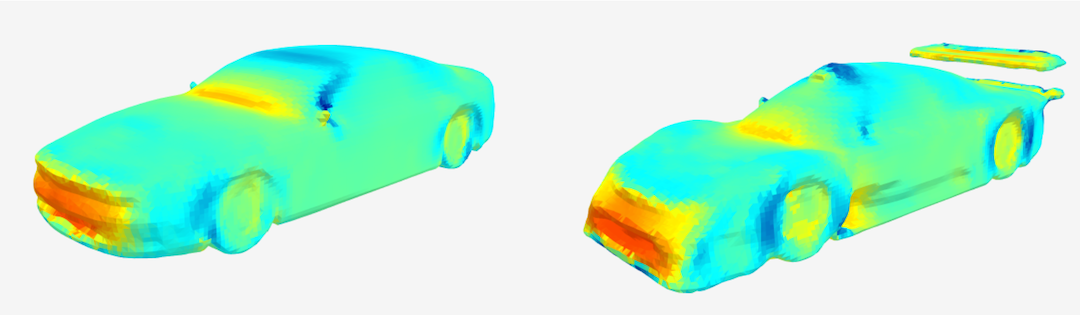
Capabilities such as aerodynamic shape optimization are now available:
- Real-time detection of conflicting requirements, for example, when cooling requirements contradict aerodynamic drag limits
- AI-enhanced design suggestions based on company knowledge, for instance, winglet geometries, leading-edge curvatures, or air-intake profiles that historically delivered the best improvements
- Faster iteration cycles that reduce silo mentality: rapid AI-driven simulations let each discipline see the impact of design changes immediately, eliminating the long waiting times that usually force teams to work separately
- Collaboration tools that recommend relevant data to other team members, reducing the information gaps that usually keep mechanical, aero CFD, aero wind tunnel, thermal, styling, and manufacturing teams disconnected.
- Focus on production value by providing tools for designers and engineers to integrate into their existing workflows, ensuring AI integration with generative models, user interfaces, and post-processing to remove bottlenecks in the design chain.
AI is breaking down silos by enabling other teams to access validated information faster, with fewer handoffs and duplication of effort.
A practical example could be side-to-side collaboration between simulation and design experts.
Breaking Down Organizational Silos with AI-Enabled Engineering Workflows
How teams implement practical AI-based methods.
Engineering professional Laurena Dehlouz advises⁽⁶⁾: “To avoid silos, you need to center your software development around user issues rather than technical ones, so that you encourage the formation of cross-functional teams and most of all, communication.”
1. Unified Leadership Team
Leadership must remove unnecessary competition and align departmental goals with the company’s vision. Strategic planning should clarify how individual teams contribute to the organization as a whole. Leaders encourage teams to share knowledge and reduce friction among specific departments.
The massive gains from Engineering AI are unlocked when a skilled team adopts an “AI-first” mindset, often meaning moving beyond evaluating AI models as mere replacements for traditional solvers and integrating them into decision-making workflows.
2. Continuous Cross-Functional Integration
AI tools map dependencies among mechanical, electrical, software, and manufacturing engineering disciplines. AI helps curb tribal mentality and foster communication. Teams that operate independently can still plug into shared AI-driven workflows.
3. AI-Supported Collaboration Tools
AI integrates with CAD, PLM, and SLM to create a shared understanding. Collaboration tools help team members share information across teams and departments, which ultimately influences how employees feel about their work environment. These tools become a key way to reduce silos.
4. RACI Frameworks Supported by AI
Clear responsibilities reduce turf wars. AI assists team leaders by identifying misaligned ownership, inconsistent documents, and dependency bottlenecks.
5. AI-Based Knowledge Surfaces
AI identifies when the organization stores fragmented data. It alerts one department if other team members have already solved a similar problem. AI improves communication and reduces siloed goals.
Effective Communication Strategies
Effective communication is the backbone of any successful organization, especially in breaking down organizational silos and strengthening its ability to innovate and respond to new challenges.
By prioritizing effective communication, organizations can create an environment where teams work collaboratively, share knowledge freely, and collectively drive toward unified success.
Here’s how:
- Establish Clear Communication Channels: Define and standardize the primary communication platforms and protocols across the entire organization. Ensuring everyone knows where and how to share information helps prevent important details from getting lost within individual teams.
- Encourage Regular Cross-Team Interactions: Schedule recurring meetings or stand-ups that bring together members from different departments. These sessions provide a forum for sharing progress and surfacing challenges. This identifies opportunities for collaboration. Cross-functional updates help teams see how their work contributes to the bigger picture and the company’s broader mission.
- Leverage Digital Collaboration Tools: Adopt organization-wide collaboration tools that allow teams to document, track, and share knowledge in real time. Various platforms make it easy for team members to access information from other departments.
- Promote a Culture of Open Feedback: Encourage team members to ask questions, offer suggestions, and provide constructive feedback across departmental lines. Leadership teams should model transparency and recognize employees who actively share knowledge and support other teams.
- Align Communication with Organizational Goals: Ensure that all communication reinforces the company vision and strategic objectives. When teams understand how their work fits into the organization’s culture and goals, they are more likely to collaborate and break down barriers.
Engineering Simulation for All
AI democratizes physics-based prediction and reduces silos.
Simulation used to be the domain of experts. AI makes it accessible to team members in different teams who do not run full CAE pipelines.
The separation between “simulation” and “design” departments dates back to when simulations were complex and specialized. AI-powered simulation brings the simulation expert closer to the design process, integrating the role and breaking down historical silos.
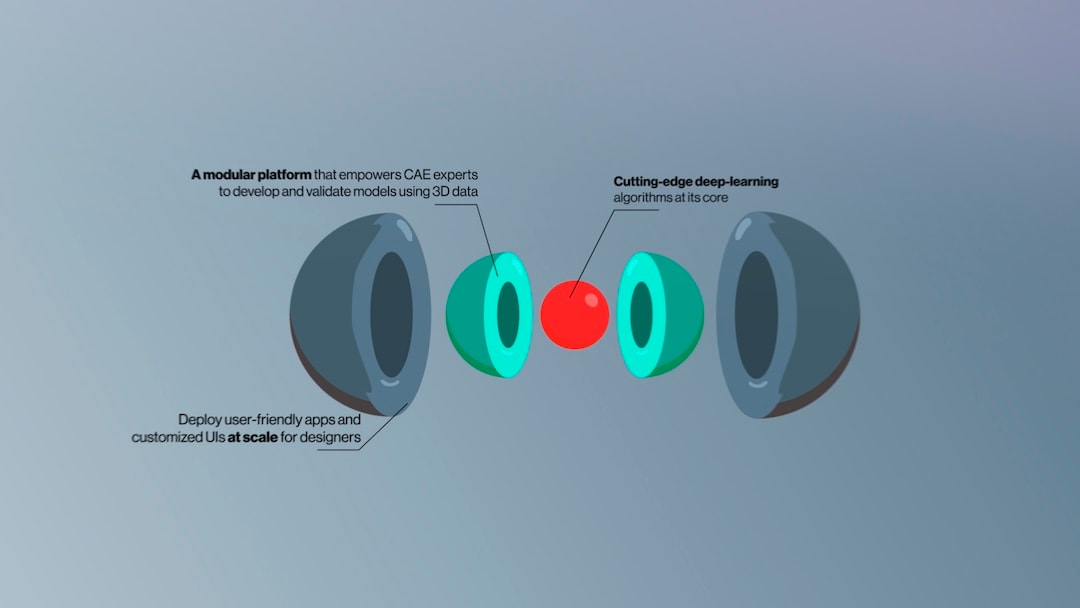
The Neural Concept platform facilitates cross-disciplinary collaboration by strengthening relationships among different teams.
Neural Concept enables engineers to convert goals and constraints into product shape, leveraging AI copilots that interpret CAD (product shape), physics, and design intent.
Here’s how it works:
- providing fast surrogate models that give real-time feedback;
- bringing simulation to the entire company, not just expert analysts;
- thus, allowing sales teams, marketing teams, and engineering teams to explore designs;
- fostering collaboration by showing how each team’s work contributes to the bigger picture;
- reducing knowledge gaps and duplication of efforts;
The platform helps shrink organizational silos by enabling all departments to access the same performance insights, regardless of their tools or workflows.
The outcome is measurable. For instance, at Eaton, the engineering optimisation workflow produced cooling modules that significantly outperformed standard products, achieving more than 30% reductions in pressure drop and over 10% reductions in overall weight.
What is the Best Way to Sustain an Integrated Organizational Structure?
The best way to sustain an integrated organizational structure is to deploy AI systems to monitor and manage cross-functional collaboration, ensuring that teamwork becomes an ongoing, automated discipline across sales, manufacturing, and beyond. This approach effectively reduces silos by aligning incentives, solving communication issues, and fostering shared accountability across all departments, including sales and engineering. The AI provides consistent updates and shared documentation, keeping the entire company aligned with core company goals.

Fostering Collaboration via Team Building Exercises
Team-building exercises help a team lead strengthen interpersonal relationships and improve coordination within self-contained teams, aligning with the organization’s culture. Implementing cross-training and job rotation builds empathy and understanding of interdependencies among departments.
- Beyond Social Events: Activities train people to communicate assumptions, challenge constraints, and propose collaborative solutions within limited timeframes.
- Structured Exercises: Techniques such as short design sprints, failure-analysis games, and cross-role problem-solving sessions build a shared mental model of decision-making.
- Psychological Safety: Structured retrospectives help team leads identify friction points, clarify responsibilities, and reinforce the safety needed for specialists to interact early. Establishing a culture of psychological safety encourages open communication and risk-taking among team members.
- Accelerated Results: Well-chosen exercises reduce misunderstandings and accelerate decision-making, particularly when teams must deliver under pressure.
Actionable Tactics: Turning Vision into Reality
Moving from concept to reality requires concrete implementation steps.
Use these initial tactics to structure your teams and data pipelines, building a shared, AI-driven knowledge base that proactively breaks down departmental barriers:
- Execute an MLOps Data Unification Sprint: Launch a time-boxed, two-week MLOps sprint to consolidate siloed departmental data (e.g., CFD, FEA, CAD history).
- MLOps (Machine Learning Operations) is the practice of automating the deployment and maintenance of ML models.
- The sprint ensures the quick delivery of a prototype for cross-functional data access.
- Form Cross-Functional AI Squads: Create small cross-functional teams responsible for co-developing the training data for a single Supervised Learning model, hardwiring alignment and collaboration requirements into the data foundation.
- Democratize Simulation via Surrogate Models: Deploy an approved, validated AI surrogate model on an organization-wide platform (e.g., an intranet dashboard). Non-experts can run instant trade studies and requirement checks, reducing bottlenecks with the core Simulation team.
- Mandate Unified Digital Twin Standards: Standardize metadata and naming conventions for all new digital assets to ensure every team’s input is immediately usable by Unsupervised Learning models seeking patterns, preventing new silos from forming.
Measuring Whether Organizational Silos Are Actually Reduced
KPIs for engineering organizations include:
- Frequency of cross-team collaboration
- Reduction of duplicated efforts
- Quality of open communication across other departments
- Employee engagement and clarity of team goals
- Collaboration tools usage across teams
- Alignment with the company’s broader mission
Teams work more effectively when they see how they contribute to the bigger picture.
Summary
Engineering design teams have always required coordination across different departments. Modern AI enables teams to break down silos, integrate CAD and CAE workflows, and unify information across the entire organization.
AI-powered simulation platforms, such as Neural Concept, enable team members from different departments to collaborate with a shared understanding of performance, design intent, and constraints.
Over 70 OEMs and Tier 1 suppliers, including Bosch, LG, and GE, rely on the platform to cut product development time by up to 75%, accelerate simulations by at least 10 times, and enhance multi-physics features such as efficiency, safety, acoustics, and aerodynamics by up to 30%.
FAQ
What is a silo mentality in engineering teams?
A silo mentality occurs when engineering teams focus on their own goals, tools, or workflows rather than collaborating with others. It develops when specialized groups work independently, use different tools, and keep separate platforms.
How can AI help break down silos?
AI exposes data links, highlights conflicting requirements, and makes simulation accessible to non-experts. AI increases cross-functional collaboration and reduces duplication of effort across engineering teams.
Why does simulation democratization matter?
When an AI-powered simulation becomes available to the entire company, design discussions include more stakeholders. Those discussions reduce gaps, accelerate decision-making, and minimize unnecessary competition between departments. AI can also elevate the level of technical communication with clients and suppliers.
What are the major types of Learning in AI?
Three major learning types are: Supervised Learning, which predicts outputs from inputs such as geometry and stress fields; Unsupervised Learning, which finds clusters in unlabeled data; and Reinforcement Learning, which involves taking actions, receiving rewards, and improving, and is used in design space search or control.
Notes - Bibliography
⁽¹⁾ Gartner - Data Quality: Best Practices for Accurate Insights
⁽²⁾ PwC - Breaking Down Organizational Silos for Better Collaboration
⁽³⁾ addepto - Streamlining Manufacturing: 30% Reduction in Manual Work with AI
⁽⁴⁾ Ron Ashkenas - Jack Welch’s Approach to Breaking Down Silos Still Works
⁽⁵⁾ Gillian Tett - The Silo Effect: The Peril of Expertise and the Promise of Breaking Down Barriers
⁽⁶⁾ Laurena Dehlouz - Breaking Down Engineering Silos