AI Simulation for Engineering: Smarter Modeling and Better Insights
Whenever bottlenecks slow product development, Artificial Intelligence can accelerate workflows by 1,000x, transforming validation from an end-stage checkpoint into real-time design feedback.
Consumer language-based AI automation (e.g., large language models such as ChatGPT) can generate “plausible” outputs. In engineering, however, we must achieve measurable physical accuracy of results before considering them valid for decision-making. This is why the recent emergence of AI simulation for engineering is a breakthrough.
The novel approach combines AI and simulation technologies to enhance speed, accuracy, accessibility, and predictive capabilities across industries:
- Data-driven artificial neural networks, tested on real-life engineering cases, offer robust pattern recognition and accelerated feedback.
- Physics-driven numerical analyses, refined via benchmarks, provide thorough representations of phenomena.
The creation of AI-driven elements, such as neural networks or rule-based systems, within simulation environments automates decision-making. It enhances simulation performance, often bypassing manual logic development through AI training.
During the product design iterations, high-fidelity simulation software was used to validate a design. However, the simulation process can take hours or even days per shot. In the meantime, product innovation can stall while numerical simulations run and “converge” to usable solutions. Learn more about simulation-driven design.
How to get support design with engineering calculations that are both reliable and affordable?
The answer is AI and simulation, a powerful combination with benefits in speed and design agility:
- Speed of Response for Timely Decision Making
Machine intelligence detects and tests complex patterns more quickly than traditional methods, enabling predictions in milliseconds. The focus is on the KPIs that matter most to the user. By leveraging cloud-native technologies, AI and simulation together can significantly reduce simulation lead times from weeks to hours, transforming the pace of engineering workflows.
- Depth of Design Space
A “design space” is a space of design variables, ranging from a few to virtually infinite in number. The design space is the multi-dimensional playground for our engineering objectives and constraints. Sadly, it’s not possible to evaluate every single point in this space! However, with a 1,000x speed boost, you will be able to manage 1,000x more points within the same amount of time. Such an acceleration allows you to be more fine-grained or to explore previously inaccessible zones of the design space! Learn more about engineering simulation.
- Democratization of Calculations
Machine Learning leverages past simulations to enable engineers at all levels to develop designs without specialist skills. The idea is to maintain those skills for R&D experts while deploying AI to designers, giving them predictive superpowers, augmenting their decision-making, and keeping the two worlds in sync with a shared set of technologies. AI simulation also provides a data-rich environment for synthetic data generation, which helps optimize business decision-making.
- Continuous Learning Cascade
First, Machine Learning combines thorough representations derived from physics-based simulation models. Second, designs evolve through learning techniques. The system can either start from a network trained from scratch or from an already trained one, and then progressively integrate new data through transfer learning.
Digital twin technology, which creates a virtual replica of a system, is increasingly used to test and optimize AI integrations by simulating real-world processes to improve operational efficiency.
How does it work?
Built on past simulations, modern AI solutions transform a precise but slow process. They accelerate design and optimization, delivering faster insights directly to designers’ desks.

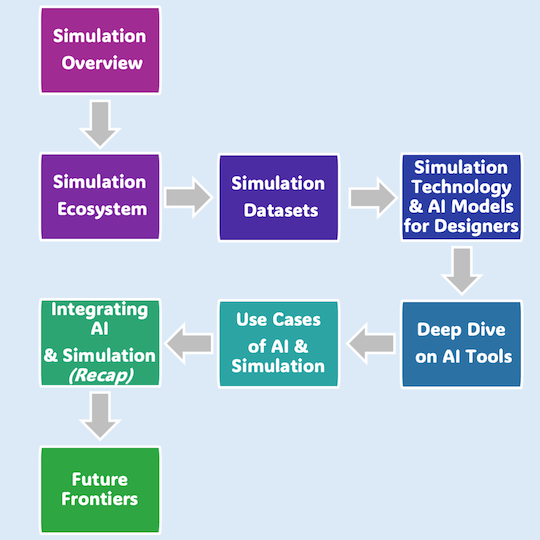
Learn more about AI simulation in the following:
- Simulation Overview
- Simulation Ecosystem
- Simulation Datasets
- Simulation Technology and AI Models for Designers
- Deep Dive on AI Tools
- Use Cases of AI and Simulation
- Integrating AI and Simulation: Recap
- Artificial Intelligence and Simulation Models - Future Frontiers
Simulation Overview
Simulation technology enables designers to analyze and optimize products in a virtual environment before prototyping. It reduces the time and costs of building physical prototypes and sending them to lab testing. Thus, the virtual approach leads to more cost-effective products.
In the 3D numerical analysis (CAE) virtual world, the equivalent of a physical prototype and test lab is:
- Virtual prototype: the CAD (computer-aided design) geometry of the object with various material properties
- Virtual test lab and experiment: the operating conditions (loads, etc.), the types of physics we need to simulate in the numerical solver, the output variables (3D plots, performance maps, global indices)
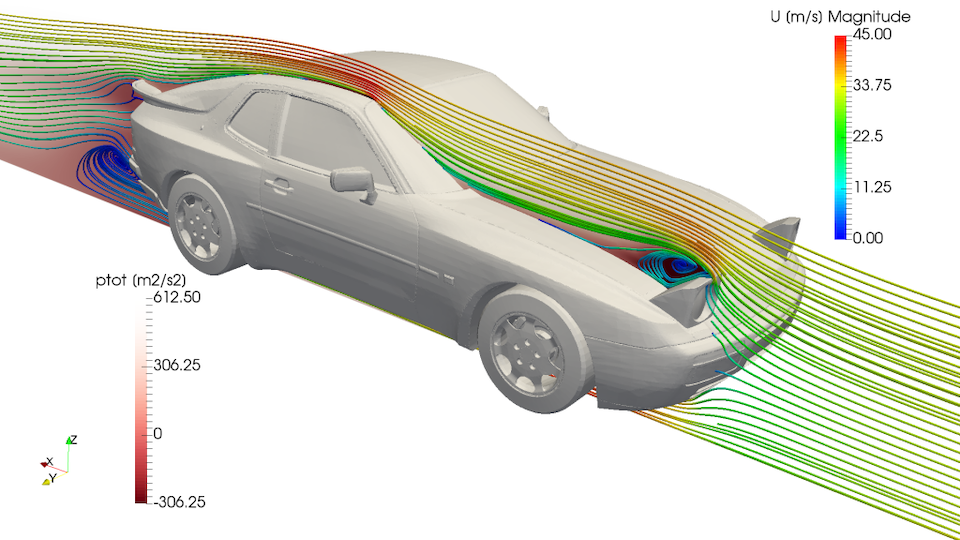
Simulation software enables engineers to represent real-world phenomena. CAE has been used for decades to model and analyze systems. High-fidelity simulation models represent physics (e.g., turbulence or nonlinear materials)
Its main branches are Finite Element Analysis (FEA) and Computational Fluid Dynamics (CFD).
- FEA can simulate, for instance, vibrations and load capacity. Additionally, crash testing simulations and durability virtual tests are conducted using FEA. Electromagnetic simulation, including radiofrequency simulation, is performed using FEA.
- CFD simulates fluid flows and heat transfer.
Different levels of fidelity are possible.
- Low-fidelity simulations employ simplified approaches to deliver faster simulation results at a lower level of accuracy, facilitating design exploration to narrow down options before conducting high-fidelity runs.
- High-fidelity aims to reproduce physics in its finest detail, delivering the most realistic results.
- Note: Quantum computing, as of the time being (2025), is not yet viable due to issues related to qubit stability and other quantum physics concerns. Practical I/O issues and the reconstruction of 3D fields are also currently complex to imagine, even in theory.
High complexity physical realism comes at a cost: a powerful (and expensive) ecosystem needs to be built around high fidelity.
In the following section, we will explore what this ecosystem is and how we can integrate design with it.
Simulation Ecosystem
- CAE requires 3D geometries shaped in CAD.
- CAD and CAE data are managed via Product Lifecycle Management and Simulation Lifecycle Management.
- CAD formats include STL, IGES/STEP, and proprietary native formats.
- CAE useful outputs include scalars (overall metrics such as pressure drop) and 3D distributions (spatial fields on surfaces and 2D sections of 3D volumes).
- File size ranges from MB to TB, with density tied to CAE mesh refinement.
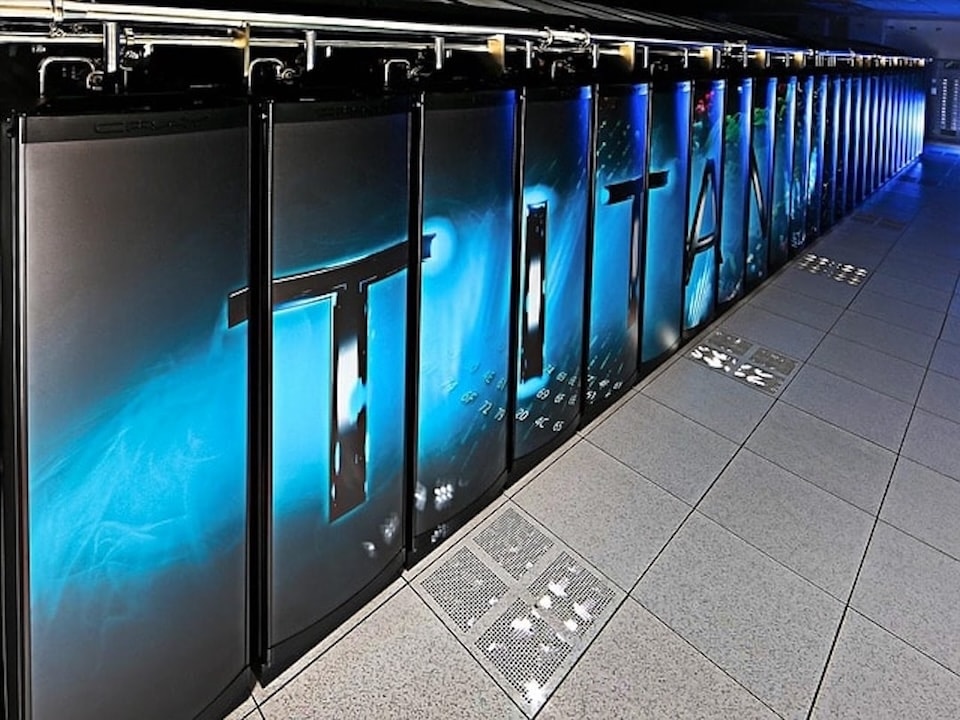
- Hardware includes in-house High-Performance Computing and cloud-based simulation for scalable resources. GPUs speed up parallel computations in CAE.
The major cost drivers in this ecosystem are hardware and skills.
- Even with advanced HPC, turnaround times remain high, and costs scale with the resolution and complexity of the solver. No design team can iterate with LES or equivalent fidelity across an entire product line.
- High-fidelity CAE, such as LES in fluid dynamics or nonlinear, transient analyses in structures, demands expert skills for setup and numerical stability control.
Ideally, we seek a way to compress turnaround times and extract expert skills. AI simulation is the answer.
Data from past simulations forms the basis for many AI-powered applications in engineering. Historical outputs create data repositories that enable the identification of learning patterns and the prediction of outcomes without requiring additional local or cloud-computing numerical analysis runs.
Simulation Datasets
The one constant output of every numerical analysis run is data.
Every run generates structured numerical information that describes system behavior under defined configurations, including boundary conditions/loads and material properties, within the specified physics and the represented geometrical domain, which is subdivided into a mesh.
Simulation data can include scalars (e.g., average temperature, total drag), fields (e.g., pressure, velocity, stress), or time series that track the transient evolution of the system. Each dataset reflects a specific configuration as described above, considering also the numerical solver settings.
When stored and organized, this accumulated knowledge becomes a reusable digital asset. It forms datasets that serve as the foundation for neural predictions. Datasets enable learning software to identify correlations, extract governing patterns, and approximate numerical analysis results across the parameter space.

Simulation Technology and AI Models for Designers
AI brings traditional numerical analysis onto designers’ desks. What are the benefits, and what kinds of tools are used?
Benefits
- Timeliness of response. Since surrogates can reduce computation, for example, from hours to seconds, AI-powered prediction is evolving the role of engineering simulation from post-design design validation to real-time decision-making.
- Depth of design space exploration. Accelerating response by 1,000x also means enabling designers to run 1,000x more iterations in the same time, allowing them to cover larger design spaces, for instance, to test different shapes, materials, or operating conditions.
- Interactive design. Engineers can adjust parameters and see predicted results interactively or via optimization algorithms. Advanced CAE users focus on validating critical designs and exploring new applications. ML Predictions enable earlier detection of potential issues, allowing specialists to address complex challenges before they become costly problems.
- Enhanced learning retention. AI simulation can increase learning retention, achieving a 90% retention rate compared to traditional passive methods.
- Improved decision-making skills. AI simulation helps decision-making skills in business education.
- Development of critical thinking and adaptability. AI simulation tools help students develop critical thinking and adaptability skills necessary for the evolving job market.
AI Tools for Design Engineers
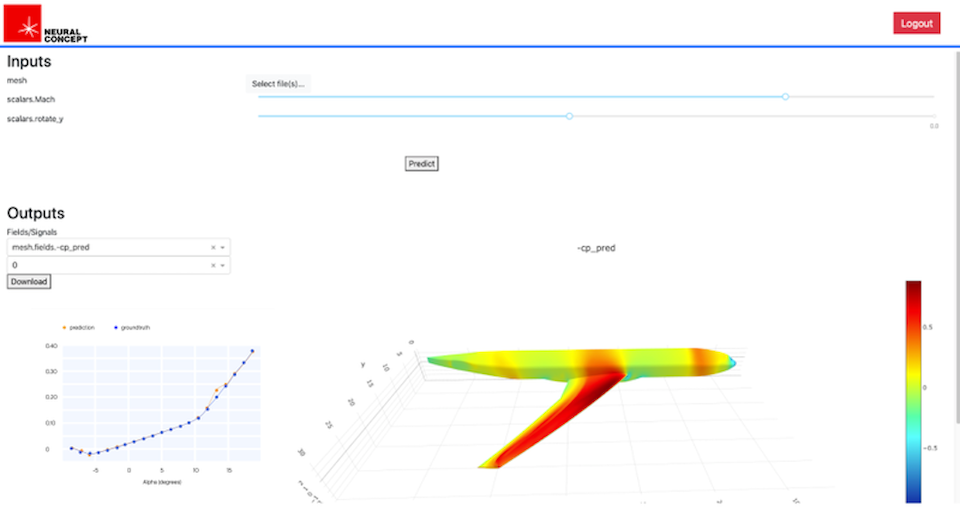
Data-driven models built on CAE datasets deliver powerful tools for instant predictions. Modern platforms offer user-friendly interfaces that enable designers to upload their geometries. As a result, the system predicts complex behaviors, such as flow fields or stress distributions, in seconds rather than hours.
AI tools support the process of creating new solutions by enabling engineers to co-create and innovate during simulations. AI-driven simulations also allow students to co-create with AI while making operational decisions in a competitive environment, fostering collaboration and strategic development.
Artificial Intelligence and CAE form a combination in which CAE generates datasets, enabling AI to accelerate and expand the scope of design space exploration.
Learning from Established Simulation Platforms
AI models learn the underlying physics governing flow / thermal / stress behavior using high-quality datasets generated by users of any high-fidelity CAE software, such as:
- ANSYS (industry-standard FEA and CFD)
- Siemens Simcenter, Altair HyperWorks (integrated multi-physics)
- Dassault Systèmes SIMULIA (advanced structural analysis)
- COMSOL Multiphysics (coupled physics)
- OpenFOAM (open-source CFD)
These and other established platforms generate rich, validated data that train neural networks to recognize patterns across diverse engineering scenarios, as described by associated geometries (such as CAD and computational meshes).
What Are the Deployment Options?
Once trained, AI-powered tools integrate seamlessly into any existing workflow. Depending on the desired workflow and audience, engineers can access smart surrogates of CAE through a variety of deployments:
- Standalone platforms that accept CAD files and return performance metrics in seconds. Example: Upload a hood geometry STL file and receive pedestrian impact scores instantly.
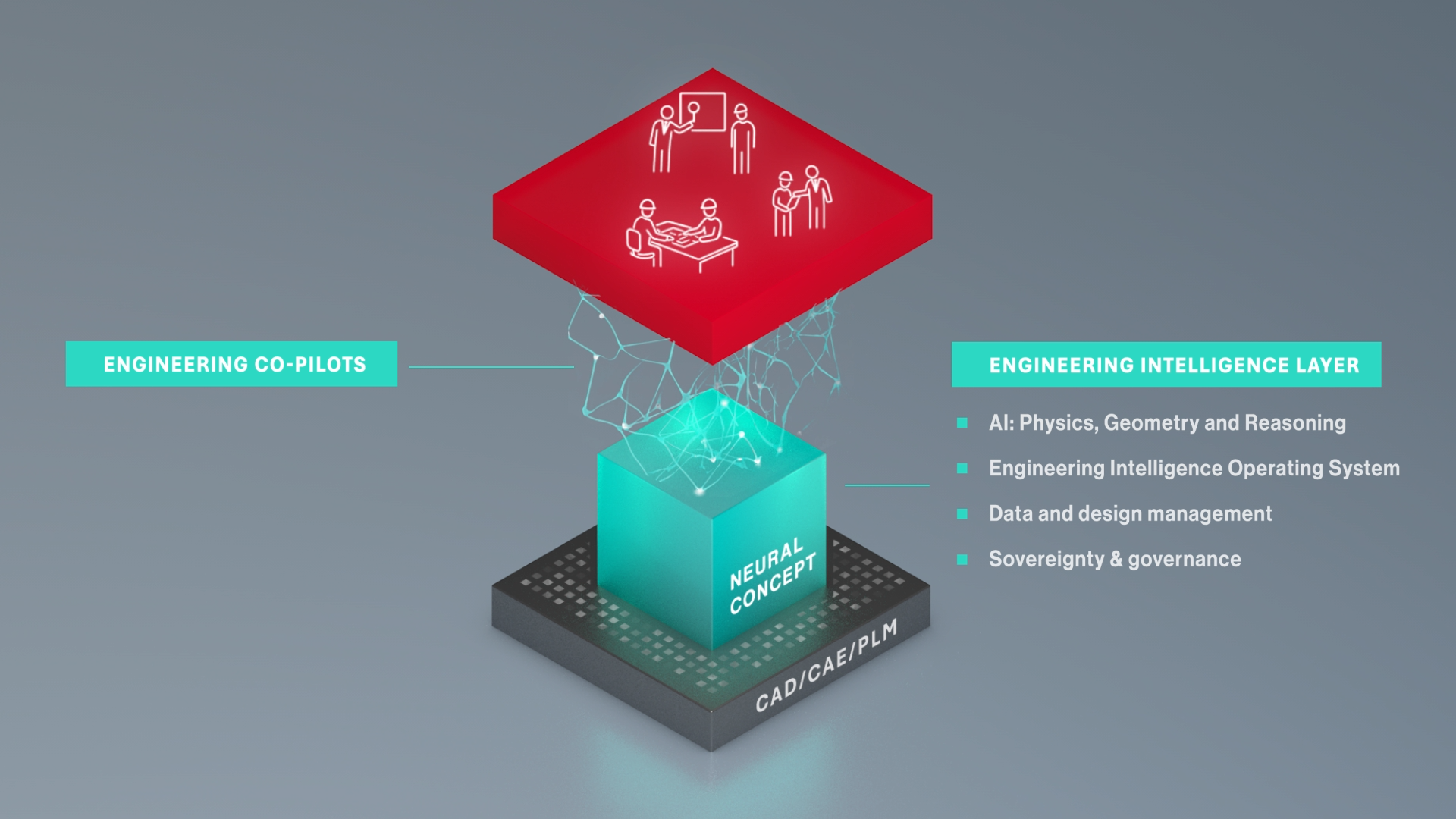
- Plugin interfaces (AI Co-Pilots) that embed surrogates directly within CAD environments. Example: Real-time feedback inside NX or CATIA as designers modify shapes while the AI co-pilot provides instant performance predictions as you design, eliminating the wait for traditional simulation.
- Cloud-based services that scale computational resources on demand. For instance, Batch-process 1,000 design variants overnight without local hardware.
- API integrations that connect surrogates to custom engineering tools. For instance, Automated optimization loops call predictions via Python scripts for automated design exploration.
In business education and business contexts, these AI simulation deployment options are increasingly used to support decision-making, enhance strategic thinking, and develop essential skills such as negotiation, teamwork, and problem-solving through interactive business simulations.
This democratization of simulation capability means that design engineers no longer need deep expertise in mesh generation, solver settings, or convergence criteria to obtain actionable insights. Instead, they focus on creative design exploration while AI handles the computational complexity, transforming simulation from a validation bottleneck into an interactive design partner.
Deep Dive on AI Tools
Think of AI simulation like training an expert engineer. After reviewing thousands of design cases, she learns to intuitively predict how new shapes will perform, at least relative to existing designs. The human limitation is that it is pretty difficult to predict exact numbers; that’s why even the most experienced engineers trust high-fidelity CAE over their intuition.
Deep Learning processes 3D CAD inputs to predict stress, flow, and thermal fields without running traditional physics solvers, using a similar “intuition” backed by numerical values. Thus, a prediction is really an inference.
Here’s how the learning process works for geometric Deep Learning:
- Building the foundation
- Neural networks consist of interconnected layers that process information. Each layer learns to recognize different patterns (basic shapes in the early layers, complex performance characteristics in the deeper layers). It is like developing intuition through experience.
- Learning from experience
- When predictions differ from actual results, the system adjusts its internal understanding. It is like engineers refining their judgment over years of practice. “Learning from mistakes” happens automatically across thousands of instances.
- Delivering instant predictions
- Once trained, platforms like Neural Concept use geometric Deep Learning to analyze new designs and deliver performance predictions in milliseconds. The secret is understanding 3D CAD geometries directly (without manual preprocessing. Engineers can explore thousands of design variants in the time previously required for a single high-fidelity CAE run.
The key advantage: Unlike traditional ROM, which needs manual setup for each design, learning automatically adapts to different shapes, enabling true design-space exploration across various configurations (geometries, materials, and conditions).
Use Cases of AI and Simulation
AI simulations drive progress across industries with real-world implementations delivering measurable results. Here are cases of the Neural Concept platform solving complex tasks via multiple models.
Aerospace
Deep Learning for real-time simulation reduces prediction times from hours to seconds. Get more details on the implementation of AI at Airbus.
Explore AI in aerospace aerodynamics to see how Deep Learning, combined with aerodynamics and cloud simulations, enables design-space exploration.
Automotive
- Neural Concept partnered on designs for several variants of hybrid and hydrogen vehicles, showcased at CES 2025, and developed new AI-driven vehicle designs.
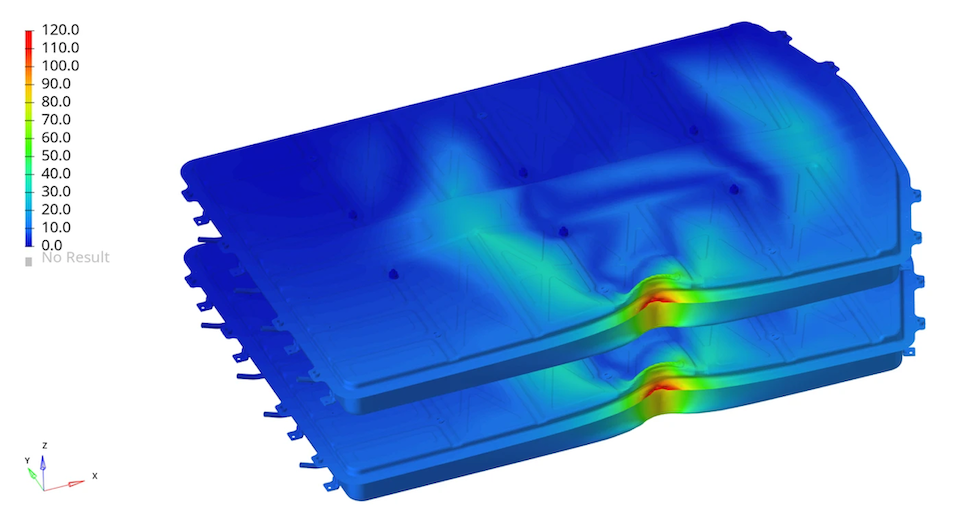
- AI predicts the performance of battery housings using structural simulation data, for example, to reduce weight. Learn more about AI for the design of innovative automotive components.
- General Motors faced challenges in designing pedestrian safety. Traditional crash simulations took 24-48 hours per run, requiring hundreds of iterations and months of optimization. Learn how to rapidly explore safety-optimized vehicle geometries. Using Neural Concept’s AI trained on GM’s crash data, prediction time decreased from 48 hours to 30 seconds, enabling the exploration of over 10,000 variants instead of only 100. Top safety and weight-reduction options were identified without modifications to GM’s existing infrastructure. Thus, the platform can adapt to any CAE standard. And remember, reducing pedestrian crash simulation time from 48 hours to 30 seconds is a 5,760x speedup, surpassing our initial claim of 1,000x!
See also how TB data were transformed in a production-ready workflow.
Motorsport
In F1 aerodynamics, Machine Intelligence optimizes component interactions.
Learn more about AI applications in Formula One.
A partnership with the VCARB team is utilizing deep learning to enhance aerodynamics. See a case of Deep Learning to accelerate F1 design.
Learn also more about external aerodynamics datasets.
Electronics
LS Electric in S. Korea achieved 99%+ accuracy in temperature and pressure predictions for mold optimization. Check the full story on superior predictions in electrical engineering.
Integrating AI and Simulation: Recap
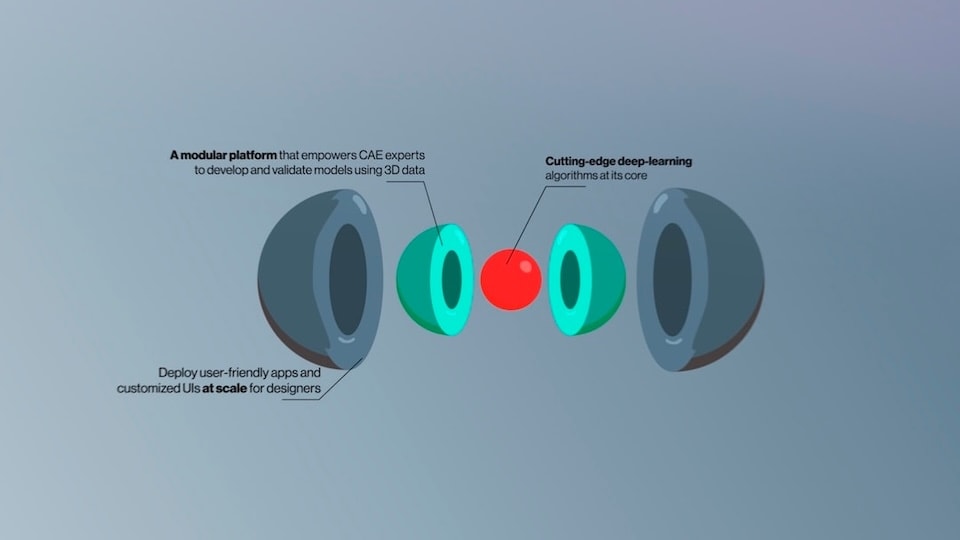
We covered the Machine Intelligence transformation of engineering simulations, from traditional CAE branches such as FEA and CFD to AI-enhanced simulations. These approaches have developed rapidly, expanding engineers’ ability to explore complex systems with less computational effort.
The benefits include speed, democratization, and continuous learning, supported by evolving ecosystems that connect CAD, PLM, and cloud hardware, enabling broader access and scalability, thereby making technology more accessible.
Artificial Intelligence and Simulation Models - Future Frontiers
The theoretical application of AI and simulation opens new possibilities for design engineers.
Some of the applications not covered in the article were:
- AI-assisted simulation for automated meshing
- digital twins for real-time monitoring and predictive maintenance in manufacturing, where a digital twin acts as a virtual replica of a physical asset to monitor equipment health and optimize operations
- materials science discovery
Some emerging areas are:
- Use of synthetic data to expand datasets
- Ensemble methods for robust predictions
- Transfer learning to adapt across domains
- Reinforcement learning for optimization
In healthcare, AI simulation is accelerating drug discovery by simulating biological processes, enabling researchers to identify new drug candidates in days rather than years. By running virtual scenarios of drug interactions, AI simulation also helps develop drugs that are safer for patients and are more likely to succeed in clinical trials.
The engineering simulation space has also transformed with cloud-native simulation, demonstrating significant potential and commercial viability.
However, the use of AI-generated proxies or digital twins raises important questions about informed consent and data privacy that must be addressed as these technologies advance.
Challenges
Realizing the full potential of these technologies means addressing the remaining challenges: dataset quality, interpretability, and integration into established workflows.
Engineering simulation will play a crucial role in how Machine Intelligence enables teams to create and validate processes and systems.
Artificial Intelligence does not simply enhance or replace CAE: it bridges the gap between two technologies.
Ready to Transform Your Workflow?
Neural Concept’s platform enables engineering teams to accelerate design exploration by a factor of 1,000.
In fact, we have shown cases with acceleration of 5,000 times or more.
From aerospace to automotive, motorsport to electronics, leading companies are already utilizing AI-powered simulation to deliver better products more quickly.
FAQs
How do you create an AI simulation environment?
Train predictors on CAD geometries and CAE outputs with platforms like Neural Concept. Simulations generate databases of 3D geometries and CAE results, whose quality and coverage affect neural network accuracy. Neural networks learn shape-behavior relationships via backpropagation, adjusting connections for accurate predictions.
How can the accuracy of AI simulations be evaluated?
Use metrics like R² for fit or MAE for error. Compare AI outputs to CAE results. Engineers validate on unseen test cases to ensure AI generalizes rather than memorizes.
Why is GPU important for AI simulation?
Modern GPUs process neural network operations in parallel, speeding up computations for large 3D datasets. These GPUs have thousands of cores optimized for matrix operations in deep learning, completing tasks hours faster than CPUs. This capability allows for faster training and real-time predictions.
What’s the difference between AI simulation and traditional ROM?
Traditional ROM requires manual parametrization of geometries before building surrogate AI models. AI simulation using geometric learning operates directly on 3D CAD files without preprocessing, enabling predictions across geometries with different topologies. This approach provides a critical advantage for design exploration involving structural variations.
Should I couple to a specific CAE software?
At least Neural Concept works with any CAE platform and any type of physics, because AI trains on simulation outputs and is therefore solver-agnostic. The actual value is in geometric learning for more innovative design, rather than a specific solver integration.
How do the accuracy and reliability of AI-generated results compare to traditional simulation methods?
AI results are faster but depend on the quality of the training data. Traditional physics-based simulations are often more reliable for unseen scenarios. AI can improve by identifying uncertain predictions and running some new simulations for transfer learning, balancing efficiency with the reliability of physics methods.