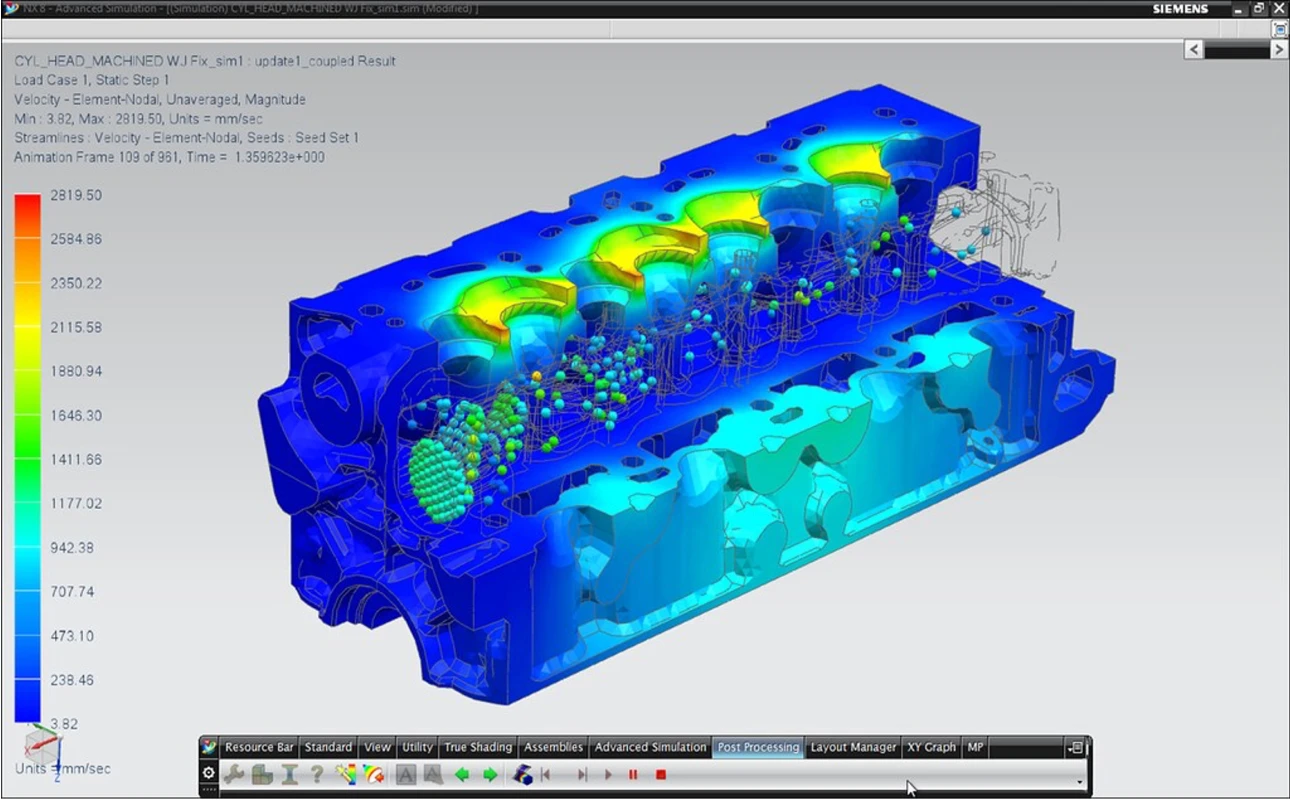
AI and 3D Printing – How Innovation is Reshaping Manufacturing
Innovation is fundamentally reshaping manufacturing by combining Artificial Intelligence with Additive Manufacturing technologies, which are rooted in the principles of computer science . The combination creates unprecedented opportunities for customization, efficiency, and design complexity. At the same time, it helps dramatically reduce waste, and it shortens production timelines. During the design phase, AI tools assist in automating routine modeling tasks, analyzing design alternatives, and flagging potential manufacturability issues early, which shortens development cycles and improves product quality.
Additive Manufacturing (AM), commonly known as 3D printing, creates objects layer by layer, similar to natural additive strategies, such as a wasp building its nest. While inspired by nature, AM is rooted in principles of computer science.
Traditional subtractive methods remove material. In contrast, AM adds it only where needed, making it ideal for custom manufacturing .
This additive approach enables the creation of complex geometries and lightweight structures, utilizing multiple materials to facilitate the customization of products more easily and more affordably, and thereby enabling the innovation of manufacturing processes. In the United States, the National Science Foundation (NSF) plays a pivotal role in advancing artificial intelligence (AI) and 3D printing technologies. Through targeted funding programs and research grants, the NSF supports projects that push the boundaries of these fields. This includes investments in AI-driven manufacturing systems, robotic-assisted additive manufacturing, and advanced materials design. By sustaining long-term research and fostering innovation, the NSF helps maintain U.S. leadership in these transformative technologies.
Additive vs. Traditional Manufacturing – Key Differences:
This guide offers a comprehensive exploration of AI and Machine Learning (ML) in AM, covering both foundational concepts and practical applications.
The sections include:
- What is AI?
- How is AI Transforming 3D Printing?
- Where can AI/ML be applied in Additive Manufacturing?
- What are the Industry Sectors of Application?
- AI Techniques for Innovation and Quality
- Design Optimization and Innovation
- What is AI-enhanced QA?
- Process Acceleration
- What is the Business Impact?
- AI and Machine Learning
- What is Machine Learning?
- Neural Networks in Manufacturing
- Predictive Models
- Practical Outcomes
- AI Technology in Manufacturing
- Machine Learning
- Deep Learning
- Computer Vision
- Natural Language Processing (NLP)
- Reinforcement Learning
- Physics-Based Models. Optimization
- What Materials are Used in AM?
- Industry Applications
- Improving Production Efficiency and QA
- AI in the Automotive Sector.
- Artificial Intelligence in the Automotive Industry: Case Histories.
- Artificial Intelligence in the Aerospace Industry.
- Artificial Intelligence in the Aerospace Industry: Case History.
- AI in the Biomedical Industry
- How to Optimize Additive Manufacturing Processes?
- Build and Post-Processing Operations
- Meeting Increasing Demand Through Process Integration
- What is CAD in the AM Context?
- What are PLM Systems in the AM Context?
- How to Ensure Structural Integrity of AM Parts through Simulation?
- Digital Twins: Bridging the Physical and the Digital
- Simulation and Digital Twins
- FEA, Simulation and Digital Twins: Summary
What is AI?
Artificial Intelligence (AI) refers to software capable of performing tasks that typically require human intelligence, for instance, pattern recognition.
A subset of AI is ML, which often utilizes neural networks to enable systems to learn from data and improve performance without explicit programming.
How is AI Transforming 3D Printing?
Here’s in short, how AI is transforming 3D printing:
- AI-Powered 3D Model Generation
- Text-to-3D: Quickly create 3D models from text descriptions.
- Image-to-3D: Convert 2D images or photos into printable 3D designs.
- Real-World Object to 3D: Reconstruct models from photos or rough scans without a 3D scanner.
- AI for Print Optimization
- Slicer Optimization: Automatically adjust layer height, infill, and other settings for best results.
- Defect Prediction: Identify risks like warping or delamination before printing.
- Real-Time Correction: Monitor printing and adjust instructions on the fly to prevent errors. Spaghetti Detection is an AI technique used in 3D printing to monitor print patterns and spot early failures, like filament over-extrusion or nozzle clogging. It uses real-time imaging and pattern analysis, helping to prevent wasted material and downtime by pausing before failures worsen. Platforms like Obico and 3DPrinterOS use this tech, showing its value in consumer and industrial manufacturing.
- AI for Design and Workflow
- Automated Design: Topology optimization and support generation.
- Personalized Printing: Tailor designs and print settings to the user’s needs.
- CAD Integration: AI features built into existing 3D design software for seamless workflow.
Where can AI/ML be applied in Additive Manufacturing?
In AM, ML can be applied across the entire workflow to recognize patterns and optimize operations:
- Design and simulation: optimize geometries, lattice structures, and build orientation.
- Production control: monitor printing in real-time and adjust parameters automatically.
- QA: predict defects and ensure consistent part performance.
AI integration amplifies these advantages by optimizing design, controlling manufacturing steps in real-time, and predicting quality issues before they occur—capabilities that are difficult to replicate in traditional subtractive workflows! We discuss the multidimensional benefits of generative design elsewhere, which dives into how CAD, CAE, and AI come together in advanced design spaces.
3D printing is already transforming industries such as automotive, aerospace, biomedical engineering, and electrical engineering, particularly with the introduction of new materials. Its integration with Artificial Intelligence (AI) is opening new opportunities to enhance design, production efficiency, printing speed, and quality.
What are the Industry Sectors of Application?
The three main industries we will review in the article are Automotive, Aerospace, and Biomedical. The role of AM in short is the following:
- Automotive Industry
- Designing lighter, stronger, and more efficient components to improve performance and reduce fuel consumption.
- Aerospace Industry
- Managing complex geometries and strict safety requirements while cutting costs and speeding up certification cycles.
- Biomedical Industry
- Producing customized implants and medical devices with high precision, reliability, and patient-specific adaptability.

AI Techniques for Innovation and Quality
Algorithms in AM analyze the geometry and stress distribution of a part to suggest material placement that supports load where needed and removes excess elsewhere. By simulating the printing process in advance, they can identify potential defects, such as warping or weak infill patterns, thereby improving the quality of the final product. This early insight enables designers to adjust the model before printing, thereby reducing iterations, avoiding failures, and lowering production costs.
Design Optimization and Innovation
AI algorithms can iteratively adjust part geometry and lattice structures for additive manufacturing (AM). For instance, topology optimization algorithms can eliminate low-stress material while preserving structural integrity, and generative design tools can explore thousands of lattice patterns to minimize weight. These AI-driven adjustments, supported by advanced machine learning algorithms, reduce material use by up to 30%, cut print time, and predict performance before printing, improving final part quality.
Major software providers, such as Autodesk, have integrated generative design capabilities into their platforms. In Fusion 360, for example, engineers can set material, load, and manufacturing constraints, and the software produces optimized alternatives directly in the same environment where they already model and test parts. This means designs can be iterated, validated, and prepared for production without exporting data across multiple tools.
What is AI-Enhanced QA?
AI-enhanced quality assurance (QA) is a proactive approach to ensuring print quality and part reliability in AM. Unlike traditional methods that relied on post-production inspection, AI can predict potential issues, including print failures, before production begins, validate designs for 3D printing suitability, and minimize waste and iteration cycles. This shift significantly reduces time and material costs, resulting in more efficient and cost-effective production.
Optimized Decision-Making Across the Workflow
AI facilitates more informed decision-making throughout the 3D printing workflow. By providing data-driven insights, identifying bottlenecks, and suggesting process improvements, AI helps manufacturers to make informed choices. This capability spans from design to production planning and execution, boosting overall operational efficiency.
Process Acceleration
AI analyzes data from design, production, and postprocessing to adjust parameters and anticipate issues in real time.
Closed-loop AI printing combines AI with 3D printing hardware to monitor the build layer by layer and adapt the process on the fly based on sensor feedback. Corrections can include adjusting extrusion rates, modifying laser power in metal printing, or compensating for thermal distortions before they compromise the part.
Reducing trial-and-error and streamlining workflow steps shortens development cycles, improves throughput, and helps manufacturers produce parts more reliably with fewer iterations.
What is the Business Impact?
The above combined benefits directly impact the bottom line.
Manufacturers using AI in AM experience measurable cost savings, improved efficiency, and enhanced quality in custom manufacturing.
Leveraging AM’s strengths while addressing its challenges through AI creates a more robust and efficient production system.
What is AI’s Role in Additive Manufacturing?
AI serves three primary functions in AM: automated design optimization, real-time process control, and predictive QA.
- AI-driven topology optimization / generative design in AM solves the fundamental constraint of traditional design: human cognitive limitations in multi-dimensional optimization spaces. Engineers can define loading conditions, material constraints, and performance requirements, allowing algorithms to explore millions of design iterations. This enables AI-driven generative design tools to create complex geometries that were previously impossible or difficult to achieve with traditional methods. These tools utilize AI to determine the optimal material usage and structural integrity, resulting in lightweight yet robust components.
- In terms of QA and defect prevention, CV systems integrated with AM equipment perform continuous inspection during fabrication. These systems identify layer adhesion failures, dimensional deviations, and surface defects, enabling immediate process corrections or build termination to prevent material waste on defective parts. AI-powered inspection reduces dependency on post-manufacturing quality control, shifting defect detection from a reactive to a preventive approach.
AI and Machine Learning
AI is software designed to perform tasks that usually require human intelligence, such as perception, decision-making, and language understanding. Among its many approaches, the most prominent today is Machine Learning (ML).

What is Machine Learning?
Machine Learning (ML) is a subset of Artificial Intelligence that enables software systems to improve their performance automatically by learning from data (training data), without being explicitly programmed for each task. ML systems identify patterns, correlations, and structures within datasets and use them to make predictions, classify input data, or optimize operations.
Central to many ML approaches are neural networks (NNs). NNs are computational models inspired by the human brain. NNs consist of layers of interconnected nodes, or “neurons,” which elaborate input data through weighted connections and activation functions.
By adjusting weights during training, NNs learn complex, non-linear data relationships. Once trained, they generalize to new inputs, enabling tasks like anomaly detection, predictions, and decision support in domains including AM. On the plant floor, ML analyzes sensor data, detects deviations, optimizes parameters, and predicts maintenance needs, continuously improving with more data.
Neural Networks in Manufacturing
Neural networks excel in AM because they:
- Model non-linear thermal-mechanical relationships during layer deposition
- Adapt parameter optimization as material behavior changes
- Learn from production variations to improve future builds
Convolutional neural networks analyze thermal imaging data to predict warping and layer adhesion failures. Recurrent networks analyze time-series sensor data to optimize toolpath velocities and extrusion rates based on real-time feedback.
Result: Higher reliability, lower costs, faster production cycles.
Predictive Models
A key application of AI and NNs is predictive modeling.
Predictive models can combine historical and real-time data in order to:
- Anticipate issues before they occur
- Optimize production schedules
- Improve efficiency and quality
AI-driven slicing algorithms shorten print times by adjusting layer height, infill density, and toolpaths dynamically to achieve desired outcomes . They preserve accuracy in detailed regions and ensure durability by reinforcing high-stress zones, leading to faster yet reliable parts.
Practical Outcomes
AI automates design optimization, controls printing processes in real-time, and predicts quality issues. AI generates complex geometries by exploring thousands of design iterations based on load requirements and material constraints. This produces lightweight structures with internal architectures impossible to manufacture conventionally.
Machine learning monitors printing parameters and adjusts temperature, speed, and material flow in real-time to maintain quality and prevent defects.
Operational Benefits aimed at achieving desired outcomes :
- Predictive maintenance reduces downtime
- Material forecasting minimizes waste
- Multi-material processing within single builds, enabling the use of multiple materials simultaneously. This advanced capability allows for the creation of complex structures and heterogeneous models, but also introduces challenges such as controlling different viscosities and ensuring proper integration of materials. Applications include more realistic prototypes and functional tissue engineering.
- Automated quality inspection during printing
AI Technology in Manufacturing
The range of AI applications in manufacturing is vast and continually expanding.
Some key technologies include:
Machine Learning
As mentioned earlier, Machine Learning allows many applications to learn from data and improve their performance over time thanks to the machine learning model.
Deep Learning
Deep learning, a subset of machine learning, has gained attention for its ability to model complex, non-linear relationships in data. While commonly associated with applications like speech recognition, its potential in AM is equally significant. As said before, algorithms can optimize design, monitor printing processes, and predict defects.
In the context of AM, deep learning enables the creation of models that learn from historical build data and real-time sensor inputs, making predictions. The model learns how variations in physical properties, layer deposition, and environmental conditions affect the final part quality.
Computer Vision (CV)
This technology enables machines to interpret and understand visual information from their surroundings. In AM, computer vision can be used for quality control, detecting defects in printed parts.
Natural Language Processing (NLP)
While less directly applicable to AM, NLP technologies can support communication between humans and machines, potentially simplifying the operation of complex equipment.
Reinforcement Learning
Reinforcement Learning (RL) is an AI method where an agent interacts with an environment, receives feedback in the form of rewards or penalties, and gradually learns strategies that maximize long-term outcomes. Unlike supervised learning, RL does not rely on labeled data but on continuous trial-and-error exploration.
RL in manufacturing optimizes toolpaths, adjusts printing parameters in real time, and cuts energy use. It also helps in robotics for autonomous control, logistics for warehouse routing, and engineering design for exploring parameters.
Physics-Based Models
Applying AI in AM has proven to be an innovation, opening up new opportunities for companies and engineers.
While AI, especially NNs and predictive models, shows promise in manufacturing, they don’t operate alone from other software. Physics-based models, using scientific principles to simulate processes, are vital in many applications. Integrating AI with these models by using simulation data is an exciting technological frontier.
Optimization
Optimization is a key focus area where Artificial Intelligence technology has shown promise in driving product innovation. Optimization algorithms can be applied to various aspects of the manufacturing process, including design, production, and supply chain management. NNs and other technologies can analyze datasets to identify optimal solutions, effectively managing computational complexity that might not be apparent to human operators. For example, AI can optimize intricate designs of parts for AM, considering factors such as material properties, printing orientation, and support structures, using surrogates of 3D simulation software. This can produce lighter, stronger, and more efficient parts.
What Materials are Used in AM?
The most popular materials that enable AM to create lightweight structures layer by layer are polymers, metals, ceramics, composites, and biomaterials.
- Polymers are a versatile class of materials widely used in AM for their low cost and ease of processing. Thermoplastics like PLA, ABS, and nylon are common, while photopolymers in stereolithography enable high precision and smooth finishes, with applications such as dental models.
- Metals are materials chosen when strength and heat resistance are essential. Stainless steel, titanium, aluminum, and Inconel powders are processed with SLM or EBM to produce aerospace components and medical implants.
- A ceramic is a hard, thermally stable, and biocompatible material. Alumina, zirconia, and silicon carbide are printed by binder jetting or stereolithography, making them suitable for biomedical devices and aerospace applications.
- Composites are a hybrid of polymers with fibers (carbon, glass) or metal powders, offering high strength with low weight. They are widely used in automotive, aerospace, and sports equipment.
- Biomaterials are a class of AM materials for bioprinting, where hydrogels and bio-inks with living cells and biodegradable polymers create tissue scaffolds and organ models for regenerative medicine. AI assists in designing and optimizing organ models for 3D printing by enabling material matching and parameter optimization, which enhances accuracy and efficiency.
Material selection is key in applications like organ models to balance print quality, structural integrity, and cost. In bioprinting and multi-material printing, fine control of dispensing pressure ensures proper flow, print fidelity, and mechanical performance.

Industry Applications
Here’s a concise summary of AI applications across three top industries, keeping the key points and examples that are developed later in the article. AI and machine learning techniques can also significantly reduce printing time by predicting optimal parameters and improving process efficiency, especially in fields like biomedical 3D printing. Predictive parameter tuning can reduce printing time and improve process efficiency, especially in biomedical 3D printing.
| Industry | Key AI Applications in AM | Benefits / Outcomes | Examples of Companies |
|---|---|---|---|
| Automotive | AI driven generative design for optimized structures; production parameter optimization | Reduced weight, improved battery efficiency (EVs), lower production time and cost | BMW: lightweight metal components; Ford: quality and precision of 3D printed parts |
| Aerospace | Generative design for complex, high performance parts; AI powered QA and defect detection | Lightweight, strong components; fuel efficiency and emissions reduction; high reliability | GE Aviation: optimized jet engine components; Airbus: enhanced quality of 3D printed parts |
| Biomedical | Customized design of implants and medical devices; AI driven quality inspection | Tailored patient solutions; improved treatment outcomes; regulatory compliance and safety | Companies producing optimized implants and 3D printed tissues or organs for regenerative medicine |
Improving Production Efficiency and QA
Production efficiency is the key measure for successful AM. AI helps reduce production time and material waste, ultimately enhancing product quality. AI can identify potential issues and suggest process adjustments by analyzing data from previous production runs, ensuring smoother production.
AI excels in QA. Traditional quality control methods can be time-consuming and prone to human error. An AI-powered CV can inspect components in real time, identifying defects and deviations from desired specifications accurately to ensure that only high-quality products reach the market. This reduces the need for rework and improves overall productivity.
AI in the Automotive Sector
AI in the automotive industry is gaining traction due to its long tradition in AM, which dates back to an era when it was known by different names.
Since the 1990s, “rapid prototyping” (even in small cases) and the production of complex components have revolutionized automotive design and production. Nowadays, AI-driven generative design allows engineers to create intricate designs and optimized structures that reduce weight without compromising strength. This is particularly important in electric vehicle development, where weight reduction is crucial for improving battery efficiency and range.
AI also improves printing speed and manufacturing efficiency by identifying potential issues and optimizing production parameters. This reduces production time and lowers costs, making AM a viable option for mass production in the automotive industry.
Artificial Intelligence in the Automotive Industry. Case Histories
Several automotive manufacturers have successfully implemented AI in their processes.
- BMW has utilized AI-driven design optimization to produce lightweight metal components, thereby reducing the vehicle’s total weight.
- Ford has utilized AI to enhance the quality and precision of 3D-printed parts, ensuring they meet stringent safety standards.
Artificial Intelligence in the Aerospace Industry
The aerospace industry has strict requirements for material performance and structural integrity.
The application of AI in aerospace enables the production of complex components and materials that meet these high standards. Using Artificial Intelligence-driven generative design, aerospace engineers can create lightweight yet strong parts, which could lead to applications like the fabrication of human organs that improve fuel efficiency and reduce emissions.
Artificial Intelligence can also assist in QA and defect detection. Aerospace is an industry where even small flaws can have serious consequences, second probably only to Nuclear Energy!
AI-powered inspection ensures that every component meets the highest quality and reliability standards.
Artificial Intelligence in the Aerospace Industry. Case History
Several aerospace companies have adopted AI in their manufacturing processes. GE Aviation has utilized AI-driven topology optimization to design and manufacture complex jet engine components, resulting in weight savings and improved fuel efficiency. Airbus has employed AI to enhance the quality and reliability of 3D-printed parts, ensuring they meet the rigorous standards required for aerospace applications.
AI in the Biomedical Industry
The biomedical industry is experiencing changes with the integration of AI in AM. AI-driven design and optimization enable the production of customized medical devices and organ models tailored to individual patients, including dental applications. This customization improves the effectiveness of medical treatments and enhances patient outcomes. AI also helps ensure the quality and safety of medical devices. AI-powered inspection detects defects and helps to determine if every device meets regulatory standards. Thus, the risk of product recalls is reduced while we improve the overall safety of medical devices.
Several biomedical companies have successfully integrated AI into AM. AI-driven generative design is utilized to create optimized implants that facilitate enhanced patient recovery. Companies are using AI to develop 3D-printed tissues and organs, advancing regenerative medicine.
How to Optimize Additive Manufacturing Processes?
To optimize additive manufacturing processes, focus on controlling both microscopic and macroscopic factors throughout the build. Optimizing AM requires a combination of precise melt pool control, real-time feedback, tailored parameters, and material-aware strategies to achieve high-quality, defect-free parts efficiently.
This chapter explores key aspects of 3D printing optimization, focusing on critical elements from the microscopic melt pool to the overall construction process.
The pool is a small volume of substance (alloy, etc.) melted by the energy source (typically a laser or electron beam). The behavior of this molten region affects the quality of the final product. Efforts to model and control melt pool dynamics have improved mechanical properties and reduced defects in manufactured parts. Researchers have developed sophisticated frameworks for real-time monitoring and control of pool characteristics. These systems can adjust process parameters in real-time, ensuring consistent quality along each printed line and throughout the entire build.
Build and Post-Processing Operations
Beyond the pool, optimizing the overall build process is crucial for efficient manufacturing. Efficient planning of build orientation, support structures, and layer thickness ensures high-quality results. Careful selection of the scanning strategy (the path the energy source follows to melt the material) directly) affects build time, material usage, and part performance.
- Advanced software tools now offer comprehensive frameworks for process planning, allowing operators to effectively balance factors such as build time, material usage, and part quality. These tools often incorporate machine learning algorithms to refine and continually optimize build parameters based on historical data.
- While much focus is placed on printing, postprocessing operations are equally critical in creating the AM workflow. These may include support removal, heat treatment, surface finishing, and quality inspection.
- Efforts to streamline postprocessing have led to more efficient production lines and shorter manufacturing times. Robotic systems can now handle tasks such as support removal and surface polishing with minimal human intervention, increasing efficiency while ensuring consistency across parts. Automation plays a crucial role in enhancing postprocessing reliability and throughput.
Meeting Increasing Demand Through Process Integration
As the demand for 3D printing parts grows, particularly in industries like aerospace and medical devices, there’s an increasing need to integrate AM and computer-aided design into broader manufacturing workflows. This integration allows for more efficient production planning and resource allocation.
Manufacturing Execution Systems (MES) tailored for 3D printing are being developed to manage and optimize 3D printing operations within larger production environments. These systems can effectively coordinate multiple 3D printing machines, manage material inventory, and schedule postprocessing operations, ensuring smooth production flow. Optimizing AM is an ongoing effort ranging from the microscopic scale of pool dynamics to the macroscopic level of production line integration. Thus, manufacturers can more effectively meet the growing demand for high-strength, complex, customized parts.
What is CAD in the AM Context?
Computer-aided design (CAD) is the cornerstone of modern product development. CAD provides a digital representation of a product that captures its geometry, dimensions, and other critical attributes associated with the product.
In the context of AM, CAD is used not only to define the final product but also to define the manufacturing process.
Advanced CAD systems now incorporate AM-specific features, such as:
- Support structure generation
- Lattice structure design
- Topology optimization
- Build orientation optimization
These features enable designers to create parts optimized for 3D printing processes, taking full advantage of AM’s design freedom. For delicate lattice structures, CAD tools provide the means to design complex geometries that would be impossible to produce using traditional production methods.
What are PLM Systems in the AM Context?
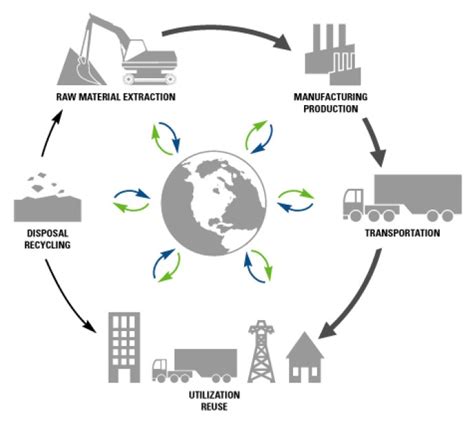
PLM systems manage and integrate data from various product lifecycle stages, including design (CAD), engineering analysis, manufacturing planning, and in-service performance. Product Lifecycle Management (PLM) systems act as the central nervous system of the digital product development process.
PLM systems are deployed in:
- Managing complex, specific data specific to 3D printing, such as material properties and process parameters
- Tracking design iterations and version control
- Facilitating collaboration between design, engineering, and manufacturing teams
- Ensuring regulatory compliance and traceability
For delicate lattice structures, PLM systems can help manage the complex data associated with these designs, including detailed geometric information and simulation results.
How to Ensure Structural Integrity of AM Parts through Simulation?
Structural integrity in AM is ensured by integrating CAD with advanced simulation tools before production.
Finite Element Analysis (FEA) assesses stresses, strains, and fatigue under actual loading conditions, while process simulation considers thermal gradients, residual stresses, and distortions during layer deposition. Leveraging simulation-driven design helps engineers validate designs earlier and iterate faster before any physical build.
Multi-scale modeling of lattice structures captures overall stiffness and local failure modes, optimizing unit-cell geometry to enhance the strength-to-weight ratio. Virtual validation reduces trial builds, minimizes defects, and ensures mechanical performance without costly redesigns.
Digital Twins: Bridging the Physical and the Digital
Digital twins represent a notable advancement in integrating digital and physical systems. A digital twin is a virtual representation of a physical product or process that can be used for various purposes throughout the product lifecycle.
Digital twins can be particularly powerful within these contexts.
- Design Optimization
- Digital twins can simulate and optimize part designs for AM, considering factors such as material properties, build orientation, and support structures. For lattice structures, this can involve optimizing the lattice design for specific loading conditions while maintaining manufacturability.
- Process Simulation
- With the digital twin of AM, manufacturers can simulate and optimize the printing process before production. This is vital for delicate lattice structures, helping predict and prevent issues like warping or incomplete fusion.
- In-Service Performance Prediction
- Digital twins can continue to provide value after production, simulating the part's behavior under various operating conditions. This can involve predicting deformation and failure under complex loading scenarios for lattice structures.

Simulation and Digital Twins: FEA
In AM, especially for delicate lattice structures, FEA is vital for ensuring integrity and optimizing designs before production. It discretizes the part into small elements forming a mesh, where equations of mechanics are applied. Solving these equations gives detailed stress, strain, and deformation information.
- Additive-manufactured lattice structures present unique challenges that FEA must account for. First, AM parts often exhibit anisotropic properties, meaning their mechanical response depends on the orientation of the multiple layers. In FEA, this is modeled by assigning directional properties to elements, capturing variations in stiffness and strength across the lattice.
- Second, the layer-by-layer nature of AM introduces residual stresses. As material is melted and solidified repeatedly, thermal gradients develop, causing internal stresses that can warp or weaken the part. FEA can simulate these thermal-structural interactions using coupled thermo-mechanical analyses, predicting where stress concentrations or distortions may occur.
- Third, lattice structures are highly sensitive to topology and orientation. FEA, combined with topology optimization, evaluates how lattice density, strut orientation, and overall geometry respond to expected loads, ensuring that structures remain lightweight while maintaining strength and material efficiency.
- FEA allows multi-scale modeling, analyzing lattice struts at fine scale to capture buckling, deformation, or stress concentrations. These local results are aggregated to predict the global behavior of the entire lattice, helping engineers anticipate failure modes that might not be visible in coarse analysis models.
- Fatigue and buckling are key concerns in cyclic or compressive loads. FEA predicts stress-life or strain-life for repeated loads and finds buckling eigenvalues, helping design to prevent failures.
- Similarly, thermal-structural coupling analyses predict the impact of rapid heating and cooling cycles inherent to AM, helping engineers understand and mitigate warping, cracking, or localized deformation.
- Finally, advanced FEA techniques like non-linear analysis and probabilistic simulation handle large deformations and variability. Non-linear FEA addresses geometric or material non-linearities, while probabilistic simulations quantify uncertainties in properties, parameters, and boundary conditions, providing engineers a more robust prediction of part reliability.
FEA Simulation and Digital Twins: Summary
| Aspect | Description / Role in Lattice AM |
|---|---|
| FEA Basics | Discretizes geometry into elements and nodes and solves mechanics equations to predict stress, strain, and deformation throughout the part. |
| Anisotropic Material Properties | Models the directional dependence of stiffness and strength due to AM layer orientation and is critical for lattice elements. |
| Residual Stresses | Simulates stresses from thermal gradients during layer by layer printing and predicts warping, stress concentrations, and potential weak points. |
| Topology and Orientation Optimization | Integrates with topology algorithms to determine lattice density, strut orientation, and geometry for light weight yet strong structures. |
| Multi Scale Modeling | Fine scale analysis of individual lattice struts is combined to predict global component behavior and to capture local buckling and stress hot spots. |
| Fatigue and Buckling Analysis | Predicts life under cyclic loading and critical compressive load failures and identifies high risk areas in the lattice. |
| Thermal Structural Coupling | Models the effect of rapid heating and cooling cycles on stresses, deformation, and potential cracking. |
| Non Linear and Probabilistic Analysis | Handles large deformations and material non linearities and quantifies uncertainties from process variability for robust reliability predictions. |
| Digital Twin Integration | Feeds real world part data back into simulations to refine predictions, improve design accuracy, and reduce trial and error testing. |
Conclusion - 3D Printing and AI
AI in additive manufacturing (AM) significantly impacts the automotive, aerospace, and biomedical industries by boosting production efficiency, improving designs, and supporting quality assurance.
Addressing reliability, regulatory, and ethical issues is crucial for the broader adoption of this technology. Advances in algorithms, materials, and technologies will further expand AM capabilities, allowing for more complex and customized parts.
Collaboration among industry players, researchers, and policymakers is crucial for overcoming challenges and realizing the full potential of AI in 3D printing.
FAQs
How is Artificial Intelligence applied in 3D printing?
AI examines large datasets of historical and real-time elaborate data to automatically fine-tune parameters, improve part consistency, and reduce errors, leading to more dependable and efficient production workflows.
What distinguishes traditional 3D printing from AI-assisted printing?
AI-assisted printing continuously adapts settings, predicts failures, and automates design, leading to faster production, better reliability, and complex geometries with less intervention.
Can Artificial Intelligence create 3D models automatically?
Yes. AI can create 3D models from texts, images, or scans. Generative design improves efficiency, and neural networks reconstruct complex shapes, reducing reliance on traditional CAD and speeding up the design-to-print process.
What does the 45-degree rule mean in 3D printing?
The 45-degree rule applies to overhangs exceeding 45°, requiring supports. Angles beyond this risk sagging and deformation. AI slicers detect critical spots and place supports smartly, enhancing print quality and reducing material use.
What are the main challenges in 3D printing?
Dimensional accuracy, surface defects, and inconsistent layer adhesion remain concerns. Thermal stresses and residual deformations from layer deposition can weaken metals. AI mitigates these risks by predicting failure zones and applying corrections during printing.
What is Artificial Intelligence-powered 3D printing software, and how does it work?
AI algorithms enhance 3D printing by optimizing three key areas: geometry (part design), slicing (converting 3D models into printable layers), and support placement (adding temporary structures). The software predicts potential defects, automatically adjusts printer settings, and monitors printing in real-time. Algorithms continuously refine parameters to reduce material waste and improve part quality consistency.
How does Artificial Intelligence optimize 3D printing parameters?
Machine learning models analyze past prints and current process conditions to adjust layer height, scanning speed, and thermal input in real-time. Predictive algorithms detect potential defect areas and recommend preemptive changes. Over time, the system autonomously improves by adapting to the printer’s characteristics and environmental factors.
What obstacles arise when integrating Artificial Intelligence into 3D printing workflows?
Challenges include capturing high-quality data, modeling variability in AM, and ensuring hardware-software interoperability. Real-time decision computations are demanding, and AI models must consider complex physics like heat transfer and stress.
Which AI algorithms are commonly used to optimize print parameters?
Supervised learning aids defect prediction and regression, while RL dynamically adjusts parameters. CNNs detect layer-wise printing anomalies, and Bayesian optimization finds effective settings with fewer trials, enabling quick tuning of complex workflows.
What trends are expected in AI-enhanced 3D printing?
AI will operate autonomous AM lines, support real-time error correction, and enable digital twin simulations. Generative design will create lighter, stronger structures, increasingly used in biomedical, aerospace, and automotive sectors. These advances will help manufacturers produce reliable, customized components more efficiently.
Which AI-powered 3D printers are leading the market in 2025?
Leading models incorporate real-time monitoring, adaptive control, and multi-material use to ensure smooth operation. Some use AI-driven slicing and feedback to enable complex designs while minimizing defects and waste. Choice depends on material, volume, and precision.