AI in PLM: From Data Management to Simulation Intelligence
To understand why Product Lifecycle Management matters and how AI implementation can be beneficial, it is useful to start with a case study. The case illustrates how complex product failures can arise from disconnected information across organizations and domains.
In 2000–2001, the automotive OEM Ford and tire supplier Firestone faced a costly tire failure crisis linked to well over 200 deaths. Investigations revealed that tire failures, concentrated in a specific production batch, were compounding with a vehicle response that amplified rollover risk.
Field complaint data that could have connected these signals earlier was distributed across systems and sites with no mechanism to surface the pattern automatically.
The recall cost exceeded $3 billion, despite both companies holding field data that, connected, would have flagged the pattern years earlier (see endnote [1].)
Product Lifecycle Management (PLM) creates the conditions under which patterns such as the above become structurally detectable before they escalate. PLM alleviates one of the biggest challenges in product development: the distribution of product data across multiple domains and organizations.
Across multiple domains and organizations, PLM software can provide a unified, version-controlled product record spanning concept, design, manufacturing, service, and retirement:
- This record is accessible across all operations: engineering, quality, manufacturing, procurement, compliance records, and field operations.
- If a field complaint arises, it can be traced to the exact design revision, bill of materials configuration, production batch, and supplier state at the time of manufacture. Data becomes relational rather than siloed. Causality becomes traceable rather than inferred.
- Most companies handling physical products adopt Product Lifecycle Management software to govern proprietary data (e.g., CAD geometry, Bill of Materials, Simulation data) throughout a product’s lifecycle.
From PLM to AI
For engineers, PLM provides a single source of truth. For corporations, it preserves institutional knowledge, ensures changes propagate correctly, and keeps records audit-ready.
- Traditional PLM is purely reactive: it records what happened and routes items for approval. It does not predict failures, suggest better designs, or flag that a supplier component caused quality issues in a previous program.
- Integrating Artificial Intelligence transforms PLM from reactive to proactive. AI in PLM can learn from relevant information such as CAD models, simulation results, change logs, and field performance records.
- Through AI implementation, PLM platforms leverage data for retrieval, search, and especially for insights supporting decision-making, for instance:
- suggest part reuse,
- perform impact analysis to predict outcomes of engineering changes without running lengthy CAE solvers,
- draft compliance documentation,
- route changes automatically.
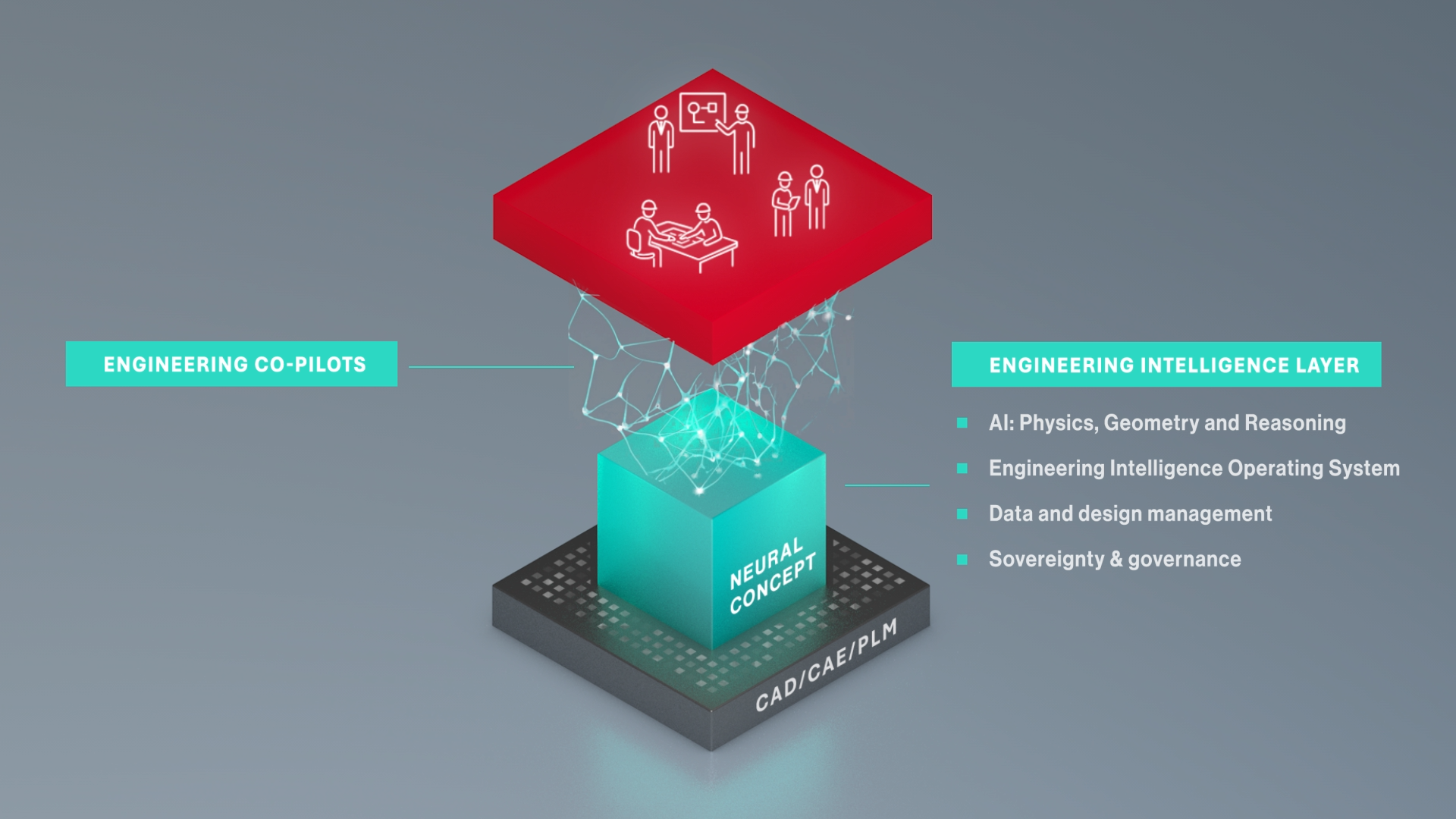
The PLM AI relationship is bidirectional and self-reinforcing: data from PLM trains AI; AI is transforming PLM by making it more actionable.
PLM and Data
AI implementation redefines how organizations innovate, collaborate, and compete by injecting intelligence into every phase of the lifecycle.
CAD Models
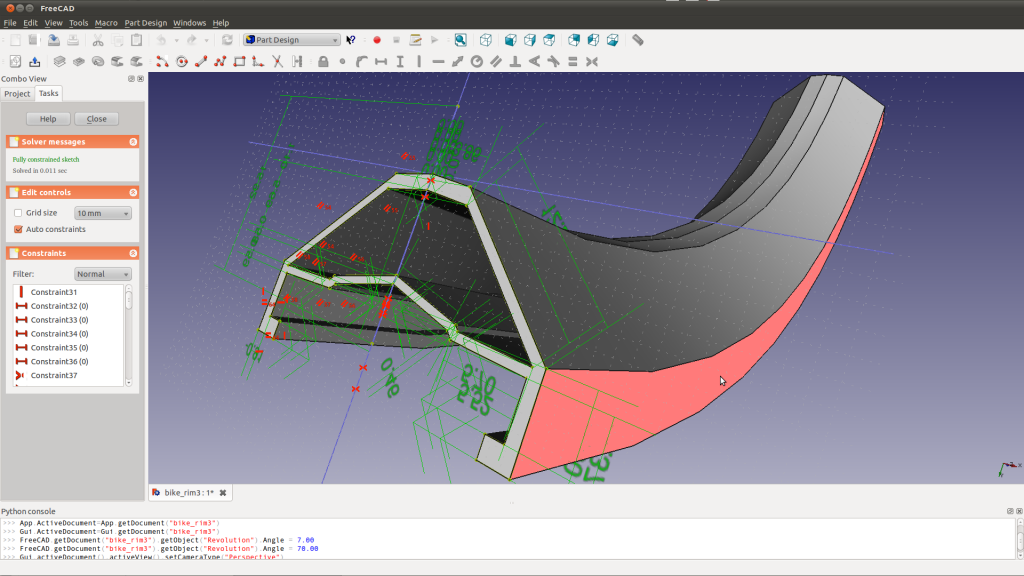
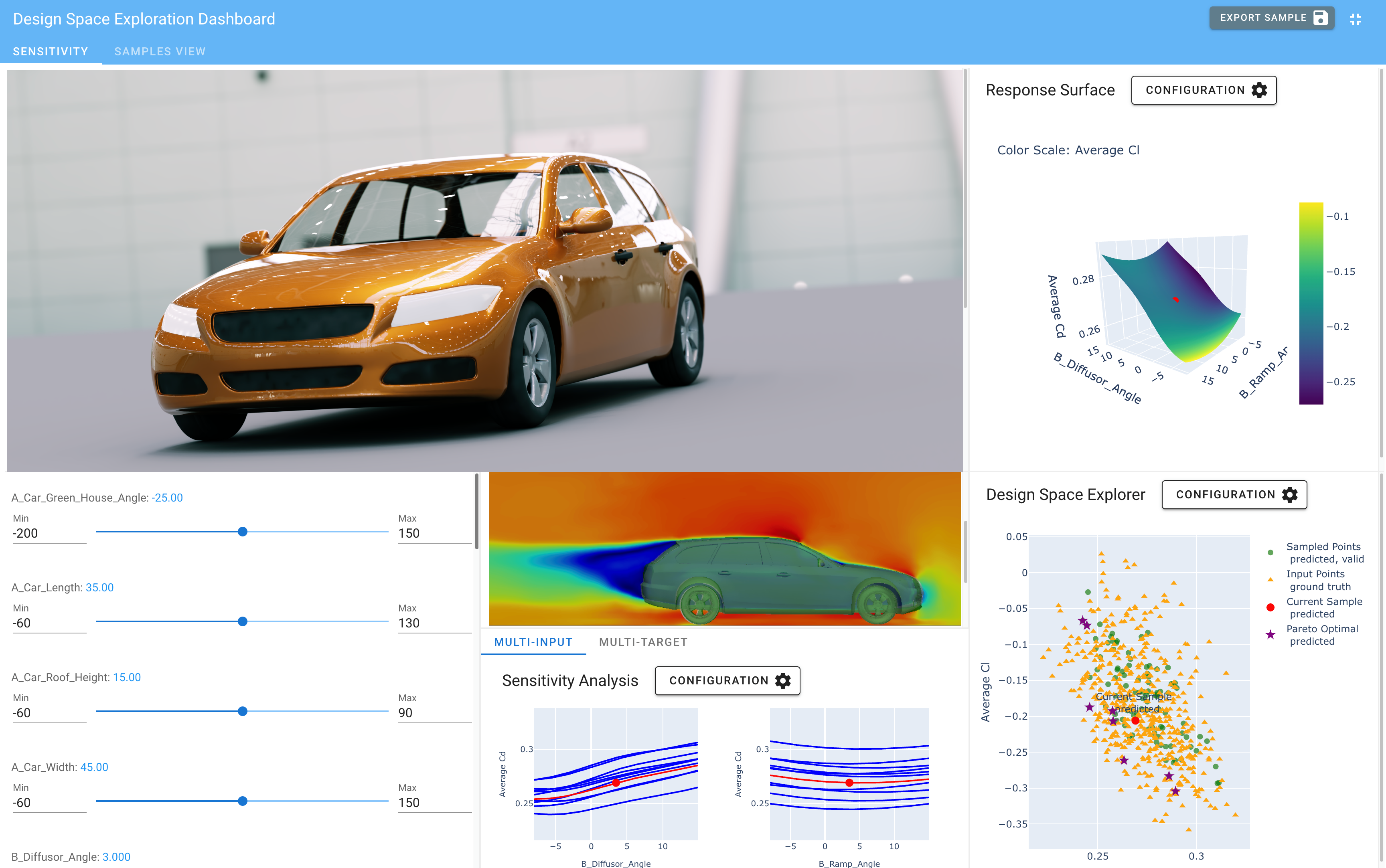
CAD is the master record of design intent. CAD captures every shape, tolerance, and assembly relationship. It is the primary input for AI surrogate models that learn to predict simulation outcomes from geometry alone, without rerunning a full solver on every iteration. Read more on CAD technology.
Simulation Data
Simulation data are the training ground for engineering AI. Each solved model (aerodynamic, thermal, structural) becomes a data point that AI learns from to predict performance for new geometries. The larger and more consistent this dataset is, the more reliably AI can retrieve information and compress the design cycle time. Learn more about self-learning AI in engineering design and simulation.
Bills of Materials (BOMs)
BOMs are structured records of every component, configuration, and supplier relationship in a product. They are the foundation for
- eliminating errors in the manual entry of data,
- detecting part-reuse opportunities across product families,
- maintaining real-time sync between engineering and ERP (Enterprise Resource Planning) during production planning.
Change Histories
Change Histories are the audit trail that makes regulatory compliance traceable. They also give AI models the signal they need to learn which types of changes have historically introduced quality risk, enabling predictions before problems propagate downstream.
Regulatory Submissions
Regulatory Submissions are among the most demanding categories in PLM. Regulatory Submissions accumulate as unstructured documents, test reports, declaration matrices, and approval records, making them difficult to query and expensive to maintain manually.
- Retrieval-augmented generation (RAG) tools now enable users to query these unstructured documents in everyday language, making document search more intuitive and accessible for engineers and compliance teams.
- LLM-based agents can parse this content to retrieve information relevant to a new submission and generate draft compliance matrices, while qualified engineers retain sign-off authority.
- AI-powered natural language processing allows users to query PLM systems using conversational language, simplifying data access and improving usability.
- AI models can also interpret user intent from natural-language queries, improving the accuracy and relevance of search results in PLM systems.

Expected Business Outcomes for AI in PLM
AI-integrated PLM produces measurable returns across four dimensions. The figures below are based on documented research and industry deployments; the ranges reflect variation across implementation maturity and sectors. The figures below reflect published research and documented industry deployments. Ranges are given where outcomes vary by industry maturity and implementation scope.
- On schedule performance, the 2018 Aberdeen/PTC study of connected PLM environments [2] found that best-in-class manufacturers the top 20% of organisations polled) achieved a 58% higher rate of hitting product date targets than their peers. AI augmentation of simulation and change management pushes adopters toward the upper tier by removing manual bottlenecks that cause slippage.
- Regarding engineering productivity, the same Aberdeen/PTC study found that best-in-class PLM users achieved a 2.4x year-over-year improvement over the industry average. The mechanism is reduced duplication: engineers retrieve validated data rather than recreating it.
- On development budgets, best-in-class organisations reported a 22% higher rate of products meeting development budgets, and a 21% higher rate of products hitting quality targets at launch.
- In regulatory documentation, AI-assisted generation of compliance records from structured PLM data materially reduces preparation time. However, published benchmarks vary too widely across regulatory frameworks to cite a single figure.
Outcome
Best-in-class advantage
Hitting product date targets
58% higher rate
Engineering productivity growth
2.4x industry average
Meeting development budgets
22% higher rate
Hitting quality targets at launch
21% higher rate
Regulatory document preparation
Significant reduction
Real-World Applications of AI Models in PLM
Artificial Intelligence features in PLM systems can automate the extraction of relevant information from supplier specification documents, improving accuracy and speed during raw materials onboarding. AI also enhances manufacturing processes by improving data retrieval and search capabilities and supporting digital transformation in manufacturing environments. Applied more broadly in PLM, AI enables generative design, predictive maintenance, automated compliance monitoring, and intelligent supplier management, each addressing a different stage of the product lifecycle where manual workflows create bottlenecks.
- Airbus used generative design to create a “bionic partition” for the A320, making it 45% lighter while maintaining structural integrity.
- Rolls-Royce leverages AI-enhanced digital twins to monitor jet engine health, reducing unscheduled maintenance by 30%. AI predicts equipment failures by analyzing IoT sensor data, reducing downtime by 30–50% and extending equipment lifespan by 20–40%.
- The medical devices sector, due to its complexity and strict regulatory requirements, is a critical area where AI integration in PLM supports compliance and accelerates innovation. For instance, Breg, a medical device company, saw a 186% ROI (Return on Investment) within one year by adopting AI-enabled PLM to automate quality document control.
Introduction to Artificial Intelligence in PLM
The biggest challenge in product development today is the distribution of product data across multiple systems and organizations. PLM systems manage product data, engineering changes, bills of materials, and workflows from concept to retirement. Their core limitation is that they remain reactive: they store and route information, but do not interpret it or act on it proactively.
AI changes this. The implementation is divided into three layers, each building on the previous:
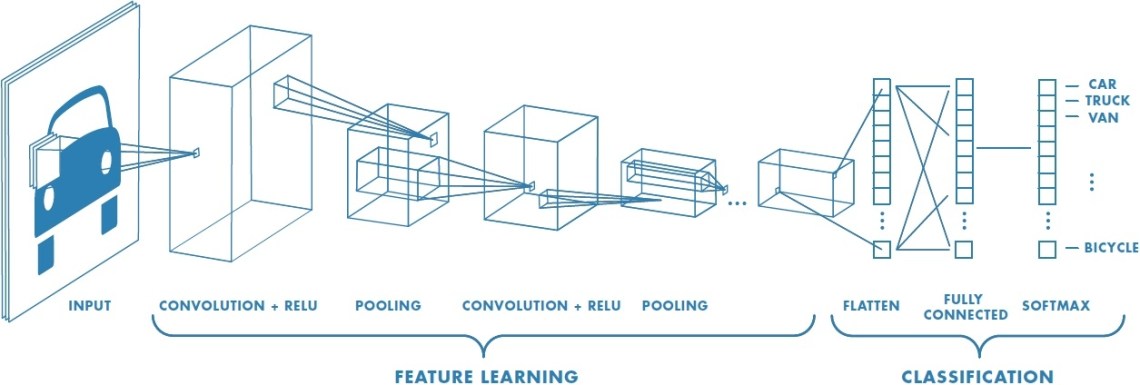
- Prediction comes first: models trained on historical data learn to forecast quality issues, failure modes, or maintenance needs before they occur. At this stage, ROI is most directly measurable. See more on predictive engineering analytics based on neural networks and CAD model recognition.
- Generation follows. Once a prediction is established, AI can generate new design variants, compliance drafts, or test cases based on existing validated data rather than starting from scratch. See more on generative design with AI.
- Automation operates across both: executing structured, rule-bound tasks such as classification, routing, and validation without human intervention, so engineers engage only when judgment is required.
The main PLM pain points that AI addresses directly are: fragmented engineering data, slow simulation feedback loops, manual BOM reconciliation, and disconnected change management across global teams.
Automating Tasks in PLM
Eliminating manual data entry is one of the fastest paths to operational efficiency in PLM, because the tasks involved are high-frequency, rule-bound, and currently error-prone - precisely the conditions where automation delivers measurable ROI within the first 90 days of deployment.
Manual tasks with the highest automation potential, ordered by typical time-to-value, are:
- BOM comparison across engineering and manufacturing versions (baseline: 4–8 hours per release)
- Change impact assessment across dependent BOMs (baseline: 1–3 days per ECR).
- Part number classification and attribute population (baseline: 2–4 hours per part family)
- Onboarding and validation of data from suppliers (baseline: 3–10 days per supplier)
- Regulatory document assembly from structured data (baseline: 2–5 days per submission)
The Digital Thread and AI
To move from data storage to engineering intelligence, manufacturers must connect lifecycle information into a continuous thread and embed AI agents that can reason, predict, and act within it under clear governance boundaries.
A true digital thread is a connected data record that links every stage of a product’s life into a single, traceable chain.
The product lifecycle encompasses all activities from initial design through manufacturing, service, and retirement.
When a design changes, the change propagates to all downstream operations (BOM, manufacturing instructions, compliance documents). Every stakeholder, therefore, works from the same current state. Recalling the initial example in our article, misalignments that would otherwise surface as late-stage, expensive errors can be resolved upstream.
What is Agentic AI?
An AI agent is a software system that pursues a defined goal without human intervention at each step.
It takes a sequence of actions, evaluates the results, and adjusts its next steps accordingly.
In a PLM context, a change management agent receives an engineering change request, checks it against requirements and regulatory compliance criteria, identifies affected BOM items, routes it to the correct approvers, and logs the outcome. It operates within defined rules and escalates to a human when a decision falls outside its authority.
Agentic AI Roles Examples
In each case here, agents surface information, generate recommendations, and flag exceptions:
- A change management agent triages and routes engineering change requests
- A BOM validation agent checks completeness and flags missing or obsolete parts
- A compliance agent maps product attributes to regulatory requirements and generates draft documentation
- A design review agent checks new geometry against prior simulation results and design rules.
Guardrails for Agentic Actions
AI agents do not approve designs, release BOMs, or sign off on compliance submissions; those decisions remain with qualified humans, while every agent action is logged for audit.
The four elements building guardrails for autonomous actions are:
- a defined action boundary (what the agent can execute without approval),
- an escalation path (what triggers human review),
- a confidence threshold (below which the agent abstains and notifies), and
- a full audit log of every action taken.
What is Generative AI?
Generative AI produces new content from learned patterns. In engineering workflows, this means generating design variants from performance constraints, producing draft compliance documentation from structured data, or suggesting part substitutions based on historical BOM and supplier data.
Generative AI and Machine Learning for Design
Given constraints such as load, weight, material, and manufacturing method, generative AI produces a range of valid 3D geometry options. Engineering AI platforms can generate thousands of CAD-ready variants in hours, compressing exploration cycles that previously took months. Engineers evaluate a curated set of high-performing candidates rather than building each one manually.
Machine learning tasks mapped to engineering workflows:
- Regression models predict simulation outcomes (aerodynamic, thermal, structural) from CAD geometry, eliminating the need for full recomputation on every design iteration. This is where the ROI for simulation acceleration is generated.
- Classification models flag non-conforming parts or high-risk changes based on historical quality data, enabling earlier detection in the design cycle.
- Clustering identifies design patterns across a product family, surfacing reuse candidates that manual BOM review would miss.
Model training requires historical CAD files and their simulation results, BOM records, change logs, quality inspection data, and field service records. Data quality and lifecycle coherence are prerequisites; models trained on inconsistent or poorly governed data produce unreliable outputs regardless of algorithm quality.
How Do Leading Manufacturers Use Predictive Analytics Across Supply Chains?
Leading manufacturers are embedding predictive analytics directly into PLM workflows to give engineering teams earlier visibility into supply chain risk, component availability, and manufacturing constraints before those issues delay a programme. The measurable ROI comes from a structural change: when engineers see supplier lead times and cost data alongside CAD geometry, trade-offs are resolved upstream where they are less expensive.
Key outcomes documented across deployments:
- Connecting supplier portals to product data allows AI to flag cost-efficiency risks at the design stage rather than after release, directly supporting higher-quality products at lower total cost.
- Fewer late-stage changes driven by supply chain surprises translate directly into faster development cycles. The mechanism is constraint-awareness earlier in the design process.
- Strategic alignment between design and procurement reduces both physical sample costs and emergency resourcing costs, contributing to the competitive advantage that manufacturers with a mature PLM strategy sustain over those without.
How Do AI-Driven Engineering Tools Support Cross-Functional Collaboration?
Traditional engineering tools keep data siloed by function: design, simulation, manufacturing, and quality. AI-driven tools address this by combining knowledge graphs that map relationships among components, processes, and decisions with retrieval-augmented generation, which surfaces relevant prior work and validated designs when an engineer needs them.
The result is that cross-functional collaboration no longer depends on people knowing who holds which information. Cost savings come from reduced duplication: samples and late-stage rework decrease when design, compliance, and manufacturing teams share a single connected knowledge base from the start. Via this structural mechanism, AI-driven PLM platforms accelerate product development and improve product quality across the organisation.

Vendor Landscape, Market Trends, and Emerging Technologies
Major PLM platforms (listed below) are embedding AI capabilities. Specialist engineering AI platforms operate as an intelligence layer above PLM, focusing specifically on simulation acceleration, generative design, and geometry-aware AI copilots. These emerging technologies integrate with existing PLM systems via API, rather than replacing them.
Six leading PLM solutions widely adopted across industrial sectors are the following:
|
PLM Solution |
Core Capabilities |
Positioning / Typical Use |
|---|---|---|
|
Siemens Teamcenter |
Enterprise PLM platform supporting multi-CAD integration, thread architecture, configuration management, and analytics. |
Common in large, complex manufacturing environments such as automotive and aerospace. |
|
PTC Windchill |
Lifecycle data management with strong change control, supplier collaboration, IoT integration, and flexible cloud/on-prem deployment. |
Well-suited for manufacturing-centric workflows requiring traceability and ecosystem connectivity. |
|
Dassault Systèmes ENOVIA |
PLM backbone within the 3DEXPERIENCE platform; integrates CAD, CAE, simulation, and collaborative engineering processes. |
Selected for globally distributed engineering organizations needing unified collaboration. |
|
Aras Innovator |
Model-based, highly configurable PLM platform with open architecture and extensible enterprise workflows. |
Appeals to companies prioritizing flexibility and reduced vendor lock-in. |
|
Oracle Fusion Cloud PLM |
Cloud-native lifecycle management integrated with ERP, supply chain, compliance, and quality modules. |
Suitable for enterprises seeking tight lifecycle–ERP integration and centralized governance. |
|
Autodesk Fusion Manage |
Cloud-based PLM integrated with Autodesk design tools; supports change management, quality workflows, supplier collaboration, and AI-assisted automation. |
Strong fit for mid-to-large manufacturers bridging CAD, manufacturing, and digital thread processes. |
Selecting a PLM Partner: Key Considerations and Evaluation Criteria
When defining your PLM strategy, vendor selection is crucial, given high switching costs and the importance of integration in capturing AI value.
Evaluate four criteria in this order:
- Open architecture is the prerequisite. If the platform does not expose APIs that allow integration with your existing PLM, ERP, and CAD tools without custom middleware, every downstream capability is constrained by that gap.
- Interoperability determines integration cost. Can it ingest your current data formats (STEP, JT, native CAD) and write back to your PLM system without manual reformatting? The answer defines how much data preparation work precedes any AI deployment.
- Model governance is essential in regulated industries. The vendor must provide model version control, retraining schedules, performance monitoring, and documentation structured for regulatory audit.
- Total cost of ownership includes licensing, integration effort, training, data preparation, and ongoing model maintenance. Projects that underestimate the time required for data preparation consistently overspend.
Transforming Product Lifecycle Management with Simulation Intelligence and Analysis
The integration of AI into PLM software is one of the defining evolutions in product lifecycle management (PLM) in the digital age. Rather than running a full physics solver on every design iteration, engineering teams using AI-enabled PLM can deploy surrogate models trained on historical CAD (Computer-Aided Design) models and simulation data to predict performance in seconds.
AI-supported simulation makes design exploration tractable within a normal development schedule and directly improves product quality and cost efficiency by catching problems before physical production begins.
Companies that address data quality first and align AI capabilities with that foundation are best positioned to accelerate innovation and sustain a competitive advantage as PLM optimization continues to evolve.
From Manual Operations to Automated Design Validation
Simulation setup traditionally requires an engineer to prepare geometry, apply boundary conditions, run the solver, and interpret results: a sequence that can take days per iteration. AI tools trained on CAD files, engineering data, and supplier data can automate geometry preparation, flag manufacturability issues before meshing, and predict outcomes for new variants without rerunning the full solver.
Automating these tasks, including data entry and simulation setup, frees engineering teams from repetitive work and reduces human error. AI capabilities such as ML, generative AI, and predictive analytics allow teams to test product designs virtually, long before a sample is produced.
Data Unification Across PLM, ERP, and Supplier Systems
The ability of PLM platforms to unify data across the product lifecycle is what makes simulation intelligence operationally useful. When PLM systems, ERP systems (Enterprise Resource Planning), and supplier portals operate on separate update cycles, engineers make decisions based on stale records: a geometry change not yet propagated to the BOM (Bill of Materials) or supplier data revised without notification.
Real-time synchronization between these systems ensures that relevant information is up to date for all stakeholders, supports cross-functional collaboration, and maintains the digital thread, where every change is traceable and every decision is grounded in accurate data.
Regulatory Compliance as a Structured Output
AI enhances manufacturers’ ability to meet regulatory compliance requirements by treating compliance documentation as a structured output of PLM optimization rather than a manual assembly task.
When proprietary data, product attributes, test results, and change histories are consistently governed within PLM software, AI-driven tools can map them to regulatory requirements and generate draft compliance matrices.
For instance, AI can generate documentation for CE (Conformité Européenne) marking, FDA (Food and Drug Administration) submissions, or ITAR (International Traffic in Arms Regulations) records.
This approach reduces the administrative burden on engineering and compliance teams and supports a broader PLM strategy oriented toward operational efficiency.
Simulation Intelligence Case Studies
The following cases demonstrate what happens when AI is embedded directly into engineering workflows. AI acts as a design copilot, thanks to accelerated performance and response times, compressing iteration cycles from months to days and expanding design spaces.
SP80 Hydrofoil Optimization
The Swiss SP80 sailing team used Neural Concept’s AI platform to optimize ventilated hydrofoil profiles. AI-generated variants and pilot feedback yielded a measured performance improvement of over 20%, compressing an exploration process that would have taken months into days through iterative simulation in the classical engineering workflow.

Accelerate Innovation in Automotive Interiors
Antolin partnered with Neural Concept to embed AI-native design copilots into automotive engineering workflows.
Traditionally, interior lighting components required manual design and lengthy simulations, often taking weeks to complete. Now, AI copilots in CAD and simulation tools enable engineers to generate, evaluate, and optimize designs in days. These copilots predict performance, guide geometric changes, and reduce the need for full simulations.
Instead of testing one configuration at a time, engineers reviewed AI-suggested alternatives, focusing more on decision-making than on trial and error.
This approach accelerates development and allows earlier validation against safety and performance standards.
By expanding this platform across product lines, Antolin is transforming AI from a pilot to a core capability, helping engineers explore design spaces faster.
The Digital Age of PLM
The digitalization of engineering workflows is reshaping Product Lifecycle Management (PLM) architectures. Modern PLM platforms are evolving from passive data repositories into computational environments that integrate AI models within product development pipelines. These systems manage heterogeneous engineering data, including CAD geometry, simulation outputs, test measurements, and manufacturing constraints, while enabling machine learning models to operate directly on this information.
AI modules embedded in PLM environments can process large multi-modal datasets to detect correlations between design parameters, physical performance, and manufacturability constraints. AI (deep learning, machine learning) enables predictive evaluation of design alternatives, automated exploration of design spaces, and earlier identification of performance or production risks during development.
The integration of AI within PLM also changes engineering workflows. Design, simulation, and manufacturing feedback loops become more iterative and data-driven. Engineers can evaluate larger sets of design variants, reduce simulation bottlenecks using surrogate models, and shorten the cycle from concept exploration to validated design.
AI-enabled PLM platforms, therefore, support faster design convergence, improved traceability across the digital thread, and tighter integration between engineering, manufacturing, and lifecycle operations from concept development through service and end-of-life management.
Everyday Language and User Experience in AI-Driven PLM
User interaction plays a central role in the adoption of AI-enabled PLM systems. Recent advances in natural language processing allow users to query and manipulate complex product datasets through conversational interfaces rather than cumbersome structured database syntax.
This interaction model lowers the operational overhead of manual data navigation and entry.
AI assistants integrated within PLM environments can also interpret engineering context, linking queries to stored CAD models, requirements documents, simulation outputs, and manufacturing data.
AI services further support continuous synchronization of lifecycle data across domains (engineering, manufacturing, and program management). Updates to geometry, requirements, or validation results propagate through the data model in near real time, allowing teams to operate on consistent, up-to-date information.
These capabilities improve data accessibility and strengthen cross-functional coordination. Teams (engineering, simulation, and manufacturing) can access shared product context more efficiently, reducing decision-making latency and maintaining traceability across the product lifecycle, from early design exploration through production and service.
Challenges Facing AI Adoption in PLM
Integrating AI into PLM environments introduces several technical and organizational challenges.
Addressing the technical and organizational constraints below enables companies to deploy AI within PLM infrastructures in a controlled, scalable manner while maintaining data integrity across the product lifecycle.
- A primary constraint concerns data quality and structure. Machine learning models depend on consistent, well-curated datasets. In many organizations, engineering data is fragmented across CAD systems, simulation environments, requirements databases, and manufacturing platforms. Inconsistent metadata, incomplete records, and heterogeneous data standards can limit the effectiveness of AI models operating within the PLM infrastructure.
- System integration represents another major challenge. Many PLM deployments rely on legacy architectures with limited interoperability across engineering tools and enterprise systems. Connecting AI services to CAD repositories, simulation pipelines, manufacturing execution systems, and requirements management tools often requires substantial data engineering, interface development, and workflow redesign.
- Successful deployment also requires organizational capabilities. Teams must develop expertise in data governance, model lifecycle management, and AI-assisted engineering workflows. Establishing consistent data standards, improving traceability across engineering artifacts, and enabling collaboration between engineering, IT, and data science groups are important steps for maintaining reliable AI-supported PLM environments.
2026 Market Trends: AI as the Core Engine of PLM Evolution
As we enter 2026, AI integration is foundational to PLM competitiveness. Recent analyst insights highlight accelerating momentum:
- Gartner predicts that by 2028, 80% of digital threads will originate in PLM systems (up from ~45% today), with increased investments to make PLM the “foundation platform” for traceable, AI-augmented product data across design, manufacturing, and service [3].
- IDC’s 2026 Manufacturing FutureScape forecasts that by the end of 2026, over 45% of major OEMs will use AI to connect data in closed loops, directly improving quality and reducing late-stage issues, echoing the Ford/Firestone risks highlighted earlier [4].
- The AI in manufacturing market is projected to grow at CAGRs of 23-46% through 2030 (sources vary: IoT Analytics at 23% to $154B; Grand View Research at 46.5% for AI in manufacturing). The surge is driven by predictive simulation, generative design, and agentic automation that compress design cycles [5][6].
Key emerging trends include:
- AI-Native and Agentic PLM: Platforms evolve from reactive data repositories into proactive systems with embedded agents for change triage, compliance drafting, and autonomous validation, all within strict human guardrails.
- Simulation Intelligence at Scale: Surrogate models and geometry-aware AI become standard for rapid iteration, reducing full-solver runs by orders of magnitude and enabling the generation of thousands of variants in hours.
- Data Quality as the Gatekeeper: As adoption accelerates, poor governance remains the top constraint. Organizations prioritizing clean, traceable lifecycle data (CAD + sim + field) see the fastest ROI.
Neural Concept’s AI-first design platform aligns directly with these trends.
The platform sits atop existing PLM/CAD environments, delivering physics- and geometry-aware predictions that accelerate simulation feedback and generative exploration. Deployments in aerospace, automotive, and industrial sectors already demonstrate 20%+ performance gains in targeted applications (e.g., hydrofoil optimization, turbine design), positioning teams to capitalize on 2026’s agentic and intelligence-driven PLM trends.

FAQs
What are the 5 key applications of AI in PLM?
Key applications of AI in PLM include AI-driven generative design, predictive maintenance, automated compliance monitoring, demand forecasting, and intelligent supplier management.
AI vs ML in PLM: what’s the difference?
ML is a subset of AI that trains statistical models on historical data. In PLM, ML handles prediction and classification; broader AI adds generative models, NLP-based agents, and rule-driven automation that ML alone cannot perform.
What is the difference between AI in PLM and a digital twin?
A digital twin is a real-time virtual replica of a physical product or system. AI in PLM analyses and acts on the full product record across its lifecycle. Digital twins are one data source AI models can learn from and update.
How does AI enhance digital twins?
AI enhances digital twins by simulating how changes in design, usage, or environment will impact performance over time, providing insights for future product versions.
What is the cost of implementing AI in PLM systems?
Cloud-based entry points start below $100K annually. Enterprise systems integrating AI with PLM, ERP, and CAD infrastructure range from $500K to several million, depending primarily on the scope of data preparation and the complexity of integration.
How does AI-powered PLM compare to traditional PLM systems?
Traditional PLM stores and routes product data; it is reactive by design. AI-powered PLM interprets that data, surfaces recommendations, and acts on defined triggers, evolving the system from a record-keeper to a decision-support layer that reduces engineering cycle time.
Can AI help BOM?
Yes. Within the PLM context, AI-driven BOM management can automate BOM adaptation by replacing obsolete parts with real-time supplier data, improving efficiency.
What could limit the effectiveness of AI in PLM systems?
AI integration in PLM systems often struggles with unstructured and inconsistent data, which limits the effectiveness of AI tools. Examples of poor data governance are: inconsistent naming, missing attributes, and fragmented lifecycle records. It’s the most common cause of underperformance after deployment.
What type of collaboration is recommended to deploy AI in PLM?
Collaboration between engineers and data scientists is essential. Engineering leads must define what decisions AI should support; teams must ensure the underlying data meets the quality threshold required for model training. The lack of cross-functional expertise in organizations can hinder the successful implementation of AI in PLM systems.
What does “natural language processing” mean in a PLM context?
Most PLM systems require users to know where data is located and how to query it. Natural language processing (NLP) removes that barrier, allowing engineers to retrieve information using plain language rather than formal database queries.
What is an example of manual task automation?
AI automates the ingestion of engineering documents by extracting structured data using NLP and computer vision, reducing manual data entry and associated errors.
Endnotes
[1] Wikipedia
[2] Integrating PLM & ERP (Research Brief)
[3] https://www.gartner.com/en/industries/manufacturing-digital-transformation
[4] (full report behind paywall) my.idc.com/getdoc.jsp?containerId=US53859625
[5] https://iot-analytics.com/industrial-ai-market-insights-how-ai-is-transforming-manufacturing
Glossary of Key Terms
The following terms cover the core technical vocabulary used throughout this article. Each definition provides context specific to Product Lifecycle Management and AI-driven engineering workflows.
|
Term |
Full Form |
Definition |
|---|---|---|
Agentic AI |
Agentic Artificial Intelligence |
AI systems that autonomously pursue goals by acting, evaluating results, and adjusting steps without human approval. In PLM, agents manage tasks such as triaging change requests, validating BOMs, and drafting compliance documents within governance guardrails. |
API |
Application Programming Interface |
A set of rules and protocols enables software systems to communicate and exchange data. In PLM ecosystems, open APIs enable AI platforms to integrate with PLM, ERP, and CAD tools without requiring a full system replacement or custom middleware. |
BOM |
Bill of Materials |
A hierarchical list of components, sub-assemblies, raw materials, and quantities needed for manufacturing. It links design, procurement, and production and serves as a key data structure for AI to analyze part reuse, costs, and risks. |
CAD |
Computer-Aided Design |
Engineers use CAD software to create detailed 2D drawings and 3D models of products. CAD files record all shapes, tolerances, and assembly relationships, serving as the master record of design intent and the main input for simulation and manufacturing. |
CAE |
Computer-Aided Engineering |
Software tools that simulate physical phenomena such as structural stress, heat transfer, and fluid flow in digital models reduce the cost of physical testing by predicting product performance under real-world conditions before prototypes are built. |
CAGR |
Compound Annual Growth Rate |
CAGR measures the average annual growth rate of a market or investment over a period, assuming each year’s growth compounds. It’s used in market analysis to project sector expansion. |
CE Marking |
Conformité Européenne Marking |
A mandatory certification mark for products sold in the EEA, showing they meet EU safety, health, and environmental standards. In PLM, maintaining documentation such as test reports and conformity declarations is essential for CE marking compliance. |
Digital Thread |
A connected data record links all product lifecycle stages from design to retirement in a continuous chain. Changes propagate automatically to all downstream teams and systems. |
|
Digital Twin |
A digital twin is a real-time virtual replica of a physical product or system that mirrors its operating state using live sensor data. Unlike static CAD models, it continuously updates, enabling predictive maintenance and remote monitoring. |
|
ECR / ECO |
Engineering Change Request / Engineering Change Order |
Formal documents that initiate ECR and authorize ECO a modification to a product design, BOM, or manufacturing process. Managing these change records is one of the most frequent workflows in PLM and a primary target for AI-driven triage and routing automation. |
ERP |
Enterprise Resource Planning |
Business software that integrates core company operations into one connected system. In PLM contexts, ERP synchronizes with engineering data to ensure manufacturing and supply chain teams always work from current product records. |
Generative AI |
Generative Artificial Intelligence |
AI models generate new content, text, designs, or geometry, by learning from large datasets. In engineering, generative AI generates thousands of design variants based on performance constraints such as load, weight, and material, allowing engineers to explore a wide solution space in hours rather than months. |
IoT |
Internet of Things |
An IoT is a network of physical devices, such as sensors and machines, that collect and send real-time data via the internet. In PLM and digital-twin use cases, it feeds live product data into engineering systems, supporting predictive maintenance and design improvements. |
ITAR |
International Traffic in Arms Regulations |
U.S. regulations govern defense exports, imports, and transfers. Aerospace, defense, or dual-use product manufacturers must keep ITAR-compliant documents in PLM systems, with strict access controls and audit trails. |
ML |
Machine Learning |
An AI where statistical models learn patterns from historical data and apply those patterns to make predictions or classifications on new inputs without being explicitly programmed for each case. In PLM, ML drives predictions of simulation outcomes, quality risk classification, and part-reuse identification. |
NLP |
Natural Language Processing |
A branch of AI that enables computers to understand, interpret, and respond to human language. In PLM systems, NLP helps engineers search for product data, compliance records, or BOM entries using everyday conversational language, rather than technical query syntax or database commands. |
OEM |
Original Equipment Manufacturer |
A company that designs and sells products or components under its own brand, often assembling them from parts supplied by a network of specialized vendors. In PLM contexts, OEMs are typically the integrators responsible for managing the full product record across their supply chain. |
PLM |
Product Lifecycle Management |
A software platform that manages all data, processes, and workflows related to a product from the initial concept through design, manufacturing, service, and end-of-life retirement. It acts as the single source of truth for engineering, quality, procurement, and compliance teams. |
RAG |
Retrieval-Augmented Generation |
An AI technique combines a language model with a search step: it retrieves relevant documents from a knowledge base before generating a response, using them as context. In PLM, RAG allows engineers to query regulatory archives or technical documents in conversational language. |
Surrogate Model |
Surrogate / Proxy Model |
A machine-learning model trained on historical simulation data can quickly predict a new design’s physical performance without rerunning a full physics solver. Surrogate models mainly help AI shorten engineering design cycles and reduce computational costs. |