AI for Structural Engineering and How It's Transforming the Industry
This guide shows practicing engineers and students how to use AI for structural engineering to achieve measurable gains in speed, design quality, and monitoring. In practice, that means data-driven systems that accelerate predictions, generate and optimize design options, automate repetitive design tasks, and assess structural health in real time.
Four applications drive results: rapid response prediction, generative and topology optimization, automated design and documentation, and continuous health monitoring. These capabilities let engineers explore more alternatives, detect damage earlier, cut material waste, and improve decisions on cost, safety, carbon, and long-term performance.
This guide shows where AI delivers, where it falls short, and where human judgment remains essential. It covers AI fundamentals, structural analysis and design, generative workflows, implementation steps, and case studies demonstrating how these tools are applied in practice.
Modern structures generate data at every stage. AI systems learn from this data and deliver results at speeds traditional methods cannot match. For engineers, two outcomes matter:
You can flag structural damage and anomalies earlier, supporting continuous monitoring rather than periodic inspection.
You can automate structural engineering workflows where repetitive operations would otherwise slow down the process.
Industry leaders now pilot AI alongside traditional methods. Data-driven prediction complements physics-based analysis, enabling engineers to apply these tools at scale.

Table of contents
What is Artificial Intelligence?
What is the focus of applications in structural analysis and design?
Material optimization
Design process automation
Implementation roadmap for structural engineers
Case studies
Bridge monitoring
Post-earthquake building assessment
Building design
Adoption by industry leaders
How does AI optimize design?
Key takeaways
What is Artificial Intelligence?
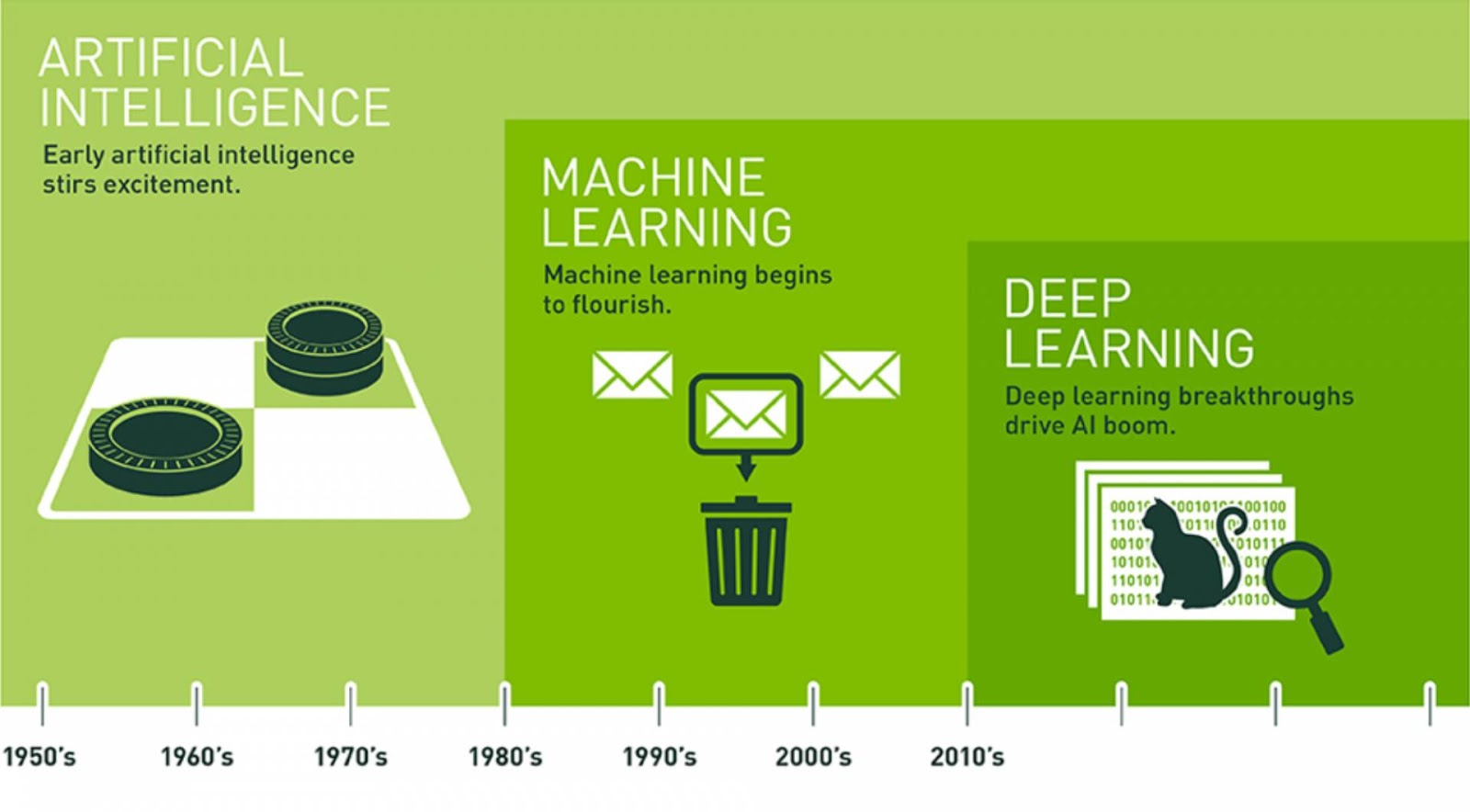
Artificial Intelligence refers to systems that learn from data rather than relying solely on explicit programming. The core idea is simple: learn and improve as you see more examples.
Deep Learning is the primary approach for training a physics-aware AI model that predicts structural response. For example, a training dataset may include
input: geometry of structures in their full complexity (e.g., 3-dimensional Computer-Aided Design CAD) with loads and various environmental conditions
output: performance parameters, for instance, learned outputs are the resulting stresses and other KPIs for structural integrity
Deep learning underpins many of the AI tools now embedded in structural engineering software, from response prediction to image-based inspection.
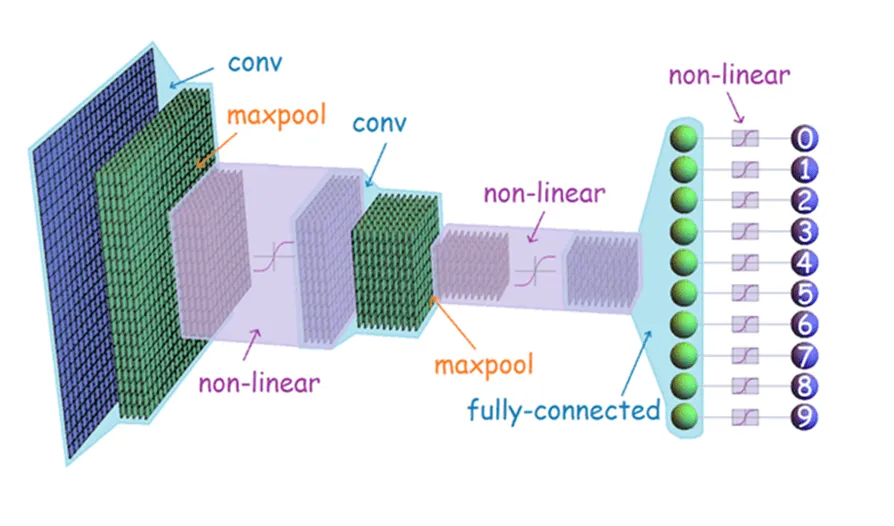
The input-output mapping is learned via training on datasets, and the trained model can predict results for new cases. An example of a structural result is the stress concentration factor.

What is the focus of applications in structural analysis and design?
AI applications in structural analysis focus on speed and exploration:
Speed: Physics-aware AI models assist finite element analysis (FEA) by predicting results in seconds, learned from input/output CAD/FEA relationships.
Augmented design space exploration: Machine learning (ML) and deep learning provide an accelerated alternative to running a full simulation for every candidate, thereby expanding the design space exploration.
Novel solutions: Within a fixed timeframe, physics-aware AI replaces a handful of simulations with hundreds of predictions, uncovering configurations that a manual iteration loop would have ruled out.
A design copilot can generate and evaluate thousands of potential design configurations, identifying optimal solutions that humans might overlook.
Generative design: Given objectives and constraints, AI autonomously generates and evaluates thousands of configurations, returning optimized candidates across the full solution space
Material optimization
AI can identify design choices that reduce waste, lower environmental impact, and maintain safety and performance. In many applications, AI-driven optimization leads to more efficient use of construction materials. The result is to support sustainability goals.
These improvements are achieved with genetic algorithms and neural networks. A genetic algorithm searches combinations of member sizing and layout against objectives such as mass and peak stress, keeping the fittest candidates across successive generations. Neural networks learn from previous designs, simulations, and real project outcomes, then help optimize to lower the environmental impact of material choices, not just predict the performance of a new layout without rerunning each analysis.
Material optimization using AI involves techniques such as topology optimization and generative design. Those techniques are deployed to identify the most efficient structural forms.
These techniques help students and practitioners in the engineering profession evaluate alternatives more quickly than traditional trial-and-error methods.
For instance, at Beijing Daxing International Airport, generative design applied to the glass skylight connections achieved a 57% reduction in mass compared to traditional plate-type connections, while also reducing peak equivalent stress by 38%.
Full reference: Wang, H. et al. (2024). "Generative design and topology optimization research for single-layer aluminum alloy grid shell connections". Case Studies in Construction Materials, 21. https://doi.org/10.1016/j.cscm.2024.e03781

Design process automation
In design automation, AI integrates into each stage:
Concept: generate candidate designs via generative approaches
Prediction: run fast physics-aware AI models for feedback
Detailing: automate drawings and documentation
Review: check compliance with building codes, which specify the minimum standards a structure must meet to be considered safe and legally compliant. Domain-specific assistants trained on a closed library of standards and guidance can answer compliance questions and surface the relevant provisions. One example is NCSEA's Ask Archie, which replaced the SE GPT tool retired in March 2026 and draws on a vetted corpus of STRUCTURE magazine articles, webinars, and white papers.

AI can automate tedious tasks by handling vast amounts of preprocessing, postprocessing results, report generation, compliance documentation, and drawing production. It can also highlight discrepancies in compliance documentation, with automated checks reducing errors before reviewer sign-off.
Standards groups are also working with industry partners to build vetted assistants and knowledge resources. Streamlining administrative tasks such as summarizing meeting notes, writing reports, and researching technical topics frees engineers to focus on design and raises productivity across the office.
Implementation roadmap for structural engineers
Adoption requires a well-organized approach.
Assess data readiness: their quality is essential.
Select technologies by evaluating AI and other new tools against workflow needs and project goals.
Pilot on low-risk projects as a starting point for uncertainty estimation.
Scale successful workflows across the organization.
The implementation can incur high initial costs for software, hardware, and training. Future capability gains justify the investment.
Adoption also depends on people. Senior engineers hold the domain judgment that validates AI output, while younger engineers tend to arrive fluent in data tools, and closing that generational skills gap through structured upskilling determines how fast a firm benefits. AI-driven educational programs help students adapt to shifting technological trends, and free online AI courses are available for construction professionals. NCSEA points engineers toward open courseware for this purpose, including Coursera, DeepLearning.AI, MIT OpenCourseWare, LinkedIn Learning, and Kaggle.
Read more about how to assess uncertainty in deep learning applications.
Case studies
This section presents practical applications, concentrating on how artificial intelligence is integrated into structural monitoring and building design workflows.
Bridge monitoring
According to ASCE's 2025 Infrastructure Report Card, of the 600,000+ bridges in the US, 49.1% are rated fair and 6.8% poor, with over 168 million daily crossings on poor-rated bridges. Continuous AI-driven monitoring directly addresses this issue.
AI-driven structural health monitoring uses sensor networks to track the real-time performance of bridges and other structural systems.
Systems process input from strain gauges, accelerometers, and displacement sensors to detect deviations, structural damage, fatigue, or stiffness loss.
Computer vision analyzes drone or fixed-camera footage for cracks and corrosion, ranking potential issues by severity so inspectors visit the spans that need attention first.
IoT platforms enable continuous data collection, while digital twins integrate this data with physics-based structural models, including static structural analysis, to simulate current and future states.
ML classifies patterns, filters noise, and detects anomalies, including nonlinear structural response indicative of damage or stiffness degradation, beyond traditional thresholds.
This shift from periodic inspections to continuous, condition-based assessment enhances predictive maintenance and safety decisions.
Read more on the difference between preventive and predictive maintenance.

Post-earthquake building assessment
A second application shifts from continuous monitoring to rapid triage after a seismic event. Researchers at Toyohashi University of Technology validated a convolutional neural network that reads acceleration recordings from instrumented buildings and classifies the damage state within seconds of an earthquake, using the wavelet power spectrum of each floor as input.
The method was tested on two currently instrumented essential buildings in Japan, Tahara City Hall and Toyohashi Fire Station, both of which must stay operational for emergency response. Immediate, automated classification tells owners and authorities whether a structure is safe to reoccupy before an engineer can complete a manual inspection.
Reference: Moscoso Alcantara, E. A. & Saito, T. (2022). "Convolutional neural network-based rapid post-earthquake structural damage detection: case study". Sensors, 22(17), 6426. https://doi.org/10.3390/s22176426
Building design
Building design is expensive to get wrong. A study by KPMG quoted by Autodesk, found that only 31% of projects stayed within 10% of their budgets over a three-year period, and that design errors alone account for 38% of construction disputes.
A typical AI-assisted workflow in building design or infrastructure monitoring can be described as follows:
Scope: Applications range from structural health monitoring of existing infrastructure to the design and evaluation of new buildings.
Tools and infrastructure: The workflow integrates AI, CAD, and FEA
Modeling approach: A physics-aware AI model is trained on historical performance records and simulation data to predict structural responses in seconds.
Performance metrics: Effectiveness is assessed by reduced computation time, lower design costs, and improved safety margins resulting from more extensive exploration of the design space.
See also this recent interview on IIE Spectrum on how AI models are changing engineering
Adoption by industry leaders
Beyond research and vendor case studies, large engineering consultancies now report AI in production work. Industry leaders such as Arcadis, Arup, and WSP have moved AI from pilot to practice. WSP describes evaluating hundreds of structural models for a commercial building at the concept stage, comparing embodied carbon, cost, and constructability before detailed design begins, which lets a client set expectations early. Arup runs an in-house generative design tool, InForm, that combines project constraints and client preferences into candidate layouts. Arcadis reports that investment in parametric, computational, and generative design is a stated priority, often coupled with BIM software so that a chosen layout carries directly into the project model. These programs sit outside any single vendor and show that AI tools are entering mainstream structural engineering practices.

How does AI optimize design?
AI optimizes design through AI-driven generative design, automates structural health monitoring, and accelerates simulations. The paragraphs below set out how each of these works and what it changes for the engineer.
Half of all buildings that will exist by 2050 have not yet been built, according to UNEP. This means the decisions engineers make today about geometry, material use, and structural efficiency will lock in emissions for decades. AI-driven design optimization addresses this problem directly, optimizing for material efficiency and carbon impact simultaneously.
It offers opportunities for innovation in design and operational efficiency in both the planning and construction phases of engineering projects.
Furthermore, optimization techniques allow for refining designs and minimizing material usage while meeting design criteria and constraints.
Tools can integrate key design criteria (geometry, loading, materiality, vibration, and embodied carbon) into a single, live, interactive interface, leading to lower greenhouse gas emissions and reduced material extraction.
Key takeaways
Structural engineering artificial intelligence has moved from research demonstrations into production tools, and the gains are consistent across the applications above.
AI learns from data and physics for faster predictions, design exploration, and early anomaly detection.
Materials improve with generative and topology methods, reducing waste while meeting safety, cost, and carbon targets.
Workflows are automated from sketches to compliance, freeing users to exercise judgment.
Adoption needs discipline: phased pilots are crucial to maximize benefits and minimize risks.
The shift this guide describes — from a handful of analyses to hundreds of predictions — rests on one capability: physics-aware AI that reads 3D geometry and predicts structural response in seconds, so engineers explore far more of the design space before committing to a full solve. That is the engineering intelligence layer Neural Concept builds for physical products, already used by more than 70 OEMs and Tier 1 suppliers.
Ready to explore hundreds of design options before your next full FEA run? Discover the Neural Concept platform.
FAQ
How does AI help structural engineering move toward more environmentally responsible outcomes?
Algorithms are particularly effective at optimizing material use and reducing waste, directly contributing to sustainability goals. AI can help structural engineers design smarter, more efficient buildings by enhancing decision-making and incorporating sustainability into the design process. A clear understanding of what a model optimizes for is essential, so that AI tools align with the engineer's and the client's vision for safety, sustainability, resilience, and low embodied carbon.
What forms of artificial intelligence are now part of standard engineering practice?
Artificial intelligence in structural engineering now includes technologies such as computer vision, natural language processing, and machine learning that are increasingly integrated into practice.
What does AI bring to the quality control side of engineering projects?
AI algorithms can automatically analyze vast amounts of project data to identify discrepancies, errors, or deviations from established engineering standards. AI technologies enable automation and improved precision in critical structural engineering tasks, including quality assurance and control. AI can enhance reliability and consistency in quality assurance while reducing the manual effort required from engineers. Automated cross-checking of documents and calculations helps drive reduced errors in deliverables, provided an engineer reviews the flagged items.
How does AI free up engineers from administrative burdens and improve teamwork?
(1) AI can improve team collaboration by allowing users to create and share user-friendly web apps to automate design workflows.
(2) It can dramatically reduce the time required to synthesize stakeholder feedback, summarize comments, and manage administrative tasks in standard development.
(3) It can enhance predictive modeling, anomaly detection, and decision support systems in structural engineering.
(4) It can assist engineers in assessing the lifecycle impacts of structural materials more comprehensively.
What are the boundaries of AI in engineering, and what risks should practitioners be aware of?
AI is not a substitute for professional knowledge and judgment; human judgment remains essential in structural engineering to validate outputs and ensure design integrity. Their critical thinking is essential in the age of AI for checking models, validating outputs, and developing new approaches. Algorithms can automatically analyze large datasets to identify discrepancies, errors, or deviations from established standards. However, AI models require high-quality, unbiased datasets to make accurate predictions, and poor data can lead to flawed designs. Also, implementing AI tools in structural engineering can incur high initial costs for software, hardware, and training. The ASCE Code of Ethics anchors this duty in item 1.h, which directs engineers to consider the capabilities, limitations, and implications of current and emerging technologies in their work.
What safeguards need to be in place before adopting AI in professional practice?
The integration of AI in structural engineering requires clearly defined guidelines and ethical frameworks for its usage. Ethical considerations in AI adoption include addressing inherent data bias that may favor certain materials, construction methods, or stakeholders. Professional bodies are building this governance layer: the NCSEA Foundation has invested more than $100,000 through its Innovation in Structural Engineering grant program to help engineers understand, shape, and responsibly adopt AI in structural engineering practices.
What is the right way to frame AI's overall contribution to the profession?
AI complements, not replaces, human expertise and creativity. It drives innovation in design and operational efficiency, enabling engineers to tackle complex challenges.
How does AI expand what's achievable in the structural design process?
AI algorithms can quickly generate and assess thousands of potential design configurations, identifying optimal solutions that human engineers might overlook. Thus, they improve the efficiency and accuracy of structural design processes by automating repetitive tasks and facilitating real-time data processing. Optimization techniques in structural engineering enable engineers to refine designs, improve performance, and minimize material usage while meeting design criteria and constraints.
How is AI changing the way engineers assess and monitor physical infrastructure?
AI-powered computer vision processes visual data from drones, satellites, and cameras. Predictive models forecast failures and schedule preventive maintenance using historical and real-time sensor data. Structural health monitoring delivers continuous oversight through distributed sensor networks.
Where does AI provide the most direct assistance in everyday engineering tasks?
AI can assist engineers by parsing complex regulatory language and offering targeted answers to compliance questions; forecasting potential failures and scheduling preventive maintenance by analyzing historical and real-time sensor data; and more comprehensively assessing the lifecycle impacts of structural materials by combining historical data with predictive models.
How does AI improve decision-making around a structure's long-term performance?
By combining historical data with predictive models, AI-powered assessments provide accurate forecasts of maintenance needs, durability, and environmental impacts over the entire lifecycle of structures.
What are the challenges in AI adoption for structural engineering?
Key challenges in adoption include data quality, the “black box” problem, and the need for skilled professionals. Ethical issues include data bias that may favor certain materials or construction methods. Engineers must ensure alignment with safety, sustainability, and low-embodied-carbon goals. The integration of AI requires clear guidelines and ethical frameworks. In the US, organizations such as ASCE (American Society of Civil Engineers), SEI (Structural Engineering Institute subdivision), and NCSEA (National Council of Structural Engineers Associations), or IABSE (International Association for Bridge and Structural Engineering) and fib (Fédération Internationale du Béton) internationally, are developing standards that will shape the future possibilities for AI in the profession.