
AI in Mechanical Engineering - How Is It Used?
Mechanical engineers use AI to explore larger design spaces within the schedule and bring engineering simulations to stages of development where they were previously too costly.
This is possible thanks to AI systems (neural networks) that predict fluid mechanics or stress analysis across design variants, enabling exploration of design spaces that once took days to weeks.
Mechanical engineering faces pressure from multiple directions simultaneously:
- demand for innovative high-performance products,
- stricter sustainability and energy-efficiency targets,
- cost and time pressures from global competition.
AI addresses these pressures throughout the full mechanical systems design cycle. Engineers can train AI models to automatically explore thousands of configurations and flag the most promising candidates against defined objectives.
The collaboration scenario that works best is a division of expertise:
- Data scientists and AI engineers build and maintain the models.
- Mechanical engineers define the physical problem, supply domain knowledge, and act on the predictions.
Key Takeaways for AI in Mechanical Engineering:
- The engineering intelligence layer serves as a foundational AI framework, providing intelligence beneath the application surface. Geometry-aware AI connects CAD, simulation, and Product Lifecycle Management (PLM) into a single data environment.
- Democratization of simulation. High-fidelity simulation was historically available only to specialist teams with large compute budgets and long lead times. AI technologies change the economics, making simulation-driven design accessible at the concept stage and across far wider design spaces than CFD or FEA alone could cover.
- Design space exploration as the core value. The practical shift AI brings to mechanical systems development is the ability to evaluate thousands of geometric variants. In contrast, engineers previously evaluated only dozens, reframing design as a search problem rather than an iterative one.
AI Tools and AI-Powered Platforms
The AI tooling available for engineering design spans two distinct levels.
- The first is the application layer: standalone capabilities embedded in existing CAD and CAE environments, such as generative design in Autodesk Fusion, topology optimization in Siemens NX, or reduced-order models in Ansys Discovery. These extend familiar tools without changing the underlying engineering stack.
- The second level is the intelligence layer where Neural Concept operates, below the application surface and above the CAD/CAE/PLM (Product Lifecycle Management) infrastructure. It provides the foundation for geometry-aware AI:
- Geometric learning on 3D data,
- A layer managing models and workflows,
- Data with sovereignty controls.
- Engineering co-pilots developed by Neural Concept sit atop this layer and draw from it.
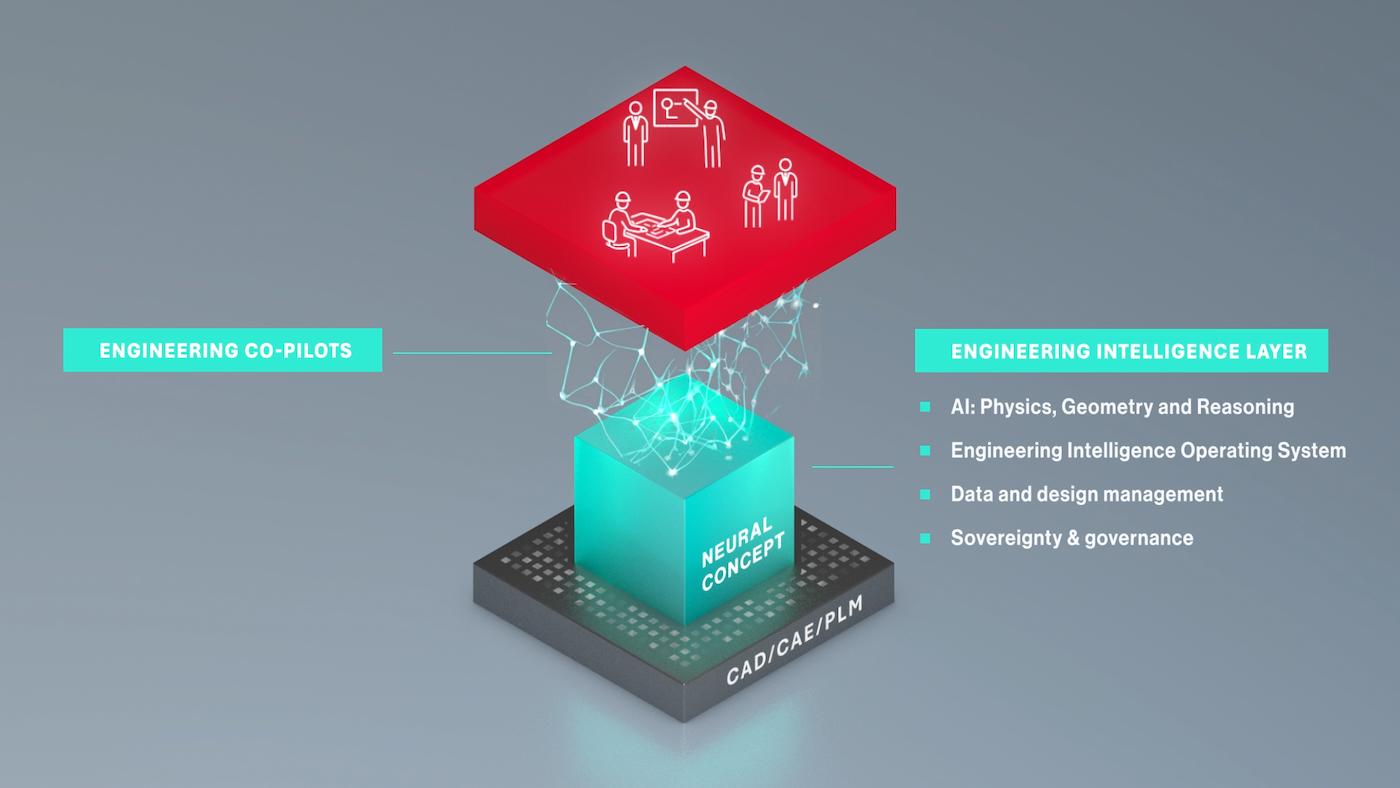
Engineers interact with Neural Concept via interfaces, not by switching tools. The platform manages geometry, deployment, and infrastructure, using cloud services as needed. Neural Concept abstracts this, providing a design exploration environment instead of a machine learning pipeline.
How Should I Choose an AI Vendor for Mechanical Engineering?
Four criteria matter when selecting an AI vendor:
- Geometry compatibility. Does the tool handle the format your workflow produces: mesh, point cloud, or parametric CAD software?
- Pipeline integration. Does it connect to your existing PLM and CAE infrastructure without requiring a parallel workflow?
- Domain calibration. Can the vendor deliver customized solutions tuned to your specific geometry family and operating conditions?
- Demonstrated accuracy. Can they show performance on problems physically similar to your own?
When Should Engineers Choose Deep Learning Over Machine Learning?
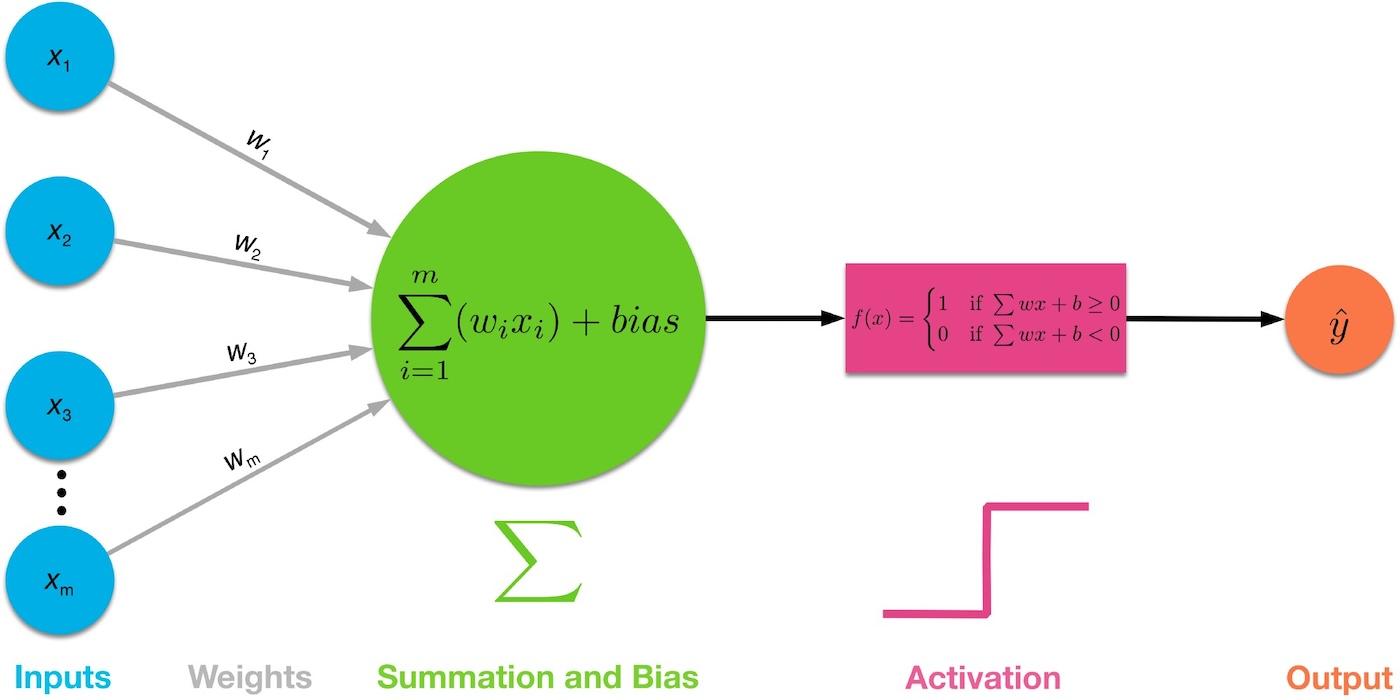
The distinction between classical machine learning and deep learning matters in mechanical engineering because each method has a ceiling, and that ceiling is determined by the input data structure.
- Classical machine learning methods, including regression, random forests, and support vector machines, learn from structured parameter vectors: scalar inputs such as material grade, operating temperature, or geometric dimensions expressed as numbers. They work well when the problem is reduced to a defined set of features and when training data is limited. The applications of machine learning in mechanical engineering, built on this approach, include surrogate modeling with low-dimensional design parameters, anomaly detection in sensor streams, and root-cause classification of manufacturing defects.
- The ceiling for Machine Learning appears when the input is not a vector but a shape. A drag coefficient depends on the full geometry of a surface, not on a handful of scalar parameters that summarize it. No finite set of hand-crafted features captures the spatial relationships in a 3D mesh.
- This is where deep learning becomes the right tool: multi-layered neural networks learn hierarchical features directly from the data, removing the requirement for manual feature engineering. 3D convolutional neural networks (3D CNN) process engineering geometry from CAD inputs; geometric learning on 3D meshes underpins the Neural Concept platform.
- Large language models (LLMs), a class of neural networks, provide engineers with a query interface to technical documents, simulation logs, and standards: engineers can pose natural-language questions and retrieve relevant results without manually navigating file hierarchies.
When to use which approach:
- Use classical ML when inputs are well-defined scalar engineering parameters and training data is limited. Scheduling, process optimization, and parametric surrogate models are natural fits.
- Use deep learning when the input is a 3D shape, a field quantity (pressure distribution or stress map), or a high-dimensional image, and when sufficient simulation or measurement data are available to train the network.
Understanding the training data, its biases, and the distribution it covers applies in both cases. A model predicts reliably only within the conditions its training data covered. Knowing that boundary is what allows an engineer to decide when a prediction should be trusted and when another simulation run is warranted.
Simulation in the Engineering Design Process
The mechanical component design follows defined stages:
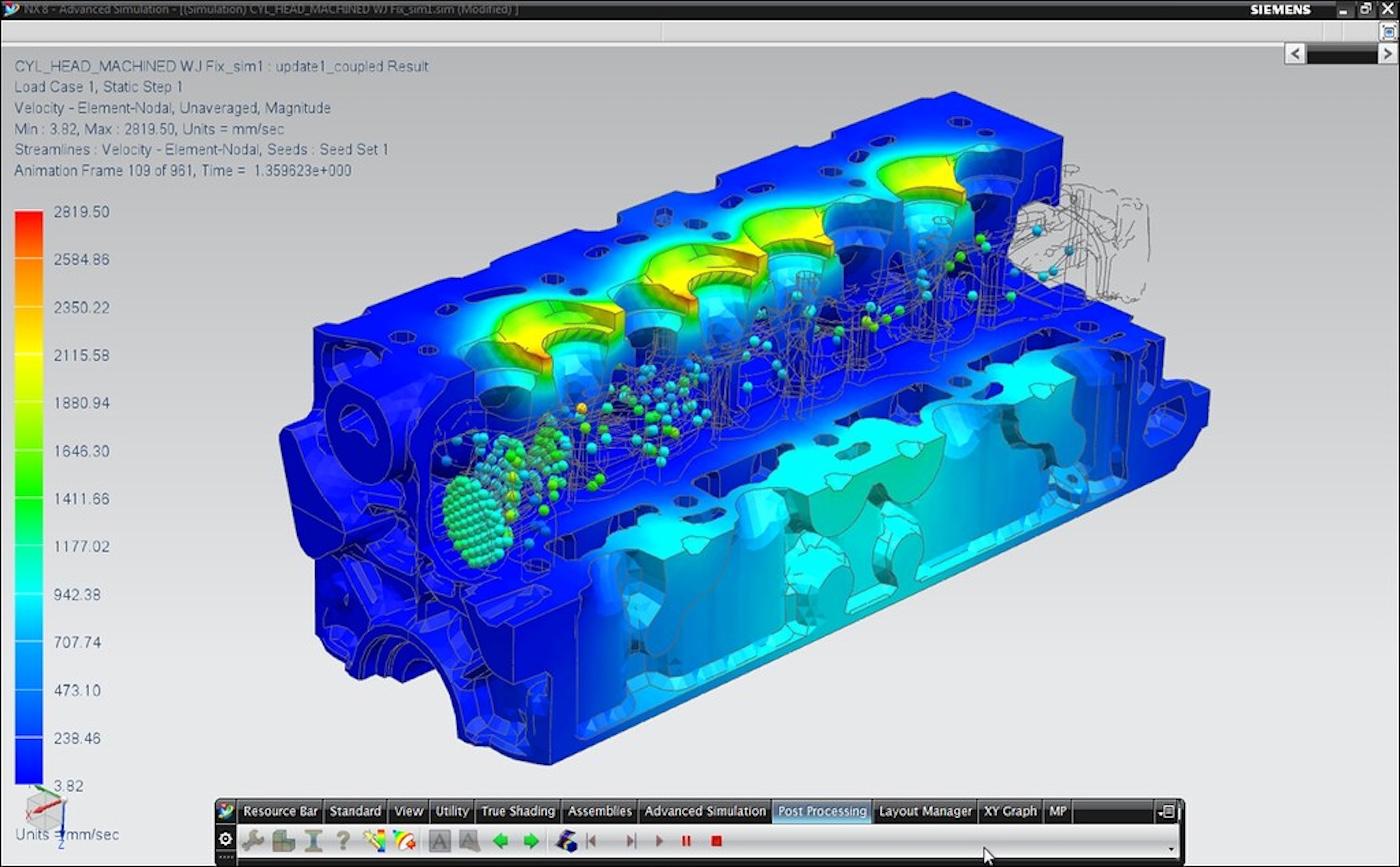
Physical testing and traditional numerical solvers, including Finite Element Analysis (FEA) and Computational Fluid Dynamics (CFD), are resource-intensive.
A single CFD run on a complex geometry can take hours to days; covering a wide design space through conventional simulation alone is rarely feasible within a product development schedule.
AI addresses this directly: trained neural network models return field predictions across geometry variants in milliseconds, at a fraction of the solver cost. Stress distributions that would previously require an overnight FEA run are evaluated interactively across design parameters, opening design possibilities that time constraints would otherwise prevent. The result is a change in the economics of engineering design: instead of evaluating dozens of variants, an engineer can evaluate thousands.
Generative Design and Topology Optimization
Generative design and topology optimization
- Generative design takes this further by inverting the process: instead of the engineer proposing a geometry and the solver evaluating it, AI generates ideas and proposes geometries that satisfy a set of constraints.
- Topology optimization is the most established form of this. Given load cases, boundary conditions, material properties, and a target mass fraction, the algorithm removes material from regions that contribute little to stiffness, producing organic, lattice-like structures that exceed the complexity of traditional manual drafting. The critical discipline is constraint definition: a topology-optimized part that ignores manufacturability will be unusable.
Multi-Objective Optimization and Trade-off Navigation
Optimizing industrial products means handling multiple objectives simultaneously, a challenge known as multi-objective optimization: weight, cost, thermal performance, and fatigue life rarely improve together.
AI-driven exploration handles it by building a Pareto front across the design space (the optimal balance between competing goals), allowing engineers to navigate trade-offs explicitly and arrive at optimized solutions rather than committing to a single objective function. Neural Concept has demonstrated this approach on several industrial problems.
Measuring AI Performance in Design Workflows
Success metrics for AI-driven design should be defined against performance criteria before the model is trained, not after.
Relevant metrics include prediction error on held-out validation cases (as a percentage of the physical range), the reduction in wall-clock time per design iteration, and the fraction of the design space explored within a fixed compute budget.
AI-Powered CAD Models and Automation
Several current tools can interpret a sketch or a set of design intent parameters and generate parametric CAD models. The practical value is highest for families of parts that follow a template, where an engineer defines the rules once, and the system generates variants on demand. The approach is closer to knowledge-based engineering than to generative AI in the language-model sense, with the line blurring as multimodal models improve at interpreting engineering drawings.
Engineers automate repetitive tasks in CAD work, such as propagating hole patterns, applying fillets to selected edges, or generating drawing sheets, using the scripting Application Programming Interfaces (APIs) provided by most major CAD platforms. AI adds value by learning which operations are typically applied together and suggesting the next step, allowing engineers to reduce navigation overhead in complex assembly environments and spend less time on repetitive CAD work.
Automated validation checks run after each design change and flag violations of design rules before a human review. Standards bodies such as the American Society of Mechanical Engineers (ASME, https://www.asme.org) define the geometric tolerancing and dimensioning frameworks that underpin these rule sets:
- minimum wall thickness
- interference between parts
- missing tolerances on mating surfaces
These checks are deterministic rules encoded by engineers and run automatically after every change.
AI extends this further: by analyzing patterns in historical change requests and documented failure modes, it can propose new rules, reducing the manual effort required to keep the rule set current.
AI in Manufacturing, Material Usage, and Automation
In manufacturing, AI is applied to three distinct problems: process optimization during production, material usage reduction, and quality inspection.
Process optimization uses machine learning algorithms trained on historical production data to recommend process parameters, such as cutting speed, feed rate, or injection pressure, that minimize cycle time or defect rate for a given material and geometry. The models learn non-linear interactions between parameters that are too complex to tune manually, and they update as new production data accumulates.
Material usage reduction is achieved through predictive models that recommend the minimum material specification that meets performance requirements and through AI-driven nesting algorithms that maximize material utilization and eliminate manual layout errors. AI optimizes energy use and helps design products for circular economies, linking factory automation decisions to broader sustainability targets.
AI-powered vision systems for quality inspection replace or augment manual visual checks on production lines. Cameras capture images of each part; a trained classification model flags defects, dimensional deviations, or surface anomalies. These systems improve precision and consistency compared to manual inspection, operate at line speed, and generate structured defect data that feeds back into process improvement.
AI-Driven Predictive Maintenance and Quality Control
Predictive maintenance models estimate the remaining useful life of a component or detect early fault signatures before failure occurs. This predictive analytics approach converts raw time-series data into maintenance schedules, producing either
- Classification (normal/degraded/fault) or
- Regression estimate of time to failure.
Predictive maintenance typically reduces machine downtime by 30 to 50% by identifying fault signatures weeks before failure, according to McKinsey.
Anomaly detection for quality assurance applies the same logic to production data.
References:
- Article on Predictive Maintenance Algorithms
- Article on Predictive Maintenance and ML
Simulation Infrastructure, Digital Twins, and PLM Integration
Simulation and Digital Twins
A digital twin is a live model of a physical system, updated continuously with sensor data and used to predict behavior, diagnose faults, and test interventions without touching the hardware. For mechanical engineers, the most common targets are rotating machines, heat transfer systems, and structural assemblies under cyclic loading.
Neural Concept trains on a corpus of high-fidelity simulations and predicts field quantities (pressure, velocity, stress, temperature) across the 3D geometry at inference time. The approach to applying machine learning in CFD replaces the numerical solver with a trained network for geometry variants.
The speedup over conventional solvers is typically in the range of thousands to millions of times. This speedup makes simulation-driven design feasible during early-stage engineering, when design decisions have the highest leverage.
Integrating real-time sensor data into a digital twin closes the loop between the physical asset and the model. Sensor streams provide real-world conditions as operating inputs; the AI model predicts the resulting field state; deviations between predictions and additional measurements flag model drift or physical degradation.
PLM Integration and the Digital Thread
Product Lifecycle Management (PLM) systems hold the authoritative record of design intent, change history, and configuration.
Embedding AI agents into PLM creates a digital thread: a traceable, connected data flow that links engineering design decisions from requirements through simulation, manufacturing, and service. AI models can then access the geometry, simulation results, and change history associated with each part revision, enabling richer analysis than a standalone tool can.
Automated change-impact analysis uses this connected data to predict which downstream assemblies, simulations, and manufacturing processes are affected by a proposed design change. A trained model can flag high-impact changes before they propagate, reducing rework.
AI-assisted design reviews extend this further: they learn from historical review comments and flag the classes of issues that reviewers have repeatedly caught in similar designs.
AI in Mechanical Engineering: Case Studies
Neural Concept’s platform has been applied across automotive and aerospace programs. The following cases show measurable results.
General Motors: Pedestrian Safety Prediction
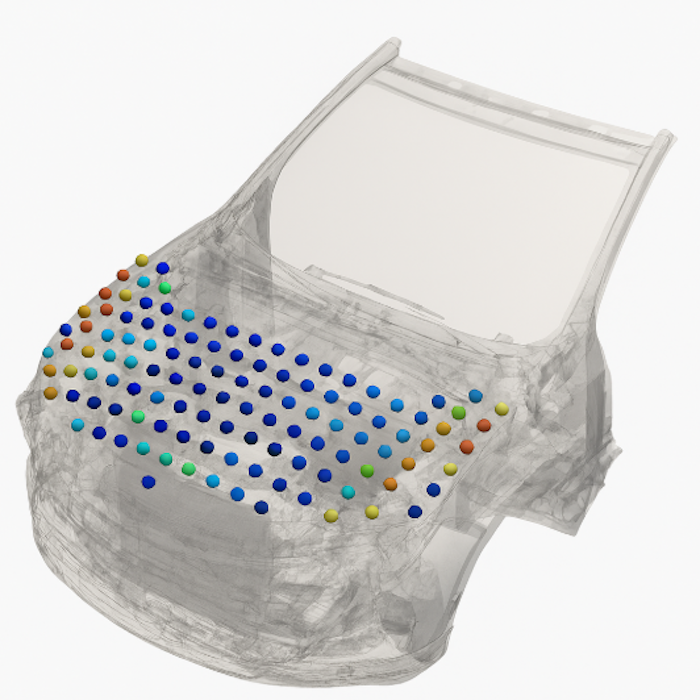
General Motors developed an AI-powered crash safety model using Neural Concept. The AI approach to pedestrian safety brought rapid structural risk prediction into the design process. Engineers can evaluate crash performance across geometry variants interactively, enabling faster iteration and closer collaboration between design and safety teams earlier in the development cycle.
Reference: Xu, S., & von Tschammer, T. (2025). Revolutionize pedestrian safety: AI-powered crash worthiness [Conference presentation, Session S73087]. NVIDIA GTC, Santa Clara, CA. https://www.nvidia.com/en-us/on-demand/session/gtc25-s73087/
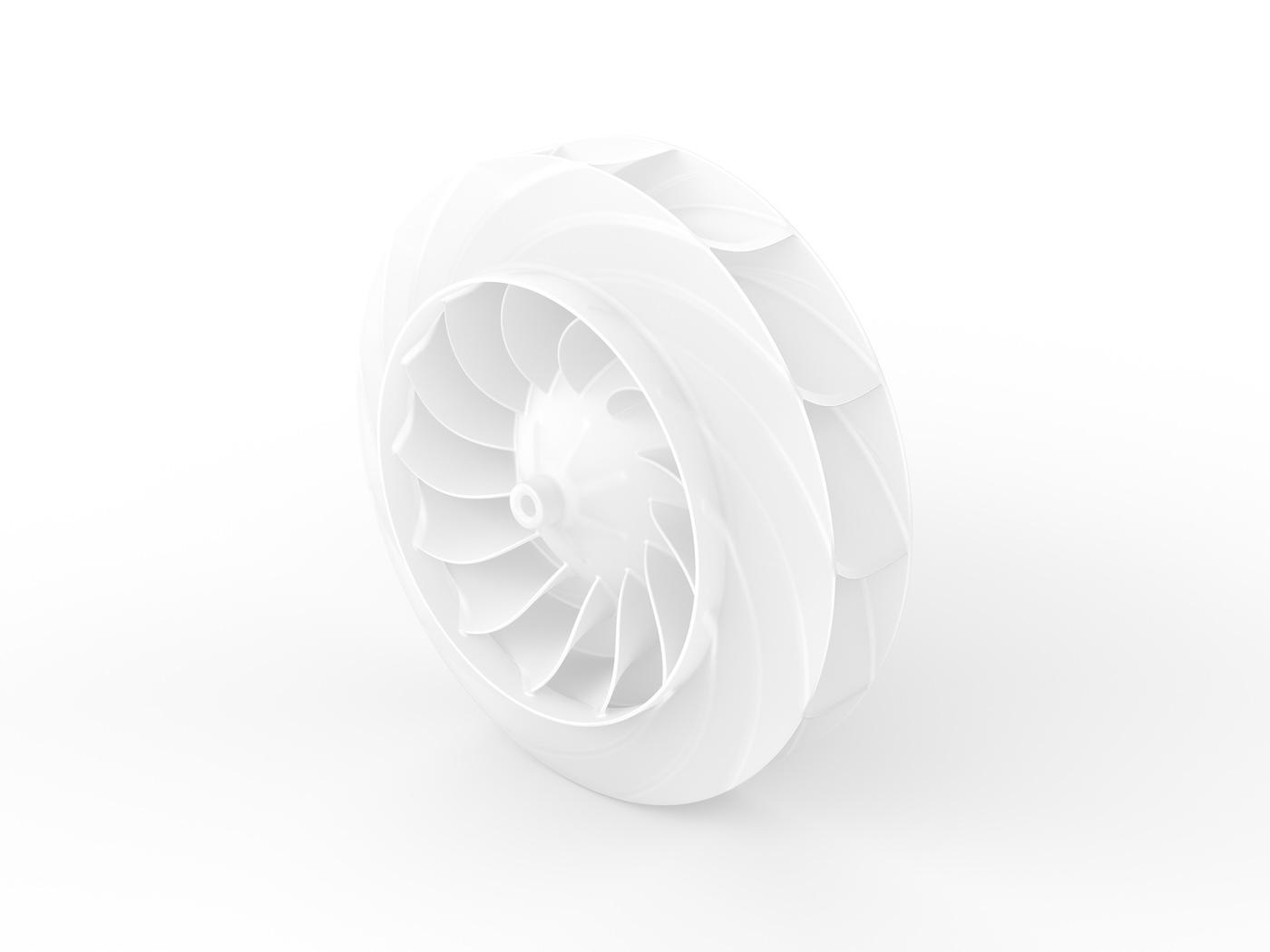
MAHLE: Novel Blower Design for EV HVAC
MAHLE embedded Neural Concept’s AI into the development of a new blower for automotive HVAC. The resulting design achieved 15% greater efficiency and a 60% reduction in noise (4 dB quieter) compared to the previous designs. Efficiency and noise reduction are critical metrics for electric vehicle range and passenger comfort.
References:
- MAHLE. (2025). Bionics optimizes air conditioning systems [Press release]. https://www.mahle-powertrain.com/en/news-and-press/press-releases/bionics-optimizes-air-conditioning-systems-108352
- Read more on the role of CFD in HVAC design.
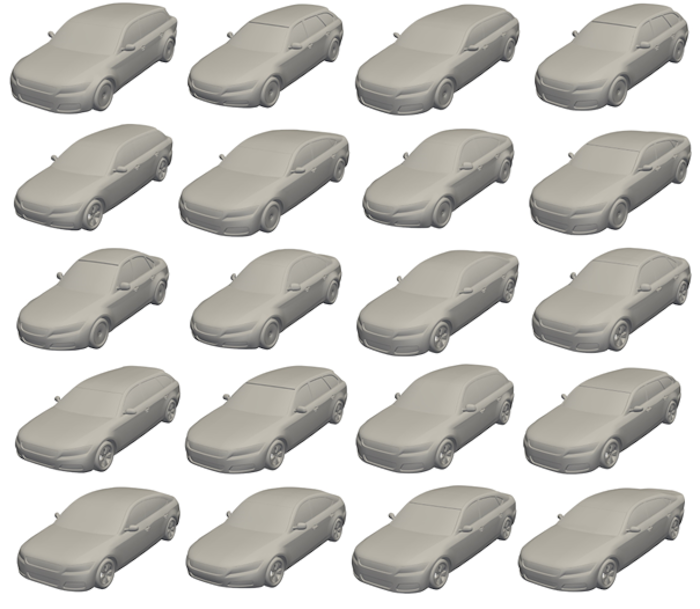
Automotive OEMs: Aerodynamics and EV Battery Cooling
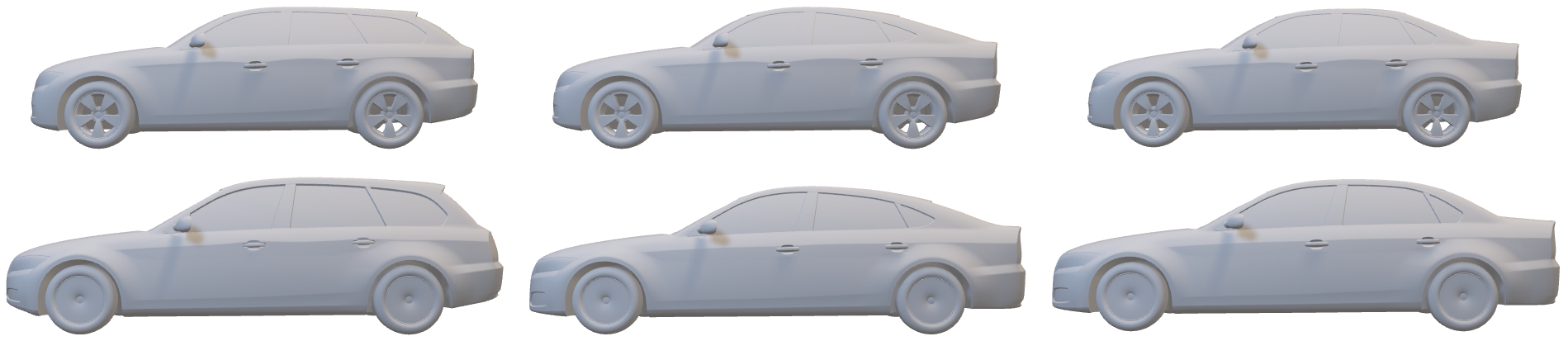
- Neural Concept has supported OEM (Original Equipment Manufacturer) programs with wind-tunnel test optimization and aerodynamic simulation, increasing efficiency by 20% in identifying low-drag configurations. Results, validated against the MIT DrivAerNet++ benchmark with 8,000 car geometries and high-fidelity CFD simulations, show the model captures flow physics rather than memorizing specific car styles, as drag prediction rarely generalizes across body types.
- In another program, Tier 1 suppliers used the platform to design EV battery cooling systems, which improved efficiency by 30% (consistent with AI-model approaches reported in the literature) and reduced time to market, emphasizing that ROI from AI-driven simulation scales with the cost of the traditional solver it replaces.
References- research papers:
- Elrefaie, M., Morar, F., Dai, A., & Ahmed, F. (2024). DrivAerNet++: A large-scale multimodal car dataset with computational fluid dynamics simulations and deep learning benchmarks. arXiv. https://doi.org/10.48550/arXiv.2406.09624
- Ebbs-Picken, T., Da Silva, C.M., & Amon, C.H. (2024). Deep encoder-decoder hierarchical convolutional neural networks for conjugate heat transfer surrogate modeling. Applied Thermal Engineering, 253, 123599. https://doi.org/10.1016/j.applthermaleng.2024.123599
Quick Recap on Artificial Intelligence (AI) Applications
- Simulation acceleration. Trained neural network models return field predictions in milliseconds, replacing CFD and FEA runs that previously took hours to days. Engineers evaluate thousands of design variants within the same schedule that previously allowed dozens.
- Generative design. AI proposes geometry candidates that satisfy defined constraints, including topology-optimized structures that exceed the complexity of traditional manual drafting. Neural Concept customers report up to 30% shorter design cycles.
- Manufacturing optimization. AI-driven process models, vision-based quality inspection, and predictive maintenance reduce defect rates and cut unplanned downtime by 30-50% (McKinsey, https://www.mckinsey.com/capabilities/operations/our-insights/manufacturing-analytics-unleashes-productivity-and-profitability).
FAQ
What are the main benefits of using AI for mechanical engineering?
Faster design exploration through AI in engineering: accelerated simulation, earlier detection of manufacturing defects, and predictive maintenance that reduces unplanned downtime. The common thread is complex problem-solving at scale: converting expensive computational or human time into automated processes.
Which companies are leading the adoption of AI for mechanical engineering?
Neural Concept, Ansys, Siemens, and Autodesk (design automation in Fusion) are among the leading tool vendors. For sector-specific applications, AI in aerospace engineering illustrates how the same platform architecture extends from automotive to flight-critical systems. On the adoption side, automotive and aerospace OEMs are the heaviest users in the industry.
What are the biggest challenges of implementing AI for mechanical engineering?
Collecting sufficient, well-labeled simulation or sensor data; validating model accuracy across the full operating range; and building engineers’ trust in predictions for safety-relevant decisions. Integration with legacy CAD and PLM systems adds friction to engineering design workflows.
How can AI improve manufacturing processes in mechanical engineering?
By optimizing process parameters in real time using production data, detecting surface and dimensional defects at line speed with vision systems, and flagging process anomalies before non-conforming material advances downstream.
What future trends are expected for Artificial Intelligence in mechanical engineering?
In the near future, physics-informed neural networks that enforce governing equations during training, multi-agent design workflows, and AI-accelerated materials discovery. Simulation foundation models trained across multiple physical domains are an emerging direction. The evolving landscape of engineering AI is moving from task-specific models toward general-purpose simulation foundations that engineers configure rather than train from scratch.
How is automation transforming the role of mechanical engineers?
Repetitive analysis and inspection tasks are increasingly automated, shifting engineers’ time toward problem definition, constraint setting, and validation of AI outputs. Domain expertise becomes more valuable, not less, because it determines whether an AI recommendation is physically credible.
What role does robotics play in modern mechanical engineering?
Robots handle tasks that benefit from consistency and speed, including precision assembly and high-volume inspection. AI improves robotic capability through better perception, reinforcement-learned control policies, and simulation-to-reality transfer for programming new tasks.
What are smart manufacturing technologies, and how do they apply to mechanical engineering?
Smart manufacturing connects machines, sensors, and software to enable real-time monitoring and adaptive control. For mechanical engineers, it means production data becomes available for model training, and AI-driven recommendations are applied directly to machine parameters.
How is the Internet of Things used in mechanical engineering applications?
IoT sensors instrument physical assets to stream operating data into digital twins and predictive maintenance models. The mechanical engineering contribution is sensor selection, placement, and integration into designs that were not originally conceived with instrumentation in mind.
How does AI in mechanical engineering differ from AI applications in civil engineering?
Mechanical engineering AI focuses heavily on dynamic simulation, fluid and thermal fields, rotating machinery, and manufacturing process data. Civil engineering AI leans toward structural health monitoring of large, fixed infrastructure, geotechnical risk assessment, and construction scheduling.
How does AI in mechanical engineering compare to AI in robotics?
Robotics AI emphasizes perception, motion planning, and real-time control. Mechanical engineering AI focuses more on accelerating simulations, optimizing designs, and improving manufacturing quality. In practice, the fields overlap in autonomous systems and smart manufacturing cells.
How effective is AI compared to human engineers in mechanical design tasks?
AI tools can generate ideas across large design spaces faster than human engineers and process high-volume sensor or simulation data more efficiently. Human intelligence remains essential for defining the problem, setting physically meaningful constraints, and taking professional responsibility for critical decisions on novel configurations outside the training data.
Will AI replace engineers?
AI will not replace engineers. It is reshaping what engineering work looks like. The role of engineers is evolving to require more knowledge of data science as artificial intelligence becomes integrated into everyday workflows. Engineers who understand how to define problems for AI tools, interpret model outputs, and validate predictions against physical reality will take on more consequential work, not less.
.jpg)
%20(1).webp)