Product Development Optimization with AI - How to Achieve It
Companies optimize product development with AI by training models on their historical simulation data. The trained models then predict the performance of new designs in real time, allowing engineers to explore far more options within the same schedule.
Product optimization improves an existing product by acting on usage data. The work is a loop: find where users struggle, change the design to fix it, measure whether the change worked, and repeat.
This guide treats product development optimization as engineers actually encounter it: a constrained search through a high-dimensional design space where every evaluation costs compute and the constraints are physical laws. The guide explains the formal structure of the problem, why classical simulation methods hit a wall on industrial schedules, and how physics-aware AI changes the economics of design exploration.
The guide is for CAE, CFD, and FEA engineers who run simulations, program managers who own delivery and cost, and R&D leaders deciding whether to commit to AI-native engineering.
Also, readers coming from consumer software optimization will recognize the principles and see how differently they apply when the objective is governed by physics.
Table of Contents
What Is Product Development Optimization in Engineering?
What is the Mathematics of Engineering Optimization?
Why Can’t Traditional Simulation Tools Keep Up with Modern Schedules?
How Does AI Change the Optimization Problem?
The Human Element: Personas in Engineering AI
The 4-Step Implementation Roadmap
How Do We Measure Success in an AI-Driven Workflow?
Common Optimization Mistakes
Continuous Improvement as a Competitive Advantage
Appendix: A Quick Guide to Optimization Algorithms
What Is Product Development Optimization in Engineering?
Product development optimization is the process of continually introducing incremental improvements to a product based on real data, user feedback, and measurable business goals.
Let's start with the concept of design space.
The design space is the set of all possible configurations of a system, defined by its free variables and the constraints that bound them. In engineering, the Product Development problem is structurally hard: the design space is high-dimensional, and every evaluation is expensive.
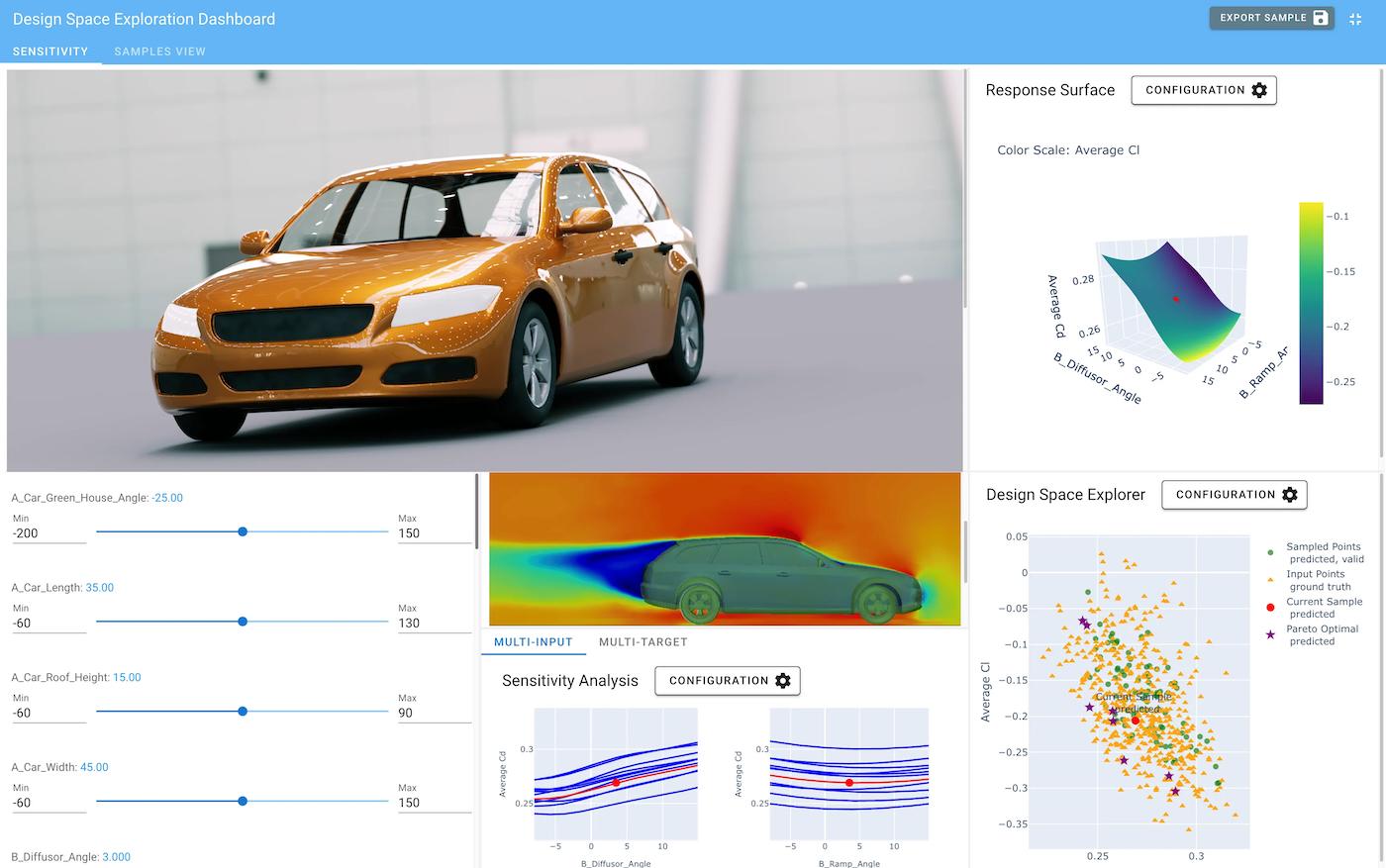
For instance, a vehicle body optimized for aerodynamic performance might be parameterized by hundreds of geometric variables, from hood curvature to underbody topology, each interacting nonlinearly with the others. Exploring that space by intuition or grid search is not feasible. Each candidate design requires a full CFD (Computational Fluid Dynamics) simulation, which consumes hours of compute time, so the number of configurations a team can evaluate within a program schedule is limited. The design that reaches production reflects those resource constraints as much as engineering intent.
The process of changing variables to identify more promising solutions is design space exploration. See a whitepaper on thermal design space exploration and constraints for satellites.
While exploring the design space, we must ensure we can assess our confidence in the results. See a whitepaper on uncertainty estimation in waveguide simulation.
Product development optimization, in the engineering sense, is the discipline of making constraints tractable: using data systematically to find improvements that intuition-driven iteration would never reach.
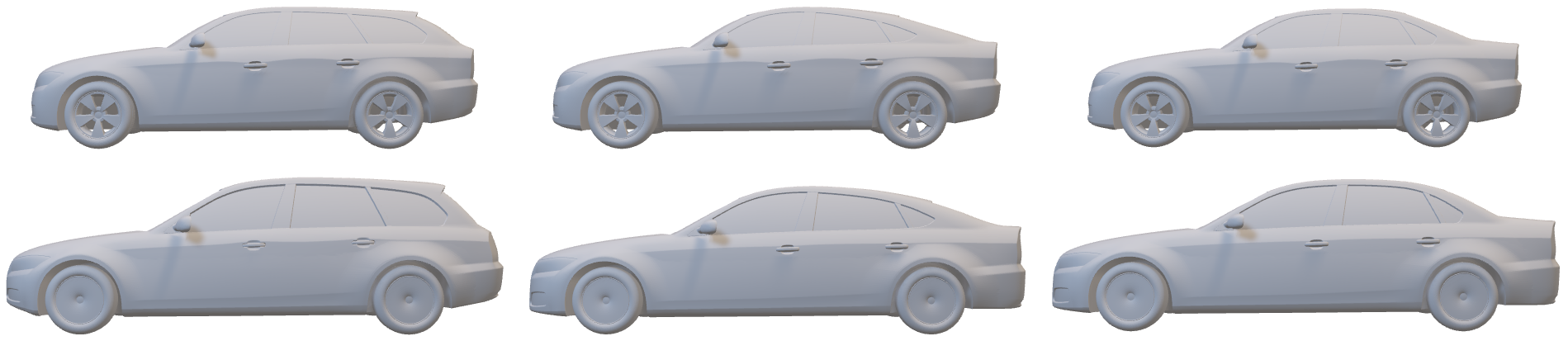
The DrivAerNet++ benchmark study shows what this looks like at industrial scale. 39 TB of aerodynamic simulation data across 8,000 car geometries, processed into an end-to-end workflow from model training to real-time deployment, in under a week. That compression represents a different optimization regime entirely.
What is the Mathematics of Engineering Optimization?
Engineering optimization is a formal problem with three components: Objective, Variables, Constraints.
Understanding its structure separates teams that apply AI effectively from those that add AI tools to an unreformed workflow and wonder why the results are marginal.
The objective function specifies what you are optimizing. The objective must be expressed as a scalar quantity that the optimization can drive in a target direction.
In aerodynamics, the objective might be drag minimization or lift-to-drag ratio maximization.
In structural engineering, it might be minimizing mass subject to a maximum allowable stress.
In thermal management, it might be minimizing the peak junction temperature.
The design variables are the parameters that the optimizer can adjust: for example, the coordinates of mesh vertices on a car body or the thickness profile of a turbine blade. The dimensionality of this space determines the difficulty of the problem. Classical methods that work well in three or four dimensions fail in hundreds or thousands.
The constraints define what counts as a feasible design. A car body must contain a minimum volume for the engine and passenger compartment, and a wing must maintain sufficient structural thickness to withstand aerodynamic loads. Formally, the optimization problem is:
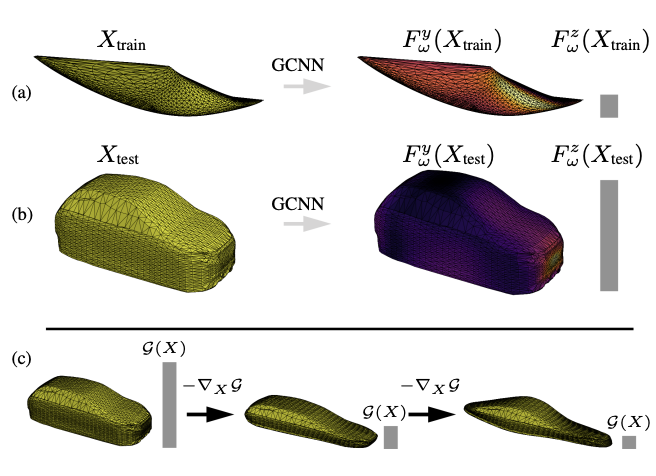
X* = argmin G(F(X)) subject to C(X) ≤ 0
where G is the fitness function, F maps design geometry to physical quantities, X represents the shape parameters, and C encodes the feasibility constraints. This is the formulation introduced in Neural Concept’s foundational 2018 ICML research on geodesic convolutional shape optimization, the academic work from which the platform grew.
Every engineering optimization problem, regardless of domain, has this structure. The product optimization process in engineering is the practice of solving problems at the speed required by industrial development schedules.
To know more, check the Appendix: "A Quick Guide to Optimization Algorithms."
Why Can’t Traditional Simulation Tools Keep Up with Modern Schedules?
Every classical method re-runs the full physical solver at each iteration, and each run costs hours. That single bottleneck caps the number of designs a team can evaluate within a program schedule, regardless of the technique it uses.
Understanding why traditional optimization struggles is necessary context for what AI-based platforms actually change.
Adjoint methods improved on this by making the objective function differentiable with respect to design parameters, enabling gradient-based search. The problem is that adjoint differentiation requires a full simulation at each iteration. For a design space of any meaningful dimensionality, the number of required iterations makes this approach expensive to run at the speed product development demands.
Gaussian Process regressors, known as kriging, train a statistical interpolant on pre-computed simulations and use it as a proxy for the true objective. Kriging performs well in low-dimensional parameter spaces. Its accuracy degrades as dimensionality increases, and it is tied to a specific parameterization: changing the shape representation requires retraining from scratch and discarding accumulated simulation data.
Genetic algorithms explore high-dimensional spaces without gradients, but each fitness function evaluation is a simulation, and the computational budget required at production fidelity is prohibitive on an industrial schedule.
The fundamental bottleneck across all of these methods is the same: each iteration requires rerunning the physical solver. The OPmobility partnership gives this bottleneck a concrete number: simulating sloshing noise in pressurized hybrid fuel tanks required approximately 12 hours per design, making rapid design iteration impossible on a program schedule. Product teams working under that kind of constraint are forced to evaluate far fewer designs than the physics would warrant, and the products they ship reflect that limitation.

How Does AI Change the Optimization Problem?
Physics-aware AI changes the problem’s structure by making the objective function differentiable with respect to shape parameters, without requiring a full solver invocation at each step.
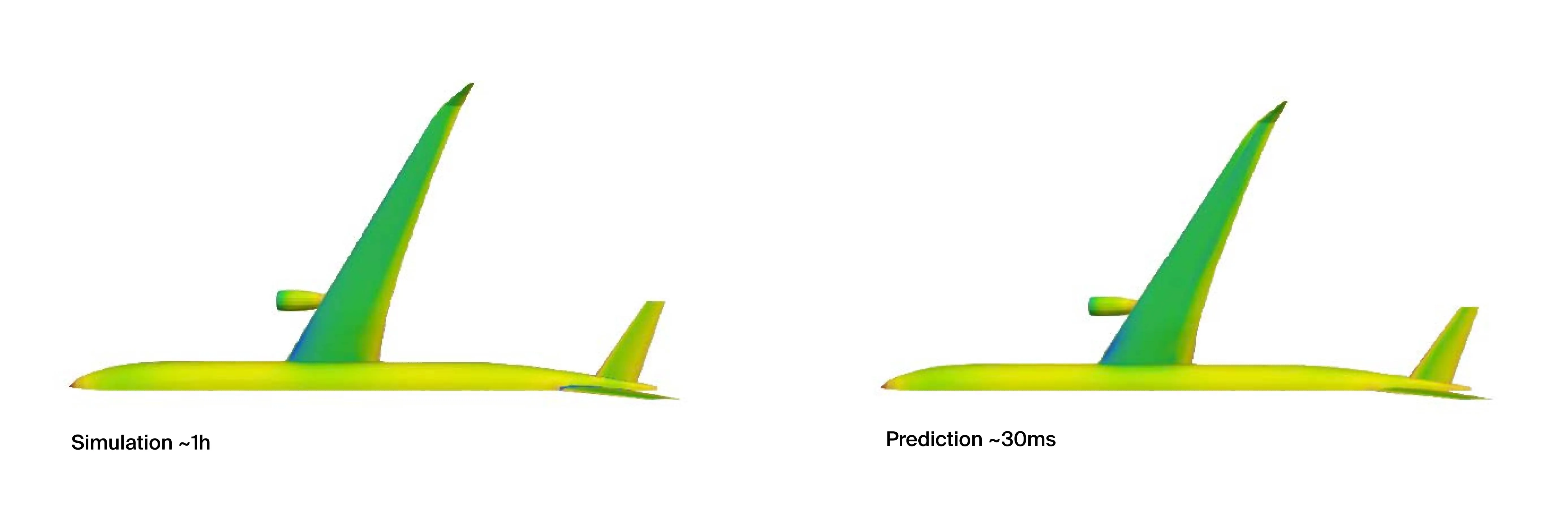
The Neural Concept platform trains deep neural networks directly on 3D geometry, predicting physical quantities across a design’s surface from the mesh itself in milliseconds rather than hours. Because the network is differentiable, it supports gradient-based search across the full design space, not just the low-dimensional parameterizations that classical methods require.
This matters for product development optimization in three concrete ways
Speed: searching a larger design space within the same schedule.
The SP80 sailing team, working to break the world wind-powered speed record, ran hundreds of thousands of design optimizations with Neural Concept, exploring more than 10,000 distinct design possibilities. In the formal terms of section two, hydrofoil performance under cavitation conditions was the objective function G, and the optimizer searched the shape space X far more thoroughly than any per-candidate simulation budget would permit. The result was a performance gain of over 20% on their ventilating hydrofoil. That volume of exploration is not achievable with any method that requires a full simulation per candidate.

Geometry: operating directly on 3D shape without a handcrafted parameterization.
When the network works on the mesh itself, training data from one parameterization can be reused when the parameterization changes, and the optimizer is not constrained to a subspace defined by the choice of design variables. The Airbus collaboration demonstrated this simultaneously across fluid dynamics, structural analysis, and electromagnetics. These are problem domains where the geometry and the relevant physical quantities differ substantially, yet the underlying approach is the same.
Safety constraints: enforceability throughout the design process.
When each evaluation takes milliseconds rather than hours, engineers can run thousands of virtual design studies instead of a handful. The optimization still does the same thing, minimizing an objective while respecting the feasibility constraints. What changes is reach: a problem once solved with a few designs can now be searched thoroughly.
General Motors and Neural Concept put this speed to work on a safety constraint at Nvidia GTC 2025.
AI trained on internal crash-simulation data from 11 vehicle programs can predict Head Injury Criterion values in seconds. In the formal structure of the problem, HIC is exactly a constraint C(X): a quantity that every feasible design must keep below a regulatory threshold, regardless of how well it performs on the objective. Making that constraint evaluable in real time means designers get feedback on pedestrian safety at every stage of the design process rather than only at final validation.

The Human Element: Personas in Engineering AI
Product discovery is where product management work begins: understanding what users need before any building starts. Product managers who combine market research with domain knowledge of simulation workflows are equipped to identify pain points that engineers have normalized as inevitable and to solve customer problems at the point of origin. That requires a genuinely user-centered approach to product discovery, not a generic one.
The framework Neural Concept operates within reflects the three core personas that define AI adoption in engineering.
The Builder is a CAE, CFD, or FEA engineer with 5 or more years of experience who needs AI that fits within the existing simulation stack without requiring lengthy integration.
The Program Manager, under delivery and cost pressure, needs ROI evidence tied to specific user segments and concrete development milestones.
The Executive needs AI ownership at the platform level and a clear path to competitive advantage.
The 4-Step Implementation Roadmap
A product optimization framework gives engineering product teams a structured approach to prioritizing improvements and measuring whether they have delivered. Without a clear product optimization plan, optimization efforts focus on the problems that surface most loudly, while systemic issues accumulate undetected.
The practical structure follows four steps.
Define success metrics for each user segment before beginning work, so results are evaluated against relevant data and pre-agreed success criteria tied to business value rather than retrospective judgment.
Collect user behavior data continuously through analytics tools embedded in the platform, tracking which user flows engineers abandon mid-task, where users interact most heavily, and where task success rates fall below threshold. Observing customer behaviors across design studies, specifically which design directions engineers pursue and which results they trust, feeds the feedback loop. Understanding customer needs at that depth requires instrumenting user interaction across the full design workflow, not only at handoff points.
Run structured optimization cycles in short, defined intervals with explicit hypotheses and measurement protocols built in from the start, using project management software and collaboration platforms to track progress in real time.
Establish a feedback loop that closes the gap between what engineers report qualitatively and what analytics data show, so that each cycle incorporates both dimensions, with digital tools centralizing project management, collaboration, and feedback, keeping qualitative and quantitative inputs in one place.
Develop contingency plans for potential risks, such as supply chain disruptions, and revisit the living risk board regularly.
Reaching production-scale AI adoption is an iterative process, continuously iterating on both the technology and the organizational practices around it. Market trends in engineering intensify the pressure to develop a deep understanding of where AI creates measurable value before committing to company-wide deployment. Over 90% of OEMs are now using AI-driven simulation, yet only 5% have successfully scaled it across full product development cycles. The gap between pilot and production deployment is precisely where a rigorous optimization framework either closes or fails to close.
How Do We Measure Success in an AI-Driven Workflow?
An AI-driven engineering workflow is measured by four key performance indicators: how much the design cycle is compressed, how many design variations a team evaluates per unit of time, how deeply engineers use the platform, and what customer feedback reveals that usage data cannot capture. Each KPI ties to a business goal and is sensitive enough to detect real improvement.
Development cycle compression. How many users complete a full design-to-simulation cycle within a target time window? Three key metrics matter most for engineering AI platforms. Neural Concept customers have achieved 30% shorter design cycles and $20 million in savings on 100,000-unit vehicle programs. Those figures anchor the business case for continued investment in the optimization process.
Design space coverage. How many design variations does a team evaluate per unit of time? A team that evaluates 10 candidate designs per program phase is working in a fundamentally different regime from one that evaluates 10,000. Tracking this number reveals whether the platform is changing the character of engineering search, not just accelerating individual runs.
Active user depth. Distinguishing active users from power users matters for understanding adoption health and for measuring user engagement across the platform. Increasing user engagement, specifically drawing engineers deeper into AI-assisted workflows rather than keeping them at the periphery, is a leading indicator of platform value before ROI figures materialize. An engineer who uses the platform for exploratory design work and usability testing of existing features extracts more value than one who runs it only for final validation.
Customer satisfaction scores complete the picture. Collecting user perspectives through user surveys and structured user interviews surfaces friction that usage metrics cannot capture. Qualitative data reveals user satisfaction issues that quantitative data alone cannot explain. Together, they support data-driven decision-making, enabling informed decisions about where to direct the next cycle. The goal is to identify patterns across simulation and usage data that reveal where the next improvement will generate the most value.
Common Optimization Mistakes
The mistakes that derail optimization efforts in engineering product development follow recognizable patterns. Key aspects of the optimization process vary significantly across disciplines and team sizes, so a framework designed for one context rarely transfers intact to another.
Conflating the objective function with the constraint
In formal optimization, the objective is what you minimize; the constraints are what you must satisfy. Engineering teams that treat safety requirements as optimization targets, rather than as hard constraints on feasible designs, risk producing designs that trade safety margin for performance in ways that validation will reject. Defining the constraint set precisely, before the optimization begins, is a prerequisite for valid results.
Optimizing a proxy for the wrong quantity
Cycle time is a useful metric for the optimization process. It is not the engineering objective. Teams that optimize for fast simulation turnaround without verifying that faster turnaround produces better designs at the product level are solving the wrong problem efficiently. The fitness function must reflect what actually matters, such as performance per unit mass at operating conditions.
Treating optimization as a one-time project
Product optimization is an ongoing process. Engineering teams that run a successful AI pilot and then pause find that the conditions that made it successful erode without continuous maintenance: engaged users drift, success criteria go unmeasured, and feedback loops close. Neural Concept’s bootcamp program, run across eight global engineering hubs in 2025, reflects the operational reality that sustained capability requires sustained investment in the people doing the work.
Ignoring specific user segments in favor of aggregate data
Aggregate user behavior data masks significant variation across user types. A platform that works well for experienced CAE engineers may create substantial friction for Program Managers who need summary views rather than raw field predictions. Tracking the user journey across both personas identifies pain points that aggregate data obscures. Product success depends on delivering targeted improvements to each segment, not optimizing for an average user who does not exist.
Continuous Improvement as a Competitive Advantage
Engineering teams that embed continuous optimization into their development process compound their advantage over time. Each design cycle generates simulation data that product teams must analyze systematically to extract the signal from. Understanding the customer journey from design concept through simulation and manufacturing feedback reveals user problems that only become visible across multiple programs. Properly analyzed, that data improves the trained models, better models enable more thorough design space exploration, and the cycle sustained across programs produces a capability gap that competitors cannot close quickly.
Neural Concept’s enterprise adoption doubled in 2025, with customers including Renault, Leonardo, GE Vernova, and Hanwha Ocean expanding from bespoke applications to company-wide use. Engineering organizations become loyal customers of AI platforms that demonstrably shorten their development cycles and improve their designs. The relationship between platform value and platform adoption is direct: when the data shows results, investment follows.
Neural Concept’s $100 million Series C reflects investor recognition that this market shift is structural. OPmobility illustrates this for a Tier 1 supplier: fuel tank simulations that took 12 hours per design now run in seconds, and development teams across multiple business units have embedded AI into their workflows as a result.
The companies that fully realize this advantage treat each development cycle as an opportunity to refine the optimization plan rather than a closed chapter. That discipline drives long-term business growth by reducing the cost of each successive program and strengthening the technical position that makes loyal customers of the OEMs they serve.
FAQ
What is an example of product optimization?
Bosch Research applied Neural Concept to shape design optimization in structural dynamics and acoustics, where the AI predicted performance for new geometries in milliseconds. This let engineers explore far more design variations within the same schedule, refining shapes through a data-driven optimization process rather than a handful of manual iterations.
What are the 4 D’s of product development?
The 4 D’s are Discover, Define, Design, and Deliver. Discover identifies user needs. Define the problem and success criteria. Design generates and tests solutions. Deliver ships and measure the result. In engineering, the Define stage specifies the objective function and constraints that determine whether later stages produce valid results.
What is product optimization?
Product optimization is the ongoing process of improving an existing product through real data, user feedback, and iteration rather than building new features. In engineering, it means searching a high-dimensional design space for shapes that minimize an objective function subject to physical constraints, then refining the search based on simulation results.
What is an optimization strategy?
An optimization strategy is a structured plan for improving an existing product: defining the objective, identifying constraints, prioritizing changes by expected return, and measuring results against pre-agreed success criteria.
How does product optimization affect conversion?
Optimization removes friction in user flows, which raises conversion rates by converting users who would otherwise abandon the process. Each refinement targets a measured drop-off point rather than guesswork.
What are the 5 Ps of product development?
The 5 Ps are Product, Price, Place, Promotion, and People. Product covers the design, its value, and the cost targets set during development and production planning; Price reflects cost and positioning; Place concerns distribution; Promotion handles communication; and People account for the team and users served. The framework anchors development to market reality rather than internal assumptions.
What are the types of optimization techniques?
Engineering optimization spans hand-designed exploration, adjoint methods that use gradients, Gaussian Process regression (kriging), and gradient-free genetic algorithms. Each re-runs the physical solver at every iteration, capping how many designs a team can evaluate. Physics-aware AI removes that bottleneck, predicting performance in milliseconds.
What are product development techniques?
Common techniques include rapid prototyping, agile cycles, minimum viable products, A/B testing, and continuous feedback loops. In engineering, the equivalent is virtual design studies at scale: AI predicts physical performance across thousands of geometries, allowing teams to test ideas against real constraints before committing compute resources to full simulation.
How do Lean and Agile principles optimize product development?
Lean and Agile move organizations from slow, linear processes to responsive systems built on eliminating waste and delivering customer value. Make work visible and limit Work-In-Progress to prevent bottlenecks, remove non-value-adding activities to shorten cycle times, and embed quality assurance through continuous integration so defects surface early. Build a Minimum Viable Product to test the market before committing further resources. Cross-functional collaboration breaks down silos, clear goals raise team engagement, and streamlined processes accelerate time-to-market.
What are real examples of companies optimizing their products?
Netflix runs thousands of A/B tests on details like thumbnails. Amazon refines its recommendation algorithms and checkout to lift conversion. Shopify uses feedback to improve onboarding and reduce churn. Airbnb launched Instant Book after users grew frustrated with waiting for host approval, which increased bookings. Inspire Fitness applied session recordings and heatmaps to study user behavior, producing a 460% rise in time spent in-app. Companies that fully optimize product management see an average 34% increase in profit and 23% in cost savings.
How does product optimization differ from product discovery?
Product discovery happens before a product is built and identifies the right problems to solve. Product optimization happens after launch and improves what already exists. Both are distinct, essential parts of the development cycle. Optimization relies on tools such as heatmaps and session recordings to expose usability issues and on prioritization frameworks like RICE, which score features by reach, impact, confidence, and effort to direct effort where it returns the most value.
Appendix: A Quick Guide to Optimization Algorithms
Algorithm | Update rule | When it fits | Where it breaks |
|---|---|---|---|
Gradient descent | Xₖ₊₁ ← Xₖ − η ∇G(Xₖ) | Smooth fitness function G. The rate η sets the step size. Adjoint methods make ∇G computable for PDE-constrained problems. | Too large an η overshoots, too small crawls. Stalls in non-smooth or multi-modal landscapes. |
Newton / quasi-Newton (L-BFGS) | Xₖ₊₁ ← Xₖ − H⁻¹ ∇G(Xₖ) H ≔ ∇²G | Curvature from the Hessian H bends the step toward the true minimum, converging in far fewer iterations. | Full Newton is expensive in high dimensions. L-BFGS approximates H⁻¹ from recent gradient history. |
Gaussian Process / Bayesian optimization | Xₙₑₓₜ ≔ argmax α(X | 𝒟) | Each G is a costly black box. A probabilistic model fits the data 𝒟, an acquisition function α balances exploration against exploitation. | Sample-efficient, yet scales poorly past roughly 20 dimensions. |
Genetic algorithms | population → {select, crossover, mutate} → next generation | Gradient-free and population-based, robust on rugged, discontinuous landscapes where ∇G is undefined or misleading. | Needs many evaluations of G, which is fatal when each one is a full solver run. |
Where Does Physics-Aware AI Sit?
Physics-aware AI does not replace any of these algorithms. By making G(F(X)) and its gradient evaluable in milliseconds, it lets gradient and Bayesian methods that were impractical at production fidelity run routinely. You use the same optimizer as before, except now each evaluation costs milliseconds instead of a full solver run.