AI in the Automotive Industry — Digitalization and Recent Improvements
Artificial Intelligence is now used in nearly every part of the automotive industry. It helps design vehicles and their parts to improve aerodynamics and crash safety. Self-driving features rely on AI to avoid hazards and keep traffic flowing. In factories, AI controls flexible robots, predicts equipment failures, and finds defects that people might overlook, making manufacturing more efficient.
In cars, AI personalizes infotainment systems based on customers’ preferences. It also includes advanced safety features that monitor driver fatigue and respond to voice commands. Beyond the car itself, AI is changing how the automotive industry manages supply chains, making operations more efficient and cost-effective.
This guide examines how these capabilities are transforming automotive systems and automotive businesses, the effect of Artificial Intelligence on product design, the remaining challenges for automotive manufacturers, and potential future breakthroughs for efficient vehicles.
You will also learn how AI makes real-time simulation possible for both Tier 1 components and complete assemblies.

Introduction to AI in the automotive industry
Artificial Intelligence is reshaping vehicle development in the following domains:
- Vehicle design: Simulation-driven optimization of powertrain and vehicle performance and safety, for instance: aerodynamics, crash safety, battery management, thermal comfort, and energy efficiency.
- Autonomous driving: Real‑time processing of camera, radar, and LIDAR data for navigation, obstacle detection, and adaptive decisions.
- Manufacturing: Smart robotics for assembly, predictive maintenance to prevent downtime, and automated quality inspection.
- User interaction: AI enhances the driving experience by providing personalized vehicle configurations based on individual driver preferences.
- Fleet operations: Route optimization, predictive diagnostics, and data‑driven maintenance scheduling to reduce costs.
- Service and updates: Generative AI tools for predictive failure analysis and automated repair recommendations.
This guide will cover:
- AI benefits
- Challenges for automotive companies
- Future prospects in the automotive industry.
These applications show how AI is already embedded across the automotive value chain, from design and manufacturing to fleet operations and the driver’s seat. But challenges remain, especially for design teams and supply chain management operating under increasing pressure.
Where are the AI benefits for the automotive industry?
Most of the AI benefits fall into two major areas: user experience and design & manufacturing operations.
- User experience: Many of us already interact with AI daily as car drivers, through advanced driver assistance systems or connected vehicle features. Final users perceive AI through its impact on driving comfort and safety.
- Design and manufacturing operations in car companies: Behind the scenes of end-user deployment, automotive manufacturing benefits, for instance, from AI-driven IoT sensors on the production line to improve quality control beyond human capability, or from the possibility of exploring thousands of virtual vehicle designs per day in search of optimal solutions
Autonomous vehicles and self-driving cars
Industry leaders invest billions to bring safe, reliable self-driving systems from labs to streets. These vehicles rely on real-time sensor fusion and AI algorithms to navigate complex environments with growing precision. The technology aims to reduce human error, improve traffic efficiency, and expand mobility options, especially for those unable to drive.
- Autonomous vehicles process data from cameras, lidar, radar, and ultrasonic sensors to identify obstacles, lanes, and traffic signs with high accuracy.
- Advanced AI enables split-second decisions for braking, steering, and acceleration, reducing accidents caused by human error.
- Through vehicle-to-vehicle and vehicle-to-infrastructure communication, autonomous systems can improve traffic flow.
- Self-driving technology promises greater independence for elderly and disabled passengers, reshaping urban transport and accessibility.

What technologies enable autonomous vehicles to navigate complex driving challenges?
Autonomous vehicles combine multiple AI-driven technologies to handle road navigation, obstacle avoidance, and real-time decision-making. Central to this is computer vision (CV), which interprets sensor data from cameras, lidar, and radar to create a detailed understanding of the surroundings. AI algorithms identify objects such as pedestrians, other vehicles, and traffic signs, allowing the vehicle to respond appropriately and helping analyze customer data. This fusion of perception and analysis equips autonomous cars to operate safely and efficiently in dynamic environments.
Computer vision in autonomous vehicle technology
AI in the automotive sector extends beyond perception. Machine learning models process the visual data to track object movement, predict trajectories, and assess potential risks. Deep neural networks recognize complex patterns, such as the difference between a shadow and a physical obstacle, thereby reducing false positives. This visual intelligence integrates with mapping systems and GPS to support lane keeping, adaptive cruise control, and automated parking.
When combined with other modules, such as sensor fusion and path planning, computer vision forms the basis of autonomous navigation strategies.
How does AI enhance safety through advanced driver assistance systems (ADAS)?
AI enhances the driving experience by providing personalized vehicle configurations based on individual driver preferences. ADAS rely on AI and sensors to assist drivers and reduce accidents with proven, certified technologies:
- Adaptive Cruise Control: Uses radar and cameras to maintain a safe distance, reducing rear-end crashes by up to 20% (IIHS data).
- Lane Departure Warning: Detects unintentional lane drifting and alerts the driver, lowering single-vehicle accidents by 11%.
- Automatic Emergency Braking: Identifies potential collisions and applies brakes automatically, cutting front-to-rear crashes nearly in half.
- Blind-Spot Monitoring: Warns of vehicles in blind spots to prevent side collisions and improve lane-change safety.
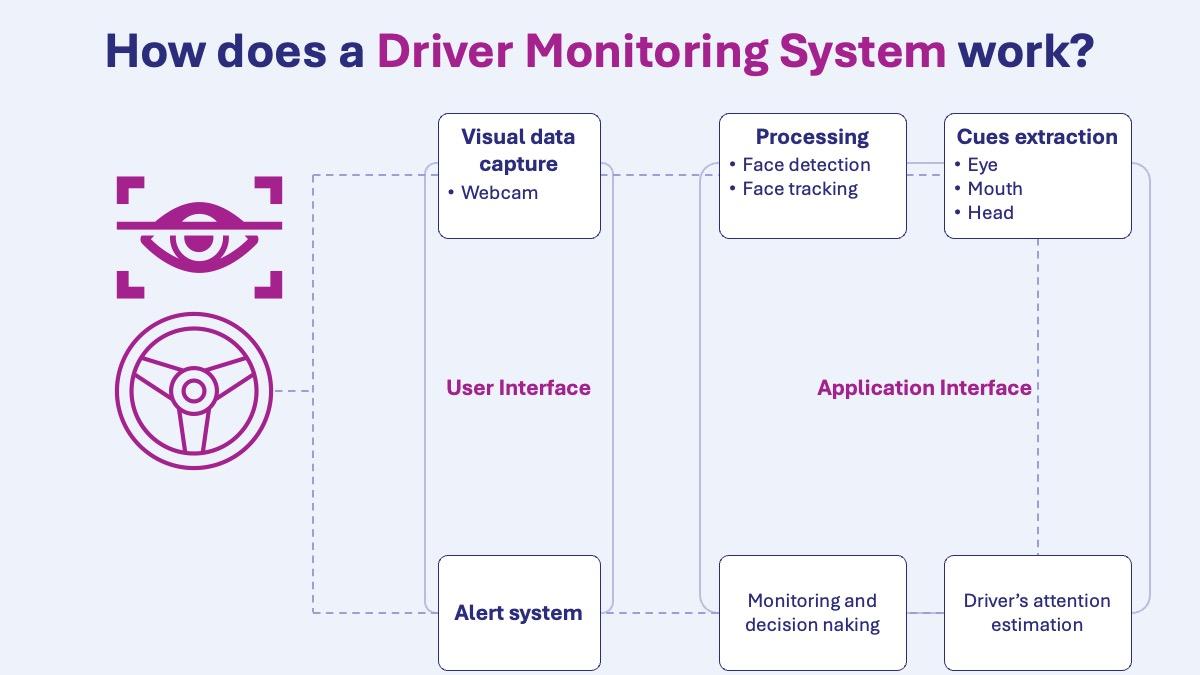
- Driver Attention Monitoring: Tracks eye and head movements to detect drowsiness or distraction and prompts alerts to restore focus.
Manufacturing processes and computer vision
Artificial Intelligence transforms the automotive industry by optimizing production. AI-driven automation and CV are now integral to manufacturing, improving quality, efficiency, and cost savings across the assembly line:
- Real-time defect detection: High-resolution cameras combined with deep learning algorithms use real-time data to identify surface defects such as scratches, dents, or paint inconsistencies with over 95% accuracy, reducing faulty outputs (examples include BMW’s visual inspection systems).
- Anomaly detection: Machine learning models detect deviations in assembly processes, flagging issues such as misaligned parts or incorrect torque settings before defects reach the end of the line.
- Production regulation: AI analyzes vehicle build data alongside sales trends to dynamically adjust production schedules, cutting inventory waste and ensuring just-in-time delivery (used by Toyota’s smart factories).
- Safety & efficiency: Collaborative robots (cobots) equipped with AI vision systems safely assist human workers, adapt to changing environments, and reduce workplace injuries.
- Sustainability: AI optimizes energy consumption on production lines by predicting peak loads and adjusting machine operation accordingly, supporting carbon footprint reduction targets.
Where is AI applied in car manufacturing?
Artificial Intelligence (AI) has many applications in car manufacturing. Three examples are quality control, predictive maintenance, and supply chain optimization.
- Quality control: AI-powered CV inspects parts and assemblies in real time, detecting defects such as surface scratches, misalignments, and paint flaws with high accuracy. Errors and scrap rates are reduced while speeding up inspections, compared to manual checks.
- Predictive maintenance: AI analyzes sensor data from manufacturing equipment to predict when machines are likely to fail or require servicing. AI prevents unexpected downtime, extends equipment life, and lowers repair costs by enabling maintenance only when needed.
- Supply chain optimization: AI models forecast demand, track inventory, and optimize logistics routes. AI improves just-in-time production, reduces stock shortages or excesses, and enhances responsiveness to market fluctuations, making the supply chain more efficient and cost-effective.
Supply and logistics optimization
- Inventory and production planning: AI algorithms analyze historical sales, supplier lead times, and demand patterns to optimize inventory levels, reducing stockouts and excess inventory; for EV-related planning, they can also predict battery life to optimize raw material distribution (as implemented by Ford).
- External data integration: By incorporating data from social media sentiment, weather forecasts, and market trends, AI-powered tools refine production schedules and pricing strategies to anticipate disruptions and shifts in demand.
- Error reduction and automation: Automated order processing and shipment tracking minimize human errors and delays, improving delivery accuracy and customer satisfaction.
- Logistics Flow Improvement: ai driven route optimization for inbound and outbound logistics reduces transportation costs and lead times while lowering emissions.
- Agility in demand response: ML models detect demand fluctuations early, enabling automotive companies to dynamically adjust procurement and manufacturing, enhancing market responsiveness and competitiveness.

From RFQ to production
AI now compresses the RFQ-to-SOP cycle that governs OEM-supplier work. The procurement sequence sets the demands; the engineering tools have changed to meet them faster.
The RFQ phase opens competition among suppliers, inviting Tier 1 companies to submit proposals for sourcing OEM vehicle equipment. Collaboration continues after the contract is signed. Aftermarket suppliers sell off-the-shelf parts, while OEM suppliers adapt to changing requirements during and after SOP. OEMs require suppliers to meet functional specifications for durability and energy efficiency across the whole cycle.
The tools that enable suppliers to meet those demands have undergone three phases:
- Until the 1990s, suppliers relied on physical prototypes and testing.
- CAE and CAD then reduced cycle times and costs, moving engineering from analog to digital (software 1.0).
- A second digital shift now adds modern software development, with AI shortening development cycles as sourcing and engineering progress from RFQ to SOP.
Automotive industry: role of Tier 1 in the supply chain
Let’s take a step back before discussing AI technology. We will examine the organization of the automotive supply chain and identify where AI can help in any automotive sector.
Who are Tier 1 suppliers in the automotive industry?
Tier 1 suppliers are companies that provide critical components or systems directly to Original Equipment Manufacturers (OEMs) in the automotive sector, whether for traditional, hybrid, or electric vehicles. Unlike commodity suppliers, Tier 1 suppliers are strategic partners rather than simple “vendors”.
OEMs rely on Tier 1 suppliers to add value, not just deliver parts. Tier 1 companies must demonstrate strong design and manufacturing expertise, and those capabilities increasingly support new business models for OEMs. Their competence is both a power and a responsibility: they influence vehicle performance, innovation, and overall quality, while also being accountable to the OEM for meeting strict technical and delivery standards.
In short, Tier 1 suppliers are essential collaborators in the entire automotive value chain, bridging advanced engineering capabilities with OEM needs.
AI in customer experience and marketing
Customer Data Platforms (CDPs) integrated with AI provide automotive brands with a 360-degree view of customers, facilitating personalized experiences. AI-driven personalization can increase customer satisfaction by 18%. For example, a dealership group might integrate sales history, online browsing patterns, and used car inventory into a single AI-enhanced dashboard.
Automakers use AI algorithms to analyze customer data, allowing them to create personalized marketing strategies. AI-targeted campaigns can also boost lead conversion rates by 37%. This could mean sending targeted offers for hybrid models to customers who have shown interest in fuel-efficient vehicles, or promoting premium trims to those who value luxury features.
Generative AI-powered chatbots can provide customers with quick, human-like responses and help them find the right choice for their needs in the car inventory. A shopper browsing an SUV page at midnight could ask a chatbot about vehicle data, such as towing capacity, compare models, or even schedule a test drive without waiting for human staff.
AI allows car dealerships to provide round-the-clock customer service, improving interactions. Whether answering finance questions at 3 a.m. or sending personalized reminders for service appointments, AI keeps customer relationships active and responsive at all hours.
Virtual assistants extend this support across booking, service reminders, and vehicle interactions. Mercedes-Benz integrated ChatGPT into over 900,000 vehicles, showing how AI personalizes the in-car experience through intelligent voice assistants.

Automotive operations and management
AI in the automotive sector integrates perception, prediction, and control systems to enable autonomous operation, and automotive AI is applied throughout the vehicle lifecycle, including predictive maintenance. Together, these components create a closed-loop decision process that enables vehicles to navigate urban traffic, travel at highway speeds, and handle diverse driving conditions with minimal human intervention.
- Data-driven decision support
- Instead of broad demographic guesses, AI models analyze warranty claims, driving-pattern telemetry, and after-sales service logs to reveal correlations among component wear, environmental conditions, and driver behavior. Thus, engineering and product teams can adjust designs, plan targeted recalls, or schedule preventive maintenance.
- Integrated production monitoring
- Computer vision and sensor fusion systems detect surface defects, misalignments, or assembly anomalies in milliseconds. Computer vision shifts inspection from batch sampling to continuous real-time verification, reducing rework cycles and scrap rates.
- Supply chain management and synchronization
- Predictive algorithms use order histories, parts lead times, and logistics data to forecast shortages or bottlenecks before they affect the line and support fleet management by improving maintenance timing and operational planning. Algorithms enable production planners to reroute orders, adjust shift patterns, or alter build schedules without halting assembly.
- Adaptive manufacturing lines
- AI-driven control systems can modify the robot trajectory, speed, and tool usage in real time based on sensor feedback and production requirements.
AI integration also brings high costs and complexity.
What are the practical use cases of AI applied to car design?
We will detail three practical use cases for AI in vehicle design: passenger-car aerodynamics, F1-car aerodynamics, and HVAC simulation. Many more applications exist, such as structural optimization, battery thermal management, and crash simulations.
- Passenger Car Aerodynamics: AI-based prediction models accelerate CFD analysis of external airflow, enabling multi-objective optimization of drag coefficient, lift, and vortex structures directly from CAD geometries.
- F1 Car Aerodynamics: ML algorithms process high-fidelity RANS (and DES, LES) simulation data to predict turbulent wake interactions and optimize aerodynamic components for maximum downforce with minimal drag penalty.
- HVAC Simulation: AI integrates steady-state or transient CFD thermal models with occupancy and climate data to optimize airflow distribution, heat transfer, and energy consumption in cabin climate control systems.
Automotive industry case 1: passenger car aerodynamics
Aerodynamic design of a passenger car can be tackled with aerodynamic simulations (CFD) or AI predictions. We will review three topics that impact battery/fuel consumption, vehicle handling, and driver/passenger comfort: drag, downforce, and (aero)acoustics. Software such as CAE/CFD can simulate all of this in hours or days. With AI, it is possible to get answers within seconds on at least three fundamental engineering aspects:
- Optimize Drag: Reducing a car’s drag boosts fuel efficiency and speed. Methods include streamlining and active aero devices like spoilers and air dams, which we’ll discuss further. Aerodynamic devices such as spoilers can improve performance by increasing downforce and reducing aerodynamic resistance.
- Optimize Downforce: Generating downforce (negative lift) can improve the vehicle’s handling and stability at high speeds or in specific situations, such as in curves. This can be achieved using active aerodynamic devices such as spoilers and airfoils.
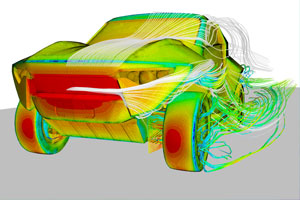
- Optimize noise: A source of annoyance for drivers and passengers is internal and external noise. External noise is generated by air flowing around the car and specific devices such as side mirrors (see figure). The aerodynamic design of a car should consider the noise generated by airflow around the vehicle and aim to reduce it.

Passenger car aerodynamics: reduce resource requirements
All topics boil down to KPIs that need optimization: drag minimized for consumption, downforce maximized for stability, and aeroacoustic noise minimized for comfort. While CFD simulations can support optimization, they require substantial computational resources and specialized skills, making them accessible to only a few designers.
Bringing advanced simulation skills to more engineers without the specialist workload: AI
AI learning helps engineering and manufacturing teams use CFD effectively, matching simulations, and supports non-CFD specialists on local computers. Prototyping generative AI reduces reliance on physical prototypes. AI’s impact will reach the automotive value chain sooner, beyond autonomous vehicles.
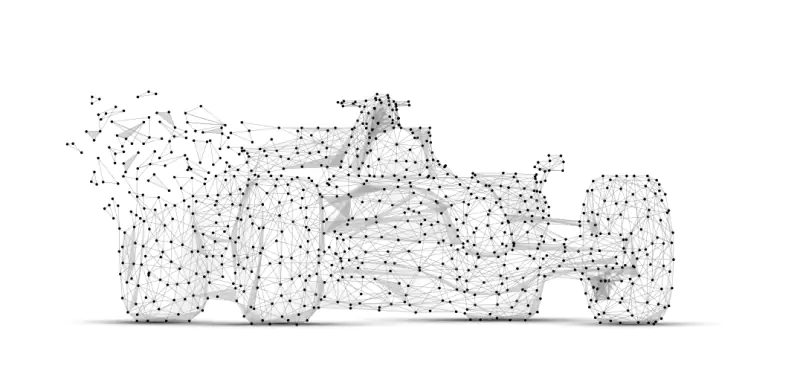
Automotive industry case 2: F1 car aerodynamics
In Formula 1, from an aerodynamic perspective, there are 4 major challenges. AI in the Automotive sector, and specifically Aerodynamics, can help solve them.
Challenges in F1
- Downforce. In an F1 car, designers focus on creating as much downforce as possible while sustaining straight-line speed. This allows the driver to have better grip and to handle turns, a crucial factor for automotive companies focusing on performance. Downforce is so powerful that it could enable driving on a ceiling!
- Drag force. Reducing drag force is also essential because it can help increase the car’s top speed: know more about F1 aerodynamics.
- Aeroelasticity. Another aspect, more relevant than in passenger cars, is aeroelasticity. The F1 car has numerous external structures exposed to aerodynamic loads. The car’s body and wings can flex and deform under such loads, which can affect the car’s performance, as seen in a few spectacular accidents.
- Regulations. F1 has strict rules governing car aerodynamics, including wing shapes, diffusers, and other aerodynamic devices. These can limit design options. There are also limits on wind tunnel testing runs and CFD simulation hours for car development. The situation is different for car manufacturers, where thre are no external controls on resource usage.
Practical case of aerodynamic design in F1: traditional approach
We will now investigate the case of an F1 designer who needs to examine five different car designs, as in the figure.

Traditional aerodynamic F1 simulation
The designer iterates with her CFD department to continuously gain insights into what is happening virtually in the flow field (see figure below) and to compute aerodynamic parameters such as downforce. Traditional simulation approaches require a transition from CAD to CFD images handled by specialists, which can be time-consuming. A more advanced scenario involves users uploading CAD files via a web portal and receiving automated aerodynamic reports, where response time remains crucial.

AI aerodynamic F1 simulation
Can AI reduce the simulation’s 3-hour wait to 0.3 seconds? This would enable designers to handle multiple design orders, explore a broader, more detailed design space with AI, and use digital twins to evaluate more design variants virtually.
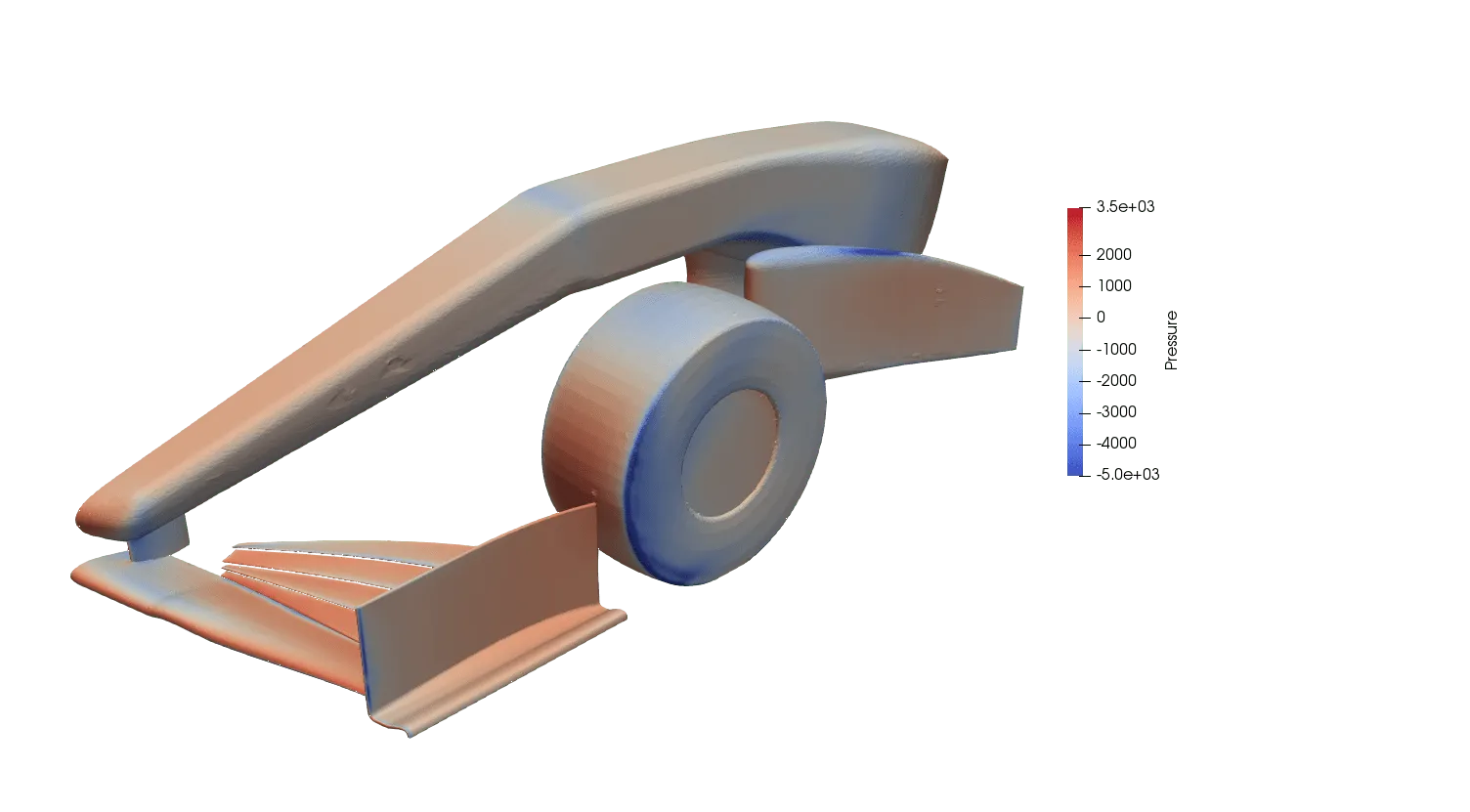
They can then focus on final solutions using CFD or wind tunnel tests. Designers need surface and volumetric data, especially surface pressure, shown below. Rapid testing supports early validation across multiple vehicle systems, such as pressure and velocity fields in vehicle cross-sections. AI allows checking aerodynamics quickly, 0.3 seconds on a laptop versus 3 hours on an expensive HPC cluster. The key is that CFD solver time drops dramatically with AI predictions, and meshing is virtually eliminated.
An F1 car’s cross-section with streamlines compares CFD (ground truth) and AI predictions, illustrating how this capability will soon transform F1 and other CFD or FEA uses in automotive and yacht racing.

Automotive industry case 3: HVAC simulation
Computational fluid dynamics (CFD) simulation can be used to optimize the design of a car’s heating, ventilation, and air conditioning (HVAC) system by predicting how air flows through the system and how it affects occupant temperature and comfort.
However, CFD is an expert topic reserved for a few specialists and some HVAC designers, as is the case throughout the automotive industry. How can AI help HVAC designers? Can AI bridge the gaps between customers (OEM), designers, and simulation specialists?
The role of data
Vast amounts of data coming from years or decades of experience in the auto industry, coupled with recent advances in AI and machine learning, is transforming the automotive industry for next-generation cars and can help HVAC designers in two ways:
- Fast thermal and flow predictions associated with designs with AI-based algorithms. AI algorithms can be used to build data-driven predictive models that estimate an HVAC system’s performance based on its design and ambient conditions. These models can help designers optimize the system’s size and configuration.
- Creation of new designs (optimization) with an AI-powered system. AI optimization algorithms can be used to search for optimal solutions based on a set of constraints and objectives, and, again, on the previous AI predictive capabilities. These algorithms can consider many design variables in near real time and find the best combination that meets the desired performance targets.
If you want to know how AI can revolutionize comfort and efficiency, check out our deep dive into the optimal design of an HVAC system.
Retrieving data and using it
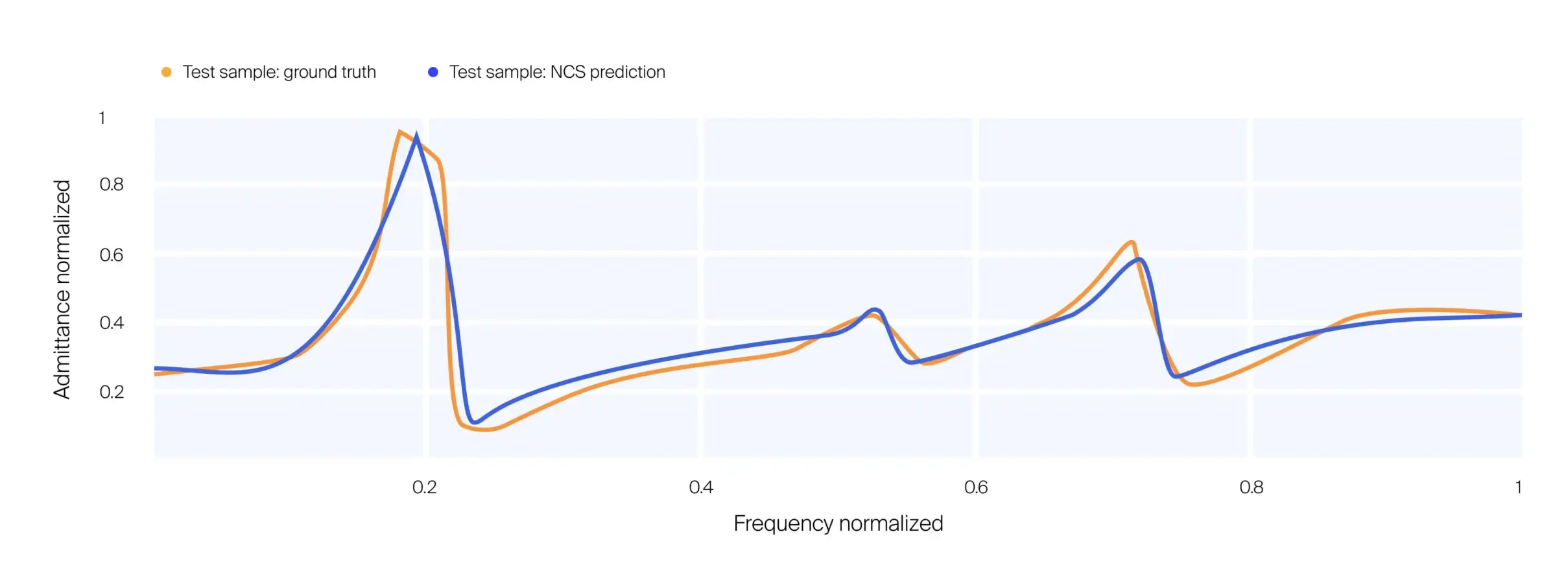
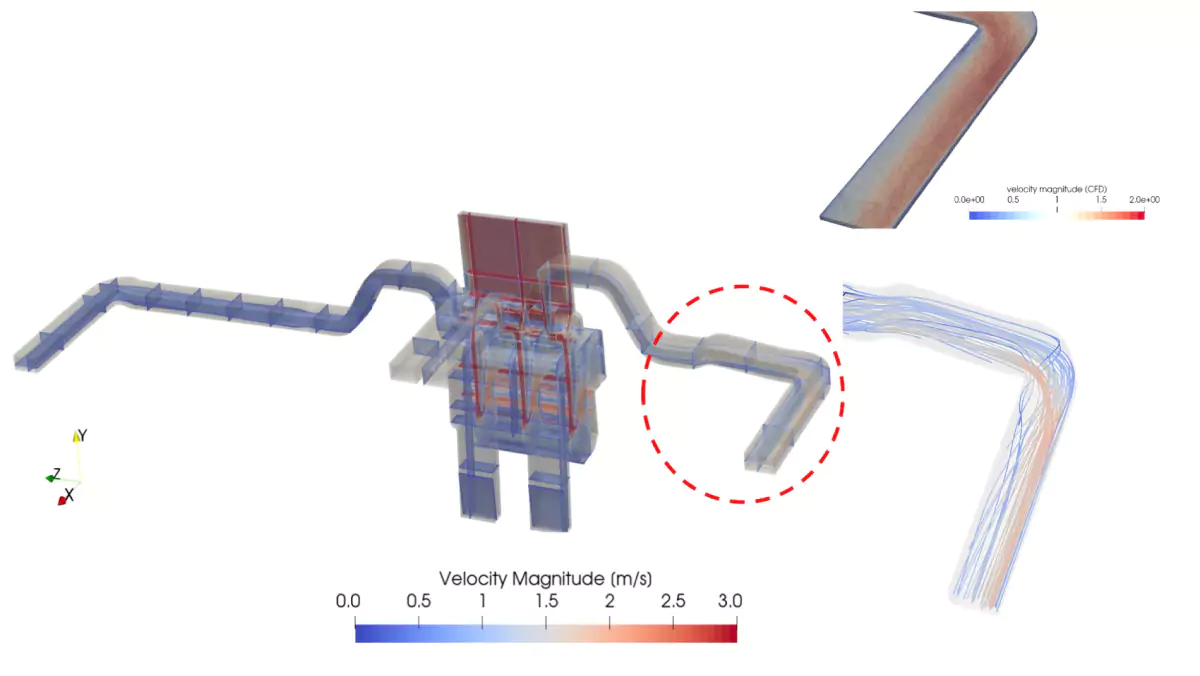
We examine an HVAC simulation case using Neural Concept’s platform, which leverages datasets from the company’s historical data stored in the PLM, including CAD, simulation, and sensor data. In HVAC design, inputs such as CAD geometries and operating parameters (e.g., inlet flow and temperature) are fed into an AI model, which predicts air pressure, velocity, and temperature in 3 seconds. This tool offers an integrated workflow within the design environment, tailored to users’ needs.
Future of AI-powered vehicles
- Full autonomy in controlled environments: AI systems will first achieve reliable self-driving on geofenced, low-complexity routes such as industrial sites, ports, and dedicated urban lanes, with a new driver-assistance system likely emerging there before broader rollout.
- Advanced driver monitoring: Real-time detection of driver distraction, drowsiness, or medical emergencies through in-cabin cameras and physiological sensors.
- Predictive maintenance: AI models will forecast component wear and failures, reducing downtime and cutting fleet maintenance costs.
- Fleet-wide learning: Vehicles will share driving data to continuously improve AI decision-making across entire fleets, accelerating software updates.
- Integration with smart infrastructure: AI-powered vehicles will coordinate with connected traffic lights, dynamic road signs, and automated charging stations, helping each connected car work more smoothly with the infrastructure and services to improve traffic flow.
What are the challenges and considerations of AI in the automotive industry?
The challenges and considerations of AI in the automotive industry are numerous, and organizations may also need to adapt operating models to deploy it safely at scale:
- Cybersecurity: Autonomous driving systems can be hacked to disable braking systems or alter navigation routes. Example: In 2015, researchers remotely took control of a Jeep’s steering and transmission.
- Data privacy: Connected vehicles generate large volumes of sensitive data, increasing cybersecurity risks, and therefore require strict data protection measures. Breaches could expose sensitive patterns (e.g., home address, daily commute times).
- Safety failures: CV can misinterpret objects in poor weather, leading to incorrect braking or acceleration.
- Ethical decisions: In unavoidable crashes, AI must choose between conflicting safety outcomes, raising public trust issues.
- Workforce impact: Automated driving and maintenance systems reduce demand for human drivers and certain repair jobs.
- Transparency: Black-box AI models make it hard to explain why a vehicle made a specific maneuver, complicating accident investigations.
AI for engineers in car companies
In most companies, there are probably 10 to 100 times as many design engineers as specialized CFD and CAE engineers. Mass deployment of CFD and CAE is conceivable with AI-based simulation, leading to significant cost savings, and engineers can also access these capabilities through a platform for design engineers and gen AI tools.
These are the three main enablers making AI-based simulation democratic and therefore mass-deployable.
- AI can be deployed on a platform for design engineers who do not need to be AI experts.
- Thanks to an artificial neural network structure, AI operates in seconds rather than hours or days.
- AI processes industrial geometries (CAD) without requiring time-consuming and specialist software such as “meshers” or solvers.
Integrating generative AI can also support engineering workflows without requiring deep AI expertise.
Therefore, the final deployment of Deep Learning from tech companies such as Neural Concept is more than “easy”... it is just straightforward!
How does AI learn?
AI learns by adjusting internal parameters to reduce errors when predicting outputs from inputs, which also helps explain how generative AI works in automotive contexts.
In the automotive sector, Convolutional Neural Networks (CNNs) can identify patterns in 3D CAD models and correlate them with simulation data, such as CFD or FEA results. This opens the door to faster, more accurate design decisions, and in design and simulation, these learning-based methods are often grouped under the umbrella of automotive artificial intelligence; see our guide to 3D CNNs for Engineers.
A CNN is a neural network for image recognition, with layered neurons analyzing visual data hierarchically. Lower layers recognize basic features, while higher layers interpret complex patterns. This process, shown in the figure, learns more details from left to right. CNNs are effective for image classification, and associating engineering results with CAD inputs is a very advanced form of this.

Conclusion
Based on this comprehensive analysis of Artificial Intelligence in the automotive industry, here are the key conclusions:
- Current Impact: AI is already transforming automotive operations across the entire value chain - from design optimization and manufacturing quality control to self-driving cars and customer experience enhancement.
- Design Acceleration: Generative AI product design reduces simulation times from hours to seconds, enabling much broader design exploration. Cases show aerodynamic optimization, F1 development, and HVAC design becoming accessible to non-specialists.
- Manufacturing Revolution: AI-powered CV achieves 95%+ defect detection accuracy, while predictive maintenance prevents costly downtime. Smart robotics and automated quality inspection are optimizing production efficiency.
- Future Outlook: Full autonomy in controlled environments and fleet-wide learning will drive the next phase of innovation.
- Key Challenges: Cybersecurity vulnerabilities, data privacy concerns, safety validation, and workforce displacement remain critical considerations for widespread adoption.
AI’s democratization of advanced engineering capabilities represents a fundamental shift toward “Software 2.0” approaches in automotive development.
FAQ
How is Artificial Intelligence implemented in automotive manufacturing processes?
AI is used for real-time defect detection via CV, predictive maintenance by analyzing equipment sensor data, and dynamic production scheduling informed by sales and inventory analytics.
What are the differences between traditional approaches and AI in the automotive industry?
Traditional automation relies on fixed, pre-programmed tasks, while AI enables adaptive decision-making by learning from data to handle variability and optimize processes without human intervention. In this context, gen AI can support faster iteration and decision-making than rigid traditional automation.
What are the applications of Artificial Intelligence in vehicle safety?
AI powers features in a driver assistance system, such as automatic braking, lane departure warning, blind-spot detection, and driver attention monitoring, to prevent accidents and enhance driver awareness.
How is Artificial Intelligence used in self-driving vehicles?
Artificial Intelligence fuses data from sensors (camera, lidar, radar) to perceive the environment, interprets complex scenarios, and makes real-time driving decisions such as steering, braking, and acceleration, enhancing autonomous driving capabilities.
What is the difference between Artificial Intelligence and ML in automotive applications?
Artificial Intelligence is the broad concept of machines performing tasks that require intelligence; in this context, the automotive industry refers to how those capabilities are applied across vehicle systems and operations, while machine learning is a subset in which systems learn from data to improve performance in applications such as vision recognition and predictive analytics. AI is also used to analyze vehicle data for diagnostics and operational decisions.
Which car manufacturers and suppliers are leading AI adoption in the automotive industry?
OEMs lead AI adoption in vehicles, with BMW using deep-learning visual inspection, Toyota scheduling production via AI demand models, and Mercedes-Benz embedding conversational AI. Tier 1 suppliers like Bosch and Continental develop perception and ADAS stacks, while Ford leverages AI for inventory and logistics. Specialized platforms like Neural Concept provide AI-based simulation to design teams.
How does AI-driven autonomous driving compare to human drivers in terms of safety and performance?
The comparison depends on the driving domain. In mapped, geofenced areas where automated systems operate, data and studies show lower injury collision rates than with human drivers because systems do not tire, lose attention, or delay responses. Outside these areas, on unmapped roads or in bad weather, humans still generally perform better in unfamiliar situations where AI might misread objects or scenes. AI driving excels at attention and reaction time but struggles with novel cases, so deployments remain limited until more data becomes available.
Should automakers build proprietary AI systems in-house or adopt third-party AI platforms?
The decision depends on whether the capability is a source of competitive advantage. Automakers tend to build in-house where the model is part of the product and defines how the vehicle behaves, such as the autonomous-driving stack or proprietary powertrain and battery control, because owning the data and the model protects long-term differentiation. They tend to adopt third-party platforms for capabilities that accelerate engineering without requiring brand differentiation, such as AI-based simulation, quality inspection, or supply chain forecasting, where a mature platform can reach production faster than an internal team. Most large manufacturers run a mixed approach, keeping the differentiating models under their own control and licensing platforms for the rest.
How does computer vision-only perception compare to sensor fusion for self-driving cars?
Vision-only perception relies on cameras and neural networks to infer depth, motion, and object identity from images. In contrast, sensor fusion combines cameras with radar and lidar so that each sensor covers the others’ weaknesses. Vision-only systems are cheaper to build and scale, and they benefit directly from advances in image models. However, they degrade in low light, glare, and heavy precipitation, and they estimate distance rather than measure it. Sensor fusion measures range directly with radar and lidar and remains reliable when one channel is impaired, at the cost of higher hardware costs and the engineering effort to reconcile conflicting inputs. The choice reflects a trade-off between cost and scalability on one side and redundancy and all-weather reliability on the other.
How are digital twins used in vehicle development and virtual testing?
A digital twin is a physics-based virtual replica of a component, system, or vehicle that remains synchronized with data from simulations, test rigs, and field vehicles. Engineers test design variants on the twin before hardware exists, running aerodynamic, thermal, crash, and durability cases that would otherwise need physical prototypes. During validation, the twin reproduces road and environmental conditions, allowing control software and ADAS logic to be tested across a wide range of scenarios in simulation. After launch, the twin ingests fleet telemetry to support predictive maintenance and inform future designs.