Engineering Design Principles: A Fundamental Guide
Engineering design principles help engineers design alternatives and develop new solutions. They ensure a systematic process for product development, from concept through launch.
Advanced software automates standardized methodologies and accelerates every design stage. CAD, CAE, and AI tools multiply engineering productivity.
AI transforms engineering design. Teams generate, evaluate, and optimize solutions in less time and with higher quality.
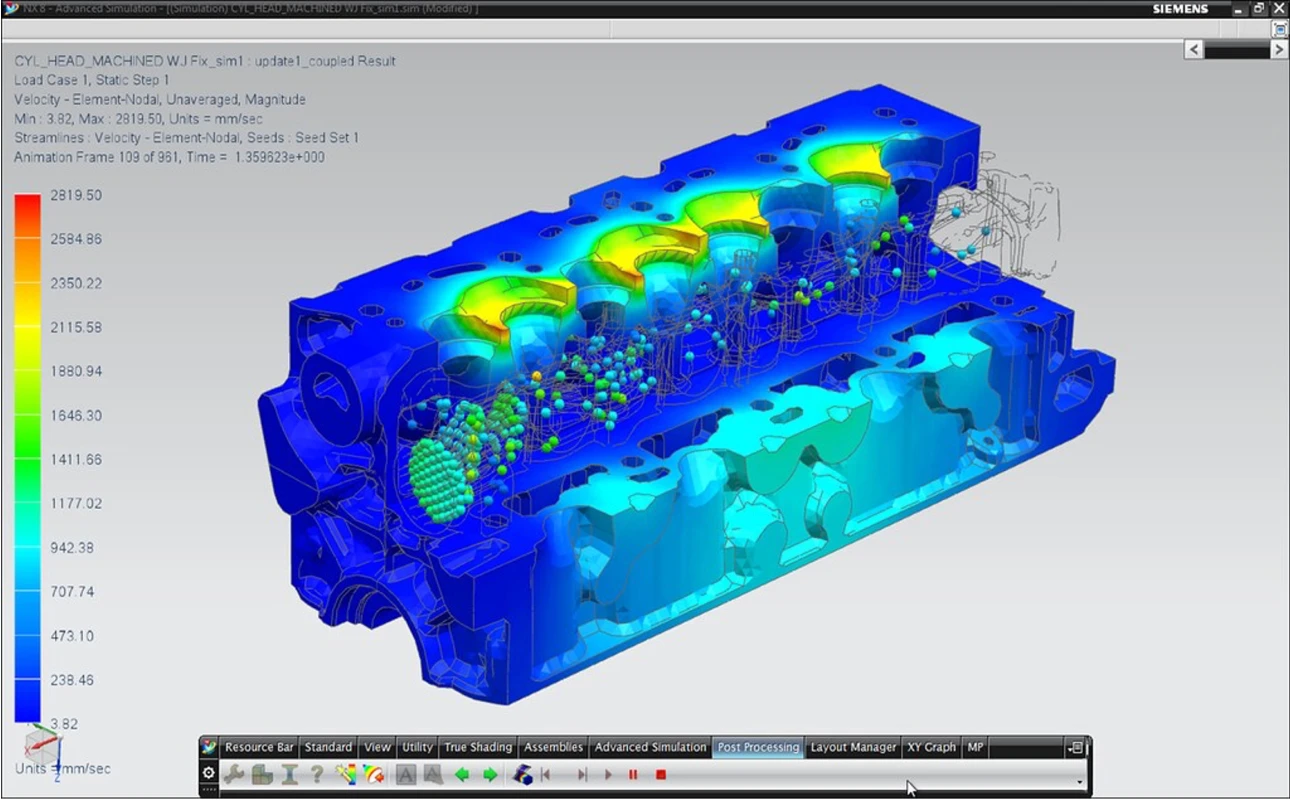
In an engineering project during the creativity phase, a concept model starts the conversation and leads the basic principles of the new product. However, teams are involved in evaluating the concept’s practical performance with precise numbers, for example, stemming from a certain initial design concept. This is possible thanks to the software’s capability to model and virtually test all performance aspects of interest to engineers, before prototypes are built.
AI is now a primary lever for design efficiency and innovation.
From creativity to mass production
In a traditional frame, engineering design is an iterative process involving continuous prototyping and testing (physical cycles). Software platforms enable communication and collaboration across all stages of product design, accelerating the previous physical cycles. An iterative engineering process and design phase in design development ultimately create innovative, functional products that respect both creativity and practical considerations.
Performance evaluation: the role of CAE
The first step is to assess the practical performance of the concept model.
CAE software simulates aerodynamics, crashworthiness, and comfort. Early simulation surfaces design issues and enables rapid iteration in CAD.
CAE validates function in late-stage development. It ensures designs hit performance, marketing, and cost targets for manufacturable products.

Constraint consideration in computer aided design
Internal and external constraints are “walls” whose presence should be incorporated into sound engineering design principles. Internal constraints may include budget limitations, timeline restrictions, and available resources, while external ones can encompass regulatory requirements and market demands.
Project management and computer-aided design (CAD) software help manage and adhere to these constraints. A practical, simple example is constraining a geometry within a certain space to avoid interference with other parts, a felt issue in any aerospace or automotive project with tight spaces.
AI Deep Learning optimization can incorporate those aspects during a generative design process.
Industrial feasibility and engineering design
Ensuring the concept is manufacturable and economically viable is crucial. Engineering design software helps create detailed 3D models and optimize manufacturing. Addressing manufacturing early reduces design iterations. As discussed earlier, considering manufacturing needs can involve constraining design by materials, weight, or space.
Engineering design principles in material selection
Structural considerations ensure designs can withstand expected loads and stresses without failure. Engineers should optimize costs without compromising quality or performance, as failures can lead to economic losses from warranty returns, not to mention more severe consequences.
Example of material selection - smartphone case study
A material selection example illustrating how engineering design principles guide product development might involve designing a new, eco-friendly product, such as a smartphone. Engineers and designers generate and compare ideas before narrowing options, carefully considering several factors in this scenario.
Environmental Sustainability and Durability. The team might opt for a biodegradable or recycled material for the smartphone case so the selected material matches the product’s required capabilities while supporting sustainability goals. This choice reduces the product’s environmental impact throughout its lifecycle.
Smartphone cases must protect the device from everyday wear and tear. So, engineers would use their expertise to evaluate materials for impact and scratch resistance, as well as long-term durability, to ensure the case maintains its functionality and appearance.
Cost Optimization. Balancing the desire for sustainable materials with cost-effectiveness is crucial. The engineers might choose a cost-competitive, sustainable material that can be manufactured efficiently while balancing sustainability with the company’s cost targets and production goals.
Engineering principles in action: automotive examples
In more detail, let us examine some design objectives in the automotive and electronics worlds.
- Automotive Crashworthiness: Engineers use advanced materials, such as high-strength steel, and design techniques to create vehicle structures that absorb and dissipate impact energy during collisions, protecting occupants.
- Automotive Electronic Stability Control (ESC): ESC systems employ sensors and computer algorithms to detect and mitigate skidding or loss of control, significantly reducing the risk of accidents.
- Automotive Pedestrian Protection: Vehicle design also considers pedestrian safety, incorporating features such as energy-absorbing bumpers and hood designs to reduce injuries in pedestrian impacts.
- Child Safety Seats: Engineers develop specialized child safety seats to protect young passengers, incorporating designs that account for child physiology and crash dynamics.

Engineering principles in action: consumer electronics
While it has some points of contact and shares methods with the automotive world, the consumer electronics world has its own peculiarities. User-centered design principles create intuitive and user-friendly device interfaces, ensuring consumers can easily navigate and operate electronic devices.
- Consumer Electronics and Battery Efficiency: Engineers optimize battery technology to extend the lifespan of consumer electronics and increase their energy density, allowing them to operate longer on a single charge.
- Materials Selection in Consumer Electronics: The choice of materials considers good design aspects such as recyclability, toxicity, and resource availability, with a growing emphasis on environmentally friendly options.
- Energy-Efficient Components: Designers focus on selecting and integrating energy-efficient components, such as low-power processors and LED displays, to reduce energy consumption and extend battery life.
- E-Waste Management in Consumer Electronics: Engineers design products for ease of disassembly and recycling to minimize the environmental impact of electronic waste.

Innovative methods in the engineering design process
AI, Machine Learning, and Automation are becoming part of a broader framework for design generation, optimization, predictive analytics, and the automation of repetitive, non-value-added tasks.
As a result, these methods are already leading to more efficient and innovative designs, supporting better design decisions and reducing development effort across various industrial sectors.
- Additive manufacturing and emerging technologies enable tailored designs, accelerate prototyping, reduce waste, and shorten production cycles.
- Connected technologies allow product engineers to add sensors and connectivity, enhancing functionality through data collection and remote monitoring. Engineers increasingly use biologically inspired design principles to develop new, sustainable designs, such as biomimetic materials and structures.
- Design principles have been adapted to support a circular economy in which products generate minimal waste and promote reuse and recycling. More broadly, engineering design applies science to optimization across products, systems, and even chemical processes, where sustainability and safety must be balanced.
- Human-centric concepts and design principles will continue to guide design innovations, particularly in fields like user interface design, by prioritizing enhanced user experience, creativity, and meeting human needs. This leads us to the human-centric vision of Industry 5.0 and to further exciting discussions.
Engineering students and innovative solutions in the new technology ecosystem
Engineering design principles encompass safety, functionality, good design, innovation, and sustainability.
Engineering design principles have lately incorporated innovative solutions in mechanical design, such as Finite Element Analysis and CFD, both in problem identification, such as the value and location of stress peaks in a component, and the development of better solutions using the same engineering software suites. Moreover, there is a trend toward incorporating human operations into AI for generative design.
All those tools and functions can now be considered part of the current method development for modeling, testing, and optimizing functionality before any physical prototype is built.
The role of instruction
Engineering students are now exposed to simulation technology in their curricula. They join corporations knowing that prototypes pose environmental challenges due to the associated costs of materials, testing room maintenance, and logistics. Engineering students are aware that a product can be developed now “on paper”, i.e., with access to virtual engineering tools.
Thus, developing products requires knowledge of basic engineering principles, including the production process.
As technology advances, engineering design evolves, with teams incorporating the latest trends, such as AI and 3D printing, and placing increased emphasis on user-centered design and sustainability. More and more engineering teams and students are exposed to the new technology ecosystem, which includes AI engineering.
Beyond sustainability, we shouldn’t forget that designing a product or system requires, as a first principle, knowing its intended functionality and purpose, ensuring the design outcome meets the expectations of users and stakeholders, and the requirements of regulatory organizations. Safety is paramount; built-in safety features are crucial for operational reliability under varying conditions.
Need for communication
Effective communication and collaboration among team members, stakeholders, and experts are essential for a successful engineering design process, from concept and research & development through the start of production to later stages of post-sales assistance and warranty, helping teams determine whether evolving solutions still meet requirements and specifications.
The final evaluation checks the solution against the initial requirements to validate its effectiveness.
AI will reduce all intermediate lags: for example, an aerodynamic design iteration can be reduced from 8 hours to 2 seconds.
Engineering design is a systematic process of refinement and improvement based on feedback and testing.
Products or systems must be designed to scale up or down as needed and adapt to changing conditions during design and development.
Key takeaways
- Engineering design principles give product development a systematic structure, from problem definition through mass production.
- CAE simulation evaluates aerodynamics, crashworthiness, and comfort before a physical prototype exists, which reduces cost and development time.
- Constraints such as budget, packaging space, and regulation belong in the design process from the start; AI-driven generative design can incorporate them automatically.
- Material selection balances durability, environmental impact, and cost, as the smartphone case example shows.
- AI reduces iteration time by orders of magnitude.
- Communication among engineers, stakeholders, and experts keeps evolving solutions aligned with requirements through final validation.
FAQ
How to apply engineering design principles to solve complex problems?
Problem definition starts the engineering design process by identifying the exact problem. Engineers then translate the problem into measurable requirements and constraints, generate alternative solutions, and evaluate each one with simulation before committing to hardware. AI accelerates the generation and evaluation of alternatives, allowing the same team to compare more options in the same amount of time. The selected solution is refined through iteration and validated against the initial requirements.
What is the difference between engineering design principles and the scientific method?
The scientific method explains phenomena: it forms a hypothesis and tests it by experiment. Engineering design produces a solution that meets requirements under constraints such as cost, safety, and manufacturability. A scientific question has one correct answer, while a design problem admits many workable solutions, and the process converges on the one that best satisfies the requirements. Engineering design uses scientific results as inputs rather than as its goal.
How do engineering design principles apply to civil infrastructure projects?
The same sequence of problem definition, constraint management, and validation applies, with longer lifecycles and stricter regulatory oversight. Finite Element Analysis enables simulation of structural behavior. Civil engineers use it to verify that a bridge or building carries loads from its environment, including wind and seismic loads, within defined safety margins.
How do engineering design principles differ between mechanical and software engineering?
Mechanical design works under physical constraints. A component that fails fatigue testing after tooling is built forces expensive rework, so mechanical engineers verify designs with simulation and prototypes before production starts. Software changes deploy at near-zero marginal cost, so software engineers iterate in shorter cycles and rely on continuous testing. Both disciplines share the same core sequence: define the problem, design a solution, verify it, and validate it against user requirements.
Which engineering design principles apply to waterfall versus iterative development?
Waterfall development completes each stage before the next begins, so requirements must be fixed early and verified at formal gates. Design freezes indicate when a design is mature enough to move to the next stage, and waterfall projects rely on them at every gate. Iterative development refines the design through repeated cycles of prototyping, testing, and feedback, which suits products with uncertain or changing requirements. The underlying principles of problem definition, evaluation, and validation apply to both; the difference lies in when and how often evaluation happens.
What do accuracy, repeatability, and resolution mean in engineering measurement?
Accuracy refers to how close a measurement is to the true value. Repeatability is the ability of a system to reproduce the same outcome. Resolution is the smallest increment a system can detect. The three properties are independent: an instrument can be repeatable yet inaccurate, or accurate on average yet limited by coarse resolution, so engineers specify all three when selecting sensors and test equipment.
Which design features support safety and mass production in modern vehicles?
Modern electric vehicles incorporate reinforced battery enclosures for safety. The enclosure protects the cells from crash loads and contains thermal events, and engineers verify it with crash and thermal simulation before tooling is committed. Snap-fit assemblies are essential for efficient mass production. They reduce fastener count and assembly time, which lowers unit cost at automotive volumes.