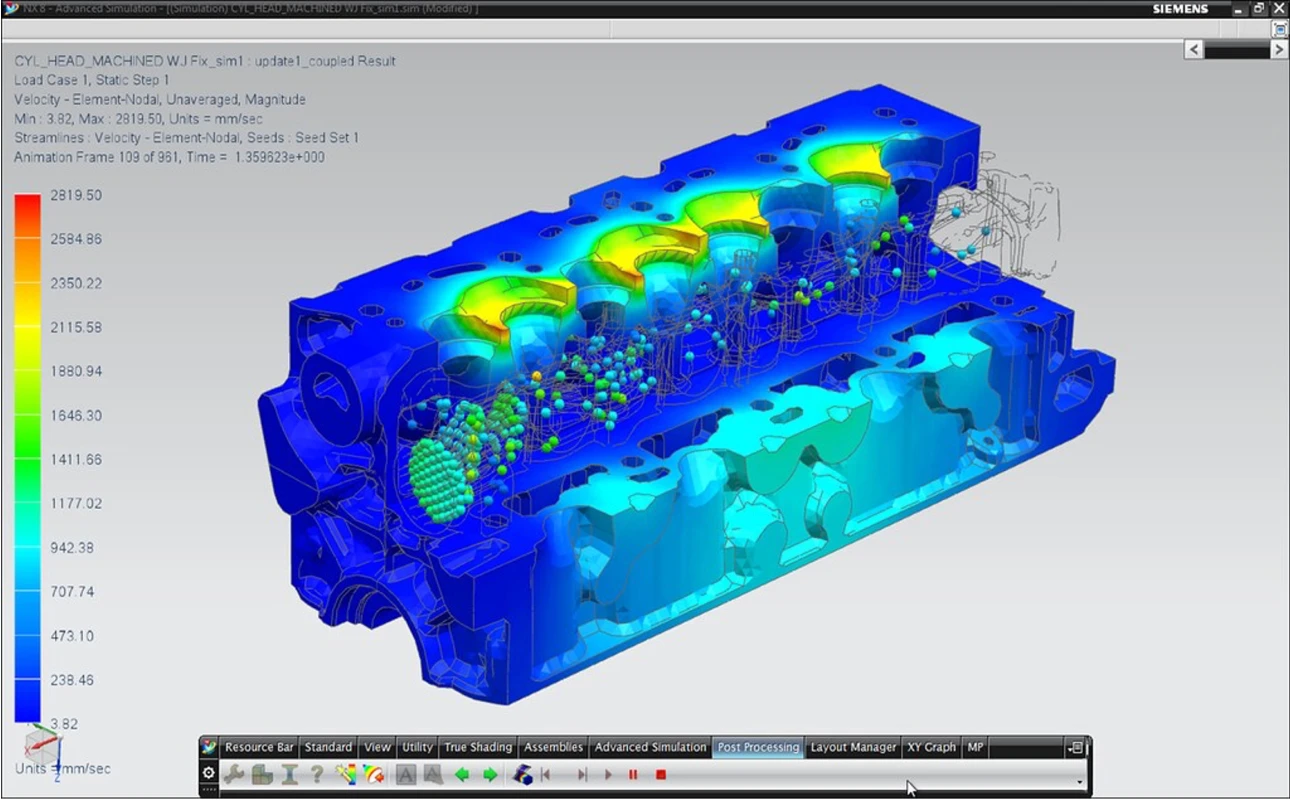
AI in Manufacturing Processes - Benefits and Practical Applications

In the business world, the manufacturing industry faces constant pressure to cut costs while maintaining product quality and meeting delivery schedules. Traditional approaches, built on manual monitoring and reactive maintenance, often fall short of expectations.

So, is there a better way? Yes, and it starts with AI.

AI-powered systems are already reshaping maintenance strategies. By analyzing sensor data from production lines, they spot patterns human operators might miss. For example, a vibration spike that signals bearing wear can trigger proactive repairs, preventing breakdowns before they escalate. This is unlike the passive, reactive methods of the past.

Four Key Takeaways on AI in Manufacturing Processes: Integrating artificial intelligence in manufacturing requires striking a balance among multiple elements. Here are four essential insights for successful AI implementation.

  1. AI Thrives on Quality Data Foundations
  2. Before any AI system delivers results, manufacturers need a strong data infrastructure, with structured data from sensors, machines, and production lines. Focus on data standardization, real-time collection, and secure storage.
  3. Human Expertise Remains Irreplaceable
  4. AI supports, rather than replaces, human workers. Success comes when experienced operators oversee AI decisions. Human intuition and knowledge are essential for interpreting results and managing exceptions.
  5. Performance Gains Require Measurable Outcomes
  6. AI investments must yield tangible improvements, including reduced downtime through predictive maintenance, enhanced quality via defect detection, and increased throughput. Establish clear KPIs, such as overall equipment effectiveness (OEE), defect rates, and cycle times.
  7. Operational Impact Extends Beyond the Factory Floor
  8. AI benefits affect the entire organization, improving supply chain optimization, inventory management, demand forecasting, and delivery timelines. This requires collaboration among IT, operations, quality assurance, and business teams to ensure that AI tools integrate with existing workflows.
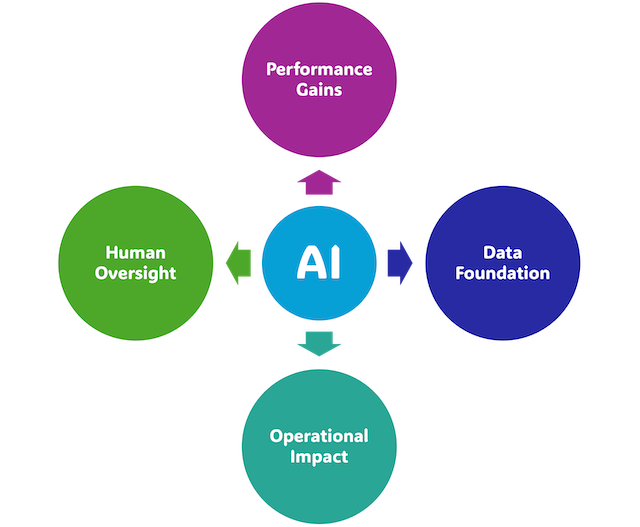
Four Key Takeaways on AI in Manufacturing Processes (Author)

AI boosts Industry 4.0/5.0 smart factories by connecting machines and humans, as also detailed in a World Economic Forum Report ⁽¹⁾:

  • How is AI in manufacturing deployed in practice?
  • We will explore how early adopters in the automotive industry and electronics manufacturing have demonstrated that implementing AI in manufacturing delivers measurable improvements in throughput, defect rates, and maintenance costs.
Artificial Intelligence in Manufacturing: article roadmap (Author)
  • AI branches
  • AI in manufacturing encompasses machine learning and computer vision. Those systems process real-time manufacturing data to enhance decision-making at every stage of the production process.
  • Beyond the factory floor
  • With the advancement of AI capabilities, particularly with the recent developments of generative AI and large language models (LLMs), the scope of applications in manufacturing operations extends far beyond factory floors, as outlined in the applications of ML in mechanical engineering.
  • Industry 4.0 and 5.0
  • The transformation of manufacturing under Industry 4.0 marks a convergence into cyber-physical systems. Cyber-physical systems merge physical production systems with digital technologies, including AI, robotics, and the Internet of Things (IoT).
  • Key takeaways on business impact
  • The introduction of AI in manufacturing to optimize processes is driving measurable improvements in cost and productivity. McKinsey estimates the corporate AI productivity opportunity at approximately $4.4 trillion and reports that mature AI deployments can reduce total manufacturing costs by up to 20%. In comparison, facility-level AI/ML use reached ~29% in 2025 surveys. ⁽²⁾
  • Market trends of AI in manufacturing:
  • AI in manufacturing boosts efficiency in predictive maintenance, quality inspection, data analytics, generative design, and agentic AI. Only about 5% of companies have fully scaled these, but the potential is high. Success requires scaling, data governance, and reskilling. Companies that do so can gain significant ROI and a competitive advantage. ⁽³⁾

For a closer look at real implementations, see this practical guide on AI in predictive maintenance.

The World Economic Forum (WEF) in Davos is a premier forum for governments, global corporations, and international entrepreneurs

Explore AI in manufacturing, its key applications, and benefits:

  • How is AI Used in Manufacturing Processes?
    • Computer Vision On the Factory Floor
    • Predictive Maintenance and AI in Manufacturing
    • AI-Powered Process Optimization
  • What Manufacturing Companies Are Implementing AI Solutions?
    • General Electric
    • Siemens
    • BMW
    • Foxconn
    • Procter & Gamble
  • How Can Generative AI Transform Manufacturing Operations?
    • Design Alternatives
    • Shop Floor Layout
    • Synthetic Data for Process Optimization: Pros and Cons
    • Supply Chain Optimization and Training Materials
  • What Are the Primary Applications of AI in Manufacturing Production?
    • Quality Control
    • Production Planning
    • Supply Chain Management
    • Energy Consumption Optimization
    • Intelligent Process Optimization
  • How Does Predictive Maintenance Work in Smart Manufacturing?
  • How Do AI Models Improve Quality Control in Manufacturing?
  • Robots and AI in Manufacturing
    • Robot Learning - What Is It?
    • What Role Do Collaborative Robots Play in AI-Powered Manufacturing?
  • How Does AI Optimize Supply Chain Efficiency in Manufacturing?
  • What Benefits Does AI Bring to Job Scheduling?
  • How Do Neural Networks Enable Smart Factory Operations?
    • Image Recognition
    • Applications
  • What Are Digital Twins in Manufacturing? Key Benefits and Applications
  • What Are the Cost Implications of Implementing AI in Manufacturing?
  • What Role Does Data Quality Play in AI Deployment Success?
  • How Are Large Language Models Applied in Manufacturing?
  • How Does AI Support Additive Manufacturing and 3D Printing?
  • What Is the Future of AI in Reshaping Manufacturing?
AI systems analyze sensor data from production lines and can identify patterns that human workers might have missed

How is AI Used in Manufacturing Processes?

AI optimizes production by continuously analyzing data from sensors, machine logs, and quality reports across multiple production lines.

Machine-learning models process this information to recommend or automatically adjust critical parameters such as feed rates, temperature, and pressure. The system monitors results in real time, tracking defective parts, scrap material, and energy usage, and refines its recommendations over time.

This closed-loop approach enables manufacturers to adapt to variations in materials, equipment wear, and environmental conditions, thereby increasing the proportion of parts that meet quality standards, reducing scrap, and lowering electricity consumption, all while maintaining consistent production throughput.

Computer Vision On the Factory Floor

On the factory floor, computer vision systems perform real-time, high-resolution inspections. Convolutional neural networks trained on thousands of defect images distinguish acceptable variations from genuine defects, reducing false positives that cause bottlenecks. Manufacturers report up to a 25% reduction in scrap rates and defect detection accuracy over 95%.

Predictive Maintenance and AI in Manufacturing

The predictive approach to maintenance represents one of the most impactful uses of Artificial Intelligence in the manufacturing industry, resulting in significant cost savings.

AI systems analyze data from sensors to predict when equipment will fail:

  • vibration sensors
  • temperature monitors
  • acoustic sensors

AI-Powered Process Optimization

Manufacturing benefits from AI. AI tools analyze data from multiple production lines simultaneously. They find bottlenecks and suggest schedule changes. AI considers factors like machine availability, operator skills, and raw materials.

What Manufacturing Companies Are Implementing AI Solutions?

Leading manufacturers integrate AI into their production processes to enhance efficiency, quality, and responsiveness. Companies such as General Electric, Siemens, P&G, BMW, and Foxconn utilize AI for predictive maintenance, process optimization, and quality control. Those companies combine AI, robotics, and vision for automated inspection and real-time adaptation.

General Electric

General Electric pioneered AI in manufacturing through its Brilliant Factory initiative. GE uses AI systems to optimize machining processes and predict maintenance needs across its aviation and power generation facilities. The GE AI models analyze sensor data from thousands of machines to identify optimal cutting parameters and predict tool wear, reducing scrap rates and extending tool life.

Siemens

Siemens integrates Artificial Intelligence throughout its manufacturing operations and embeds AI capabilities into the products it sells to other manufacturers. The company’s smart manufacturing platform combines AI-powered production planning with real-time monitoring, enabling companies to simulate process changes before implementing them on production lines. The Siemens approach to implementing AI reduces risk while accelerating the adoption of new manufacturing processes.

BMW

BMW uses AI in manufacturing to optimize its automotive production lines. Discover more about the BMW AI initiative. The company deploys computer vision systems that inspect welds and paint quality with greater accuracy than traditional methods. The BMW AI systems also optimize energy usage across facilities by predicting demand patterns and adjusting heating, cooling, and lighting systems accordingly, delivering cost savings while reducing environmental impact.

Munich BMW Factory and Museum | View from Olympiatower | Flickr

Foxconn

Foxconn, a major electronics manufacturer, utilizes AI-powered robots to assemble smartphones and computers on its production lines. These robots use machine learning to improve their precision over time, adapting to variations in component dimensions without requiring manual reprogramming. The integration of Artificial Intelligence with robotics has enabled Foxconn to maintain quality while increasing production volumes.

Foxconn Builds Robotic Factories With Omniverse & NVIDIA AI

Procter & Gamble

Procter & Gamble utilizes AI in its manufacturing processes. It improves production and supply chains at its consumer goods plants. AI tools analyze data from production lines. They find the best mixing times, temperatures, and ingredient ratios. This helps ensure consistent product quality across all sites. The company also uses AI to manage its supply chain. It predicts demand patterns, helping keep raw material inventories optimal and reducing waste.

Procter & Gamble Factory | Flickr

How Can Generative AI Transform Manufacturing Operations?

Generative AI in manufacturing opens up new design possibilities, enabling engineers to explore parameter spaces that are far larger than they could evaluate manually.

What does the ability of AI-driven exploration mean in practice?

In the design process, generative AI algorithms test thousands of scenarios to suggest optimal geometries. The method incorporates both targets and constraints, such as weight limits, material properties, and stress tolerance.

This AI-driven exploration provides a comprehensive approach to evaluating the design space, surpassing traditional methods that consider only a limited number of options. The generative design method is beneficial in additive manufacturing, enabling the creation of lighter and stronger components compared to conventional designs.

Let’s examine the details in the next section.

Design Alternatives

Product development cycles compress dramatically when generative AI generates and evaluates design alternatives. Manufacturing engineers specify requirements for mechanical properties, cost targets, and manufacturing constraints, and generative AI proposes solutions that meet these criteria. The traditional CAD (computer-aided design) process required engineers to create each design iteration manually. For a quick refresher on how design tools operate, explore what is CAD technology.

In contrast, generative AI explores the solution space autonomously, identifying designs that human intuition might miss.

To see how AI refines geometries for 3D printing efficiency and material savings, explore AI optimization for Additive Manufacturing.

Subtractive and additive manufacturing | source fabacademy.org

Shop Floor Layout

The shop floor should be optimized to boost throughput and enhance safety. Poor layouts lead to excessive handling and longer cycle times, thereby reducing productivity. Analyzing machine use and operator movement helps eliminate bottlenecks and improve coordination. In dynamic environments, an optimized layout enables a quicker and smoother workflow. The outcome is a more efficient use of space and resources.

Generative AI in manufacturing optimizes shop floor configuration by analyzing data on material flow, machine dependencies, and worker movement. AI models generate configurations that minimize handling time, reduce bottlenecks, and improve safety. AI can propose those optimal arrangements in hours instead of weeks.

Synthetic Data for Process Optimization: Pros and Cons

Generative AI is increasingly used to produce synthetic datasets for model training when operational data is limited or unavailable. This approach accelerates the deployment even before physical production begins.

  • Structural Risk
  • The reliance on synthetic data introduces a structural risk: when successive models are trained on data generated by earlier models rather than on real process observations, statistical diversity diminishes, and systematic biases can accumulate. This phenomenon, analogous to model collapse in large-scale generative systems, can lead to an erosion of alignment between digital models and physical reality.
  • Consequences
    • Overly optimistic model performance during training
    • Poor generalization once applied to actual production.
  • Remediations
  • Maintaining a proportion of verified, sensor-based data and regularly recalibrating AI models against real operational feedback remain essential safeguards to prevent such degradation.

In conclusion, synthetic data accelerates early optimization but must always be validated and corrected against real-world measurements as soon as they become available.

Supply Chain Optimization and Training Materials

Supply chain optimization benefits from the ability of generative AI to model complex scenarios.

By generating thousands of configurations and simulating their performance under various conditions (such as demand fluctuations, transportation disruptions, and supplier delays), generative AI helps manufacturing companies build resilient supply chains.

Generative AI also helps create work instructions and training materials.

AI systems analyze process documentation and production data and generate step-by-step instructions. Instructions are tailored to specific products and operator skill levels. This customization improves training effectiveness and reduces errors on the production line.

What Are the Primary Applications of AI in Manufacturing Production?

Predictive maintenance is one of the most proven applications of AI in the manufacturing sector. AI models analyze vibration patterns, temperature fluctuations, and acoustic signatures from production equipment to predict failures before they occur. This proactive AI in manufacturing reduces unplanned downtime by 30-50% and lowers costs by eliminating unnecessary preventive maintenance.

Quality Control

AI-powered quality control automation outperforms traditional methods in speed and accuracy. Computer vision scans products rapidly, detecting flaws that humans might overlook due to fatigue or size. Neural networks trained on defect data differentiate cosmetic from functional issues, reducing rework and preventing defective products from reaching customers.

Production Planning

AI-driven production planning coordinates multiple lines and manages complex dependencies across manufacturing stages. These systems optimize job schedules by balancing machine capabilities, operator shifts, material inventory, and delivery deadlines to ensure efficient operations. When disruptions occur (such as a machine breakdown, a delayed shipment, or a last-minute order), AI can recompute feasible production plans within minutes, rather than hours.

For instance, a global consumer-goods manufacturer cited by McKinsey reported that implementing AI-based planning tools reduced planning time by 60%, as detailed in a report on  autonomous supply-chain planning for consumer-goods companies.

Supply Chain Management

Supply chain management undergoes a transformation when AI systems analyze data from suppliers, logistics providers, and market trends to optimize inventory levels and delivery schedules. Analyzing historical sales data alongside external factors such as weather patterns, economic indicators, and social media sentiment enables AI to forecast future demand more accurately than traditional methods. This capability reduces both stockouts and excess inventory, thereby improving supply chain efficiency and lowering costs.

McKinsey reports that inventory for finished goods decreased by up to 20% and supply-chain costs by up to 10%, according to their analysis on autonomous supply-chain planning for consumer goods companies.

Energy Consumption Optimization

Manufacturers face rising energy costs and sustainability requirements. Therefore, optimizing power consumption represents an increasingly important application. AI can analyze energy usage patterns across facilities to identify opportunities to reduce consumption without affecting production. Smart systems adjust equipment operations based on electricity pricing, job schedules, and environmental conditions.

A review article, “Green Energy Management in Manufacturing Based on Demand Prediction by Artificial Intelligence” (Saudi J. Eng. Technol., 19/04/2025), reports that the implementation of AI and IoT in manufacturing has achieved, on average, 15-20% cost reductions in energy consumption.

Intelligent Process Optimization

Artificial Intelligence continuously improves manufacturing processes by identifying optimal parameter settings. For instance, in machining, Artificial Intelligence determines the ideal cutting speeds, feed rates, and tool paths based on material properties and the desired surface finish. AI in manufacturing within the chemical sector optimizes reaction temperatures, pressures, and ingredient ratios to maximize yield while minimizing waste and energy consumption.

Ghinwa Azzi Fab Academy 2021

How Does Predictive Maintenance Work in Smart Manufacturing?

Predictive maintenance relies on AI systems that continuously monitor equipment health through sensor networks distributed across the shop floor. Vibration sensors detect anomalies in rotating machinery, thermal cameras identify overheating components, and acoustic sensors pick up unusual sounds that precede failures. AI models process this sensor data in real-time, comparing current signatures against standard operating patterns and known failure modes.

  • Machine learning models are trained on historical failure data and sensor readings prior to failures. AI algorithms detect subtle changes in vibration, temperature, or acoustics that are linked to potential failures. These models process more manufacturing data to improve prediction accuracy and enable earlier problem detection.
  • Manufacturing engineers get alerts when AI detects potential failures and estimates remaining useful life. These predictions help schedule repairs during planned downtime, avoiding unexpected breakdowns. The AI also suggests likely-failing components, enabling technicians to prepare the necessary parts in advance of maintenance.
  • Integration with manufacturing systems allows predictive maintenance AI to consider production schedules when recommending maintenance. If AI predicts a bearing failure in two weeks, it assesses production needs and suggests maintenance over the weekend, avoiding production stops. This keeps equipment running and reduces failures.
  • The business value of the predictive approach to maintenance extends beyond avoiding breakdowns. Performing maintenance only when needed helps manufacturers reduce costs associated with unnecessary parts replacement and labor. Equipment lasts longer when maintained at optimal intervals, rather than arbitrary schedules.
  • Maintenance uses AI to optimize strategies and improve efficiency. Instead of treating machines separately, AI analyzes interdependencies and prioritizes maintenance to prevent cascading failures. For example, if a compressor failure shuts down multiple lines, AI prioritizes the repair of the compressor over that of equipment affecting only one machine.

How Do AI Models Improve Quality Control in Manufacturing?

AI-powered quality control leverages real-time data analytics and computer vision (CV) to detect manufacturing defects with superhuman consistency. Quality control systems with Artificial Intelligence analyze products across multiple inspection points. They identify root causes through data correlation and enable proactive adjustments before defects occur.

Capability

How It Works

Key Benefits

Defect Detection

CV captures product images; neural networks analyze for scratches, dimensional variations, misalignments, and material inconsistencies

detection speed in [ms]

real-time rejection of defective items

Model Training & Adaptation

Systems learn from thousands of labeled images showing acceptable vs. defective products; continue learning from production data

Adapts to changes in materials and processes

distinguishes normal variation from actual defects

Closed-Loop Control

AI detects defect patterns and alerts operators or adjusts processes

Reduces waste by preventing the continued production of defective parts

Root Cause Analysis

Correlates defect patterns with machine settings, operator shifts, material lots, and environmental conditions

Enables targeted improvements rather than ineffective broad changes

Multi-Sensor Fusion

Integrates data from cameras, laser scanners, ultrasound, and other inspection technologies

Comprehensive quality assessment for complex products with hidden defects

Predictive Quality Control

Detects process capability shifts before defects

Enables proactive adjustments to maintain quality indices

Robots and AI in Manufacturing

Robots in AI-powered manufacturing range from simple, rule-following systems to advanced, learning ones. Their development shows a move from strict automation to more flexible, environment-aware operations. The categories of rule-based, training-based, and context-based robotics demonstrate different control styles that are increasingly merging into hybrid systems. On the factory floor, collaborative robots (cobots) enhance human–machine teamwork across all three types, transforming productivity, safety, and flexibility.

Robot Learning - What Is It?

Learning robots can acquire new skills, adjust to changes, or improve task performance. The key is learning through experience instead of explicit coding by humans. Learning utilizes sensors, AI vision, and force-feedback mechanisms to sense the environment, identify data patterns, and adjust movement and decisions in real-time.

Rule-Based Robotics

Rule-based robotics remains dominant in structured, repetitive environments where precision and cycle time are critical, such as automotive body shops. Advances in AI-assisted programming, including tools such as Siemens Industrial Copilot, are simplifying deployment and extending the reach of these systems.

Training-Based Robotics

Trained robots are gaining relevance in settings where robots learn from simulated or real-world experiences using reinforcement learning. This approach reduces setup effort and enables flexible automation for mid-volume or adaptive tasks.

Context-Based Robotics

Context-Based Robotics represents the next step, powered by foundation models and “zero-shot” learning, enabling robots to reason and act in unfamiliar scenarios. In practice, these categories overlap, and hybrid robots often combine all three capabilities within a single workflow.

We will next see an operational layer that encompasses all of the above categories.. A cobot can be rule-based, training-based, or context-based, depending on its control method.

What Role Do Collaborative Robots Play in AI-Powered Manufacturing?

Collaborative robots (Cobots) equipped with AI capabilities work safely alongside humans without the safety cages traditional industrial robots require. It’s an operational layer that can be applied to all three system types, enabling collaboration regardless of the underlying intelligence model.

Cobots surpass traditional robots by overcoming issues like rigidity, isolation, and high setup costs. Whereas conventional robots excel at repetitive tasks but lack flexibility and safety, cobots utilize AI vision, force sensing, and motion control to adapt and work in tandem with humans. They enable hybrid workflows where humans handle precision and customization, while cobots manage repetitive or heavy-duty tasks. This results in greater flexibility, faster changeovers, and lower costs, especially for small-batch or high-mix production.

How They Work

Cobots use computer vision systems and force sensors to detect human presence and adjust their behavior accordingly, slowing down or stopping when workers enter their operating space. Human-robot collaboration enables flexible manufacturing cells where workers and robots perform tasks suited to their respective strengths.

Adaptability

AI enables cobots to adapt to variations in parts and tasks without reprogramming. AI-guided vision enables robots to assemble products with slight size differences, adjusting for part position and orientation. These capabilities are functional in low-volume, high-mix manufacturing, where frequent product changes make traditional programming impractical.

Learning from Data

Collaborative robots acquire new skills through observation, rather than being programmed. Manufacturing engineers can manually guide the robot through a task, and AI algorithms extract the underlying pattern from these demonstrations. The robot then replicates the task, using machine learning to refine its performance based on feedback. This approach reduces the time required to deploy robots for new manufacturing processes.

Automation and Safety

Collaborative robots perform repetitive tasks, thereby reducing fatigue and the risk of injury to humans. This automation enables humans to focus on tasks that require judgment or problem-solving. AI systems optimize task distribution, considering cycle time, ergonomics, and product complexity, boosting productivity and worker safety satisfaction.

Flexibility in Manufacturing Processes

Integrating collaborative robots with manufacturing systems enables the creation of flexible, reconfigurable production lines. AI-driven planning optimally assigns robots and workers based on the specific needs of each product. During changeovers, robots physically relocate while AI updates task assignments and motion programs.

Quality

Cobots perform tasks requiring consistent force application or precise positioning. Whether applying adhesive beads, inserting fasteners, or positioning components, the robots execute these routine tasks. Robots, with their repeatability, reduce defects and overall optimize manufacturing processes. Human workers verify the work of robots and handle exceptions, combining robotic consistency with human flexibility.

(djhigh.co.kr)

How Does AI Optimize Supply Chain Efficiency in Manufacturing?

AI-driven supply chain management integrates demand forecasting, procurement optimization, and risk mitigation to enhance decision-making, reduce costs, and maintain service levels. These systems analyze vast amounts of data, from sales history to geopolitical risks, enabling real-time decision-making across the entire supply network.

Capability

How It Works

Key Benefits

Demand Forecasting

Analyzes sales, economic, weather, social media, and promotion data to predict demand by product and location.

Optimizes production volumes; reduces stockouts and excess inventory

Procurement Optimization

Monitors supplier performance, prices, and geopolitical risks to recommend optimal purchase timing and quantities.

Balances holding costs against price volatility; aligns materials with seasonal demand

Transportation Optimization

Evaluates fuel prices, traffic, weather, and delivery windows to select routes and carriers; replans during disruptions

Reduces logistics costs; minimizes delivery delays while meeting sustainability goals

Network Inventory Optimization

Determines optimal stock levels across facilities by treating warehouses as an interconnected network

Reduces total inventory while maintaining service levels through strategic positioning

Supplier Relationship Management

Tracks delivery performance, quality, lead times, and responsiveness across suppliers

Identifies reliable partners; enables data-driven selection and negotiation

Risk Mitigation

Analyzes sourcing and distribution structure for dependencies, geographic risks, and supplier health; runs disruption scenarios.

Highlights vulnerabilities early; suggests mitigation, like alternate suppliers or safety stock

What Benefits Does AI Bring to Job Scheduling?

Traditional job scheduling faces issues, such as:

  • conflicting goals like minimizing idle time while meeting deadlines,
  • performance drops with production changes,
  • difficulty in adapting to disruptions.

The complexity grows exponentially with the number of jobs, machines, and constraints, and makes optimal scheduling difficult.

As an outcome, companies operate with suboptimal schedules, leading to:

  • bottlenecks / longer lead times
  • excess inventories.

AI-driven production scheduling balances objectives:

  1. minimizing changeover time
  2. meeting delivery dates
  3. maximizing equipment utilization
  4. reducing work-in-process inventory

AI algorithms evaluate millions of schedules to find optimal solutions.

More details:

  • Machine Breakdown
  • When a machine breaks down, a material shipment arrives late, or a customer requests an expedited delivery, AI systems recalculate the job schedule within minutes, propagating changes through dependent operations. This responsiveness prevents disruptions from cascading through the production plan and minimizes their impact on delivery performance, eliminating the need for manual interventions.
  • Job Scheduling
  • Management of the sourcing and distribution system enables Artificial Intelligence to coordinate supplies (material arrivals) with production needs. Rather than maintaining extensive raw materials inventories, intelligent manufacturing systems order materials to arrive just in time for production. The AI synchronizes supplier lead times, job schedules, and customer delivery dates, reducing working capital requirements while ensuring material availability.
  • Capacity Planning
  • Capacity planning benefits from Artificial Intelligence that predicts bottlenecks before they constrain production. Analyzing planned orders against equipment capabilities and historical cycle times, AI tools identify when capacity becomes insufficient to meet demand. These predictions give manufacturing engineers time to increase capacity through overtime, equipment acquisition, or process improvements before missed deliveries occur.
  • Sequencing decisions determine product order.
  • Optimized sequencing enhances productivity in industries with sequence-dependent setups, such as those involving color changes in plastics or shifts in steel grades. The algorithms group similar products to minimize setups while meeting delivery deadlines.
  • Labor planning
  • Labor planning integrates with AI-powered production scheduling to ensure sufficient skilled workers are available when needed. AI systems consider operator certifications, training, and productivity data to avoid overloading workforce capabilities. This coordination prevents infeasible schedules due to a lack of qualified personnel.

How Do Neural Networks Enable Smart Factory Operations?

Artificial neural networks enable smart factories by processing manufacturing data from sensors and control systems. Inspired by the brain, these models learn complex patterns, with deep learning involving multiple layers that extract hierarchical features. They analyze data streams, detecting subtle anomalies before issues or failures and capturing nonlinear relationships between variables that traditional methods miss.

Image Recognition

Image recognition, using neural networks, automates visual inspection in manufacturing. Specialized artificial networks inspired by the visual cortex, trained on thousands of images, identify defects like cracks, scratches, discoloration, or misalignment.

For a deeper look at how these models process visual data, see the article on CNN Technology for Engineers.

Traditional rule-based vision systems require explicit programming for each type of defect. In contrast, neural networks can generalize from the provided training examples, detecting novel defect types similar to those they have seen before.

Applications

  • Process control applications optimize manufacturing processes in real-time.
  • Artificial neural networks learn the relationships between input parameters, such as temperature, pressure, and feed rate, and output characteristics, including yield, quality, and energy consumption. Once trained, these models recommend parameter adjustments that optimize efficiency while maintaining product specifications and adapt to variations in raw materials or environmental conditions.
  • Predictive modeling using neural networks forecasts production outcomes based on current conditions.
  • These models predict cycle times, defect rates, and equipment performance, enabling proactive interventions to be made. Manufacturing engineers use these predictions to adjust processes before problems occur.
  • Natural language processing, facilitated by neural networks, extracts insights from unstructured manufacturing data.
  • These include maintenance logs, operator notes, and quality reports. These AI technologies identify patterns in text data that correlate with production issues, revealing insights that structured data alone might miss. This capability enables manufacturing companies to leverage historical documentation to enhance operations.
  • Reinforcement learning optimizes sequential decision-making in manufacturing processes.
  • This specialized neural network approach learns optimal control strategies through trial-and-error simulation and then applies them in actual production. This technique proves valuable for complex processes where optimal control policies are difficult to determine analytically, such as the assembly process for products with many variants.

What Are Digital Twins in Manufacturing? Key Benefits and Applications

Digital twins in manufacturing represent virtual replicas of physical assets, processes, or entire factories, powered by AI, IoT sensors, and real-time data.

These digital models simulate real-world behaviors to predict outcomes, optimize operations, and test scenarios without risking actual production.

According to McKinsey, digital twins can reduce manufacturing downtime by up to 30% and accelerate product development by 50%. They bridge the gap between physical and digital realms, enabling smarter decision-making in smart factories under Industry 4.0 and 5.0. Learn how Neural Concept unveiled real-time digital twins.

Neural Concept

Digital twins utilize sensor data to replicate equipment performance, with AI forecasting failures or simulating changes, such as predictive maintenance, on a larger scale. This is especially useful in complex, costly environments.

“Neural Concept’s integration of the NVIDIA Omniverse Blueprint with its 3D AI platform will help customers accelerate, AI emulate and visualize real-time digital twins at scale, accelerating CAE product development and speeding the pace of innovation.”

(Tim Costa, senior director of CAE, EDA, and quantum at NVIDIA)

The applications of digital twins are:

  • Predictive Maintenance and Optimization
  • Digital twins monitor equipment health in real-time, using machine learning to predict wear and suggest optimizations. Companies like BMW use digital twins in their factories to simulate assembly lines, resulting in a 20-30% reduction in energy consumption and improved efficiency.
  • Process Simulation and Testing
  • Manufacturers can perform “what-if” analyses virtually (such as modifying production parameters or testing new materials), without stopping operations. The approach shortens R&D time and lowers costs, as shown by Siemens’s use of digital twins for virtual commissioning of machinery.
  • Supply Chain Resilience
  • By modeling end-to-end supply chains, digital twins can predict disruptions such as supplier delays or demand fluctuations. Predictions help optimize inventory and logistics, with examples from GE Aviation showing a 15% reduction in lead times.
  • Training and Worker Safety
  • Virtual replicas provide safe training environments powered by AR/VR technology, enabling operators to practice complex tasks. In electronics manufacturing, firms like Foxconn employ digital twins to enhance worker-robot collaboration and minimize accidents.
  • Sustainability and Energy Management
  • Digital twins analyze energy usage patterns to minimize waste and emissions. For additive manufacturing, they optimize designs for lighter, more efficient parts, aligning with environmental goals.
(Digital Twin Vectors by Vecteezy)

What Are the Cost Implications of Implementing AI in Manufacturing?

Implementing AI in manufacturing requires large upfront investments in data, connectivity, and integration, varying by scale. Predictive-maintenance pilots cost under $200,000, while fully automated “smart factory” setups can exceed $10 million. Hardware retrofits and sensors form most initial costs, especially for outdated assets without digital interfaces. After deployment, costs shift to data storage, software, and talent. ROI depends on continuous use, with savings from avoiding failures, process optimization, and scrap reduction, often leading to payback within 18-36 months.

Category

Key Points

Typical Costs / Notes

Initial Investment

Start with pilot projects before full deployment

Predictive maintenance: $50K–$200K

Complete smart factory: >$10 M

Infrastructure

Sensors, networking, edge, and cloud systems

Retrofitting legacy equipment = high cost. Modern systems = built-in connectivity

Software

Commercial or custom solutions

Commercial = subscription fees

Custom = development cost, no license

Data Infrastructure

Collection, cleaning, storage, governance

Ongoing cost grows with data volume

Cloud tools simplify scalability

Talent & Training

Data scientists, integration engineers, operators

Early partnerships offset hiring and training gaps

ROI Drivers

Downtime ↓ Defects ↓

Throughput ↑

Typical payback = 18–36 months

AI Cost Breakdown in Manufacturing

What Role Does Data Quality Play in AI Deployment Success?

Data quality fundamentally determines the performance of AI systems in manufacturing applications. Machine learning models trained on inaccurate, incomplete, or inconsistent data often produce unreliable predictions, regardless of the algorithm’s sophistication.

Here’s how companies could address quality issues:

  1. Sensor accuracy and calibration have a direct impact on AI reliability. Vibration sensors in predictive maintenance can’t detect subtle anomalies if they drift out of calibration. Computer vision in quality control fails due to lens contamination or poor lighting. Regular calibration and monitoring ensure data quality standards are met.
  2. Data completeness impacts AI training and operation. Missing data from sensor failures, communication issues, or logging gaps hampers understanding and model accuracy. Data gaps during operation can lead to AI making incomplete or incorrect decisions.
  3. Aligning data streams from multiple sources is a challenging task. Precise time synchronization is essential; clock drift or inconsistent timestamps can mislead cause-and-effect analysis.
  4. Data labeling quality for supervised learning affects model accuracy. Mislabeling by humans leads to incorrect patterns. Rigorous procedures with multiple reviewers are critical for high-stakes applications.
  5. Data governance validates data quality. Without clear ownership and standards, data can degrade due to system changes, sensor wear, and outdated documentation. Formal governance with metrics, monitoring, and remediation ensures AI reliability in the sector.

How Are Large Language Models Applied in Manufacturing?

A Large Language Model (LLM) is an AI application trained on massive amounts of text to understand patterns, context, and relationships in human language.

Unlike numeric sensors or process signals, LLMs derive insights from textual documentation, uncovering connections between verbal observations and quantitative process data that engineers might otherwise miss. There is significant potential to improve manufacturing processes. LLMs can read and interpret unstructured data such as maintenance logs, quality reports, and operator notes.

Applications of LLMs in Manufacturing (Author)
  • Work instruction generation
  • LLMs analyze product specs, process documents, and equipment manuals to produce tailored step-by-step instructions, ensuring they stay current as products or processes evolve and reducing manual documentation effort.
  • Knowledge management
  • Engineers can query extensive repositories of manuals, SOPs, and incident reports in natural language. LLMs quickly retrieve and synthesize relevant information, eliminating time-consuming manual searches.
  • Root cause analysis
  • LLMs can identify recurring failure patterns, sequences, and remediation strategies by scanning maintenance logs and incident reports. This helps engineers address root causes proactively.
  • Supplier and administrative communication
  • LLMs draft technical queries, purchase orders, and quality specifications automatically, ensuring accuracy and reducing administrative burden.
  • Training content generation
  • LLMs create quizzes, study guides, and reference materials from process documentation, allowing training programs to scale and adapt alongside evolving manufacturing processes, with minimal engineering effort.

How Does AI Support Additive Manufacturing and 3D Printing?

Additive manufacturing, also known as 3D Printing, builds parts layer by layer, unlike traditional subtractive machining. It’s known for creating complex shapes, lightweight structures, and rapid prototyping. However, optimizing process parameters, materials, and designs is a challenging task. AI helps by transforming additive manufacturing into a data-driven, faster, more innovative, and scalable process.

Here is how:

  • Smarter Printing
  • Machine learning models learn how print settings (such as speed, temperature, and layer height) affect surface finish, accuracy, and strength. They suggest optimal combinations for each geometry and material, cutting down trial-and-error.
  • Real-time monitoring
  • Computer vision tracks the build layer by layer. Neural networks identify issues such as warping or delamination and can pause the print or automatically adjust settings to prevent waste.
  • Design beyond limits
  • Generative AI creates shapes that are impossible to achieve with traditional milling or casting methods. It explores weight-optimized, lattice-like forms that leverage the freedom of 3D printing. At the same time, they respect constraints such as overhang angles and support requirements.
  • Faster material discovery
  • Instead of testing endless formulations, Artificial Intelligence predicts how new alloys or polymers will behave in Printing, shrinking R&D cycles from months to weeks.
  • Targeted finishing
  • Vision systems inspect printed parts and let Artificial Intelligence decide which areas need polishing or machining. Only what’s necessary gets reworked, saving time and cost.
  • Efficient production processes
  • AI also plans print jobs, orients and nests parts on build plates, schedules printers, and balances throughput and quality across machines.

What Is the Future of AI in Reshaping Manufacturing?

Manufacturing will shift toward autonomous, connected, and sustainable systems as it converges with 5G, edge computing, and advanced robotics.

Here’s where the AI transformation is heading in manufacturing processes:

  • Autonomous production systems
  • AI will control entire production flows. It will adjust parameters, reorder materials, schedule builds, and coordinate real-time maintenance. Engineers will move from direct control to supervising AI and fine-tuning its behavior.
  • Digital twins become standard.
  • AI-driven digital replicas of factories enable manufacturers to test changes, optimize processes, and train models virtually before implementing them on physical lines. Continuous data feedback ensures that virtual and real systems remain aligned.
  • Sustainability by design
  • AI will optimize for cost, quality, and environmental impact simultaneously. It will reduce power, minimize material waste, and select recyclable or sustainable materials to meet tighter regulations and customer expectations.
  • Resilient supply chains
  • AI systems monitor risk, simulate disruptions, and propose countermeasures instantly. They can reroute logistics, identify alternative suppliers, and maintain delivery schedules under volatile conditions.
  • Customization at scale
  • Mass personalization will become practical. Artificial Intelligence automatically adapts designs and production plans, enabling factories to switch product variants without downtime or additional costs.
  • New business models
  • Manufacturers will sell performance rather than just products. They will utilize AI analytics to ensure uptime, throughput, and efficiency, and provide data-driven optimization as part of their customer service.

Quoted Sources

⁽¹⁾ World Economic Forum (2023): “Now is the time to double down, not slow down, on transforming industry

⁽²⁾ McKinsey (2025): “Superagency in the workplace: Empowering people to unlock AI’s full potential

⁽³⁾ Siemens (2025): “The Role of AI in Predictive Maintenance for Electronics Manufacturing

FAQ

What is the difference between Industry 4.0 and Industry 5.0?

Industry 4.0 emphasizes automation, digitization, and data-driven efficiency through the integration of IoT, AI, robotics, and cloud technology for smart factories. Industry 5.0 shifts toward human-centric manufacturing, blending advanced technology with human creativity and fostering collaboration between humans and machines.

What are the steps to implement AI-driven predictive maintenance in manufacturing?

Identify key equipment prone to failure and install sensors for vibration, temperature, pressure, and acoustics. Gather baseline data over weeks or months to find patterns. Label failure data with sensor readings before breakdowns to train machine learning models for early detection. Use these models for real-time monitoring and alerts, updating them with new data to enhance accuracy.

How does AI compare to traditional automation in manufacturing?

Traditional automation relies on fixed sequences and programming, making it susceptible to unexpected events. AI learns from data, adapts, and handles variability, reducing the need for reprogramming. While conventional automation handles repetitive tasks, AI responds flexibly to complex situations. Combining both leverages routine automation and intelligent decision-making.

What are the key use cases of AI in automotive, electronics, and food processing plants?

Automotive manufacturers use AI for welds, robot maintenance, and paint optimization. Electronics makers inspect circuits, optimize placement, and predict failures. Food plants utilize AI to sort, enhance cooking and cooling processes, monitor packaging, and forecast demand.

Which AI software platforms are best for optimizing factory workflows?

The best platform varies based on infrastructure, needs, legacy systems, and expertise. Siemens MindSphere offers IoT and AI solutions for process and maintenance; GE Predix monitors industrial equipment; PTC’s ThingWorx combines IoT connectivity with AI analytics; Microsoft Azure IoT and AWS IoT are cloud platforms that utilize machine learning for manufacturing.

What KPIs should companies track to evaluate AI performance in manufacturing processes?

Track OEE, MTBF, MTTR, first-pass yield, defect rates, cost per unit, inventory turnover, stockouts, energy use, forecast accuracy, and production comparison to measure productivity, quality, costs, supply chain, efficiency, and planning.

How does the cost-benefit analysis of AI differ between assembly line and batch manufacturing?

Assembly line manufacturing gains faster ROI from AI due to continuous data and stable conditions, enabling repeated optimizations. Quality control automates the inspection of millions of products annually, making small defect improvements valuable. Batch manufacturing has limited data and frequent changeovers, which reduces the immediate impact of AI; however, it still benefits scheduling, changeovers, and resource management.

What Challenges Exist in Integrating AI with Legacy Systems?

Legacy manufacturing setups impede AI adoption due to outdated equipment lacking digital interfaces, requiring costly retrofits. Proprietary formats in legacy PLCs hinder data integration, as middleware introduces latency and increases failure points. Poor network limits real-time AI applications, and aging hardware can’t meet low-latency quality control needs. Human factors also affect adoption; operators who are resistant to change often require training.