AI in Civil Engineering: Applications & Advancements
AI in civil engineering encompasses the application of machine learning, deep learning, computer vision, and language models to predict the behavior of structures, soils, water, and construction programs. These systems operate alongside physics-based tools. Licensed engineers retain accountability for all outputs with code or safety implications.
Key takeaways
Defect detection accuracy: a VGG16 convolutional network reached 95% crack detection accuracy on mosaic images of concrete footings assembled from UAV photography (Scientific Reports, 10.1038/s41598-024-58432-w).
Project Impact: Deloitte's analysis of AI and analytics in construction reports 10- 20% lower schedule overruns and 10–15% cost savings.
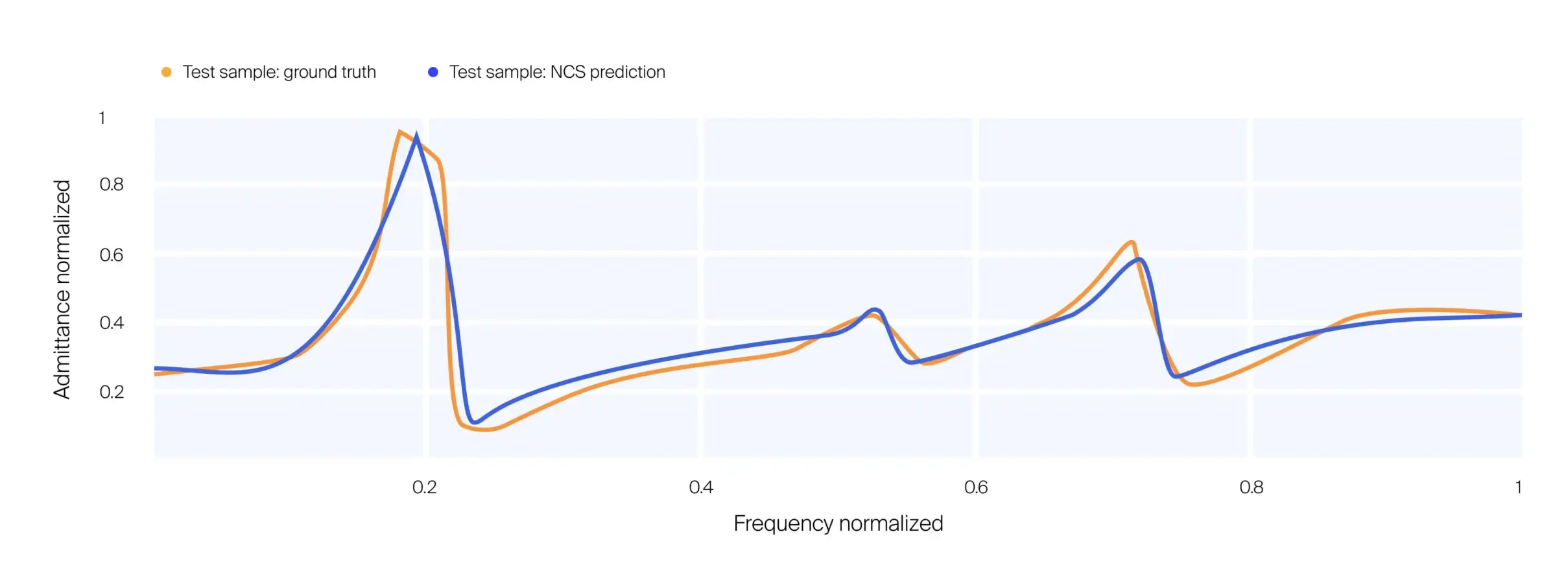
Simulation Speed: RWDI and Neural Concept developed a deep learning model using RWDI’s urban wind flow dataset for the Orbital Stack platform. The iteration time for an urban wind study decreased to approximately two minutes, and the cost per iteration was reduced by a factor of ten.
Micro-crack detection: Singapore’s bridge management system flags micro-cracks through strain gauge analysis before they become visible to inspectors.
Generative design in the field: the MX3D bridge in Amsterdam was designed with generative design and topology optimization, printed in stainless steel, and instrumented with a sensor network that feeds a digital twin (Arup, lead structural engineer).

This article examines the current state of AI in civil engineering, its technical foundations, and applications that have been deployed in operational projects.
This article is intended for structural and geotechnical engineers, who will find the evidence required to decide whether a model output can be signed. Program managers and technical directors will find cost and schedule data supporting each claim, along with information on the automation of routine tasks that contribute to reported savings.
AI technologies are rapidly transforming civil engineering. A 10–20% reduction in project schedules alters bid capabilities, while models that identify scour rates redefine inspection program requirements. However, responsibility remains unchanged: engineers who accept model outputs retain the same liability as for manual calculations.
Civil engineering AI systems are trained on data such as strain gauge readings, inspection photographs, simulation outputs, borehole logs, and completed project reports. These trained models enable machines to perform tasks that previously required experienced engineer reading raw measurements: classifying a crack, interpolating a soil profile between boreholes, predicting a flow field, or predicting structural failures months before traditional inspection cycles would detect them.
Current trends point in the same direction across the construction industry. Artificial Intelligence transforms civil engineering through generative design. AI-powered site monitoring improves the efficiency of construction oversight. This pattern repeats across AI applications in engineering.
Explore the full spectrum of AI applications in structural engineering and smart city development - where it stands today, how it drives design and decision-making, and what's next for information-based infrastructures:
What is the current state of AI in civil engineering?
What are the core AI application domains in civil engineering?
What are the technical foundations of AI in civil engineering?
What are the key AI applications in civil engineering practice?
How is CFD used in civil engineering?
How is AI helping project management?
How is AI used in smart city development?
What technologies support AI in civil engineering?
What are the ethical considerations of AI in civil engineering?
What is the future of AI in civil engineering?
What is the current state of AI in civil engineering?
AI is in production use in civil engineering for design exploration, visual inspection, condition monitoring, and schedule forecasting, but it holds no signing authority anywhere. Deployment depth varies sharply by phase: generative design and computer vision are routine in large firms, while smaller firms typically start with a single inspection or scheduling workflow. An assessment across the sector reveals three patterns:
Design Phase: Generative design now routinely explores solution spaces containing thousands of viable configurations. The MX3D bridge in Amsterdam exemplifies this approach: AI-driven topology optimization reduced material usage by 30% while maintaining structural performance under dynamic loading. Crucially, sensor networks embedded during fabrication create a digital twin that continuously validates design assumptions against real-world behavior.
Regulatory Reality: Despite technological capabilities, building codes mandate that civil engineers' judgment be the final authority. Artificial Intelligence generates candidates, whereas licensed professionals verify compliance. This human-in-the-loop requirement isn't a temporary constraint since it reflects the profession's accountability structure.
Performance Envelope: Current AI technologies excel at pattern recognition within the training distribution and struggle with novel scenarios. A neural network trained on temperate-climate structures will underperform when applied to Arctic conditions unless the training dataset explicitly includes similar environments.

What are the core AI application domains in civil engineering?
Six domains carry most of the deployed value: structural health monitoring, geotechnical site characterization, hydraulic and wind analysis, construction planning and progress control, transportation systems and traffic flow prediction, and life-cycle assessment for sustainable infrastructure. Each domain shares the same shape. A physical asset generates measurements, a model converts those measurements into a forecast, and an engineer decides what to do about it.
Structural health monitoring: vibration signatures, strain histories, and inspection imagery feed damage classifiers and remaining-life estimates.
Geotechnical characterization: CPT soundings and borehole logs train models that interpolate site conditions between sparse measurement points.
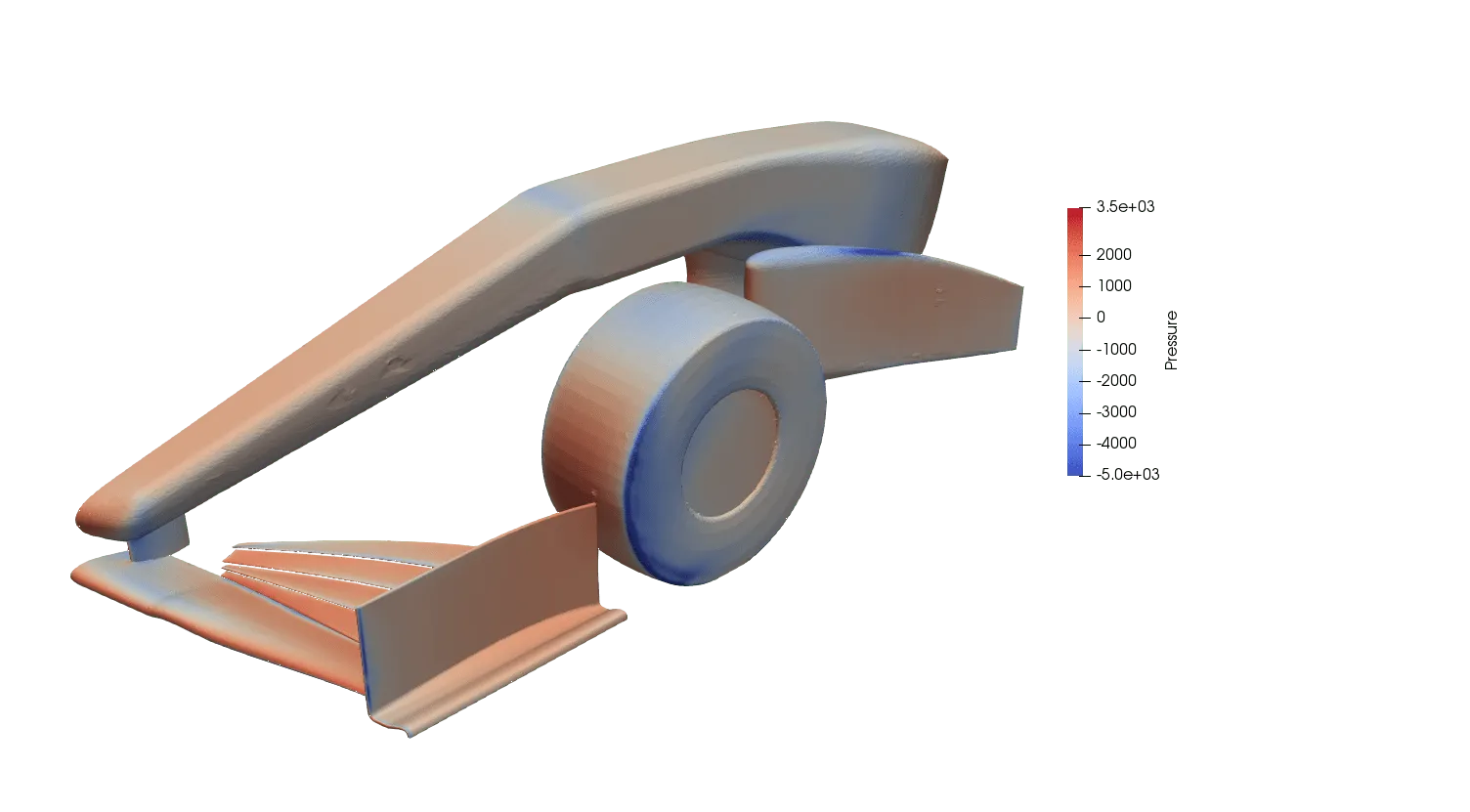
Hydraulics and wind: neural networks trained on CFD or wind-tunnel results return flow fields in seconds instead of hours.
Construction planning: models trained on completed project reports forecast activity durations, flag risk, and re-sequence work when conditions change on construction sites.
Transportation systems: traffic flow prediction drives adaptive signal timing, ramp metering, and variable speed limits.
Sustainable development: embodied-carbon models price material choices at design time and support environmental compliance reporting.
Buildings, bridges, and networks are no longer static records but evolving sources of information. The sections below trace how these approaches deliver measurable improvements, from risk assessment through pattern recognition in inspections to predictive modeling across design, execution, and operation.
Evolution from heuristics to learning systems
Early “AI” in civil engineering consisted of rule-based expert systems that codified the decision-making processes of senior civil engineers. These systems failed when confronted with edge cases outside their programmed logic.
Modern approaches transition from expert-defined logic to outcome-based modeling.
For instance, a neural network learns what crack patterns precede material spalling from thousands of labeled inspection images rather than from coded heuristics. This sensor-informed approach captures subtleties that resist explicit formulation.
From isolated optimization tasks in the 1990s, we can now access integrated workflows that process continuous streams from IoT sensors, satellite imagery, and management platforms. The result is an evolution from reactive (after-the-fact) to predictive maintenance.
What are the technical foundations of AI in civil engineering?
Four technical layers sit under every civil engineering AI application: data science, which turns raw measurements into training sets; machine learning, which finds statistical relationships in those sets; deep learning, which learns hierarchical features from visual data and time series; and computer vision with immersive interfaces, which converts images into quantities an engineer can act on. The sections below define each layer and state what it demands in practice.
Data science
This discipline provides the methodological backbone for predictive models and AI applications in our field. It synthesizes statistical inference, computational methods, and domain expertise to transform raw measurements into informed decisions for civil engineers, as summarized in the table below.
Category | Examples / Details |
|---|---|
Data Types | Structural: Strain gauge time series, natural frequencies, crack width measurements Geotechnical: SPT N-values, CPT resistance profiles, piezometric levels Environmental: Temperature cycles, precipitation records, wind speed distributions Site operations: Equipment utilization, cost variance Asset management: Traffic loads, utility consumption patterns, maintenance logs Geospatial: LiDAR point clouds, InSAR deformation maps, multispectral imagery |
Collection Methods | In-situ instrumentation: Vibrating wire strain gauges, MEMS accelerometers, tiltmeters IoT networks: LoRaWAN sensor nodes, cellular-connected smart meters Remote sensing: UAV photogrammetry, satellite SAR interferometry, terrestrial laser scanning Laboratory characterization: Triaxial shear tests, fatigue testing, X-ray CT scanning Digital project data: BIM models, ERP systems, schedules Crowdsourced inputs: GPS probes, citizen damage reports |
Challenges | Heterogeneity: Legacy sensors output old proprietary formats Volume: Storage and transmission costs escalate Quality: Sensor drift and human transcription errors corrupt datasets Interoperability: Bridging decades-old SCADAs with native ML pipelines Security: Infrastructure monitoring = critical vulnerability information Scale mismatch: Lab-scale material tests versus full-scale |

Machine learning: pattern recognition at scale
Machine learning uncovers statistical relationships without requiring explicit programming of the rules. For civil engineers, this is particularly valuable when working with systems that involve numerous interacting variables, exhibit nonlinear responses that are not proportional or easily predictable, and cannot be fully captured by exact analytical formulas.
Practical Implementation: An ML model trained on vibration response from healthy bridges learns the nominal frequency spectrum. When deployed on new structures, deviations from this learned baseline flag potential damage. The engineer doesn't program “if frequency drops by X%, suspect cracking”: the model simply infers this relationship from measured responses.
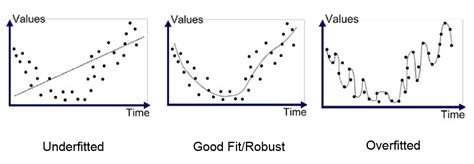
Requirements: Practical ML demands substantial, high-quality datasets. Training a crack detection model requires thousands of labeled images spanning different material mixes, ages, and loading conditions. Insufficient information leads to models that memorize training examples rather than learning generalizable features: this problem is called overfitting (see figure).
Human Judgment Remains Critical: Machine Learning models predict; they don't explain the mechanism. When a model flags unusual foundation settlement, the engineer must still diagnose whether the cause is consolidation, poor drainage, or structural overload. The model accelerates detection, but it doesn't replace geotechnical analytical formulas.
Deep learning: neural networks for complex patterns
Deep learning employs artificial neural networks with multiple processing layers to learn hierarchical representations. Each layer extracts increasingly abstract features: early layers might detect edges in images, middle layers recognize textures, and deep layers identify crack patterns.
Architectural Considerations: Convolutional neural networks (CNNs) excel at processing spatial information, such as images and finite element meshes. Recurrent neural networks (RNNs) and transformers handle sequential information from structural monitoring time series. Graph neural networks show promise for analyzing structural topologies where connections between elements matter as much as the elements themselves.
Computational Requirements: Training deep networks demands significant GPU resources. Training a high-accuracy damage detection model may require days on high-end hardware. Inference (applying the trained model) is far cheaper and often runs on edge devices at building sites.
Application Scope: Deep learning is most effective where pattern recognition from raw inputs is required and mechanistic models are impractical. Examples include automated visual inspection, load forecasting based on historical traffic patterns, and fast approximations of computationally expensive simulations.
Limitations: Deep networks function as “black boxes,” making it difficult to understand why a model makes a specific prediction. For critical decisions, this opacity creates regulatory and liability challenges. Techniques such as attention mechanisms and gradient-based attribution methods provide partial explanations but don't fully resolve the interpretability problem.
Application Area | Deep Learning Applications |
|---|---|
Structural analyses & design | Topology optimization, nonlinear response prediction, and damage detection |
Urban comfort predictions | Microclimate modeling, pedestrian wind comfort, acoustic propagation |
Field operations | Schedule optimization, asset and workforce planning, progress monitoring |
Geotechnical engineering | Soil stratification from CPT, bearing capacity estimation, and liquefaction potential |
Smart infrastructures | Structural health monitoring, predictive maintenance, load forecasting |
Computer vision and immersive technologies
Computer Vision (CV) algorithms transform visual data into quantitative information. AI-based monitoring of construction sites and completed assets rests almost entirely on this layer:
Defect detection: Trained CNNs identify concrete spalling, steel corrosion, and pavement cracking from drone imagery with accuracies that match or exceed those of human inspectors. A VGG16 network applied to mosaic images of concrete footings assembled from UAV photography reported 95% crack detection accuracy (Scientific Reports, 10.1038/s41598-024-58432-w)
Progress monitoring: Time-lapse analyses automatically track construction progress against schedules, generating S-curves without manual entry
Safety compliance: Real-time video analyses detect PPE violations (missing hard hats, improper harness use) and trigger alerts
Photogrammetric reconstruction: Structure-from-Motion (SfM) techniques generate dense 3D point clouds from UAV imagery, enabling volumetric calculations and deformation analyses
Technical Reality: CV systems struggle with varying lighting conditions, occlusion, and surface contamination. A model that performs well on clean concrete may fail when surfaces are wet or shaded. Robust deployment requires extensive validation under field conditions.
Virtual reality (VR)
VR enables immersive interaction with digital models:
Design review: Stakeholders walk through BIM models at 1:1 scale, identifying spatial conflicts invisible in 2D drawings
Buildability: Project sequences are simulated virtually, revealing logistical constraints before equipment mobilization
Training: Operators practice complex procedures (crane operation, confined space work) in risk-free virtual environments
VR hardware remains expensive and cumbersome for daily use. Most firms deploy VR selectively for high-value activities rather than routine workflows. The technology augments but doesn't replace traditional visualization methods.
What are the key AI applications in civil engineering practice?
The applications that reach daily practice are predictive modeling of structural response, FEA acceleration, geotechnical site characterization, schedule optimization, risk scoring, and robotic automation on construction sites. Each one connects physical observation to a computational model, so that decisions rest on continuous evidence rather than on periodic sampling and assumption.
The following sections illustrate how these methods enhance forecasting, automate verification, and facilitate safer, more resilient designs and operations.
Predictive modeling foundation
Predictive modeling encompasses any computational method that forecasts future system behavior. In civil engineering, this ranges from physics-based FEA simulation to pure ML models to hybrid approaches combining both FEA and ML.
Quality Control Automation: CV-based inspection systems scan every weld on steel structures, flagging defects with superhuman consistency. Unlike human inspectors, software doesn't experience fatigue-induced increases in error rates over the duration of a shift.
Communication Enhancement: Natural language processing (NLP) tools extract key information from daily reports and automatically update dashboards. Large language models assist in drafting technical specifications, though human review remains mandatory.
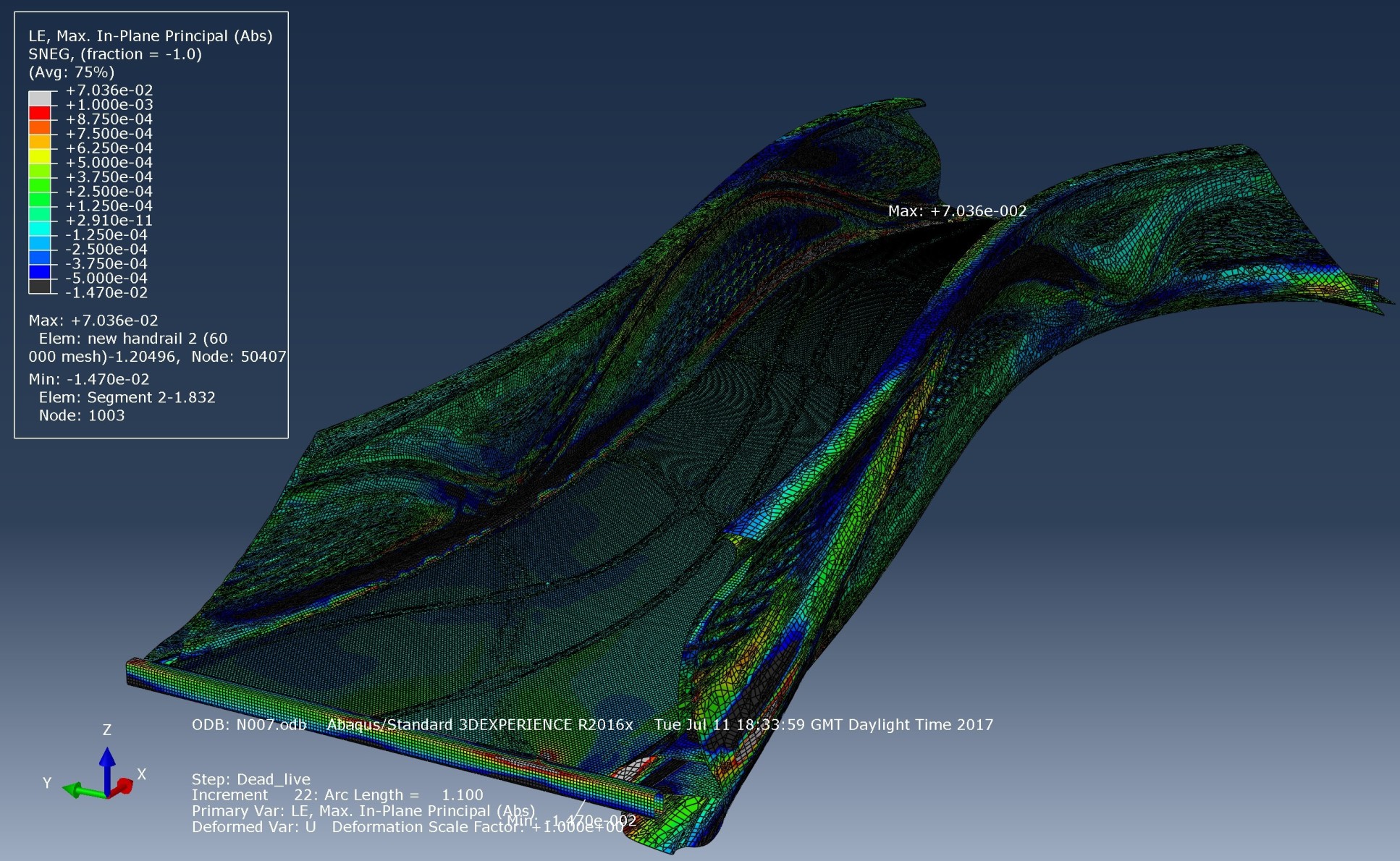
FEA: physics-based prediction
FEA works by dividing a continuous structure into numerous small, interconnected pieces called elements. Each element follows the laws of mechanics, including stress, strain, and deformation. However, solving these relationships for the entire structure analytically is impractical in real-world scenarios. Instead, computers combine the behavior of all elements and numerically solve the resulting extensive system of equations, predicting how the structure will respond under various loads. This approach, developed by researchers and adopted by designers during the 1980s and 1990s, is grounded in physics and yields results that can be directly interpreted using principles of construction materials and mechanics.
Core Capabilities:
Stress distribution under static and dynamic loading
Modal analyses for natural frequencies and mode shapes
Buckling stability
Thermal and hygroscopic effects
Material nonlinearity (plasticity, creep, cracking)
Contact and friction between components
Material Behavior Modeling:
FEA simulates complex constitutive behavior. For example, cementitious cracking and crushing, steel yielding and strain hardening, soil consolidation, and liquefaction. Accurate material models require extensive laboratory characterization and testing to ensure their accuracy and reliability. Models validated against experimental results become reliable predictors for full-scale structures.
Seismic Performance:
FEA enables nonlinear time-history analyses in which structures are subjected to recorded ground-motion accelerograms. Engineers identify which components undergo plastic deformation, where collapse mechanisms develop, and how structural modifications enhance seismic resilience. Also, FD (finite differences) methods can be applied.

Geotechnical applications
Geotechnical engineering is adopting machine learning and IoT-based sensing to analyze soil behavior, monitor ground movement, and anticipate instability. ML models trained on site investigation data, such as borehole and penetration test results, predict subsurface properties and deformation trends, while sensor networks provide continuous field feedback. The combination enables earlier detection of anomalies and more reliable, data-driven risk prevention than traditional periodic surveys.
ML-Enhanced Site Characterization: Neural networks trained on CPT (Cone Penetration Test) and borehole logs predict soil stratification across sites with sparse direct measurements. These models interpolate between boreholes more accurately than traditional kriging when trained on regional geology.
Real-Time Monitoring: IoT-connected inclinometers and piezometers stream readings to cloud platforms, where anomaly detection flags unusual movements or pore-pressure changes. For slopes and excavations, this early warning system enables intervention before instability progresses to failure.
Risk Assessment: ML models trained on historical landslide inventories identify high-risk terrain by correlating slope angle, soil type, precipitation, and land use patterns. These predictive maps inform land-use planning and prioritize investments in stabilization.
AI-augmented planning
Schedule Optimization: Artificial Intelligence planning methods analyze historical project data to generate realistic schedules accounting for weather patterns, equipment availability, and crew productivity. These models identify the critical path and suggest task sequencing that minimizes project duration.
Key Capabilities in monitoring progress:
Historical learning: Models trained on past projects predict activity durations more accurately than purely heuristic approaches
Weather coupling: Platforms such as Procore incorporate weather forecasts to automatically adjust schedules for temperature-sensitive activities (e.g., asphalt paving)
Resource leveling: AI tools optimize equipment and labor allocation to avoid bottlenecks while minimizing idle time
Dynamic rescheduling: When delays occur, Artificial Intelligence rapidly generates updated schedules and identifies mitigation strategies
Collaboration platforms: Civil engineering project management platforms deploy intelligent task routing and automated status updates. However, the value proposition centers on reducing administrative overhead rather than fundamentally changing project delivery methods.
Performance Monitoring: Continuous comparison of planned versus actual progress enables the early identification of trends that may lead to delays, thereby improving resource allocation. Predictive analytics indicate whether corrective action is necessary or if the schedule float is sufficient to absorb the variance.
Documented Impact: Deloitte analysis of AI and analytics in construction reports 10- 20% lower schedule overruns and 10- 15% cost savings, attributed to optimized sequencing, better resource utilization, and reduced rework. Case-level figures cluster in the same band: the scheduling vendor ALICE Technologies reports an average 17% reduction in duration and 14% in cost across its deployments. Earlier problem detection accounts for much of the gain, because a change made in planning costs a fraction of the same change made on site.
Robotics and automated machinery on site
Robotics is revolutionizing construction, an industry characterized by routine, geometrically defined, and physically demanding tasks. Robotic bricklayers place units from a BIM-derived layout at a rate a human crew cannot sustain across a full shift, while the crew handles setup, corners, and quality control. Automated machinery extends the same logic to earthworks, where GPS-guided and increasingly autonomous excavators grade to a digital surface model without staking, mirroring broader AI-driven transformations in industrial engineering processes.
Material handling: autonomous transporters and robotic arms move units and components across construction sites, reducing the manual lifting that causes most site injuries.
Layout and marking: mobile robots print floor layouts directly from the model, removing a manual transcription step that historically introduced dimensional errors.
Progress capture: rovers and drones collect visual data on a fixed circuit, feeding the same computer vision pipeline used for defect detection. AI can automate site condition analysis and progress tracking from that circuit, comparing each pass against the model.
Constraint: Site conditions cause most of these systems to fail faster than laboratory trials suggest. Uneven ground, weather, congested work areas, and constant layout changes mean that robotic equipment currently supplements crews on well-defined, repetitive scopes and does not cover the full project scope.
Risk identification and mitigation
AI-based risk management evolves maintenance from periodic assessment to continuous monitoring:
Historical Data Mining: Machine Learning algorithms analyze past databases to identify factors correlated with cost overruns, schedule delays, and safety incidents. Patterns invisible to human review emerge from statistical analyses of thousands of cases.
Predictive Maintenance: Deterioration models forecast when structural components will require intervention:
Condition assessment: CV analyses of inspection images track crack growth, corrosion extent, and concrete delamination over time
Remaining life estimation: Physics-informed models combine structural analyses with observed damage to predict the time to critical condition
Maintenance optimization: Models schedule interventions to minimize life-cycle costs while maintaining target reliability levels
Practical Example: On high-rise buildings, ML models predict HVAC systems and elevator maintenance needs by analyzing field measurements (temperature, vibration, current draw). Scheduled component replacement before failure reduces downtime and emergency repair costs.
Proactive Safety: For bridges, ML-based proactive safety recommends enhanced protective measures (e.g., cathodic protection against reinforcement corrosion) when risk models indicate an elevated probability of failure. ML evolves maintenance from reactive repair to proactive risk reduction.
Large-Scale Infrastructures: In linear cases, such as railways and highways, Artificial Intelligence integrates geological records, geotechnical surveys, and progress monitoring to flag risks, including ground settlement, tunnel instability, or slope failure, before they impact operations.
Sustainability: Predictive modeling assesses the impacts of material selection on embodied emissions, energy consumption, and environmental footprint. Prediction enables informed trade-offs among performance, cost, and sustainability objectives and produces the audit trail required for environmental compliance reporting. Sustainable infrastructure decisions become defensible when the carbon consequence of a material substitution is a number in the model rather than an assertion in the design report.
How is CFD used in civil engineering?
Civil engineers use CFD to size and verify anything that involves air or water movement: building ventilation and atrium stratification, spillway discharge capacity, bridge pier scour, flood inundation extent, pedestrian wind comfort at street level, and microclimate control inside heritage buildings. Computational Fluid Dynamics solves the Navier-Stokes equations governing fluid flow using numerical methods. In civil engineering, CFD provides insight into airflow, water movement, and pollutant transport that would be prohibitively expensive to measure experimentally at full scale. Read more on a special AI-powered CFD tool for architects and civil engineers.

HVAC and building performance
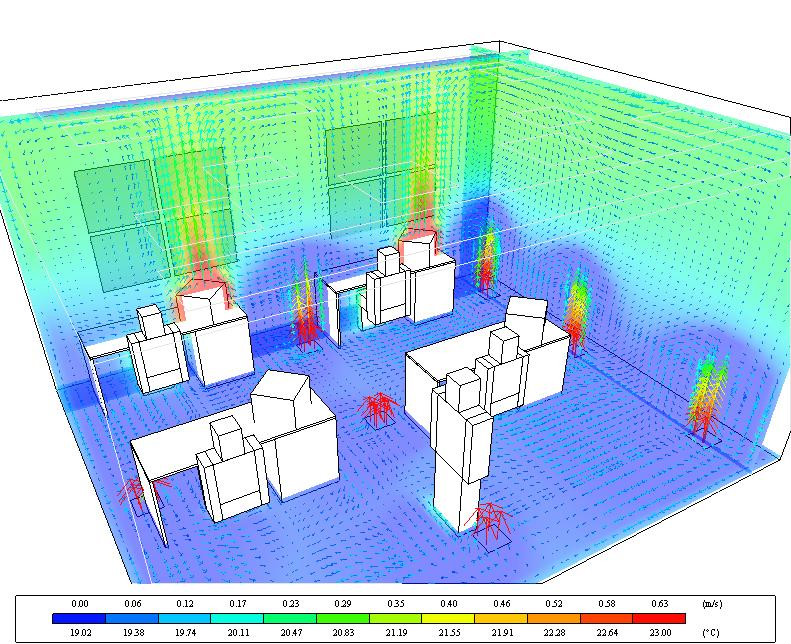
CFD simulations optimize building ventilation strategies by predicting airflow patterns, temperature distributions, and contaminant dispersion. Engineers evaluate design alternatives virtually, selecting configurations that maximize occupant comfort while minimizing energy consumption. AI improves building energy modeling by integrating multiple data sources, combining simulation output with metered consumption and local weather records.
Atrium Analyses: Large atria create complex thermal stratification and natural ventilation flows. CFD identifies optimal inlet/outlet locations and sizing to achieve desired air change rates without excessive mechanical ventilation.
Read more on data-driven Deep Learning, also applied to HVAC.
Hydraulic structures
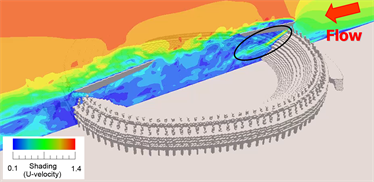
CFD enables detailed investigation of water flow through dams, spillways, weirs, and channels.
Civil engineers simulate with CFD:
Discharge capacity: Verification that structures safely pass design floods
Energy dissipation: Optimization of stilling basins to prevent downstream erosion
Sediment transport: Prediction of deposition patterns that may reduce reservoir capacity
Scour assessment: Identification of pier locations in bridges where flow acceleration may cause foundation undermining
Practical Implementation: CFD models calibrated against physical hydraulic models or prototype measurements provide reliable predictions for design modifications. However, turbulence modeling remains challenging: different turbulence closure models can yield significantly different predictions for complex geometries.
Flood modeling
CFD-based flood inundation models simulate overland flow during extreme rainfall events. These models:
Identify areas vulnerable to flooding under different storm scenarios
Evaluate the effectiveness of proposed flood protection measures (levees, floodwalls, detention basins)
Facilitate emergency response planning by predicting flood arrival times and inundation depths
Deep Learning Acceleration: High-fidelity CFD is computationally expensive. A single simulation may require hours or days. Neural networks trained on CFD results return predictions in seconds, which makes scenario examination practical during a flood event rather than weeks afterward. Neural Concept applies this approach using geometric deep learning that predicts flow fields directly from CAD geometry, so an engineer can change a shape and see the consequences without re-meshing.
Documented Result: RWDI, the wind engineering firm behind the Orbital Stack platform, trained a Neural Concept deep learning model on its urban wind flow dataset, assembled from decades of wind tunnel testing. Inside Orbital Stack, iteration time for an urban wind and pedestrian comfort study dropped to roughly 2 minutes, and the cost per iteration fell about tenfold. The change moved wind analysis from a late-stage verification step to an early-stage design input, and it put the analysis within reach of smaller firms and smaller projects that could never justify a wind tunnel campaign. RWDI later extended the model to render 3D wind streamlines, a capability that previously required a full CFD run. Read more on the AI-powered CFD tool built from decades of wind tunnel data.
Digital Elevation Model Processing: The nonparametric nature of deep learning architectures makes them well-suited for processing irregular DEMs. Traditional interpolation algorithms struggle with complex terrain; in contrast, neural networks learn appropriate representations directly from training datasets.
Preservation of cultural artifacts
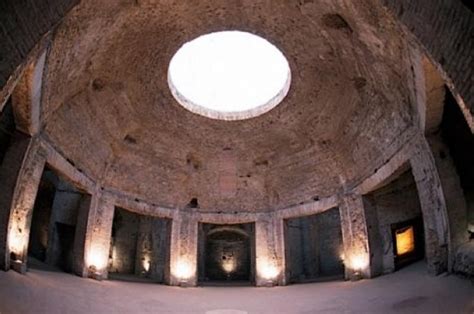
The article “CFD modeling for the conservation of the Gilded Vault Hall in the Domus Aurea” (reference https://doi.org/10.1016/j.culher.2003.08.001), supported also by the author of the present article, demonstrated the simulation of the virtual microclimate conditions inside the Hall with the Gilded Vault in the Domus Aurea, Rome. Researchers in Rome used a CFD finite-volume method to solve the governing equations and predict the detailed distribution of temperature, humidity, and air movement throughout the Hall. The simulation results inspired practical recommendations for conserving both the Hall and the Domus Aurea monument as a whole.
How is AI helping project management?
AI does three specific things for a construction project manager: it optimizes the schedule by predicting activity durations from completed project reports, it flags cost and safety risks by scoring the current program against historical overrun patterns, and it allocates crews and equipment by leveling resources against the forecast. Each of these replaces a manual exercise that previously consumed days or weeks of coordination effort. AI can automate project setup and budget tracking, removing the repeated manual entry of the same figures across the fee model and the cost report.
This capability extends from foundation design optimization (where software evaluates soil-structure interaction scenarios in hours rather than days) to proactive maintenance scheduling that identifies material fatigue before it compromises structural integrity.
The result is measurable. Civil engineering firms save time for coordination, reduce overruns, and raise the reliability of delivered assets.
How is AI used in smart city development?
In smart cities, AI runs four municipal functions: it balances electricity distribution against demand and generation forecasts, it sets traffic signal timing from live traffic flow prediction, it ranks maintenance work across road networks and bridges by predicted deterioration rate, and it tests proposed developments against traffic, air quality, and energy models before approval. All four draw on sensors embedded across the built environment, and all four replace reactive response with forecast-driven scheduling.
Energy management
Smart grid platforms analyze consumption patterns, generation capacity, and price signals to optimize electricity distribution. Barcelona's CityOS integrates energy, water, and waste management data, enabling operators to identify inefficiencies and implement corrective measures.
Impact: Real-time optimization reduces peak demand, enables greater integration of renewable energy, and lowers costs for consumers. However, benefits heavily rely on sensor deployment density and data quality.

Traffic management
Traffic flow prediction is the core function here. Models forecast demand across the network, and AI traffic controls adjust signal timing based on real-time vehicle detection and predicted congestion patterns. Singapore's Smart Nation initiative demonstrates citywide deployment where adaptive algorithms reduce travel times and emissions compared to fixed-timing signals.
Technical Approach: Traffic prediction models use historical patterns, special event schedules, and weather forecasts to anticipate demand. Control software then optimizes signal timing, ramp metering, and variable speed limits to maximize network throughput.
Predictive maintenance
Municipal asset management deploys AI to prioritize maintenance across road networks, bridges, and utilities. Models estimate condition degradation rates, aiding in resource allocation and enabling transition from time-based to condition-based maintenance strategies.
Economic Impact: Proactive intervention before failures occur reduces emergency repair costs and service disruptions. However, implementation requires comprehensive asset inventories and a historical condition dataset (prerequisites that many municipalities lack!).
Data-driven urban planning
AI platforms analyze demographic trends, economic indicators, climatic and ecological factors, and transportation patterns to inform urban development decisions. Songdo, South Korea, utilizes simulation and AI tools to evaluate the impacts of proposed developments on traffic, air quality, and energy demand before approval.
Sustainability Alignment: Ensuring new assignments align with climate goals and enhance livability requires explicitly incorporating these objectives into planning algorithms. Without such constraints, optimization may produce economic efficiency but result in socially or environmentally problematic outcomes.
What technologies support AI in civil engineering?
Five technologies carry civil engineering AI into production:
BIM and GIS provide geometry and spatial context;
IoT sensor networks provide real-time measurements;
Cloud and edge computing provide training capacity and low-latency inference;
Generative design software enables searching over candidate geometries;
And large language models handle technical documents.
Success across all five depends on curated, domain-specific training records that reflect standards, historical outcomes, simulations, and known failures.
BIM and GIS
Building Information Modeling (BIM) and Geographic Information Systems (GIS) provide the digital backbone for AI applications. BIM contains detailed geometric and attribute information for individual structures, while GIS situates these elements within broader spatial networks.
AI tools Coupling: ML models embedded within BIM platforms analyze design options, perform automated code compliance checks, and generate quantities. When connected to GIS, these models incorporate site-specific constraints, such as soil conditions, utility conflicts, and environmental restrictions, into the design optimization process.
IoT-enabled real-time monitoring
Internet of Things (IoT) sensor networks continuously measure structural response, ambient conditions, and operational parameters. AI systems analyze real-time data from embedded sensors, scoring each reading against the expected response of the instrumented member. Edge computing devices perform local processing, transmitting only anomalies or aggregated statistics to central platforms, reducing bandwidth requirements and enabling low-latency response.

Architecture: Cloud platforms provide scalable storage and computational power for training ML models on archival records. Trained models are deployed to edge devices for real-time inference. This distributed architecture strikes a balance between centralized learning and decentralized execution.
Cloud and edge computing
Cloud and Edge Computing represent two complementary approaches for processing and managing data. Cloud systems offer vast centralized resources. Edge computing brings computation closer to where data is generated. The term “edge” refers to the boundary of the network where data is first produced.
Cloud advantages: Unlimited storage, high-performance computing for model training, centralized data management, and easy collaboration across distributed teams.
Edge advantages: Low latency for time-critical decisions, operation during connectivity loss, reduced transmission costs, and enhanced security by limiting cloud uploads.
Hybrid approach: Most deployments combine both, with edge devices handling immediate response requirements while syncing with cloud platforms for long-term elaborations and model updates.
Generative design workflows
Generative design explores design spaces defined by
constraints (material properties, load requirements, geometric limits) and
objectives (minimize weight, maximize stiffness, minimize cost).
The result is a set of Pareto-optimal results showing trade-offs between competing objectives.
Engineers' Role
Software generates candidates; civil engineers evaluate manufacturability, constructability, and compliance with codes not captured in the optimization formulation. This human-software collaboration produces better outcomes than either could achieve independently.
Large language models and documentation automation
Large language models process human language, enabling them to read and draft the technical documents that consume a large share of engineering hours: specifications, method statements, daily project reports, RFI responses, and correspondence. Generative models handle the first draft and the extraction pass; a human-supervised review remains mandatory because LLMs occasionally hallucinate technical details that sound plausible and are incorrect.
Drawing production: AI can automate the generation of drawings in Autodesk Revit. Autodesk introduced generative design directly into Revit in the 2021 release, and a set of AI plugins can now compose sheets, cut views, place dimensions and tags, and check drawing sets against office standards from plain-language instructions rather than Dynamo scripts. Vendors reporting on their own deployments claim documentation time reductions in the 50-70% range for automated drawing production, with the engineer’s role shifting from drafting to verifying generated output. These remain supplier figures until an organization measures its own baseline.
Administrative load: the same pattern appears in back-office work. In a case published by the software vendor Monograph, Brunton A&E, a 22-person structural, MEP, and architecture practice, deployed AI-assisted project management to parse contracts, forecast fee schedules, and flag scope creep. The firm reported that AI reduced administrative work by 25% and that integrated invoicing pushed bills out roughly twice as fast because the system processes project data continuously rather than at month-end.
Appropriate use cases: Formatting and structuring existing technical content, generating initial drafts for editing, and extracting key information from long documents.
Inappropriate use cases: Making final technical judgments, performing calculations, or generating content without verification.
AI in brainstorming and innovation
AI excels at rapidly generating numerous ideas when prompted with constraints and objectives. For engineers working with large datasets, AI tools can identify non-obvious correlations and suggest hypotheses for investigation.
Many generated ideas will be impractical, infeasible, or previously attempted and abandoned. Critical evaluation remains essential.
What slows adoption: culture and metadata
Two barriers block deployment more often than model accuracy does. Cultural resistance among engineers slows down AI adoption because a profession whose liability rests on personal judgment has a rational reason to distrust a tool that cannot explain itself. That resistance eases when a model is introduced on a non-critical workflow, measured against a documented baseline, and shown to be auditable.
The second barrier is structural. Metadata must be properly architected for effective data management, or the training set cannot be assembled at all. A firm holding twenty years of project reports, drawings, and monitoring records still has nothing trainable if those records carry no consistent identifiers for asset, discipline, revision, and units. Metadata architecture is unglamorous work, and it determines whether the rest is possible. Smaller firms often reach a usable dataset faster than large ones here, because they have fewer legacy systems to reconcile.
Training data for AI
To be helpful in the sector, training datasets must include:
Methods and standards (codes, specifications, best practices)
Project histories with outcomes (performance, cost, schedule)
Physics-based simulation results validating predictions by models
Failure case studies ensure models learn from mistakes
Current predictive systems trained on general internet sources lack this domain-specific knowledge. A model that has read vast amounts of text found online will produce fluent prose about a shear wall and no reliable number for one. Developing industry-focused models requires collaboration across firms, educational institutions, and standards bodies to assemble comprehensive training datasets while respecting proprietary information.
What are the ethical considerations of AI in civil engineering?
Nine issues carry practical weight: dataset bias, hallucinated technical content, liability allocation after a failure, data privacy and infrastructure security, overreliance on unverified output, ownership of AI-generated designs, equity in how maintenance funding is prioritized, explainability of black-box predictions, and the energy cost of training. Each has a concrete mitigation, and each remains the responsibility of the licensed engineer who signs the drawing.
Models need representative records to avoid bias. Their results must be verified to prevent false outputs. Human oversight remains essential.
Security measures and privacy controls should be built in from the start. Quality checks ensure that updates don't degrade performance.
Decisions must remain explainable, and energy use should be tracked to ensure accountability throughout deployment.
Bias and dataset representativeness
ML models trained on unrepresentative datasets produce biased predictions.
Potential Risks: If the training datasets consist primarily of urban infrastructures, model performance will degrade on rural projects. If the dataset originates from a single geographic region, models may not generalize to other climatic or seismic zones.
Mitigation: Ensure training datasets cover the full range of conditions under which models will be deployed. Document known limitations and validate performance on held-out test sets representative of deployment conditions.
Hallucination and generated misinformation
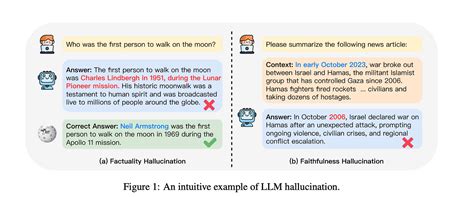
Generative AI models sometimes produce outputs that sound plausible but are entirely fabricated. This phenomenon is called hallucination.
A hallucination occurs when a model generates a plausible-sounding statement that is not grounded in reality or the provided sources. The model is not “lying”; it is predicting the next token that looks likely given its training, not checking the world.
Intrinsic hallucination
The model contradicts or invents facts about material that is present in the prompt or context.
Extrinsic hallucination
The model asserts facts that are not supported by the prompt or training evidence (it invents new facts).
An AI might suggest a design approach using non-existent materials or predict outcomes based on spurious correlations. The risk is that implementing hallucinated recommendations could compromise structural safety!
How can we mitigate hallucinations in civil engineering?
Hallucination mitigation requires that the model never be the last step. Every generated claim is grounded in a retrievable source, every safety-relevant number is recomputed with a deterministic method, the output is tested against physical invariants such as equilibrium and mass balance, and an engineer’s approval is obtained before any recommendation applies to a load-bearing element. The model proposes a verification pipeline, and a named engineer disposes of it.
The table below combines practical detection guidelines, deployable mitigations, and checklists:
Category | Technique / Action | How to Apply / Notes |
|---|---|---|
Practical Detection | Unit & dimensional checks | Verify units match (N/m², kg/m³); reject outputs with inconsistencies. |
Order-of-magnitude filter | Compare values to expected ranges (e.g., steel E = 2.1·10² GPa; aluminum E = 6.9·10¹ GPa); flag implausible numbers. | |
Cross-source grounding | Require a retrievable reference (URL, DOI) for cited standards and verify it automatically. | |
Physical-consistency tests | Check invariants: mass balance, energy balance, equilibrium, compatibility; discard violations. | |
Probabilistic cues | Low token log-probabilities or high entropy across runs often indicate unreliable claims. | |
Cross-model agreement | Query multiple models or decoding modes; flag significant discrepancies. | |
Deployable Mitigations | Retrieval-augmented generation (RAG) | Force the model to cite retrieved passages; verify automatically. |
Constrained decoding | Apply token filters or constrained grammars for numeric outputs and standard IDs. | |
Post-generation verification pipeline | Treat the model as the proposer; run automated unit tests, sanity checks, and obtain human sign-off. | |
Domain fine-tuning with curated negatives | Retrain on the verified corpus and known bad examples to reduce fabrications. | |
Use specialized approaches | Offload calculations/conversions to calculators or symbolic engines. | |
Provenance logging | Record prompt, model version, and retrieved sources for auditability. | |
Human-in-the-loop rules | Block changes affecting structural load-bearing elements without engineer approval. | |
Checklists | Require sources | For any standard, code clause, or normative number. |
Automatic numeric checks | Units and order-of-magnitude plausibility for all claims. | |
Recompute critical numbers | Loads, factors of safety using deterministic methods; do not trust model arithmetic alone. | |
Physical-consistency tests | Equilibrium, compatibility, and conservation of suggested designs. | |
Flag low-confidence outputs | Entropy/log-prob or missing retrieval hits. | |
Mandatory human sign-off | For any recommendation affecting safety. |
Accountability and liability
When an AI system contributes to a structural failure, liability allocation becomes a complex issue. Responsible parties may include:
The engineer who deployed the AI tool without adequate validation
The AI vendor states that the model had undisclosed limitations
The organization that failed to implement appropriate oversight
Current Reality: Regardless of AI involvement, licensed engineers remain legally responsible for the designs and decisions they make. AI tools do not dilute professional liability: they're considered aids to engineers' judgment, not substitutes.
Privacy and security
Data privacy and infrastructure security are the same problem here. IoT sensors on infrastructure collect outputs that, if compromised, could reveal vulnerabilities or operational patterns that adversaries can exploit. Privacy concerns arise when monitoring systems track individual behaviors (e.g., vehicle movements, building occupancy patterns).
Safeguards:
Technical Safeguards
Encryption in transit and at rest, role-based access controls, anonymization of personally identifiable information, and secure decommissioning of retired sensors.
Policy Safeguards
Clear governance policies specifying what output is collected, how it's used, who has access, and retention periods.
Overreliance on AI
Excessive trust in AI predictions without verification creates risk. Users must maintain competence to evaluate outputs critically.
Education must evolve to include AI literacy, i.e., understanding how ML models work, their limitations, and appropriate validation methods.
Intellectual property
Ownership of AI-generated designs is legally unclear. If an algorithm generates a novel structural configuration, does the IP belong to the engineer who ran the algorithm, the software vendor, or is it unpatentable?
Current Approach: Contractual agreements should explicitly address IP ownership for AI-generated content. Review the terms of service for each platform to understand the rights granted and retained.
Social equity
AI-driven decision-making can perpetuate or exacerbate existing inequities, thereby further complicating construction progress.
Risk: Predictive maintenance models trained on inspection records may prioritize high-traffic urban infrastructures, systematically underserving rural or low-income communities unless equity is explicitly incorporated into the objective function.
Mitigation: Define performance metrics that include equity considerations. Validate that model recommendations don't systematically disadvantage specific communities.
Transparency and explainability
Deep learning operates as a black box. Predictions appear without visible reasoning. For critical assets, decisions must be traceable.
Attention maps can reveal which inputs most influenced a prediction, SHAP values quantify the impact of each variable, and simpler approximating models reproduce the black box's behavior with rules an engineer can read.
Clear documentation, human oversight with the authority to override, and communication in plain technical language ensure the process remains accountable.
Environmental responsibility
The deployment of AI itself has environmental costs, as training large models requires significant energy consumption. Its applications in civil engineering should provide net environmental benefits, accounting for:
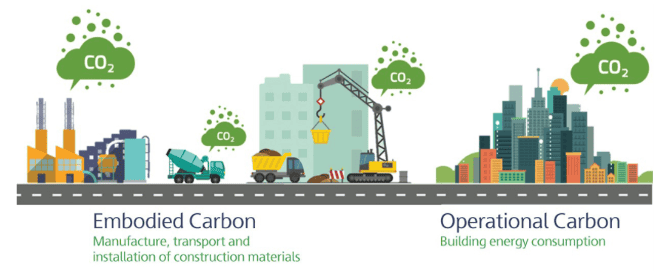
Embodied carbon in selected materials
Energy consumption of recommended solutions
Life-cycle environmental impacts
Best Practice: Life-cycle assessment should evaluate the environmental consequences of AI-driven design decisions, not just immediate performance metrics.
What is the future of AI in civil engineering?
Five shifts are already underway: condition-based maintenance replacing fixed inspection intervals; carbon accounting embedded in the design loop; digital twins becoming standard for high-value assets; infrastructure that reconfigures itself in response to demand; and a profession in which computational fluency is a baseline requirement rather than a specialization.
Maintenance will rely on continuous condition forecasting rather than fixed schedules. Designs will embed carbon impact, enabling real-time trade-offs. Critical assets will have live digital counterparts for simulation.
Professionals should combine structural expertise with computational fluency to operate effectively with these intelligent assets.
Predictive maintenance as standard practice
Within a decade, reactive maintenance will be considered obsolete. Continuous monitoring, coupled with AI-driven condition forecasting, will enable just-in-time intervention, maximizing asset life while minimizing costs and service disruptions.
Example: Singapore's bridge management system detects micro-cracks through strain gauge analysis before they become visible to inspectors. Maintenance crews receive work orders when degradation rates exceed thresholds, not on fixed schedules.
Enabling Technology: Wireless sensor networks with 10+ year battery life, edge computing for real-time computation, and cloud platforms integrating previous outputs from thousands of structures.
Carbon accounting
Every design decision has carbon consequences. AI tools will calculate embodied emissions for every component, presenting engineers with explicit trade-offs between sustainability, performance, and cost during the design process, rather than as an afterthought.
Technical Challenge: Life-cycle assessment databases must integrate with design software to facilitate efficient and accurate analysis. Industry collaboration is required to develop standardized carbon accounting methodologies.
Digital twins becoming standard
High-value infrastructures will coexist in both physical and digital forms. The Crossrail in London demonstrates this approach: a continuously updated digital twin enables operators to simulate emergency scenarios (such as fire, flooding, or structural damage) without disrupting service.
Value Proposition: Risk-free testing of operational changes, predictive performance modeling under future conditions, and forensic investigation after incidents.
Barrier: Creating and maintaining accurate twins requires sustained investment. The business case is clear for critical infrastructures but questionable for routine structures.
Adaptive infrastructure
Infrastructures will respond autonomously to changing conditions. As existing promising examples:
Barcelona's traffic signals already operate this way. It has no fixed timing sequences; instead, it operates continuously in response to current demand.
Amsterdam's water distribution system detects leaks and automatically reroutes flow.
Trajectory: Isolated intelligent systems will network into city-scale cyber-physical systems. Coordination across domains (traffic, energy, water) will enable system-level optimization impossible with siloed control.
Caution: Increased connectivity creates cybersecurity vulnerabilities. Robust security architectures must evolve in tandem with smart infrastructures.
Evolving professional skills
The next generation of civil engineers will be computational practitioners as comfortable with Python as with FEA. The boundary between software development and civil engineering will become increasingly blurred, and professionals will need to be fluent in both domains. Civil engineering faces a supply problem here: the discipline competes for computational talent against employers that pay more and release products faster.
Educational Imperative: Educational institutions should integrate statistics and ML into civil engineering curricula. Practicing civil engineers require continuing education to remain relevant.
Specialization: Expert-level ML competence is unnecessary for every engineer, though every engineer needs sufficient literacy to deploy AI tools and critically evaluate their outputs.

Data-driven methods have moved from speculation to real-world deployment in infrastructure design and construction.
The technologies transforming civil engineering complement human expertise rather than replacing it. Computational models excel at pattern recognition and rapid optimization, while domain specialists contribute judgment, accountability, and contextual understanding.
Current trends across the construction industry show tangible value in structural monitoring, design refinement, and project coordination. Yet, effective adoption requires realistic expectations, proper validation, and an awareness of technological limitations.
The field now faces a decision: actively guide the introduction of intelligent systems to strengthen professional practice, or passively adopt commercial deployments without scrutiny.
The first path requires investment in technical competence and ethical reflection; the second risks weaker results and loss of professional influence.
Practitioners who unite classical engineering skills with digital fluency will define the next stage of the discipline.
The pattern under every example in this guide is the same: a model trained on a firm's own simulation and monitoring data returns in seconds an answer a solver takes hours to produce. Neural Concept builds that engineering intelligence layer for physical infrastructure — the geometric deep learning behind the RWDI / Orbital Stack wind tool that cut an urban wind study to about two minutes — training on your CFD, CAD, and sensor history so a design change can be judged against evidence rather than assumption. It is already used by more than 70 OEMs and Tier 1 suppliers.
Ready to put your simulation data to work? Discover the Neural Concept platform.
FAQ
What are the main benefits of AI in civil engineering?
AI in civil engineering enhances structural health monitoring, enables early crack detection, predicts maintenance needs to optimize repairs, enables generative design to conserve materials, improves geotechnical modeling, and reduces delays by 10-20%.
Will AI replace civil engineers?
Machines can streamline workflows, but lack the judgment for complex decisions. Human professionals remain responsible for ensuring safety, upholding ethics, and maintaining compliance. Licensed engineers retain ultimate accountability. The profession will evolve, with effective AI users replacing those who are not, much as analyses of AI’s impact on mechanical engineering careers conclude that intelligent tools augment rather than displace engineering roles.
How do I start learning AI as a civil engineer?
Begin with Python, probability, and linear algebra. Solve practical problems using civil engineering datasets such as structural monitoring, borehole logs, or traffic counts. Enroll in online courses (Fast.ai, Coursera, MIT OCW) for structured learning. Practice with libraries such as scikit-learn, TensorFlow, and PyTorch to build skills. Collaborate with experts to learn workflows and best practices.
How does AI-driven predictive maintenance work for infrastructure?
Predictive maintenance employs ML models trained on field data to forecast failures. These analyze historical data to link parameters with remaining useful life. Real-time data predicts maintenance needs, enabling condition-based repairs rather than relying on fixed schedules. For bridges, this technology detects issues months earlier than traditional inspections, allowing for cost-effective preventive maintenance rather than costly emergency repairs.
How does AI compare with traditional methods in geotechnical engineering?
Traditional geotechnical methods employ mechanistic models that have been validated over decades, providing a reliable physical understanding within their respective ranges of application. Machine Intelligence approaches learn from CPT soundings, borehole logs, lab tests, and performance data, capturing complex, nonlinear relationships that are difficult to express analytically but are evident in previous outputs.
Which approach should I use for geotechnical work, AI or traditional analysis?
Neither is superior in general. Traditional methods provide interpretable results and work with sparse data. AI handles complexity and big data, requiring training sets. Best practice: Utilize traditional methods for design calculations and code compliance, and deploy AI to enhance site characterization, identify anomalies in monitoring data, and refine empirical correlations through AI.
What measurable impact does AI have on construction project outcomes?
Deloitte's analysis of AI and analytics in construction reports 10-20% lower schedule overruns from optimized sequencing and delay mitigation, and 10-15% cost savings from improved resource utilization and reduced rework. Earlier problem detection also reduces the need for late-stage changes.
Which AI software and platforms are available for civil engineering?
Major platforms, such as Autodesk, Bentley, Trimble, and Procore, offer schedule optimization, digital twins, automation, and ML-based project management, including forecasting. Tools such as Ansys and Abaqus support FEA workflows. Many startups focus on drone inspection with computer vision.
Why do traditional engineering methods still matter alongside AI?
Traditional methods are dependable and understandable. Regulators also approve them. AI offers automation, pattern detection, and learning. So the two approaches complement each other: established mechanisms and Machine Intelligence models to find patterns beyond current knowledge.
How much does it cost to implement AI in a civil engineering firm?
Costs vary by scope. Pilot cases can cost €20,000-100,000 (utilizing open-source tools, limited deployment, and internal expertise). Department-level deployment could cost €100,000-€500,000 (for commercial platforms, training, and initial integration). Enterprise deployment can reach €1M-10M+ (including comprehensive IoT networks, cloud infrastructure, and ongoing development)
What hidden costs should I budget for in an AI deployment?
Hidden costs include staff training, workflow modification, and ongoing maintenance. The budget should consist of infrastructure components (such as sensors and connectivity) in addition to software. Return on investment depends on the project’s value and the consequences of failure. Justification is strong for critical infrastructure, weaker for routine structures.
How do engineers adopt machine learning in practice?
Engineers adopt machine learning by first identifying problems where it clearly outperforms traditional methods. They start with small pilot projects on non-critical tasks to gain hands-on experience. Collaboration with AI specialists and IT teams ensures alignment of objectives, data infrastructure, and deployment processes. Each model is validated against established benchmarks, then documented and standardized for broader application.
How does AI improve day-to-day engineering work?
It enables earlier detection of issues, automates repetitive work, and supports better decision-making. It continuously monitors system performance. It expands the range of design options available for exploration.
What are the biggest challenges to adopting AI in civil engineering?
Key challenges include securing high-quality inputs, integrating AI with legacy systems, addressing a skills shortage, validating outputs, rising cybersecurity threats, and regulatory ambiguities that impact trust and adoption.