Thermal Battery Technology: How It Works and Where It’s Used
A thermal battery is a thermal storage system that captures and stores heat for later use. It holds heat in a medium such as water, hot rocks, refractory brick, or molten salt, then releases it on demand as hot water, steam, or hot air. Thermal battery storage systems separate heat production from electricity supply, so a plant can charge on low-cost electricity when wind and solar panels are producing, then extract heat hours or months later.
This article covers four aspects:
The physics that determines how much heat a storage medium can hold,
The four main categories of thermal technologies
The applications where thermal batteries are already in use
The constraints that still limit deployment.
The article is written for engineers and technical managers who are comparing heat storage with electric batteries, heat pumps, or gas boilers for industrial heat production and space heating.
Industrial heat accounts for roughly a quarter of global energy demand, so the storage decision moves energy costs and emissions further than most other electrification choices.
Key takeaways
Most mature category. Sensible heat storage, which raises the maximum temperature of water, rock, or brick without a phase change, is the most commercially available type of thermal storage, according to IRENA.
Rondo Energy. Rondo heats refractory brick to between 1,100 and 1,500 °C and reports a total efficiency of over 98%. Its 100 MWh unit in California, charged solely by an on-site solar array, entered commercial operation in October 2025, with a reported round-trip efficiency above 97% and daily losses under 1%.
Sand batteries. Polar Night Energy's Sand Battery stores high-temperature heat at up to 600 °C and can deliver hot water, steam, or air. The 100 MWh installation at Pornainen in Finland holds about 2,000 tonnes of crushed soapstone and reports a round-trip efficiency of 80-90%.
Molten salt. Two-tank molten salt storage in concentrated solar power plants, such as Andasol and Solar Two, achieves an annual storage efficiency of up to 99%. IRENA reported that the installed molten salt capacity is 491 GWh and is projected to grow to 631 GWh by 2030.
Seasonal thermal energy storage. Denmark's Vojens Pit Thermal Energy Storage holds 200,000 m³ of water and is charged by a 70,000 m² solar heating field. It supplies more than half the town's annual district heat, avoids about 6,000 tonnes of CO₂ a year, and was built for roughly EUR 24 per cubic meter.
Steel plant waste heat recovery. Thermal batteries capture heat from hot exhaust gases during steel production, then release it to preheat incoming raw materials or generate steam for power generation.
Pyrotechnic reserve batteries. EaglePicher, Saft, and Tadiran build a different device that shares the same name: a sealed cell that sits inert for years, then activates in milliseconds to power missile guidance and aerospace electronics.
Table of contents
What is a thermal battery?
How does thermal battery technology work?
How does the physics of thermal batteries work?
What are the main types of thermal batteries?
Where are thermal batteries used?
What are the advantages and challenges of thermal batteries?
What is a thermal battery?
Thermal storage systems that capture and store heat for later use are called thermal batteries. They use a storage medium that absorbs and releases heat during phase changes or temperature variations.
Thermal batteries offer high energy density per unit volume, and a well-insulated storage unit can hold its charge for months. Rondo reports losses of less than 1% per day from its brick stacks, and Polar Night Energy reports about 85% thermal recovery after weeks of storage.
Before discussing thermal batteries in detail, let's recall that heat batteries have been used for thousands of years as thermal energy storage systems! A house with thick walls can be considered a passive thermal battery. Walls absorb and store heat from sunlight or internal heating sources during the day and release it during cooler periods, interacting with the surrounding ambient heat conditions in buildings. This helps maintain a more stable indoor temperature without additional input. The walls don't store energy like a traditional battery but still store thermal energy, making the house a passive thermal battery. Thermal batteries replace or supplement existing natural gas boilers in industrial plants for heating needs.
Thermal management of these devices differs from EV Battery Thermal Management and broader battery cooling in electric vehicles because thermal batteries focus on storing and releasing heat rather than maintaining a narrow operational temperature range to protect electrochemical reactions, as in EV batteries.
Thermal batteries are made with materials that can absorb and store heat well, such as graphite, crushed rock, and bricks. Companies like Rondo Energy develop thermal batteries using conductive bricks that can heat to high temperatures for industrial applications. These systems store excess electricity generated by wind farms and solar panels, then return it as process heat.

How does thermal battery technology work?
Two different devices, called thermal batteries, operate in opposite directions. A thermal storage battery converts excess electricity into heat, holds it in a medium, and returns the heat. A pyrotechnic reserve battery holds a solid electrolyte that stays inert until a heat source melts it, at which point the cell delivers current. This section describes the second type, which dominates defense and aerospace use. The storage type is covered under the physics and types sections below.
Thermal battery technology operates based on stacked electrochemical cells arranged in series or parallel configurations, depending on the desired power density and volume. For compact designs, a thermal battery may contain a single series stack of cells or multiple parallel stacks for applications requiring higher energy outputs.
Four components are present in cells:
The Cathode acts as an electron acceptor during discharge.
The Electrolyte is a solid-state material that conducts ions between the anode and cathode.
The Anode functions as the electron donor.
The Pyrotechnic Heat Source provides the thermal energy required to melt the electrolyte, activating the battery. This feature allows the battery to transition from a dormant to an active state within milliseconds. "Pyrotechnic" is a controlled chemical composition that burns rapidly to produce heat.
Modern thermal batteries utilize advanced chemistry, such as the lithium silicon/iron disulfide (LiSi/FeS₂) couple, which offers four advantages:
High Density: LiSi/FeS₂ provides one of the highest capacities per unit volume, enabling compact designs without sacrificing performance.
Substantial Power Density: The chemistry enables rapid power delivery, which is crucial for applications requiring immediate power.
Low and Stable Internal Impedance: The battery maintains consistent internal resistance during operation, ensuring reliable performance and high efficiency.
Environmental Adaptability: These batteries are resilient and perform effectively across a wide range of temperatures and pressures, making them suitable for demanding environments such as aerospace and military applications.
How does the physics of thermal batteries work?
A thermal battery stores heat in a storage medium and releases it when needed. Two mechanisms do the work. Sensible heat storage raises the temperature of the medium without changing its state. Latent heat storage melts the medium, which absorbs energy at a constant temperature and releases it again on solidification.
For sensible storage, the amount of heat stored depends on three factors:
Weight: A heavier medium can accumulate more.
Heat-holding ability: Water or special salts can hold more heat per kilogram.
Temperature difference: The wider the gap between the charged and discharged states, the more energy the medium holds. Doubling the usable temperature difference doubles the stored energy for the same mass.
Latent storage changes the arithmetic. A phase change material absorbs its heat of fusion at a single temperature, so it stores more energy per kilogram over a narrow temperature range than a sensible medium does, and it discharges at a nearly constant temperature.
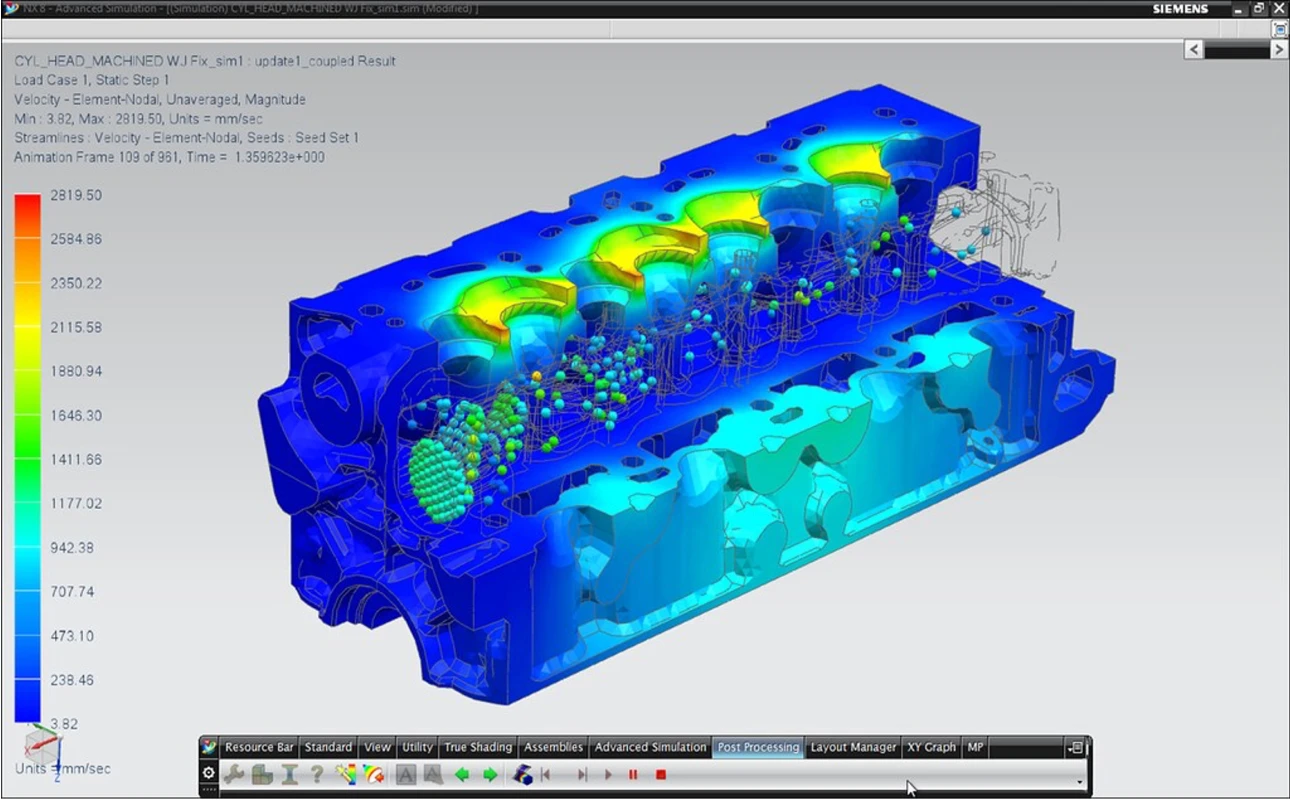
These types of batteries are usually designed using thermal modeling tools, similar to those used for heat exchanger design and more general electronic thermal management systems.
Conventional thermal modeling of a storage vessel is computationally expensive. A transient conjugate heat transfer solve over a charge-discharge cycle takes hours, and a storage vessel must be evaluated across insulation thickness, pipe pitch, medium selection, and charge rate. That cost caps the number of variants you can examine before you commit to a geometry.
Neural Concept is the Intelligence Layer for Engineering. Its physics-aware AI learns from your existing CFD and FEA results and predicts temperature and flow fields on new geometries in seconds, so you evaluate hundreds of insulation and heat exchanger configurations in the time a single conventional run takes.
Neural Concept already applies this to thermal problems in EV battery thermal management and immersion cooling, where the models predict peak cell temperature and temperature difference across a pack directly from the CAD geometry. The same approach applies to a heat storage vessel because the governing physics is the same conjugate heat transfer problem, just at a different scale. Because the trained model stays inside your company, the design knowledge accumulates as an asset you own.
What are the main types of thermal batteries?
Thermal batteries are divided into four categories based on how the medium stores energy: phase change (latent heat), molten salt, sensible heat, and thermochemical. Sensible heat storage is the most commercially available type because water, concrete, and hot rocks are cheap and the engineering is well understood. Thermochemical storage has the highest energy density and the lowest technology readiness.
Phase change thermal battery
These batteries store latent heat, absorbing and releasing thermal energy during melting and solidification. The phase change gives them high energy density in a compact volume and a nearly constant discharge temperature. A solar heating installation uses this to carry daytime collection into nighttime space heating or off-grid power generation.
Molten salt thermal battery
Molten salt systems use high-melting-point salts to recover waste heat and store solar thermal energy. Concentrated solar power plants use two-tank molten salt storage to store excess heat collected during the day and generate electricity at night or during cloudy periods, with the cold and hot tanks operating at roughly 290 and 574 °C. IRENA recorded 491 GWh of installed molten salt capacity, projected to reach 631 GWh by 2030. Due to their thermal stability and high heat capacity, these systems are suitable for high-temperature applications, such as industrial processes and combined heat and power. Additionally, they are chemically stable and non-flammable, enhancing safety in large-scale, high-temperature operations.
Sensible heat thermal battery
Sensible heat thermal batteries store energy by raising the temperature of a solid or liquid without changing its phase. Common mediums include water, oil, concrete, sand, and hot rocks. Polar Night Energy's Sand Battery is a sensible heat system that reaches a maximum temperature of 600 °C and delivers hot water, steam, or air to a district heating network.
Their advantages include simple design, low cost, and inexpensive, readily available materials. The technology is easy to implement and requires minimal maintenance. An example application is building heating systems, where water or concrete absorbs heat during the day and releases it at night to provide indoor comfort.
Thermochemical thermal battery
Thermochemical batteries are based on reversible chemical reactions such as
A + Heat ⇌ B + C
The advantages are high density, long-term storage without loss, and suitability for transportable and seasonal usage. Heat remains stored until a reverse reaction is triggered! Thus, hydrogen-based setups use reversible chemical reactions to capture thermal input and release it later for industrial applications or electricity generation.
Where are thermal batteries used?
Thermal batteries run in four settings today: industrial process heat, defense and aerospace power, grid stabilization, and district heating for space heating. In each case, the system absorbs excess electricity or waste heat, then supplies heat when demand rises or renewable production dips. Rondo has announced deployments across food and beverage, cement, fuel, chemical, and textile production.
Industrial processes
Thermal batteries recover waste heat in industrial facilities. They capture heat from steel manufacturing or chemical production, storing it for preheating materials, generating steam, or powering other processes, boosting efficiency and lowering costs.
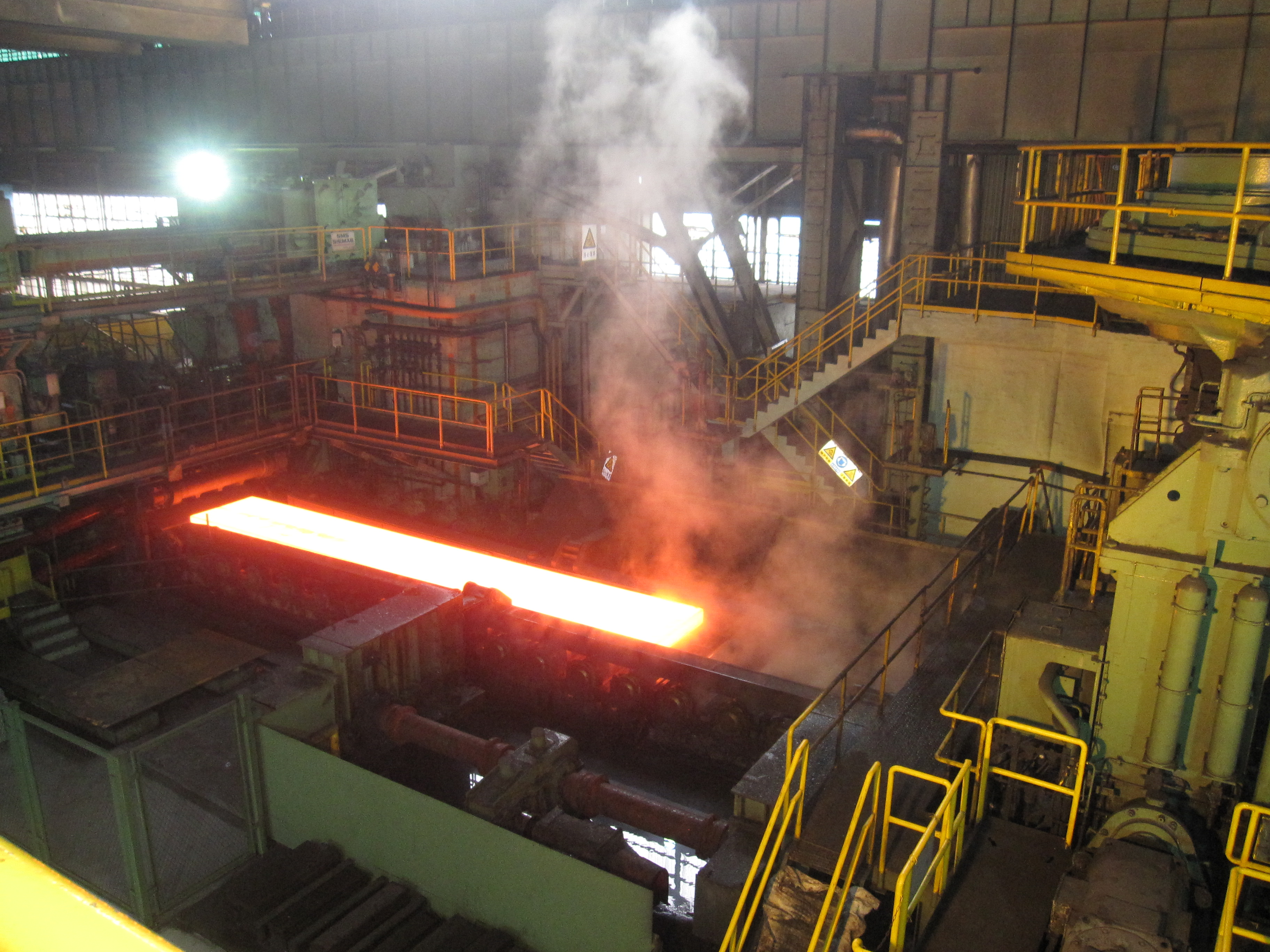
A real-world example is the use of thermal batteries in steel plants to store heat from hot exhaust gases during steel production. The stored heat then preheats incoming raw materials or generates steam for turbines, cutting the fuel a plant burns for the same output. Rondo's first commercial unit follows the same pattern in California oil production, where solar-charged brick replaces a gas-fired boiler, avoiding nearly 13,000 tonnes of CO₂ per year.
Military and aerospace applications for thermal battery
Thermal batteries have supported military and aerospace applications for decades, especially where long shelf life and reliability are essential. They provide a maintenance-free solution that activates quickly after dormancy. Their high power density and rapid activation are advantageous. For example, the battery remains inactive in missile guidance systems until launch, then supplies reliable, immediate power to critical electronics, ensuring operation under extreme conditions.
Grid stabilization and load leveling
Thermal batteries stabilize the electrical grid by storing excess electricity during low demand and releasing heat during peak demand. Charging on low-cost electricity during off-peak hours and discharging during the evening peak reduces strain on the grid and lowers the energy costs a site pays for the same amount of heat. Rondo's units charge for roughly six hours a day on the cheapest available power, then supply heat continuously.
A real-life example is large-scale thermal energy storage in Denmark's district heating systems. Denmark pioneered Pit Thermal Energy Storage for seasonal thermal energy storage in solar district heating. The plant at Vojens holds 200,000 m³ of water in a lined pit 13 meters deep, charged by a 70,000 m² field of solar collectors. It stores summer heat for winter delivery, covers more than half of the annual heat production for about 2,000 households, and avoids roughly 6,000 tonnes of CO₂ emissions per year. At that scale, the pit cost about EUR 24 per cubic meter of storage volume.
Differences between a thermal battery and an EV battery
Thermal and EV batteries both store energy but serve different functions.
Thermal batteries store thermal energy for industrial heating, managing excess heat in processes such as manufacturing or balancing energy during intermittent renewable generation. They contribute to the energy transition by improving efficiency and reducing reliance on fossil fuels in heating and industrial processes, potentially helping lower industrial emissions. On the other hand, EV batteries store electrical energy to power electric vehicles, supporting the shift towards cleaner transportation.
The US Department of Energy (DoE) is exploring the integration of such systems to improve energy efficiency. While thermal batteries and EV batteries are distinct technologies, both are essential to achieving sustainability goals. Future synergies could further enhance their role in reducing emissions and optimizing energy use across industries.
Another difference is the cooling technique used to maintain operational efficiency and safety. Thermal batteries rely on passive systems such as insulation, while electric batteries rely on active systems such as immersion cooling. Heat pumps sit between the two, upgrading low-grade heat rather than storing it, and they pair well with a thermal store that buffers their output.
What are the advantages and challenges of thermal batteries?
The advantage of a thermal battery system is cost: it stores energy in materials that cost tens of euros per tonne rather than thousands, and it scales by adding volume. The constraint is that most designs return heat rather than electricity, which limits the addressable market to sites with year-round heat demand.
Advantages
Low-cost storage medium. Sand, rock, brick, and water are abundant and do not need scarce minerals. Pit storage in Denmark costs about EUR 24 per cubic meter.
High round-trip efficiency for heat. Rondo reports above 97% efficiency for its 100 MWh unit; Polar Night Energy reports 80-90% at Pornainen; and molten salt tanks reach an annual storage efficiency of up to 99%.
Long duration. Losses run under 1% per day in a large brick stack, and pit storage shifts summer solar heating into winter demand.
High temperature heat. Refractory brick reaches 1,500 °C, which covers process temperatures that heat pumps cannot serve.
Drop-in integration. A heat battery ties into an existing steam flange alongside a gas boiler, so a site converts without rebuilding the plant.
Long service life. Installations are specified to last more than 30 years, with no capacity fade like that seen in electric batteries.
Challenges and future prospects
What are the main challenges and opportunities for thermal batteries and storage?
Material optimization. The performance of thermal batteries depends on materials and design. Research focuses on media with higher thermal capacity and on optimizing heat transfer fluids.
Heat, not electricity. Adding a steam turbine to recover electricity sharply drops round-trip efficiency. Most current products therefore address process heat and district heating rather than grid-scale power generation.
Integration with existing plant. Connecting a store to current systems requires matching steam conditions, control logic, and a site with both cheap electricity and steady heat demand.
Independent verification. Most published efficiency and cost figures come from vendors. Few audited data points across a full operating year exist yet.
Market adoption and support. Green policies can accelerate the deployment and innovation needed for thermal battery technology to succeed in this sector.
Thermal batteries balance intermittent energy generation (solar or wind) with consistent energy demand by storing thermal energy. These systems are cost-effective across various applications and efficiently store excess thermal energy generated during periods of low demand, which can later be used when demand peaks.
Thermal batteries' advantages include their scalability, long lifespan, and low cost. These make them suitable for energy storage in residential heating systems for large-scale industrial applications. These benefits position them as a potential solution for enhancing grid stability, improving efficiency, and supporting the integration of clean energy.
However, challenges like optimizing materials, enhancing design, and boosting operational efficiency still hinder widespread adoption. Continuous research is essential to refine thermal storage technologies, improve heat retention, and tackle response time and thermal loss issues so that they can realize their full potential.
The physics behind a thermal battery — a conjugate heat transfer problem across insulation, geometry, and charge rate — is the same physics Neural Concept's engineering intelligence layer is built to accelerate. Trained on your own CFD and FEA history, it predicts temperature and flow fields on new storage geometries in seconds, turning a design space that once took days of simulation into an iteration loop measured in hours. It is already used by more than 70 OEMs and Tier 1 suppliers.
Ready to explore your own thermal design space faster? Discover the Neural Concept platform.
FAQ
How efficient are thermal batteries?
Thermal batteries are highly efficient, with minimal energy loss over time, especially when using phase-change techniques.
What is the best material for a thermal battery?
Common materials include phase change materials, salts, water, and concrete, depending on the application.
Who are the leading thermal battery manufacturers?
EaglePicher Technologies, Saft, and Tadiran provide high-performance, reliable energy storage solutions for military, aerospace, and industrial applications.
What are the disadvantages of thermal batteries?
Thermal batteries can require high temperatures and specialized infrastructure, which can limit their applications and increase costs.
How long do those batteries last?
Depending on the thermal conductivity and the specific heat capacity, it can last from hours to days.
What are the environmental benefits of thermal batteries?
Thermal batteries help reduce carbon emissions by enabling the efficient storage and use of renewable energy sources, such as solar and wind, and by optimizing industrial heating and manufacturing processes. Their capability to store excess energy during off-peak hours and release it when necessary reduces reliance on fossil fuels, making them a sustainable energy solution.