Automotive Digital Transformation - Trends and future predictions
Table of Contents
- Introduction
- Key Engineering Areas in Automotive Digital Transformation
- Benefits of Digital Transformation
- New Technologies: Transformation in the Automotive Industry
- Four Challenges Facing Automotive Companies in 2026
- Automotive Digital Transformation Trends
- Simulation and AI Benefits
- Key Drivers of Change
- Supply Chain Optimization
- Future Outlook & Conclusion
Digital transformation in the automotive sector is revolutionizing how we design and update systems over time. Vehicle functions increasingly depend on software-defined components. Many functions need new approaches to architecture and lifecycle management. It also changes how we control production. Decisions once based on schedules or manual inspection now rely on real-time data and sensor feedback. Support models are evolving, too. Diagnostics, updates, and performance tuning now extend far beyond the factory. Vehicles stay connected to the cloud infrastructure.
Key Engineering Areas in Automotive Digital Transformation
Vehicles are becoming increasingly software-centric and connected. Digital tools and data-driven design are refocusing engineers' activities. In short, here is how engineers develop, operate, and maintain vehicles.
- Manufacturing:
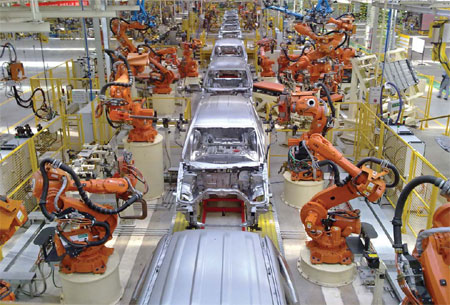
- Production lines now incorporate sensor networks, robotics, and real-time analytics. Predictive maintenance relies on failure modeling and machine-level telemetry. Digital twins of components and assemblies are used to test process changes without disrupting physical lines.
- In-Vehicle Platforms:
- Modern vehicles use centralized compute nodes rather than distributed control units. Domain controllers replace traditional Electronic Control Units (ECUs), enabling higher data throughput and unified software environments. Connectivity and real-time data logging introduce new timing and bandwidth constraints for embedded systems.
- Sales & Service Interfaces:
- Configuration, diagnostics, and updates are increasingly handled through software portals and APIs. Engineers are expected to build systems that support remote diagnostics, user-facing parameter tuning, and interaction with third-party service platforms — all within regulated environments.
- Software-Defined Vehicles:
- Core functionality, from infotainment to braking logic, is managed by software. OTA (Over-the-Air) updates push patches and new features post-sale. Engineering teams must implement version control, rollback mechanisms, and runtime validation directly into vehicle firmware and middleware.
- Mobility-as-a-Service (MaaS):
- Vehicles used in shared fleets must be designed for high utilization, minimal manual servicing, and automated provisioning. Usage data affects component wear modeling, charging strategy (for EVs), and access control systems. Integration with fleet management platforms becomes a design requirement.
- Data and Connectivity:
- Data acquisition extends beyond CAN bus to Ethernet, 5G, and proprietary protocols. Engineers work on filtering, compression, and prioritization for real-time telemetry and delayed cloud sync. Data governance, ownership, and access rights affect system partitioning and logging granularity.
- Cybersecurity:
- Threat surfaces include gateways, firmware, sensors, and communication stacks. Secure boot, encrypted data paths, certificate-based authentication, and in-vehicle intrusion detection must be implemented. Regulatory compliance adds formal constraints to design and update workflows.
Benefits of Digital Transformation
Companies can now rely on real-time data, software-driven updates, and predictive insights to improve performance and reduce costs. Thus, as a benefit, digital technologies are reshaping automotive engineering, enabling faster, smarter, and more flexible operations.
- Higher operational throughput:
- Automated process control systems adjust in real time based on sensor feedback, reducing the need for manual intervention and stabilizing cycle times.
- Early fault detection:
- Live monitoring and predictive models flag wear or malfunctions before they occur, minimizing downtime and improving reliability metrics.
- Software-driven product evolution
- Subscription features and usage-based configurations enable the delivery of new functionality without requiring hardware changes.
- Lower service costs
- Remote diagnostics reduce technician dispatches; targeted firmware updates extend the life of deployed systems.
- Shorter development cycles
- Digital tools make it easier to test design variants and deploy updated logic without full hardware revalidation.
- Better alignment with real-world use
- Field data guides feature tuning and performance adjustments, making engineering changes more evidence-based.
The transformation reshaping the automotive industry is foundational, redefining design, manufacturing, and mobility experience. This is a profound shift in mindset, challenging a century of industrial assumptions by automotive manufacturers. True innovation cannot be reduced to trends. Electrification, mechanical engineering automation, and connectivity are converging forces that are redefining the car from a mechanical object into a dynamic, software-driven platform within a broader ecosystem of services. For manufacturers, the implications are deep, forcing a rethink of operations across procurement chain resilience, factory architecture, and customer engagement. For instance, connected vehicles and virtual showrooms enhance customer experience.
The digital transformation must be embodied, not implemented at the edges. Those viewing this transition as a tech upgrade will be left behind, while those seeing it as industry reinvention will shape its future.
New Technologies: Transformation in the Automotive Industry
Digital transformation is essential for the automotive industry’s future competitiveness.
Viewing “efficiency” and “cost reduction” as mere outcomes underestimates the magnitude of the transformation. The industry is reinventing industrial logic with adaptive systems and integrated platforms.
The digital transformation allows the automotive industry to overcome traditional constraints, producing with precision, anticipating needs, and creating personalized, predictive customer experiences.
When effectively applied, AI becomes a key partner in design, logistics, and service. Thus, analytics makes the factory a "learning entity".
A digitally transformed enterprise shifts from static planning to dynamic orchestration. Companies mastering these skills are not affected by market volatility; they can anticipate shifts. Integrating digital technologies with automotive craftsmanship fosters innovation and sustainable growth.
The automotive industry is becoming more innovative, agile, and resilient. And also more human: machines adapt to individual needs; progress is measured not only by profit but by purpose. Automotive companies that adopt digital transformation will stay competitive amid rising consumer expectations.
Four Challenges Facing Automotive Companies in 2026
The automotive sector will face a complex landscape in 2026–2027, shaped by rapid technological change, ongoing supply chain volatility, evolving business models, and growing cybersecurity risks. Addressing these challenges requires strategic investment, operational agility, and a focus on innovation:
- Technological upheaval
- Rapid advances in software, electrification, and connectivity are driving a major reallocation of engineering resources.
- Procurement chain volatility
- Supply chain disruptions are increasingly structural and long-term, necessitating new sourcing strategies and resilience planning.
- Business model transformation
- Digitalization is reshaping vehicle distribution, service models, and revenue streams, requiring agile operational approaches.
- Cybersecurity threats
- Rising vehicle connectivity expands attack surfaces, making robust security measures and regulatory compliance essential.
1. Technological Upheaval is Forcing Resource Reallocation at Scale
The deployment of SDVs (Software-Defined Vehicles) across multiple brands since 2024 required a reorientation of over 30% of Stellantis’ R&D engineering staff from mechanical systems to embedded systems, cybersecurity, and AI integration.
The shift is not theoretical: the STLA Brain platform went live in selected MY2025 Jeep and Peugeot cars, forcing realignments in supplier ecosystems and internal development pipelines.
Other OEMs are facing similar challenges.
Volvo Cars announced 3,000 job cuts in May 2025, citing the need to reduce costs amidst rising raw material prices and declining demand in the European market.
Volkswagen and Audi have also announced significant job cuts and restructuring plans to adapt to the changing automotive landscape.
2. Procurement Chain Volatility Is Now Structural, Not Cyclical
The 2025 U.S. tariffs on imported vehicles and parts have significantly disrupted global supply chains. GM restructured its supply chain, relocating over 25% of it to the U.S. since the COVID-19 pandemic and reducing sourcing from China to under 3%. This strategy aims to lessen the impact of tariffs and establish a fairer, competitive landscape for U.S. automakers.
The Eastern European automotive companies, heavily reliant on automotive manufacturing, are also feeling the strain. Slovakia, the world’s largest car producer per capita, expects to lose 20,000 jobs and €5 billion in exports over three years due to the tariffs. Companies like Mata Automotive are relocating production operations to Mexico to bypass these tariffs.

3. Digital Transformation is Forcing Structural Business Changes
The shift towards digitalization is compelling automakers to rethink traditional business approaches. Scout Motors, backed by Volkswagen, plans to sell its electric vehicles directly to consumers, bypassing traditional dealerships. This direct-to-consumer approach aims to create a transparent, efficient purchasing experience that reflects consumers' changing expectations in the digital age.
This trend is mirrored in dealerships, where digital retailing platforms and process automation are becoming essential. Modern consumers expect seamless online research, financing, and purchase flows, driving the adoption of digital tools not only for customer interactions but also for internal process optimization. Automation enables faster quoting, inventory checks, and vehicle allocation, resulting in both a better user experience and increased cost efficiency.
Similarly, Stellantis has been investing in software-driven products, with platforms such as STLA Brain, STLA SmartCockpit, and STLA AutoDrive expected to be integrated with technology by the end of 2024. These initiatives aim to enhance the mobility experience and offer new revenue streams through subscription-based services.
4. Cybersecurity Threats are Escalating with Increased Connectivity
The rise of connected vehicles has made automotive cybersecurity a critical concern. In 2024, the automotive industry experienced over 400 cybersecurity incidents, with more than 100 involving ransomware. These attacks targeted original equipment manufacturers (OEMs), suppliers, and electric vehicle (EV) charging infrastructure, highlighting vulnerabilities within the automotive ecosystem.
The financial impact is substantial. Cyberattacks cost the auto industry over $22 billion in 2024, with cloud and back-end systems as the most frequent targets. The increasing number of vulnerabilities and the potential for large-scale incidents underscore the need for robust cybersecurity measures.
Cybersecurity protections are crucial for automotive companies as they increasingly digitize their processes.
Automotive Digital Transformation Trends
Here is a breakdown of the main trends in automotive manufacturers’ digital transformation.
- From Sampling to Streaming: Quality Control Goes Fully Digital
- Digital transformation in the automotive sector is shifting from concept to concrete application, particularly where it directly affects engineering efficiency and product integrity. At several vehicle assembly plants, analytics built on live torque and vibration data from fastening tools have replaced traditional offline quality checks. Instead of sampling batches, each fastener is now a data point. On one manufacturing line, this eliminated manual audits and caught a tool calibration drift within two hours, not two days.
- Machine Learning Cuts Down Prototypes
- AI and digital tools can improve quality control and efficiency in manufacturing processes. Digital tools facilitate improved data integration and analytics, thereby enhancing informed decision-making.
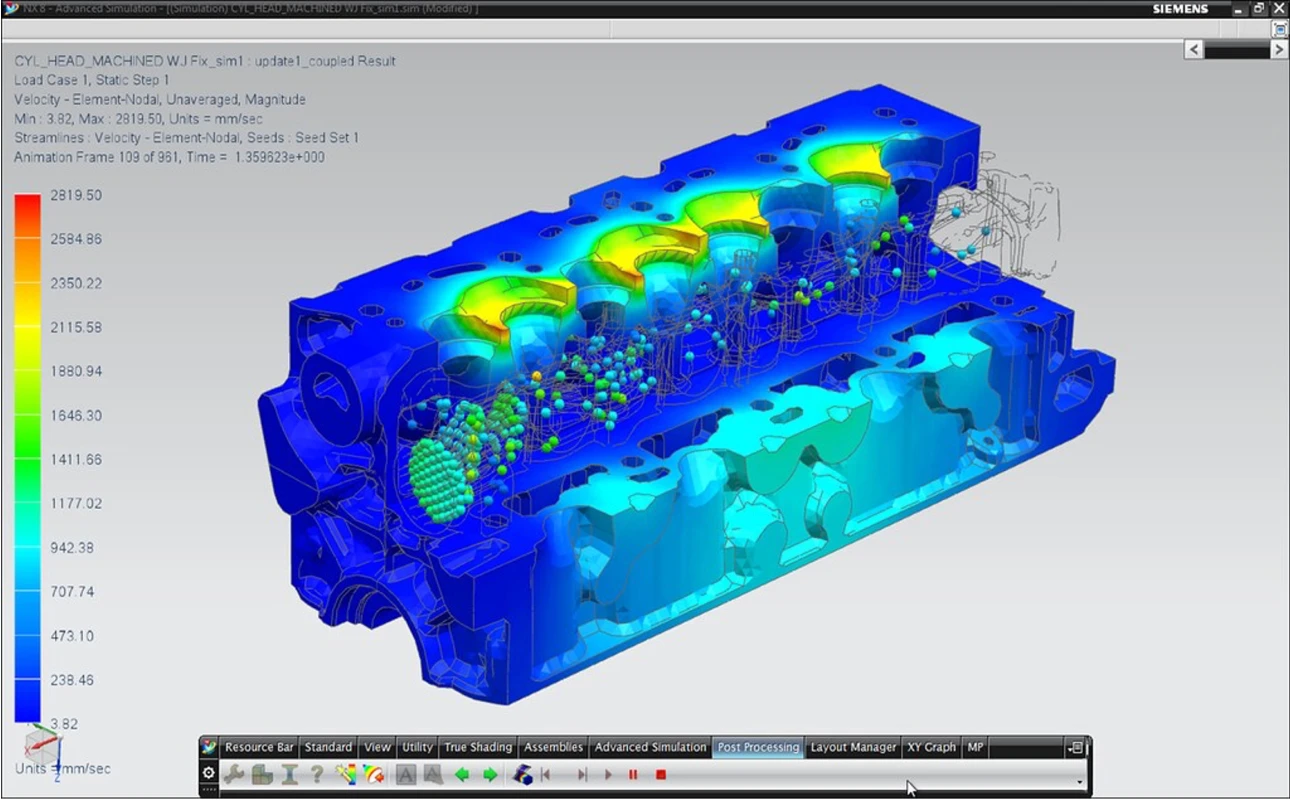
- In vehicle design, mechanical engineering Machine Learning is trained on historical validation tests to predict component fatigue life under variant load cases. This has reduced the number of required physical prototypes for specific suspension components by nearly 40%, freeing both time and budget for higher-risk system tests.
- Collaborative Simulation Accelerates ADAS Development
- Autonomous driving programs are also pushing digital collaboration into new territory, enhancing careers in engineering and AI.
- Engineers in Japan, Germany, and California now iterate on control strategies in shared simulation environments calibrated using data from global test fleets. One team shortened its steering software release cycle from six weeks to ten days using this approach. Without the simulations, coordination would stall on hardware availability and regional testing windows.

Simulation and AI Benefits
AI trained on simulation data enables interactive, predictive design spaces. Engineers iterate without waiting for physical tests, accelerating decisions, reducing rework, and embedding performance insights earlier, where they have the most significant influence on outcomes and cut downstream costs. Here are the benefits:
- Higher operational throughput:
- AI surrogates trained on simulation data reduce bottlenecks in design reviews and iteration loops, helping teams move faster from concept to line-readiness.
- Early fault detection:
- Thousands of simulated load cases are fed into AI models that flag design weaknesses before physical testing, thereby increasing confidence in early-phase decisions.
- Software-driven product evolution:
- Predictive AI tools now guide design adaptation in real time. These models evolve with new data, enabling continuous updates to product logic and geometry.
- Lower service costs:
- Early performance insights minimize late-stage design flaws, reducing recalls and downstream service interventions.
- Shorter development cycles:
- Engineers interact with AI-driven design environments built from large-scale simulations. Waiting for test results is no longer the bottleneck.
- Better alignment with real-world use:
- Surrogates trained on real-world simulation inputs ensure that designs reflect realistic usage scenarios, not just lab conditions.
Key Drivers of Change
In 2026, the automotive industry is being reshaped by a combination of cost pressures, technological change, and evolving consumer expectations. Efficiency remains a central concern, especially as input costs such as materials, energy, and labor remain volatile across regions. In response, manufacturers are automating more manufacturing steps and optimizing operations through data-driven methods. For example, analytics are applied to assembly lines to reduce process variability and lower rework rates.
Consumer Demand
Consumer demand is also shifting. Interest in electrified, connected, and customized vehicles continues to grow, prompting changes in both product design and service models. Automakers are experimenting with direct-to-customer channels, over-the-air updates, and modular feature offerings tied to usage patterns rather than fixed configurations.
Central Role of Software and New Competencies
The above shifts are supported by digital transformation. Software has moved from the periphery to the core of vehicle architecture. Engineering workflows increasingly rely on simulation, cloud collaboration, and AI-enhanced tools. New competencies are required as a result: simulation, data analysis, embedded systems design, and product lifecycle management tools are now central to automotive R&D and operations.
Innovation in Services
Innovation in this context is not limited to product form. New services, such as fleet diagnostics or predictive maintenance platforms, are expanding the industry’s boundaries. Growth is coming as much from digital integration as from physical output. The ability to turn data into operational or commercial value is emerging as a key differentiator.
Predictive Maintenance
Predictive maintenance increases productivity by 25% and reduces breakdowns by 70%. According to a downloadable position paper by the Deloitte Analytics Institute, predictive maintenance has been shown to increase productivity by 25%, reduce breakdowns by 70%, and lower maintenance costs by 25%. These figures are echoed in other industry analyses, such as those by NRI and Pecan AI, which cite similar improvements in productivity and reductions in breakdowns.
Massive Investments
While the benefits of transformation are substantial, so are the investments required. Recent industry benchmarks estimate that the average digital transformation project can cost enterprises approximately $27.5 million, reinforcing the need for strategic planning and phased deployment to ensure long-term ROI, according to a recent study from International Data Corporation (IDC).
Supply Chain Optimization
Supply chain optimization has become a strategic imperative for automotive manufacturers, especially in the wake of the disruptions of 2020-2023. The semiconductor shortage alone cost the global automotive industry an estimated $210 billion in lost revenues in 2021 (AlixPartners), prompting a structural reevaluation of just-in-time models and supplier dependencies.
Digital transformation helps manage chip shortages and disruptions by improving supply visibility, design flexibility, and production agility. For example, digital BOMs and parametric CAD models enable engineers to quickly adapt designs when parts are unavailable. Real-time inventory tracking systems allow the efficient reallocation of existing stock, thereby avoiding unplanned downtime.
Design Adaptability and Inventory Agility
Automated storage and retrieval systems (AS/RS) are becoming a foundational component of smart manufacturing infrastructure. By replacing manual handling with coordinated, sensor-guided material movement, these systems enhance inventory accuracy and minimize unplanned stoppages on the line. When integrated with real-time factory data platforms, AS/RS supports adaptive scheduling and enables just-in-sequence manufacturing even under fluctuating demand conditions.
Logistics and inventory management are now being overhauled using real-time data platforms.
For example, the BMW Group is developing a digitized cloud architecture to enhance efficiency and lower costs. It implemented a supply chain control tower with predictive analytics, enabling the early detection of potential disruptions across Tier 1 to Tier 3 suppliers. This system reportedly helped reduce supply-related downtime by over 30% in 2024.
Similarly, Toyota has begun integrating AI-driven demand forecasting into its inventory planning, cutting excess inventory in some plants by up to 20%.
Real-Time Logistics and Predictive Control
The adoption of digital technologies across the supply chain is accelerating. According to the Capgemini Report on intelligent industry transformation, 72% of automotive executives identified real-time data analytics as a critical enabler for supply chain resilience. These tools enable dynamic logistics rerouting based on real-time updates, automated exception handling, and cross-functional transparency.
Strategic Supplier Partnerships
Collaboration with suppliers is also evolving. Stellantis and Foxconn formed a joint venture in 2023 (SiliconAuto) to co-develop and secure automotive-grade chips, ensuring long-term availability and integration capabilities. Volkswagen Group's partnership with Bosch on battery supply chain digitization is another example, aiming to optimize the flow of raw materials for gigafactory-scale manufacturing.
Future Outlook & Conclusion
The future of digital transformation in the automotive industry is set to deepen along defined axes. The transition to electric and autonomous vehicles remains a catalyst, not only as a shift in propulsion or control technology but as a change in how vehicles are developed, operated, and monetized. Software-defined vehicles, updated via connected platforms, will become the norm.
Online vehicle retail is projected to grow from approximately $348 billion in 2024 to $571 billion by 2030. This represents an 8.6% compound annual growth rate (CAGR). This rapid expansion highlights the growing consumer adoption of digital channels for vehicle purchases and the evolving role of e-commerce in the automotive industry.
Data will inform both operational and strategic decisions. Fleet telemetry, user behavior analytics, and predictive diagnostics will fuel the next wave of optimization, from supply chain orchestration to individualized post-sale services. These capabilities require investment not just in tools, but in software infrastructure, secure data pipelines, and cross-domain integration.
Digital platforms will play an increasingly significant role in development and delivery. Virtual validation environments are expected to reduce the need for physical testing, while cloud-based design workflows will enable distributed teams to collaborate in real time. Meanwhile, business approaches will evolve to reflect usage-based pricing, on-demand features, and integration with broader mobility ecosystems.
Automotive firms that adapt to this software- and data-centric paradigm will gain a competitive advantage. The technology changeover is not optional; it is foundational to maintaining competitiveness in a landscape shaped by technological convergence.
FAQs
What is the role of communication in the digital transformation?
Automotive digitalization is most effective when organizations communicate well, as employees are often the key drivers of successful tech adoption.
What are the 4 main areas of digital transformation?
The four core areas are: business model evolution, process automation, customer experience enhancement, and organizational culture change. Together, they reshape how companies operate in a "digital-first" world. Of course, customer experience must blend digital options with genuine care from sales representatives.
What is digitalization in cars?
Digitalization in cars refers to the integration of software, connectivity, and data-driven features into vehicles, enabling functions such as over-the-air updates, predictive maintenance, advanced driver assistance systems, and enhanced infotainment systems.
Which industry has the most digital transformation?
Manufacturing leads the way in digital transformation, driven by Industry 4.0 technologies such as IoT, AI, and robotics. The automotive, aerospace, and electronics industries are especially active. The use of AI in automotive manufacturing is expected to grow significantly over the next few years.
How can engineers accelerate digital transformation in automotive product design?
By adopting AI simulation tools, cloud platforms, and continuous integration workflows, engineers can iterate more quickly, collaborate globally, and reduce the time required for prototype development.
Is Neural Concept compatible with the transition to software-defined vehicles?
Yes. Neural Concept’s design tools, powered by Deep Learning, integrate into software-centric design processes and enable faster iterations.
Can Neural Concept support real-time collaboration across global R&D teams?
Absolutely! The NC platform enables cloud-based access to AI models and design workflows, allowing global teams to collaborate on the same projects without delays or versioning issues.
How does simulation-based AI help reduce costs in vehicle design?
Simulation-based AI minimizes the need for physical prototyping by predicting performance early. It reduces design iterations and shortens design cycles, resulting in substantial savings in time and resources.