A Guide to Battery Energy Storage System Design
Battery energy storage system design sizes a battery and its power conversion system to a defined duty cycle, then specifies the control and safety equipment required to sustain that duty cycle over the asset's life. Battery Energy Storage Systems (BESS) are a component of the global transition towards a sustainable energy future, and the scale of deployment has changed the design problem.
Key takeaways
Quick facts:
Almost all new grid-scale storage now uses lithium iron phosphate cells housed in factory-built containers.
Four hours of discharge at rated power is the common configuration.
Turnkey system prices averaged around $117 per kilowatt-hour worldwide in 2025, although regional figures differ by a factor of three.
Fire safety expectations have shifted again with the 2026 edition of NFPA 855, which now requires fire testing at the installation level rather than solely at the unit level.
Effective thermal management across the full system lifecycle is now a primary design constraint, affecting performance, safety, and permitting outcomes.
This short guide will explore the details of battery energy storage system design, covering aspects from the fundamental components to advanced considerations for optimal performance and integration with renewable energy sources. It works through component selection and chemistry choice, then through the sizing of each subsystem, and closes on the economics and the codes that govern permitting. The material is written for computer-aided engineering and power electronics engineers who specify subsystems, for program managers accountable for cost and schedule on storage projects, and for research and development leaders assessing where AI enters the design loop.
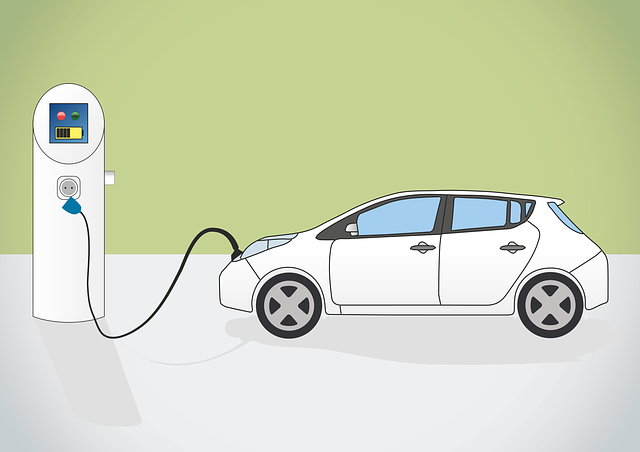
Table of contents
What is a battery energy storage system?
Key components of a battery energy storage system
How to choose the appropriate battery technology?
Battery energy storage system design
Battery energy management system design
Monitoring and control systems
Economic considerations
Lifecycle cost analysis
Regulatory and environmental considerations
Future trends in battery energy storage system design
Conclusion
FAQ
Sources
What is a battery energy storage system?
A battery energy storage system is a complex arrangement of components designed to store electrical energy in chemical form and convert it back to electricity when needed. The battery pack design must be oriented to performance and efficiency, because storage systems are vital in managing the intermittent nature of renewable energy generation, providing grid support to ensure a stable power supply.
The role has widened as the share of inverter-based generation has risen. A modern grid-connected battery energy storage system shifts energy across hours, responds to frequency deviations within milliseconds, and, when equipped with grid-forming inverters, establishes the voltage and frequency reference that synchronous generators once provided.

Key components of a battery energy storage system
Battery modules
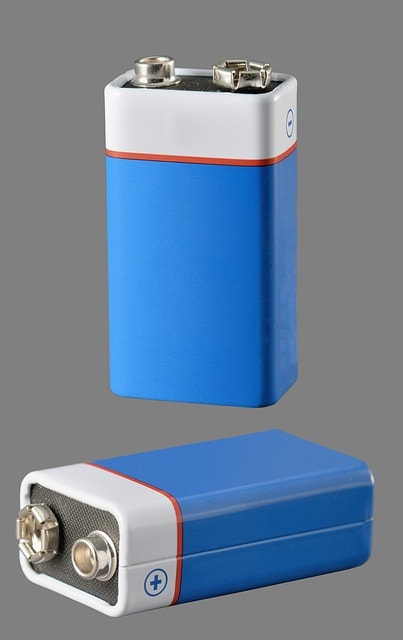
The heart of any BESS, battery modules store electrical energy in chemical form. The choice of battery technology is crucial and depends on factors such as energy density, power density, cycle life, and cost.
Power conversion system (PCS)
This component converts the direct current (DC) from the batteries to alternating current (AC) for grid connection or use in electrical systems, and vice versa for charging. Recent PCS designs also offer grid-forming operation, allowing the system to set voltage and frequency rather than follow an existing reference.
Energy management system (EMS)
The EMS oversees the operation of the entire BESS, optimizing energy flow, monitoring performance, and ensuring safe operation.
Battery management system (BMS)
Working closely with the EMS, the BMS monitors and controls individual battery cells or battery modules, ensuring optimal operating temperatures and preventing overcharging or deep discharging.
Thermal management system
This system maintains the batteries within their optimal operating temperature range, which supports performance, helps prevent degradation, and extends battery life. Poor temperature control can also lead to thermal runaway in battery systems.
Safety systems
Including fire suppression systems and various protection devices, these components ensure the safe operation of the BESS. The 2026 edition of NFPA 855 added a further category, the thermal runaway propagation prevention system, which detects precursors such as cell off-gas and applies targeted cooling before a single cell failure spreads.
Reference: Telgian, “NFPA 855 Changes in the 2026 Edition”
Grid connection equipment
For grid-tied systems, this includes the transformers and switchgear required to connect to the power grid.
How to choose the appropriate battery technology?
Choosing the right battery technology is fundamental to the success of a BESS. Several options are available, each with its own strengths and weaknesses:
Lithium-ion batteries
Lithium-ion batteries, particularly lithium iron phosphate (LiFePO4) variants, have become the go-to choice for many BESS applications due to their high energy density, excellent cycle life, and improving cost-effectiveness. They offer a good balance of power and energy, making them suitable for both short-duration, high-power applications and longer-duration energy storage.
The cost position has moved sharply.
BloombergNEF recorded average pack prices of $70/kWh for stationary storage in 2025, a 45% decline from 2024, making stationary storage the lowest-priced battery segment for the first time.
Averaged across all applications, LFP packs came in at $81/kWh, compared to $128/kWh for nickel-manganese-cobalt oxide (NMC). The near-complete switch to LFP has also removed the stationary market's exposure to cobalt price movements.
Lead-acid batteries
While less energy-dense than lithium-ion batteries, lead-acid batteries remain a cost-effective option for certain applications, especially where space is not a constraint and a shorter cycle life is acceptable. They are often used in backup power systems and off-grid applications.
Flow batteries
Flow batteries, which store energy in liquid electrolytes, offer the advantage of decoupled power and energy ratings. This makes them particularly suitable for long-duration storage applications and conceptually distinct from thermal battery technologies that store energy as heat. However, they typically have lower round-trip efficiency compared to lithium-ion batteries.
The technology reached gigawatt-hour scale at the end of 2025. The Jimusar project in Xinjiang, supplied by Rongke Power, entered operation on December 31, 2025, with a 200 MW/1,000 MWh vanadium flow installation co-located with a 1 GW solar plant, designed for intensive daily cycling. Vanadium flow systems carry lower energy density than lithium counterparts, but they degrade more slowly and do not burn.
Other emerging technologies
Research is ongoing into various other battery technologies, including sodium-ion, solid-state, and metal-air batteries.
Sodium-ion has now passed from research into commercial supply for stationary applications. In April 2026, CATL signed a three-year agreement to supply 60 GWh of sodium-ion batteries to energy storage integrator HyperStrong, followed by a CNY 5 billion investment to add 40 GWh of sodium-ion capacity in Fujian. The chemistry uses neither lithium nor cobalt and operates between -40 °C and 70 °C. CATL has packaged it in the same enclosure dimensions as an existing 587 Ah lithium storage cell, so balance-of-system hardware carries over. Reference: CnEVPost, “CATL secures world’s largest sodium-ion battery order,” April 27, 2026; ESS News, “A closer look at CATL’s new sodium-ion battery,” April 20, 2026
Solid-state and metal-air designs are not yet widely commercialized for grid storage, although these technologies may offer significant advantages in the future.

| Chemistry | Where it fits | Strengths | Limits | 2025 pack price, all segments |
|---|---|---|---|---|
| LFP (lithium iron phosphate) | Almost all new grid-scale projects | No cobalt or nickel; tolerates higher temperatures before thermal runaway; sustains cycle life under daily arbitrage duty | Lower energy per unit mass and volume than NMC | $81/kWh |
| NMC (nickel-manganese-cobalt) | Vehicles | Highest energy per unit of mass and volume | Cobalt and nickel exposure; a minor advantage for a container on a concrete pad | $128/kWh |
| Lead-acid | Backup power and off-grid | Cost-effective where space is not a constraint | Less energy-dense; shorter cycle life | Not surveyed here |
| Vanadium flow | Long-duration storage and intensive daily cycling | Power and energy ratings decoupled; degrades more slowly; does not burn | Lower round-trip efficiency and energy density than lithium | Not surveyed here |
| Sodium-ion | Entering commercial stationary supply | Neither lithium nor cobalt; operates from -40 °C to 70 °C; drops into existing enclosure dimensions | Commercial volume so far concentrated in China | Not surveyed here |
| Solid-state and metal-air | Not yet widely commercialized for grid storage | Potential future advantages | Not deployable today | Not surveyed here |
Battery energy storage system design
Designing a BESS requires careful consideration of various factors to ensure it meets the application's specific needs while operating safely and efficiently. The first step in BESS design is to clearly define the system requirements:
1. Energy Storage Capacity: How much battery energy needs to be stored?
2. Power Rating: What is the maximum power output required?
3. Discharge Duration: How long does the system need to provide power?
4. Cycle Life: How many charge-discharge cycles is the system expected to undergo?
5. Response Time: How quickly does the system need to respond to demand?
6. Round-Trip Efficiency: What level of efficiency is required?
These requirements will inform the choice of battery technology and the overall system design.
Sizing the battery system
Once the requirements are established, the battery system can be sized. This involves determining the number of battery modules required to meet the battery energy storage capacity and power-rating requirements. The power-to-energy ratio is a crucial consideration here, as it affects the choice between high-power and high-energy battery configurations.
Duration also affects unit cost because power electronics are shared across whatever energy they serve. BloombergNEF found global averages of $124/kWh for two-hour systems and $110/kWh for four-hour systems in 2025.
Cell format has moved in parallel: the 314 Ah LFP cell became the volume default, and larger formats around 587 Ah have entered deployment, raising the energy that fits in a 20-foot enclosure from roughly 5 MWh to more than 6 MWh. Fewer enclosures per megawatt-hour reduce foundations and cable runs on a constrained site.
Designing the power conversion system
The PCS must be sized to handle the battery system's maximum power output. It should also be designed for high efficiency to minimize losses during energy conversion.
Considerations include:
Power rating
DC/AC conversion efficiency
Harmonic distortion
Reactive power capability
Fault ride-through capability
Grid-forming or grid-following control mode
In North America, the PCS must also comply with IEEE 1547-2018 for the interconnection and interoperability of distributed energy resources, with equipment certified to UL 1741.
Battery energy management system design
The EMS is the brain of the battery storage system, responsible for optimizing its operation. Key functions include:
Monitoring and controlling energy flow
Implementing charge/discharge strategies
Interfacing with external systems (e.g., grid operators, renewable energy sources)
Forecasting energy production and demand
Implementing peak shaving and other grid support functions
Battery management system design
The battery management system ensures the safe and optimal operation of the battery modules. It should be designed to:
Monitor individual cell voltages and temperatures
Balance cell charge levels
Protect against overcharging and deep discharging
Estimate state of charge and state of health
Communicate with the EMS
Thermal management system design
Maintaining optimal operating temperatures is crucial for battery performance and longevity. The thermal management system should be designed to optimize heat transfer:
Keep batteries within their optimal temperature range
Remove heat generated during charging and discharging
Maintain temperature uniformity across battery modules
Operate efficiently to minimize energy consumption
Liquid cooling has become the baseline configuration for containerized systems above about 5 MWh because air cooling cannot maintain cell-to-cell temperature spread within a few degrees at high ambient temperatures. In both EVs and grid-scale storage, battery cooling system design determines whether cells remain in their allowable temperature window under fast charge and high-power operation. Fortunately, heat exchanger design can be assisted by both classic simulation and AI technologies to predict physical quantities of interest, such as the temperature distribution in the battery pack.
Physics-aware AI trained on prior simulation data returns those predictions in seconds rather than hours, allowing engineers to evaluate battery cooling plate geometries and flow arrangements across a full design space instead of a handful of candidates.
Safety system design
Safety is paramount in battery storage system design. Key safety systems include:
Fire detection and suppression systems
Ventilation systems to prevent buildup of potentially hazardous gases
Electrical isolation and protection devices
Emergency shutdown systems
Thermal runaway propagation prevention
The January 16, 2025 fire at the Vistra Moss Landing facility in California destroyed a 300 MW indoor installation and prompted the evacuation of around 1,200 residents.
Reference: Utility Dive, “After Moss Landing, what’s next for battery storage?,” February 2025; CTIF, “Monterey County moves towards BESS ban after massive fire at Moss Landing”
A review published by WECC in December 2025 noted that the facility was one of the earliest large-scale installations and predated NFPA 855 entirely.
Reference: WECC, “Moss Landing BESS Fire Report,” December 2025
The 2026 edition of that standard requires an explosion control and prevention system compliant with NFPA 69, or a performance-based alternative validated by installation-level fire and explosion testing. Deflagration venting to NFPA 68 is no longer accepted as a primary strategy, and large-scale fire testing at the installation level now accompanies UL 9540A unit-level testing.
Reference: Exponent, “NFPA 855 Expands Safety Guidelines for Battery Energy Storage Systems”; UL Solutions, “Installation Codes and Requirements for Energy Storage Systems (ESS): FAQs”
Grid connection design
For grid-tied systems, proper grid connection design is crucial. This includes:
Transformer sizing and selection
Switchgear design
Grid synchronization systems
Compliance with grid codes and standards
Integration with renewable energy sources
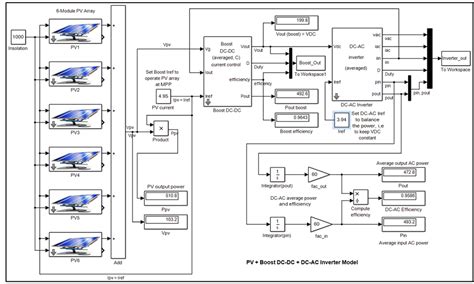
One of the primary applications of battery energy storage systems is integration with renewable energy sources such as solar and wind power. This integration helps manage the intermittent nature of renewable energy generation by storing excess energy during periods of high production and supplying power during periods of low production.
Solar power integration
When integrating a battery energy storage system with solar power systems:
Size the battery system to store excess energy generated during peak sunlight hours
Design the EMS to optimize self-consumption of solar energy
Consider a DC-coupled BESS for higher overall efficiency, since it shares an inverter with the solar PV system
Hybrid BESS designs combine AC and DC coupling features when project requirements call for greater flexibility.
Wind energy integration
For wind energy integration:
Battery energy storage system design should handle the variable and often unpredictable nature of wind power
Size the system to store energy during high wind periods for use during low wind periods
Implement advanced forecasting in the EMS to predict wind power generation

Grid support applications
BESS can provide valuable services to the power grid, including:
Frequency Regulation: A battery energy storage system can respond rapidly to grid frequency deviations, helping to maintain grid stability. The system should be designed with high power capability and fast response times for this application.
Voltage Support: Battery energy storage systems can help maintain grid voltage within acceptable limits. The PCS should be designed with this capability in mind.
Peak Shaving: The battery energy storage system can discharge during periods of high demand to reduce peak load on the grid. The system should be sized appropriately to handle the expected peak demand reduction.
Backup Power: In the event of power outages, battery energy storage systems can provide backup power to critical loads. The system should be designed with appropriate capacity and islanding capability for this application.
Grid-Forming and Black Start: A system with grid-forming inverters establishes its own voltage and frequency reference rather than following an external one. It supports networks with high shares of inverter-based generation and can be specified to restore supply after a full outage. The DongSu Substation project in Inner Mongolia, a 1 GW/4 GWh grid-forming LFP plant, connected to the grid on August 3, 2026, and is expected to discharge around 1 TWh annually.
Monitoring and control systems
Effective monitoring and control are essential for the reliable operation of a BESS.
Key aspects include:
SCADA systems
Supervisory Control and Data Acquisition (SCADA) systems provide overall monitoring and control of the BESS, including:
Real-time monitoring of system performance
Remote control capabilities
Data logging and reporting
Alarm management
Three protocols usually coexist on one site. Modbus TCP carries reads from inverters and battery management systems inside the fence. DNP3, specified in IEEE 1815, is what most North American utilities require at the point of interconnection. IEC 61850, and specifically part 7-420, defines logical nodes for distributed energy resources, so that two suppliers modeled to the same nodes can be exchanged without rewriting the SCADA tag map.
Predictive maintenance
Implementing predictive maintenance strategies can help prevent failures and optimize system performance. Modern predictive maintenance algorithms based on sensor data and machine learning allow operators to anticipate component failures instead of reacting to alarms. This involves:
Continuous monitoring of key parameters
Use of machine learning algorithms to predict potential issues
Scheduling maintenance based on actual system condition rather than fixed intervals
Economic considerations
The economic viability of a BESS project depends on various factors.
Capital costs
The initial investment in a BESS can be significant.
Key cost components include:
Battery modules
Power conversion system
Balance of system components (e.g., containment, wiring, safety systems)
Installation and commissioning
Regional differences dominate the headline number. BloombergNEF's 2025 cost survey found the global average turnkey price at $117/kWh, with China at $73/kWh, Europe at $177/kWh, and the United States at $219/kWh.
| BloombergNEF, 2025 | Price |
|---|---|
| Turnkey system, global average | $117/kWh |
| Turnkey system, China | $73/kWh |
| Turnkey system, Europe | $177/kWh |
| Turnkey system, United States | $219/kWh |
| Two-hour system, global average | $124/kWh |
| Four-hour system, global average | $110/kWh |
| Pack price, stationary storage | $70/kWh, 45% below 2024 |
| Pack price, LFP across all segments | $81/kWh |
| Pack price, NMC across all segments | $128/kWh |
Local production costs and dependence on imported cells account for most of the spread.
Operating costs
Ongoing costs to consider include:
Maintenance and replacement costs
Energy losses due to round-trip efficiency
Auxiliary power consumption (e.g., for thermal management)
Revenue streams
Potential revenue streams for BESS projects include:
Energy arbitrage in energy markets
Provision of ancillary services to the grid
Capacity market payments where such a market exists
Demand charge reduction for commercial and industrial customers
Increased self-consumption of renewable energy
Lifecycle cost analysis
A comprehensive lifecycle cost analysis should be performed, considering:
Initial capital costs
Operating and maintenance costs
Replacement costs (e.g., battery replacement)
Expected revenue over the project lifetime
Disposal and recycling costs at end-of-life
This analysis should also be informed by early feasibility studies that cover key technical and grid-connection assumptions.
Regulatory and environmental considerations
BESS projects must comply with various regulations and environmental considerations:
Grid codes and standards
Compliance with relevant grid codes and standards is crucial for grid-connected systems. These may include:
IEEE 1547-2018 for interconnection of distributed energy resources, with IEEE 1547.9-2022 covering its application to storage
IEC 62619:2022 for safety requirements for large-format Li-ion batteries in industrial applications
IEC 62933 for electrical energy storage systems at system level
UL 9540 for safety standards for energy storage systems
UL 9540A as the test method for thermal runaway fire propagation, with the sixth edition taking effect on January 1, 2027
NFPA 855, 2026 edition, for the installation of stationary energy storage systems
Environmental impact
Consider the environmental impact of the BESS, including:
Lifecycle carbon footprint
Recycling and disposal of batteries at end-of-life
Potential for hazardous material leakage
Projects selling into the European Union face an additional documentation requirement. Under Article 77 of Regulation (EU) 2023/1542, industrial batteries above 2 kWh placed on the EU market from February 18, 2027, must carry a digital battery passport accessible through a QR code, recording carbon footprint and lifecycle data.
Permitting and zoning
Obtain necessary permits and comply with local zoning regulations, which may include:
Building permits
Electrical permits
Fire safety approvals
Environmental impact assessments
Local approval has become slower in some jurisdictions. After the Moss Landing fire, Monterey County moved toward restricting new installations, and setback distances have become a recurring point of negotiation in permitting elsewhere.
Future trends in battery energy storage system design
As technology advances, several trends are shaping the future of BESS design. Ongoing research into new battery chemistries and designs promises to deliver higher energy densities, longer cycle lives, and improved safety. Sodium-ion has been the first of these to arrive at commercial volume, and the industry expects lithium and sodium chemistries to coexist rather than replace one another.
The increasing adoption of electric vehicles presents opportunities for vehicle-to-grid (V2G) integration, in which EV batteries can support the grid. According to the IEA, V2G remains in the pilot and pre-commercial stages across most regions, with regulatory approval and interconnection rules advancing faster than commercial rollout.
AI and ML algorithms are being increasingly used to optimize BESS operation, predict maintenance needs, and enhance overall system performance. On the design side, physics-aware AI models trained on simulation data act as an intelligence layer over existing computer-aided engineering workflows, returning thermal and structural predictions fast enough to explore large design spaces before a single prototype is built. Modular BESS designs allow for easier scaling and component replacement, improving flexibility and reducing lifecycle costs.
Conclusion
Designing a Battery Energy Storage System is a complex task that involves factors ranging from the choice of battery technology to integration with renewable energy sources and the power grid.
By following the guidelines outlined in this article and staying abreast of technological advancements, engineers and project developers can create BESS that help our transition to a clean energy ecosystem.
The economics have shifted faster than most design assumptions written five years ago, and the safety codes have shifted with them. Both deserve to be checked at the start of every new project rather than carried forward. The direction of the energy system remains closely tied to the development of advanced battery energy storage systems.
Thermal and structural performance as design variables
Two of the constraints above, cell-to-cell temperature spread and propagation resistance, are decided by geometry: the cooling plate channels, the flow arrangement, the spacing between cells. They are also the constraints a solver answers slowest and latest. A model trained on a company's own simulation archive reads the geometry and returns the temperature field directly, so a cooling layout can be judged while it is still a choice rather than after the enclosure is fixed. Neural Concept delivers this as an Intelligence Layer for Engineering for physical products, above the CAD and CAE tools already in use, with an AI Design Copilot that answers inside the design loop.
Eaton applied it to cooling plates and gained more than 30% in pressure drop and more than 10% in weight. MAHLE explored 30 million design iterations on a radial blower, reaching 15% higher efficiency with 4 dB less noise. Neither replaces the solver; both change how many thermal layouts reach evaluation before one is committed.
Ready to judge a cooling layout while the geometry is still open?
Explore the platform →FAQ
What is the difference between LFP and NMC battery chemistries for utility-scale storage?
LFP has replaced NMC in almost all new grid-scale projects. It uses neither cobalt nor nickel, tolerates higher temperatures before thermal runaway, and sustains cycle life under daily arbitrage duty. NMC holds more energy per unit of mass and volume, an advantage in vehicles and a minor one for a container standing on a concrete pad. BloombergNEF set the average LFP pack price at $81/kWh in 2025, compared with $128/kWh for NMC.
Can second-life EV batteries be used in stationary battery energy storage systems?
Yes, and several projects run on repurposed automotive packs, although the economic case has narrowed. Retired packs commonly retain 70% to 80% of their original capacity, and stationary duty is gentler than driving. Screening each pack for state of health and replacing the vehicle BMS adds labor that new cells do not require, and new stationary LFP packs reached $70/kWh in 2025.
What cybersecurity protocols and standards apply to grid-connected BESS?
IEC 62443 covers the BESS control stack as an industrial automation and control system. In North America, the NERC CIP standards apply to assets classed as part of the bulk electric system and carry enforceable penalties. IEEE 1547.3-2023 provides a cybersecurity guide for distributed energy resources but remains voluntary. At the protocol level, DNP3 Secure Authentication and IEC 62351 address communications security.
What is the difference between containerized and building-integrated BESS deployment models?
A containerized BESS arrives as a factory-built ISO enclosure with thermal management and fire suppression already installed and tested, so site work reduces to a foundation and the cable connections. A building-integrated system places racks inside a structure, at the cost of longer construction and a more demanding fire strategy. Moss Landing Phase 1, destroyed in January 2025, was an indoor design that predated NFPA 855.
Why is black-start capability important for certain utility-scale BESS designs?
Black start allows a resource to energize itself without an external supply and then restore sections of a network after a complete outage. Conventional plants depend on diesel generators for this. A battery energy storage system with grid-forming inverters already holds energy and establishes voltage and frequency references directly, so it starts faster. The 1 GW/4 GWh DongSu plant in Inner Mongolia was connected in August 2026.
What communication protocols are used for BESS-SCADA integration?
All three, at different layers of the same site. Modbus TCP carries read data from inverters and battery management systems within the plant boundary. DNP3, specified in IEEE 1815, is what most North American utilities require at the point of interconnection. IEC 61850-7-420 defines logical nodes for distributed energy resources, so suppliers modeled to the same nodes can be exchanged without rewriting the SCADA tag map.
What are the key design considerations for residential/home battery energy storage systems?
Residential systems are sized to a household load profile and a tariff structure rather than to a market bid, so usable energy across an evening peak matters more than power rating. LFP dominates the segment. DC coupling shares an inverter with the rooftop array, while AC coupling allows retrofit to an existing installation. UL 9540A unit-level testing determines whether a unit may be installed indoors.
What additional safety standards, like NFPA 855 and UL 9540A, apply to BESS design?
NFPA 855 governs installation, UL 9540 covers the system as a product, and UL 9540A is the test method for thermal runaway fire propagation. The 2026 edition of NFPA 855 requires large-scale fire testing at the installation level, adds thermal runaway propagation prevention in section 9.7.6.6, and requires an explosion control and prevention system compliant with NFPA 69. Deflagration venting to NFPA 68 is no longer accepted as the primary strategy. UL 9540A Ed. 6 takes effect on January 1, 2027.
Sources
The standards and regulations named above, in the order they appear:
NFPA 855, 2026 edition — Standard for the Installation of Stationary Energy Storage Systems. Companion documents: NFPA 69 (explosion prevention systems) and NFPA 68 (deflagration venting), no longer accepted as a primary strategy.
UL 9540 — Energy Storage Systems and Equipment, and UL 9540A — the test method for thermal runaway fire propagation, sixth edition effective 1 January 2027.
IEEE 1547-2018 — interconnection and interoperability of distributed energy resources, with IEEE 1547.9-2022 for storage and IEEE 1547.3-2023 for cybersecurity. Equipment certified to UL 1741.
IEC 62619:2022 (safety of large-format lithium-ion cells for industrial use), IEC 62933 (electrical energy storage systems at system level), IEC 62443 (industrial automation and control system security).
IEEE 1815 (DNP3) and IEC 61850-7-420 (logical nodes for distributed energy resources) for SCADA integration; NERC CIP for bulk electric system assets in North America.
Regulation (EU) 2023/1542, Article 77 — digital battery passport for industrial batteries above 2 kWh placed on the EU market from 18 February 2027.
The data and incident sources are linked inline in the sections above: BloombergNEF's 2025 price survey, Energy-Storage.News, the WECC and Utility Dive reporting on Moss Landing, Telgian and Exponent on the NFPA 855 revision, UL Solutions on installation codes, and CnEVPost and ESS News on sodium-ion supply.
Appendix — abbreviations
BESS — battery energy storage system
PCS — power conversion system, the DC-to-AC stage and its controls
EMS — energy management system, which optimises energy flow at plant level
BMS — battery management system, which monitors and protects cells and modules
SCADA — supervisory control and data acquisition
LFP — lithium iron phosphate; NMC — nickel-manganese-cobalt oxide
DoD, SoC, SoH — depth of discharge, state of charge, state of health
V2G — vehicle-to-grid
DER — distributed energy resource
Grid-forming — an inverter that sets its own voltage and frequency reference instead of following an external one
Black start — restoring supply to a network after a complete outage without an external source
Round-trip efficiency — energy returned divided by energy stored, across a full charge and discharge