Neural Concept Connect US brought peers together for Engineering AI’s hard questions
Table of contents
On October 20, Neural Concept Connect came to the San Francisco Bay Area for its first US edition. Engineering leaders from automotive, consumer electronics and semiconductors spent the day comparing notes with speakers from GHSP, OPmobility, Microsoft hardware, NVIDIA and OpenAI, after an opening keynote on Computational Intelligence in Engineering from Altair founder James Scapa.

NCC SF Bay Area
James R. Scapa
Founder & Former CEO, Altair

NCC SF Bay Area
Dhaval Shah
Product Design Engineering, OpenAI

NCC SF Bay Area
Da Yang
Sr. Director, Semiconductor & EDA Products, NVIDIA

NCC SF Bay Area
Pritul Shah
Sr. Director, AI System, Simulation and Design, Microsoft

NCC SF Bay Area
Rad Desiraju
Director of WW Industry Advisory, Microsoft Azure

NCC SF Bay Area
Paul Blaicher
VP of Engineering, GHSP
NCC SF Bay Area
David Hill
Open Innovation Director, OPmobility
Across the sessions and roundtables, the conversation kept coming back to the same challenge: the technology is progressing quickly, but turning that capability into a trusted and scalable engineering practice requires a different way of connecting engineering teams, their knowledge and AI agents.
From individual tasks to a new operating system for engineering
In his opening keynote, James R. Scapa, founder of Altair, shared his perspective on Engineering AI:
“The real disruption, in my view, is not a faster CAE department or a faster design department. It’s a completely different product-development operating system. The opportunity comes from connected decisions across teams, not isolated tools working on their own.”
James R. Scapa
Founder, Altair
Pierre Baqué, CEO and co-founder of Neural Concept, picked up the thread by describing three levels of impact for Engineering AI.
“The first level is about eliminating or accelerating manual tasks, taking what engineers do today and making it faster. The second is at component level, with agents that can drive the design process intelligently. The ultimate level is the system level, and that requires rethinking the full design process and the organisation of the company.”
Pierre Baqué
CEO and co-founder, Neural Concept
From there, the sessions that followed moved from vision to practice, with speakers sharing how their organisations are approaching this shift.
Building an engineering brain that belongs to the company
Which parts of the AI application layer should an engineering organisation own?
Across the day’s panels, the answer that emerged was clear: every company will need to build its own engineering intelligence around its products, processes and accumulated knowledge. Panellists saw general-purpose models as a foundation, with the lasting value coming from connecting them to the specialised tools and experience through which the company designs physical products.
Security came up as the issue most often overlooked. Speakers described engineering data as a company’s crown jewel, with access control that needs to extend to AI agents as well as people. On infrastructure, the room converged on a hybrid model: sensitive workloads staying on-premise, with elastic cloud compute adding capacity when needed.
Whatever the architecture, one point was shared across the panels and roundtables: the company’s engineering knowledge remains a strategic asset.
Accountability has to be designed into the workflow
Accountability sparked one of the liveliest debates of the day. As AI agents takes on more steps in an engineering process, attendees agreed that human responsibility does not disappear: in high-impact environments, a named person still signs off the work.
Where views diverged was on what that meant in practice. For several speakers, the challenge went past keeping a human “in the loop” at every step. Engineering teams need a review experience that shows what the system did, what evidence supports the result and where human judgement is required.
The conclusion in the room: trust comes from a workflow that is traceable and designed for approval.
“When we talk about AI in product development, we hear three things: do more, do faster, do more efficiently. If you zoom out and pick one word, it’s ‘do’, and AI is amazing at doing. What it can’t do, and I hope it shouldn’t do, is deciding what’s worth doing.”
Pritul Shah
Sr. Director, AI System, Simulation and Design, Microsoft
Moving from the map to action
Neural Concept Connect US created space to step back and compare the paths companies are taking with Engineering AI.
Across the customer sessions and roundtables, speakers agreed that AI has already shown it can perform individual engineering tasks. The conversations focused instead on what comes next: building the technical and organisational foundations that allow those capabilities to be trusted and scaled.
The engineering leaders who shared their experience described a similar approach. They start with the use cases that carry the clearest business value and give each one an owner inside the engineering organisation. Those component-level applications then become the building blocks of a connected, system-level process.
Pierre Baqué closed the day on that same note:“Today was about stepping back, taking a look at the map, looking at the compass together. But tomorrow is going to be about action.”
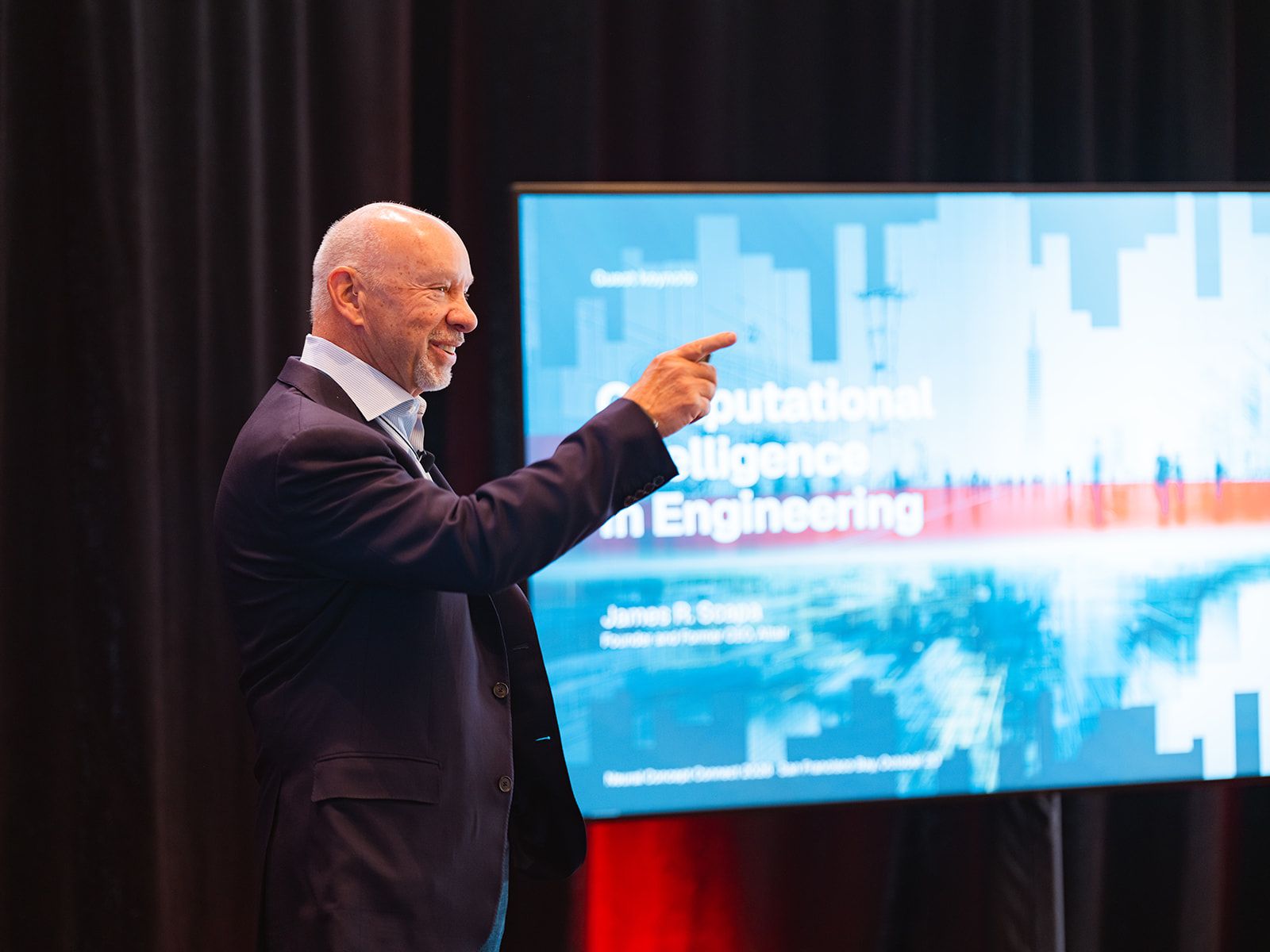 KeynoteComputational Intelligence in EngineeringJames R. Scapa, Altair
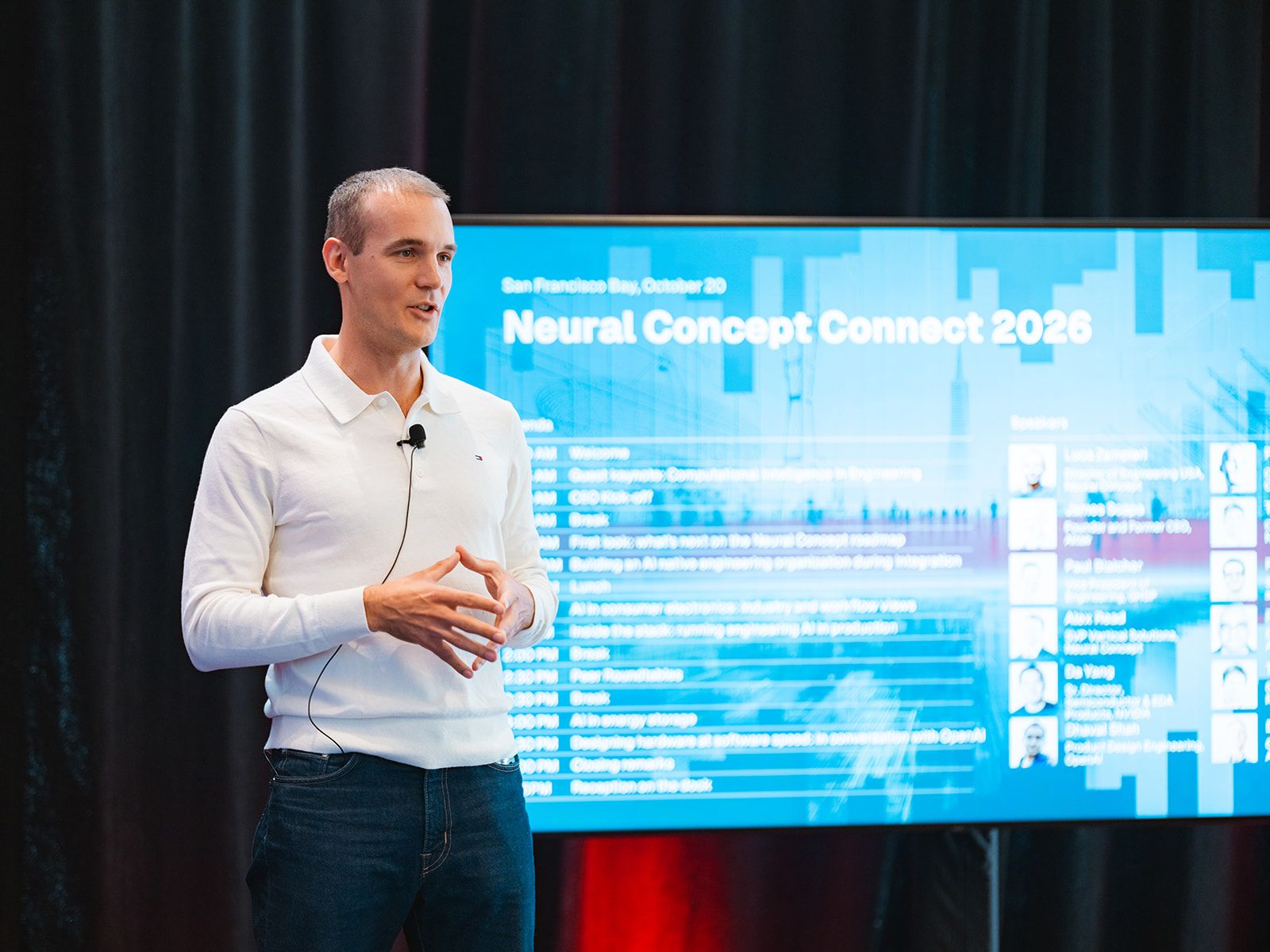 OpeningCEO kick-offPierre Baqué, Neural Concept
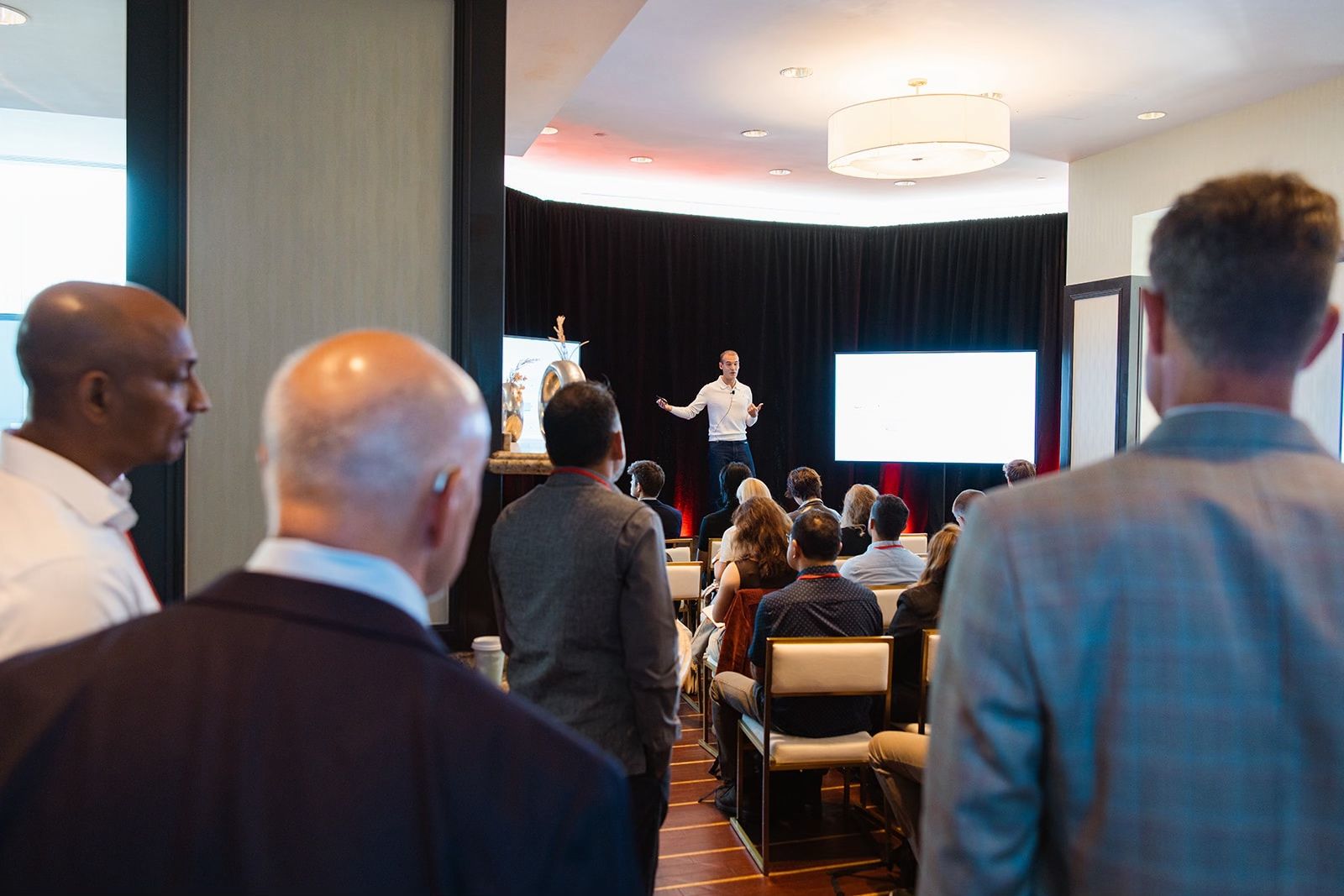 OpeningCEO kick-offPierre Baqué, Neural Concept
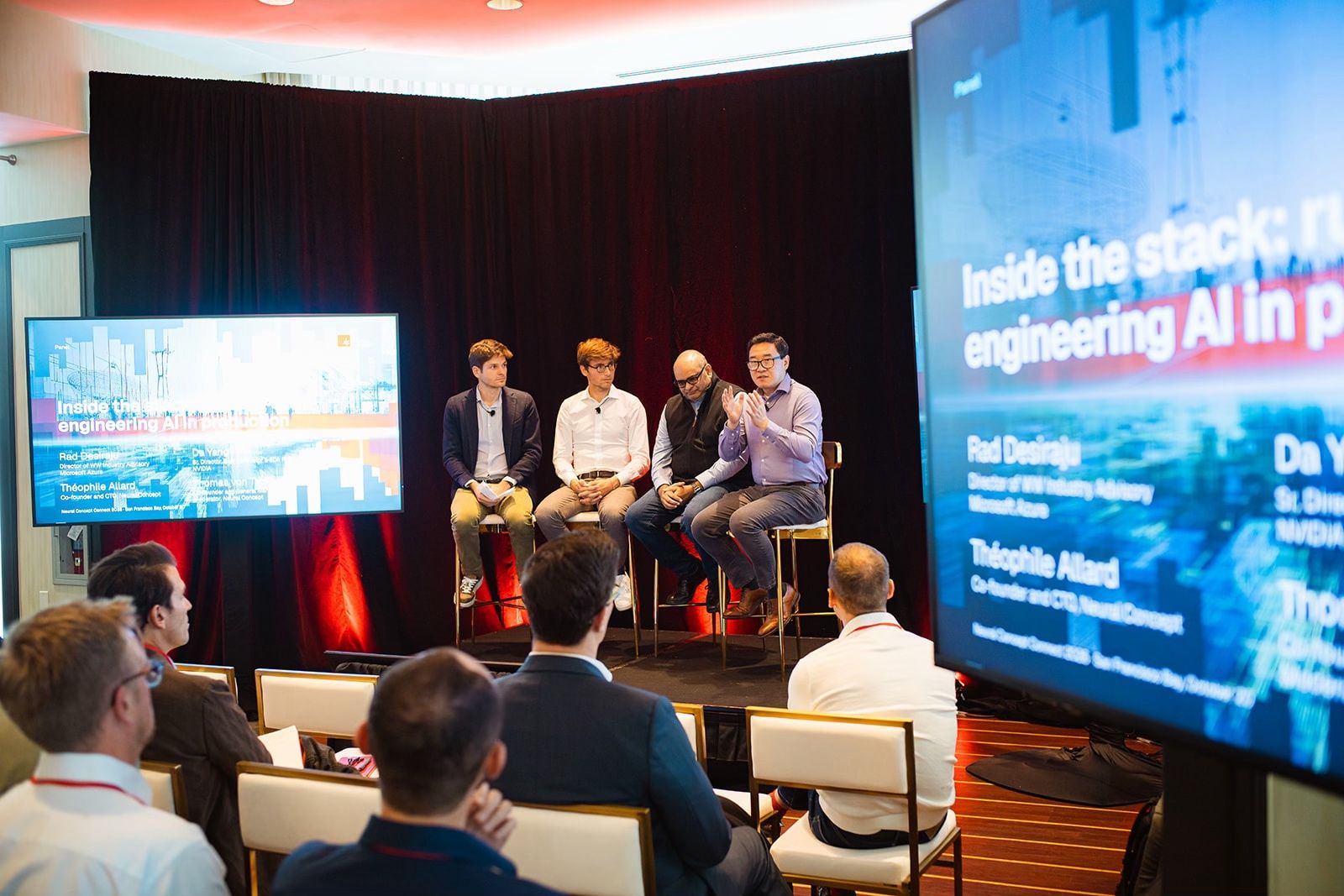 PanelInside the stackThomas von Tschammer & Théophile Allard (Neural Concept), Rad Desiraju (Microsoft), Da Yang (NVIDIA)
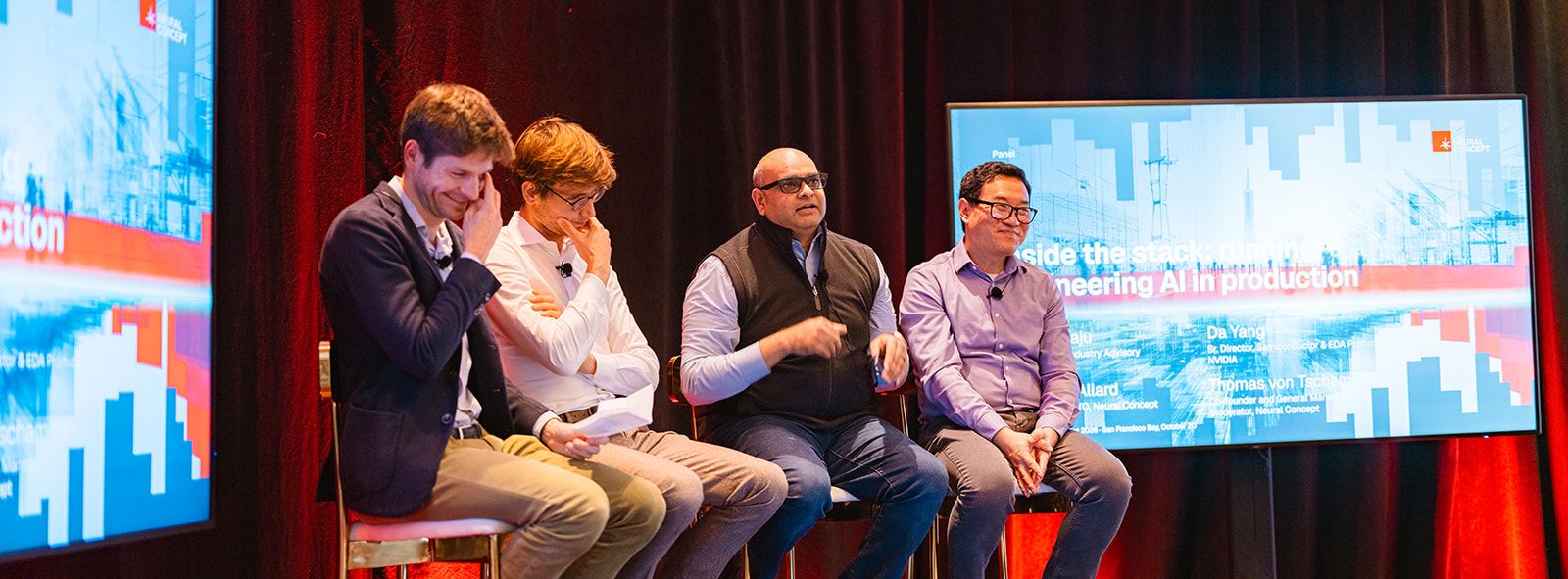 PanelInside the stackThomas von Tschammer & Théophile Allard (Neural Concept), Rad Desiraju (Microsoft), Da Yang (NVIDIA)
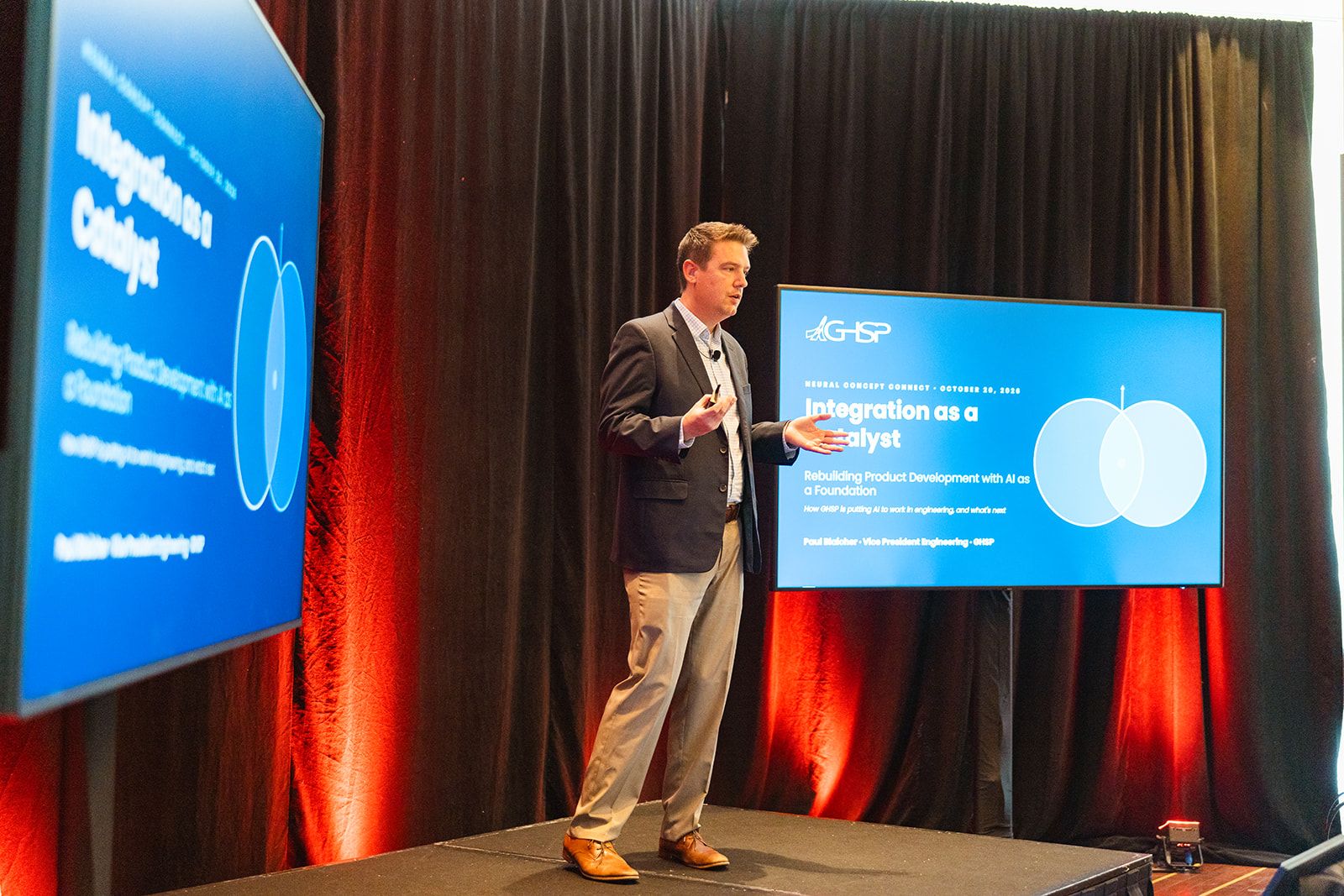 TalkRebuilding product development as AI-nativePaul Blaicher, GHSP
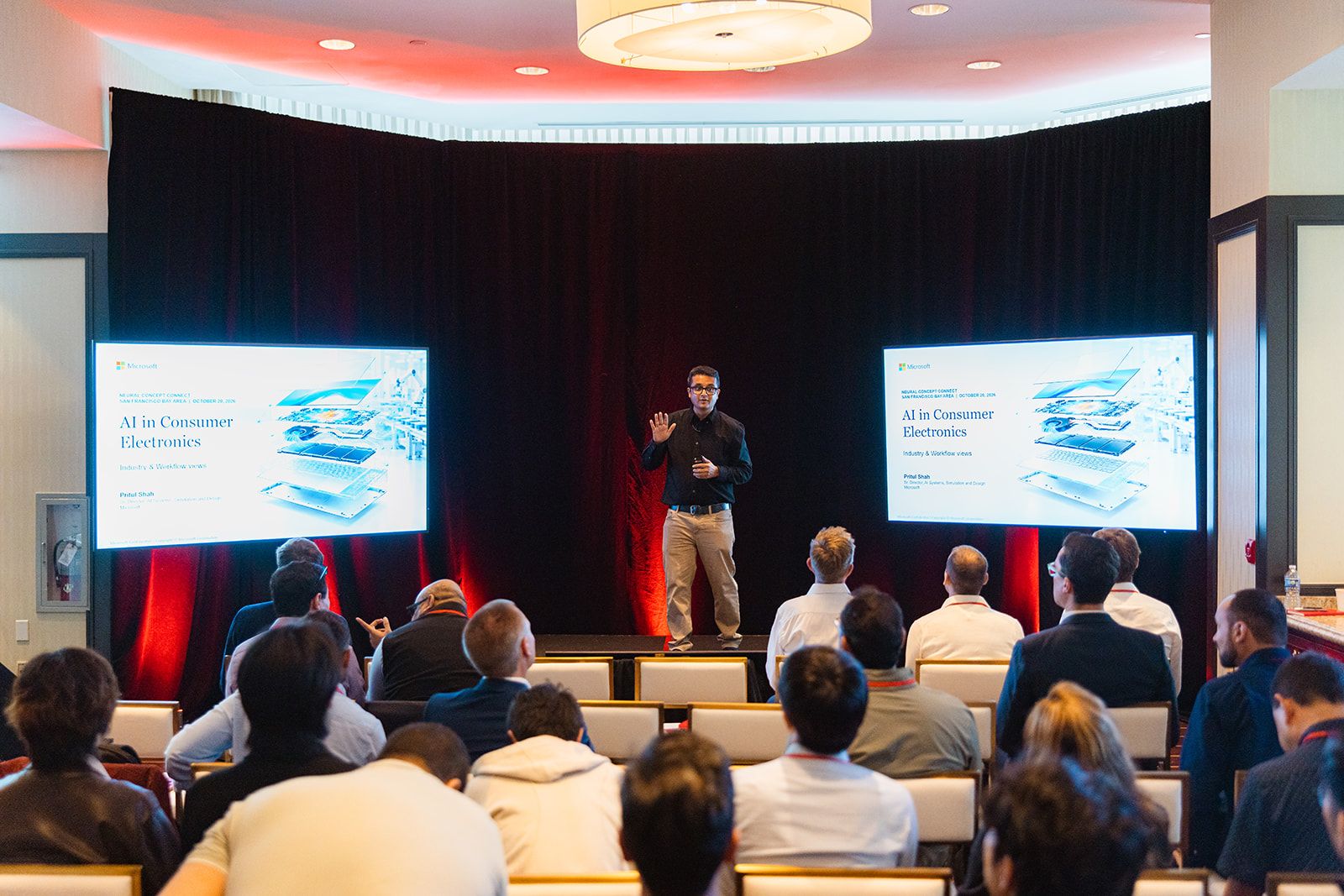 TalkAI in consumer electronicsPritul Shah, Microsoft
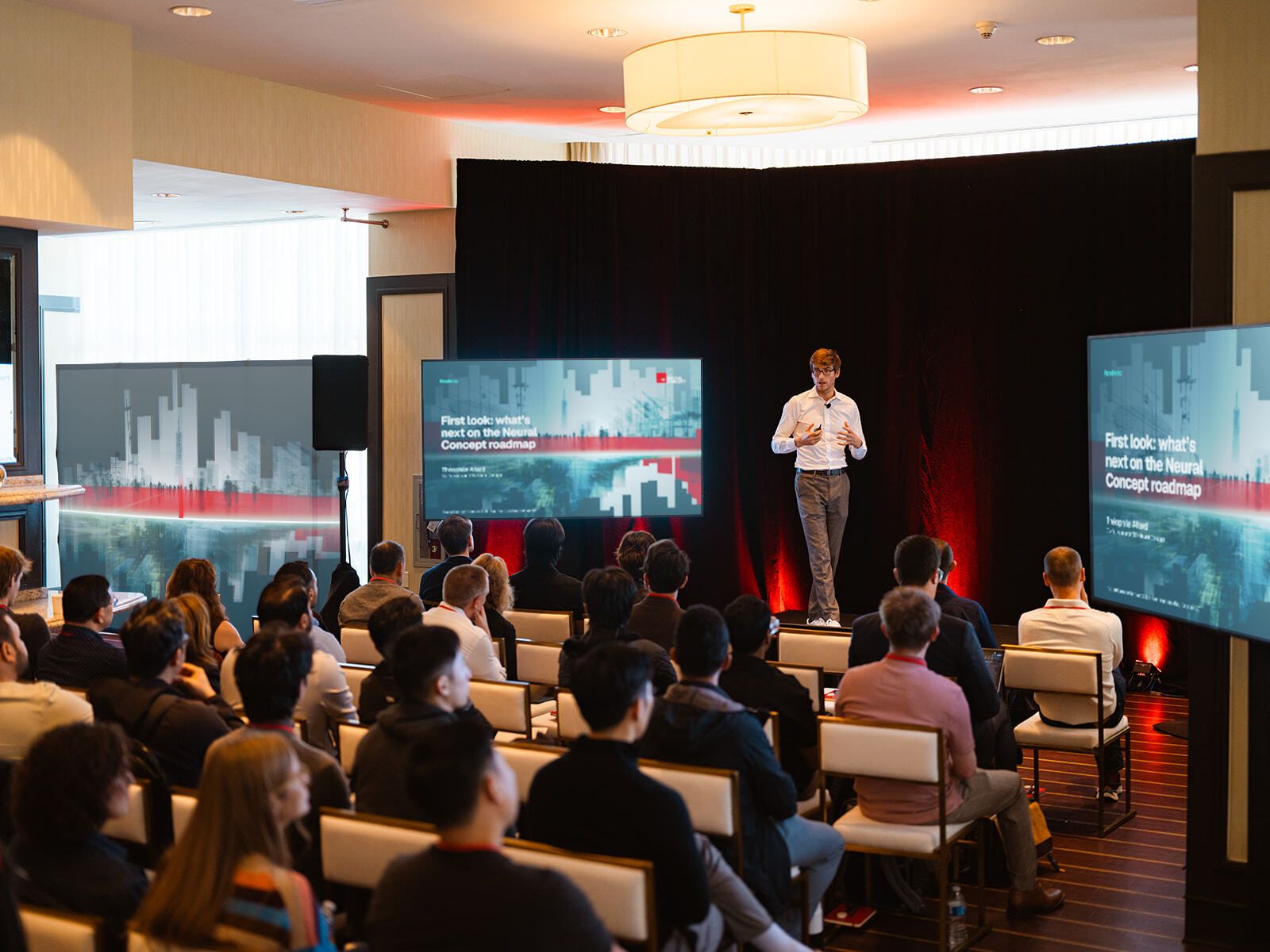 First lookProduct roadmapThéophile Allard, Neural Concept
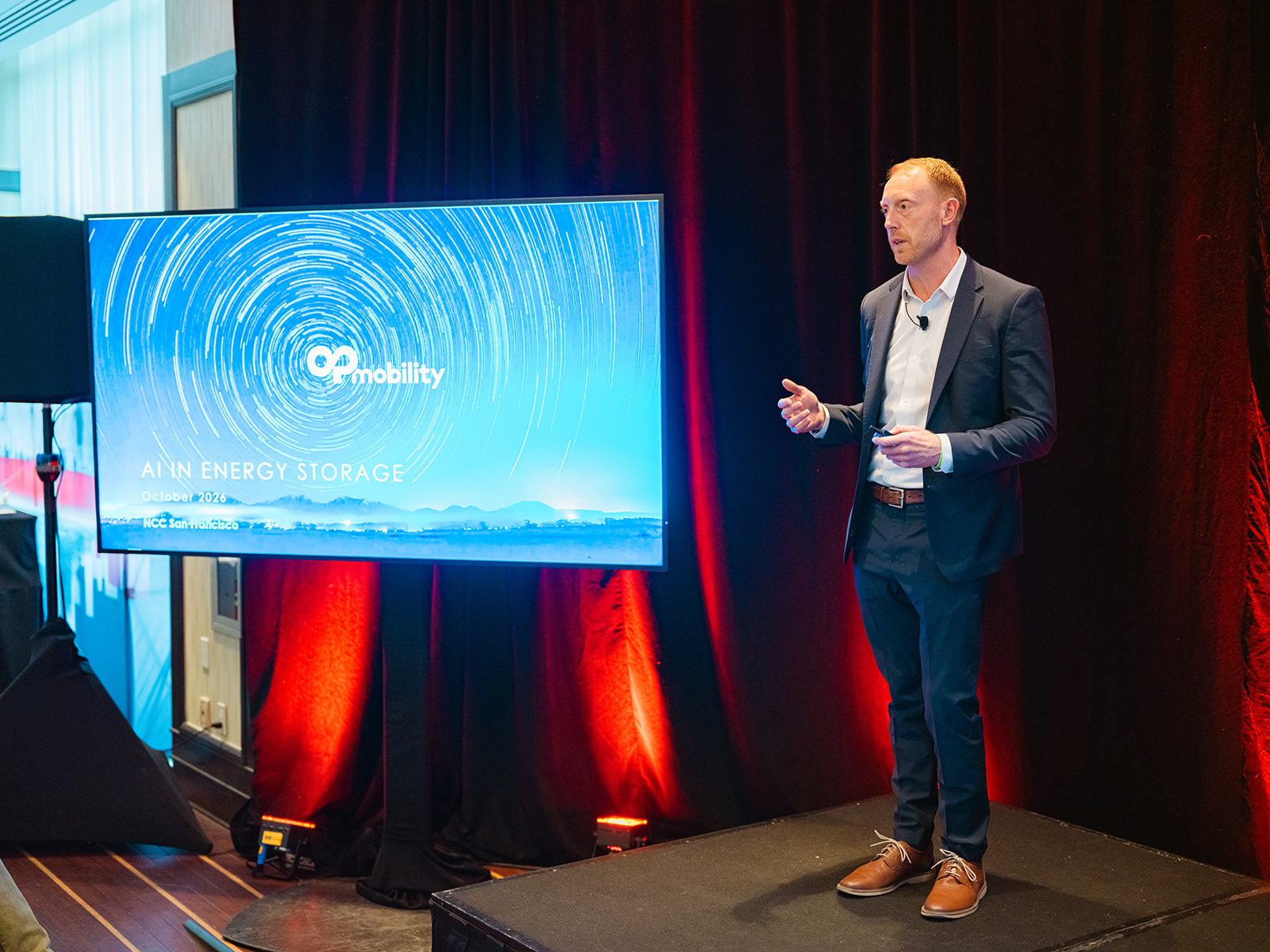 TalkAI in energy storageDavid Hill, OPmobility
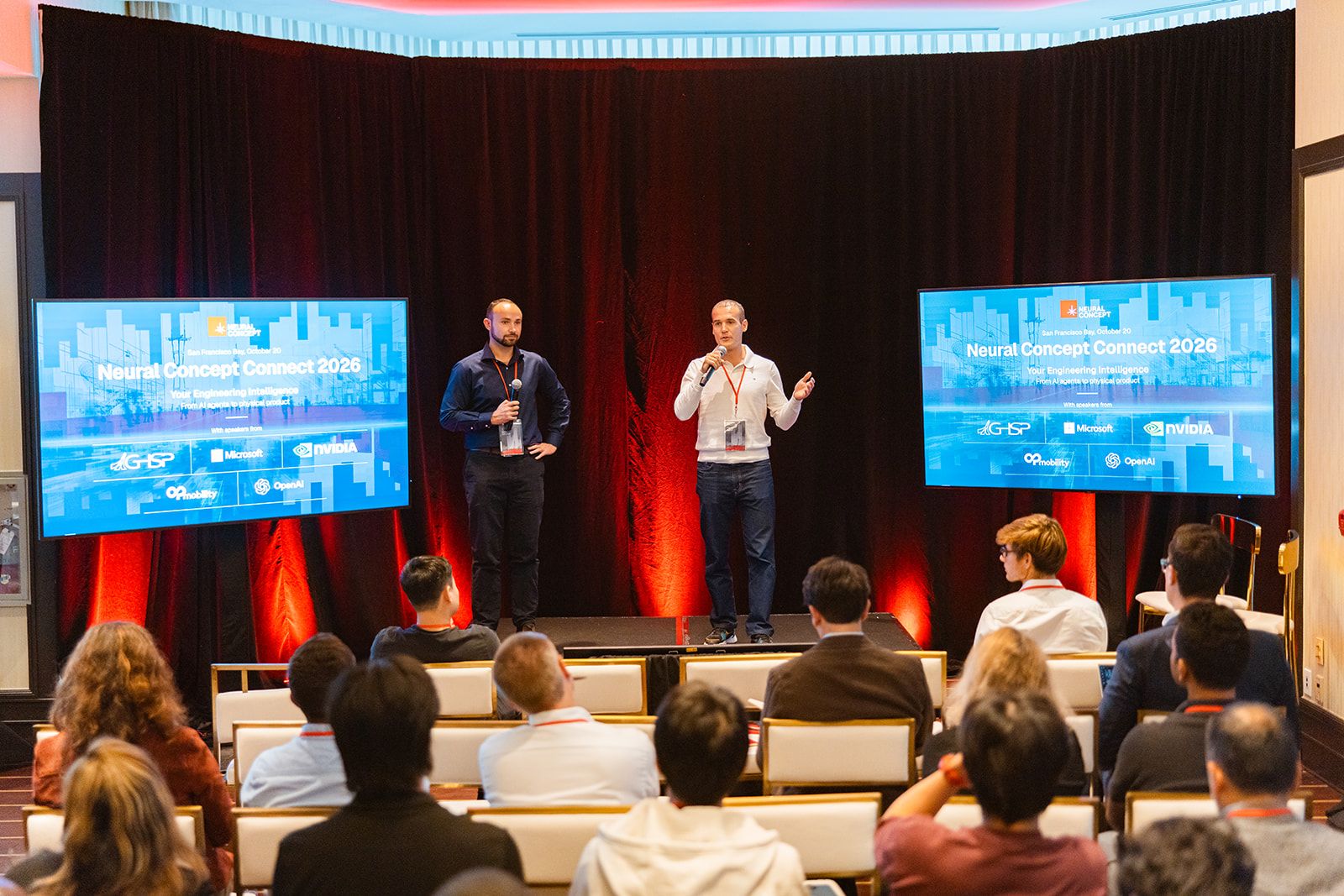 ClosingMoving from the map to actionLuca Zampieri & Pierre Baqué, Neural Concept