CES 2026 Confirms the Shift Toward Engineering Intelligence
- CES 2026 made a long-building reality visible: Engineering Intelligence is moving from vision into operational reality, as AI becomes embedded within engineering workflows.
- Neural Concept introduced its new Physics- & Geometry-Aware AI Design Copilot, reinforcing the intelligence layer as the core foundation guiding engineering decisions from the earliest design stages.
- CES amplified Neural Concept’s role within the global engineering ecosystem, reflecting strong alignment across partners such as Microsoft and NVIDIA, engineering leaders, and industry media on the adoption of AI within engineering workflows.
The Shift Toward Engineering Intelligence
AI for engineering is moving beyond experimentation and isolated tools to become operational, embedded, and increasingly mission-critical. For engineering leaders navigating rising complexity, shrinking timelines, and mounting performance constraints, this shift is no longer theoretical — it is already reshaping how engineering decisions are made. On stage at CES, this momentum was echoed by Jensen Huang, CEO of NVIDIA, who noted during his keynote that “the ChatGPT moment for Physical AI is almost here.” This reflects a broader move toward intelligence that understands physical systems, constraints, and real-world complexity, and can close the loop from concept to decision.
At the intersection of engineering, AI, and industrial ecosystems, CES is where this reality becomes visible, providing the right context for Neural Concept to introduce a new platform capability and reinforce its role within a rapidly maturing global engineering landscape.
In short, CES reinforced a direction that Neural Concept has been building toward for years.
A New Step in Engineering Intelligence: Introducing the AI Design Copilot
As engineering teams face increasing product complexity and shrinking development cycles, Neural Concept unveiled at CES 2026 a major extension of its Engineering AI platform: a Physics- & Geometry-Aware AI Design Copilot. This new Copilot positions Engineering Intelligence as the central layer guiding the design process, from early concept exploration through informed engineering decisions.
The impact is tangible:
- Weeks of manual CAD and simulation setup compressed into minutes
- 10 to 1,000 times more design variants explored per iteration
- Fewer late-stage redesigns and downstream bottlenecks
This is not about adding AI to engineering. It is about embedding intelligence directly into how engineering decisions are made from day one.
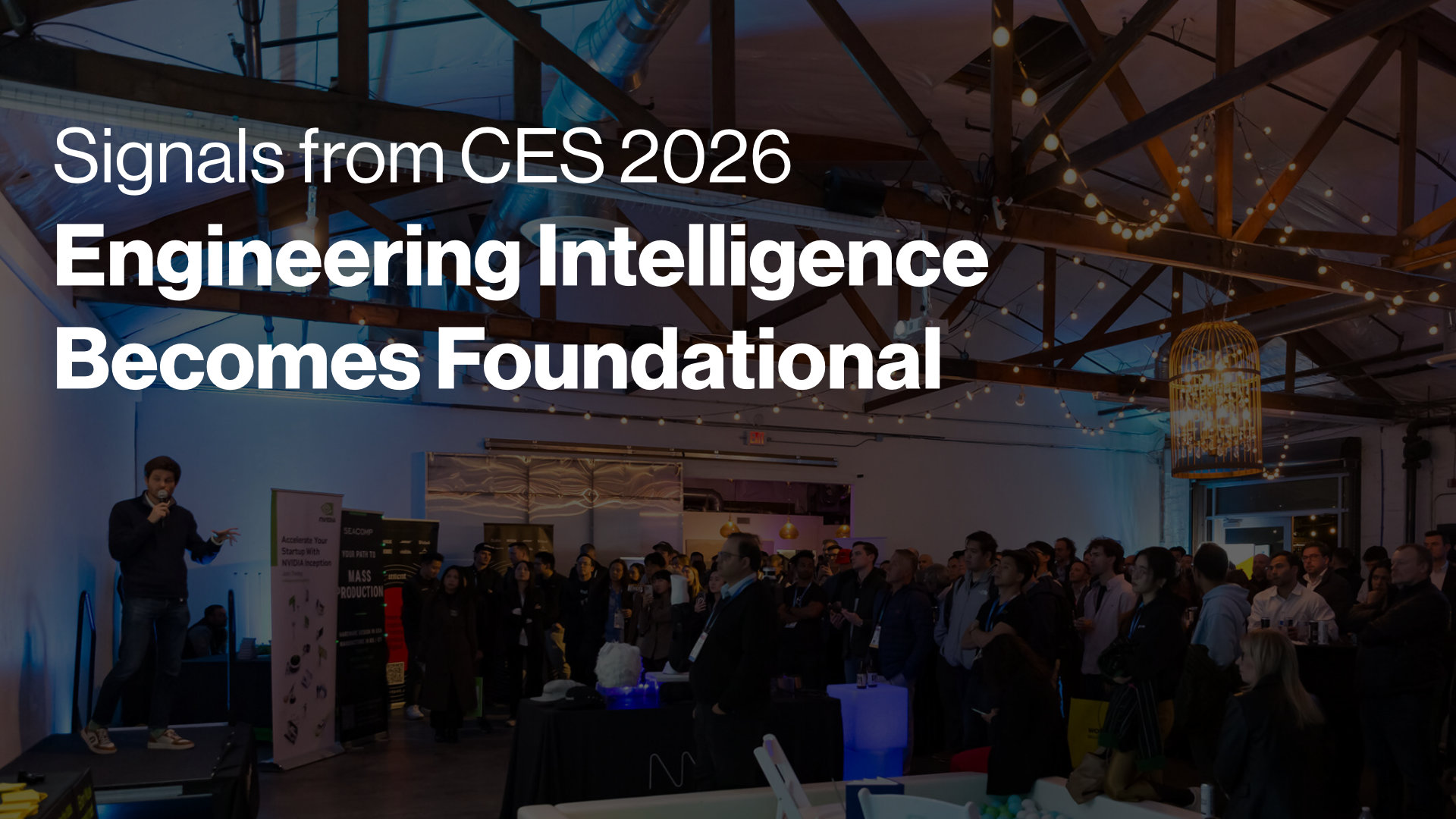
This new capability was introduced during a media breakfast that created space for in-depth discussions on enterprise AI adoption, workflow transformation, and the distinction between measurable impact and AI hype — conversations reflected in leading engineering media such as engineering.com.
Engineering Intelligence in Action Across the CES Ecosystem
From Microsoft to NVIDIA, CES 2026 highlighted Neural Concept’s role beyond product innovation, as an active participant in the broader Engineering Intelligence ecosystem, spanning platforms, partners, and industry conversations.
Within the Microsoft ecosystem, Neural Concept was featured as part of Microsoft’s global partner landscape. A live demonstration of the Neural Concept platform was showcased on Microsoft’s booth, illustrating how Engineering Intelligence integrates into enterprise-grade engineering environments. This positioning is reflected in Microsoft’s own engineering communications, sharing the performances of Neural Concept’s platform on the MIT DrivAerNet++ benchmark, highlighting how Engineering Intelligence is already operating at enterprise scale.
At the same time, Neural Concept’s alignment with NVIDIA’s Physical AI and Omniverse-based engineering visualization initiatives further anchored its role within advanced engineering workflows. Neural Concept’s US General Manager, Thomas von Tschammer, was also invited to participate in NVIDIA’s Founders & Friends event at CES, reflecting continued engagement within the Physical AI ecosystem.
Taken together, these engagements illustrate how Neural Concept operates as a neutral, engineering-native intelligence layer, designed to work across ecosystems rather than within a single proprietary stack. As enterprises scale AI across engineering organizations, this ability to span platforms is increasingly becoming a requirement rather than a preference.
CES 2026 also reflected a broader market alignment. Neural Concept engaged with engineering leaders from some of the world’s most advanced industrial companies, including OEMs, Tier-1 suppliers, and technology partners. Across these exchanges, a consistent pattern emerged: forward-looking organizations increasingly recognize that adopting Engineering Intelligence is becoming a foundational requirement to manage complexity, accelerate development cycles, and scale AI beyond isolated pilots.
Looking Ahead into 2026
CES 2026 marked a milestone, not an endpoint. Looking ahead, Neural Concept’s focus in 2026 is on scaling Engineering Intelligence enterprise-wide, expanding the copilot vision across the full engineering lifecycle, and deepening integrations across the global engineering ecosystem.
The future of engineering will not be defined by faster tools, but by smarter systems.
Engineering Intelligence is how that future gets built.